Trending
PM Kobakhidze submitted his annual report to Georgian parliament
3 June 2026



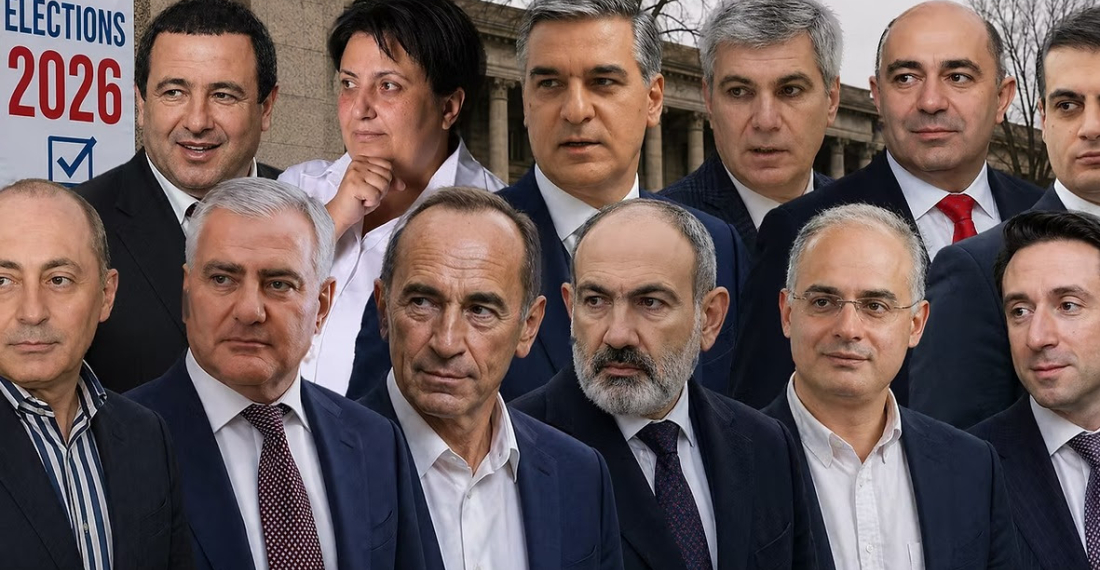
The campaign for Armenia’s parliamentary elections began on Friday (8 May), with 17 parties and two electoral blocs competing for seats in parliament. They are seeking the support of around 2.5 million eligible voters across the country.
With the campaign now underway, political forces are already working to mobilise public opinion and define themselves against their rivals. The election campaign is being shaped by several major divides, including peace versus a reconsideration of the current peace process, European versus Russian geopolitical orientations, and populist versus democratic tendencies. Each party is targeting different sections of the Armenian electorate, hoping that its message and strategy will be enough to secure representation in parliament.
On commonspace.eu, we are closely following developments ahead of Armenia’s parliamentary elections, which will take place on 7 June. This page brings together our coverage, analysis, interviews and updates on the campaign. At the bottom of this blog, all the issues of the Armenian Election Monitor 2026 can be found.
3 June 2026, A strategic choice: Armenian voters between diversification and dependency
"This commentary was prepared by Ms. Varduhi Harutyunyan for the 10th issue of the Armenia Election Monitor 2026 newsletter.
Exactly one month before the parliamentary elections in Armenia, Yerevan was transformed into the center of Europe, hosting the 8th European Political Community Summit, parallel to which the inaugural Armenia-European Union Summit and the state visit of French President Emmanuel Macron were also held. Such developments in Armenia-EU relations became possible after the National Assembly of Armenia adopted a law on March 26, 2025, initiating the process of Armenia's accession to the EU. Yerevan and Brussels are also engaged in an active dialogue on visa liberalization. Cooperation in the fields of security and defence is deepening, and the EU has also expressed support for Armenia's agenda on regional unblocking and the diversification of economic relations.
Just days before the elections, US Secretary of State Marco Rubio also arrived in Armenia for a brief visit. The Secretary's visit was marked by the signing of three crucial documents. Through one of them, Armenia-US relations were effectively elevated to yet another level, reaching a Comprehensive Strategic Partnership. Additionally, the framework agreement on the Trump Route for International Peace and Prosperity (TRIPP) was initialed, along with a framework memorandum on critical minerals and rare earths. Undoubtedly, Armenian-American relations are developing and deepening at an unprecedented pace. Specifically, the Republic of Armenia and the US transitioned from a strategic dialogue to a strategic partnership on January 14, 2025. It is noteworthy that while this initial document was signed under the US Democratic administration, the Republicans, led by Donald Trump, contrary to the assertions of many, did not ignore this partnership. Instead, they elevated it to a new level with lightning speed and infused it with strategic depth, demonstrating their consistency and active interest in Armenia, as well as in peace and stability in the South Caucasus."
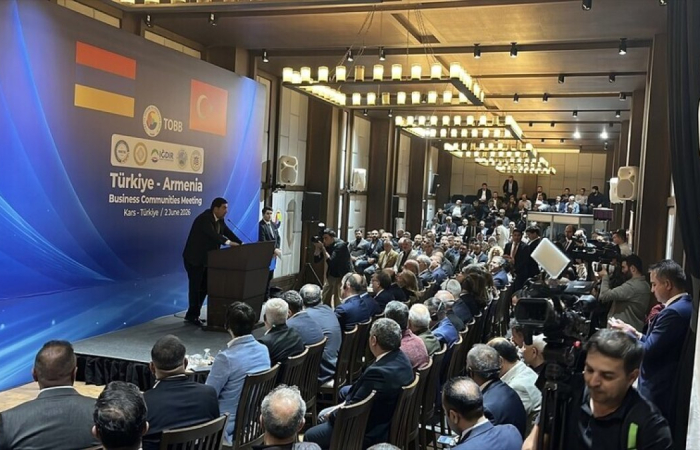
3 June 2026, Kars meeting brings together business people from Armenia and Turkiye

"Turkish and Armenian entrepreneurs met in the Turkish city of Kars to discuss potential joint projects, new investments, and areas of economic cooperation. The meeting was organised by the Kars Chamber of Commerce and Industry (Kars Ticaret ve Sanayi Odası).
During the talks, a wide range of areas were discussed, including trade, logistics, transport infrastructure, tourism, agriculture, industrial production, energy, and services. Particular attention was paid to expanding transport connectivity and simplifying logistics routes between the countries and through the South Caucasus region.
Following the official part, the program continued in a closed format of B2B meetings, where business representatives from both countries discussed potential investment projects and possible areas of cooperation in areas such as the food industry, textiles, construction, tourism, and technology."
Monday Commentary written by Dennis Sammut, published on commonspace.eu on 1 June 2026
"It is important to state clearly, and at the outset, that it is up to the Armenian to make this choice. Outsiders should not interfere. The next Armenian government will have important choices to make, at both the domestic and international level, and it must have the clear mandate, and the legitimacy of a popular vote, to deliver these choices.
But it seems that this does not fit the needs of Putin’s Russia. Over the last days Russia has openly interfered in Armenian politics, using the leverages it accumulated over the years. Putin has made it clear that he will not tolerate an independent minded Armenian government. Armenia was since its independence in 1991, a compliant “partner” of Russia, and fitted into Vladimir Putin’s grand strategy of surrounding Russia with countries, that whilst nominally independent, depended on Russia for their defence, economy, foreign policy, and indeed for their survival. Any attempts at independent thinking or action was to be crushed. Look what happened to Ukraine. Armenia was told bluntly that the same could happen to it."
"Ahead of key parliamentary elections,scheduled to be held in Armenia on Sunday, 7 June, Russia continues to attempt to put pressure on the Armenian Government led by prime minister Nikol Pashinyan. On 30 May, Russia recalled its Ambassador to Yerevan for consultations.
The Ambassador of the Russian Federation to the Republic of Armenia, S.P. Kopyrkin, has been summoned to Moscow for consultations in connection with the steps taken by the Armenian leadership to move closer to the European Union, which are detrimental to cooperation within the EAEU."
"The leaders of the states of the Eurasian Economic Union (EEAS) issued a tough statement warning fellow-member state Armenia of the consequences of its desire to join the European Union. The stark, sharply worded, warning, comes days before crucial parliamentary elections in Armenia, scheduled for 7 June."
29 May, Upcoming elections in Armenia: why is it important? - a view from Azerbaijan
"This commentary was prepared by Mr Ahmad Alili for the ninth issue of the Armenia Election Monitor 2026 newsletter.
The upcoming parliamentary elections in Armenia are no longer being discussed only within Armenia itself. Today, the Armenian vote is being closely watched in Azerbaijan, Russia, Türkiye, across Europe, and in the United States. This is not simply another domestic electoral cycle in a small South Caucasus country. It is an event capable of influencing the future geopolitical architecture of the entire region. At the same time, its significance should neither be exaggerated nor underestimated.
For the first time in Armenia’s modern political history, an incumbent leader is approaching elections with an agenda centred on peace and normalisation rather than conflict management or historical mobilisation. This distinction is important. The 2021 elections were not about peace. In the aftermath of the 2020 Karabakh war, Prime Minister Nikol Pashinyan was effectively seeking a mandate connected to the preservation of the Karabakh issue and to a broader post-war political framework shaped by remedial secession narratives. The current political moment is fundamentally different.
What is now emerging is a debate not only about political leadership, but about Armenia’s entire geopolitical worldview and strategic self-perception."
28 May, Russia bans produce imports from Armenia
"Russia will suspend imports of fresh fruits, vegetables and herbs from Armenia, Russia’s agricultural safety watchdog said on Thursday (28 May).
“Rosselkhoznadzor is introducing temporary restrictions starting May 30, 2026, on the import of fresh tomatoes, cucumbers, peppers, fresh herbs and strawberries originating in or shipped from Armenia,” the agency said in a statement.
The move is likely political in nature, ahead of the 7 June parliamentary elections in Armenia, even though Rosselkhoznadzor cited safety concerns. "
28 May, Trump endorses Pashinyan for re-election
"In a classic Truth Social post today (28 May), United States President Donald Trump expressed his full support for Armenian Prime Minister Nikol Pashinyan, who is running for re-election in one of Armenia’s most important elections. Many analysts in Armenia and outside the country argue that these elections are crucial and will determine the direction of the country."
27 May, Russia warns Armenia: Choose EU and lose favourable energy terms
"Russia has warned Armenia that it may suspend or terminate a bilateral agreement governing natural gas, petroleum products, and uncut diamonds if Armenia continues to deepen ties with the European Union. The 2013 agreement outlines terms under which Russia indefinitely eliminated export duties on shipments of petroleum products, natural gas, and diamonds to Armenia.
On Monday (25 May), Russian Energy Minister Sergei Tsivilev issued a threat to Armenia’s Ministry of Territorial Administration and Infrastructure, the Russian business daily Kommersant reported, citing a copy of the letter it reviewed."
27 May, Armenia at a crossroads: Elections, peace, and the limits of international guarantees
"This commentary was prepared by Mr Narek Minasyan for the 8th issue of the Armenia Election Monitor 2026 newsletter.
Less than a week remains until Armenia’s parliamentary elections. The campaign is in full swing, political forces are attacking one another in increasingly harsh terms, investigations into hybrid attacks against Armenia appear almost daily, and statements interfering in Armenia’s internal affairs continue to come from Moscow.
The June 7 elections are arguably the most geopolitically significant in Armenia’s modern history. Their outcome will shape the country’s trajectory for years. Campaign narratives suggest that Armenian voters will effectively answer several strategic questions: whether to continue normalization with Azerbaijan and Turkey or revise existing understandings; whether to deepen ties with the EU or strengthen dependence on Russia; whether to continue democratic reforms or return figures associated with the previous political system.
According to an IRI survey conducted in mid-May, Armenians’ top concerns are national security and border issues, the economy and unemployment, and peace. Unsurprisingly, the Armenia–Azerbaijan normalization process has become the central issue of the campaign. Against this backdrop, political and expert circles are again debating the idea of “guaranteed peace” and international security guarantees."
27 May, Rubio voices support for Pashinyan ahead of 7 June elections
"US Secretary of State Marco Rubio expressed support for Armenian Prime Minister Nikol Pashinyan during a brief refuelling stopover at Yerevan's Zvartnots airport on Tuesday (26 May), less than two weeks before the parliamentary elections on 7 June.
During the stop, Rubio met with Armenian Foreign Minister Ararat Mirzoyan. Speaking next to Mirzoyan, Rubio said: “Both yourself and the prime minister and your entire team here in Armenia are blazing the trail towards a brighter and more independent future for Armenia.”
Rubio added: "I am very happy to be here to show my support for their courage, my support for their vision, my support for their dedication, my support for their willingness to see for the future of their country and what it takes to get there.”"
22 May, The upcoming Armenian election will decide the future direction of the country
"This commentary was prepared by Mr Anri Stepanyan for the seventh issue of the Armenia Election Monitor 2026.
The upcoming elections that the Republic of Armenia will be facing next month will likely be one of the most decisive political moments for the country in the past decade. Ever since the Velvet Revolution in 2018, the country has undergone numerous internal and external processes that have significantly impacted its stance in the region, in the international arena, and the lives of its citizens. Much of this has been due to the change of regime in 2018, from the old-fashioned conservatives to the current ruling party and Prime Minister Nikol Pashinyan, who are commonly framed as “pro-Western”. The importance of the upcoming elections lies in the fundamentally different approaches of these two sides regarding the direction in which they want to steer Armenia."
20 May, Beyond the ballot: Elections as a test of public reason and political consciousness
"This commentary was prepared by Ms Aghavni Harutyunyan for the Armenia Election Monitor 2026 newsletter. The full issue can be checked here.
When we speak about Armenia’s upcoming parliamentary elections, public attention naturally turns to the visible political outcome: who will win, which parties or alliances will cross the threshold, how the balance between the ruling party and the opposition may shift, and how the next political cycle will be shaped. These are legitimate questions.
Elections are the constitutional mechanism through which power is formed, renewed, challenged, or transferred.
Yet elections are never only about the final result. In a democratic society, they are also a process through which the condition of political culture, public debate, and informational resilience becomes visible. In Armenia’s case, this broader dimension is especially important. The campaign unfolds in a society shaped by security uncertainty, post-war trauma, contested perceptions of peace, concerns over sovereignty, external influence, institutional distrust, and social fatigue.
For this reason, Armenia’s elections should be examined not only through the ballot box, but also through the public and informational environment in which citizens’ choices are being formed. A democratic election is not complete merely because citizens are formally able to vote. It is complete when, before voting, citizens can orient themselves in an environment of facts, substantiated arguments, political programs, responsible commentary, and public accountability."
15 May, Armenia’s 2026 vote: A referendum on peace and sovereignty?
Commentary for Armenia Election Monitor 2026, by ELEONORA SARGSYAN, published on 15 May 2026
"On 7 June 2026, Armenians will go to the polls in parliamentary elections that are formally domestic, but politically much larger than that. Nineteen political forces – seventeen parties and two alliances – are competing in the race. Yet the real contest is not only between parties. The 2026 elections are not only a domestic contest over power, but a referendum-like moment on Armenia’s geopolitical orientation, peace agenda, and democratic resilience.
At the heart of this election are three larger questions: whether a post-war society can resist the political instrumentalization of fear; whether a small state can reclaim agency after years of strategic dependence; and whether, after repeated rupture and loss, Armenia can still define its future beyond trauma. In this sense, the election is not only about who governs Armenia next. It is about the political direction through which Armenia will try to govern itself after war, displacement, and the collapse of old security assumptions."
"The campaign for the Armenian parliamentary elections began on Friday (8 May), with 17 parties and two electoral blocs in the running. All are seeking to enter parliament and win the support of around 2.5 million eligible voters across Armenia. With the campaign underway, each party is already mobilising public opinion against the other. Parties are divided on different themes: peace vs reconsideration of the current peace process, European vs Russian trajectories, and populist vs democratic tendencies, among other political cleavages shaping the campaign. Each party is targeting different segments of the Armenian electorate and hoping that its strategy will secure seats in parliament."
11 May, Monday Commentary: Europe goes to the Caucasus, but that is just the beginning of the story
Monday Commentary written by Dennis Sammut, published on commonspace.eu on 11 May 2026
"Dozens of European presidents, prime ministers, and other senior leaders descended on Yerevan last week to participate in the 8th Summit of the European Political Community (EPC). For a day or two, you could not go anywhere in the centre of the Armenian capital without bumping into a European leader and his entourage.
The summit itself was by and large uneventful, with seven-minute set-piece speeches, during which leaders heaped praise on Armenian Prime Minister Nikol Pashinyan. This followed the traditional welcome, whereby leaders were greeted individually by Pashinyan, which lasted for hours. There was an unusually long “red carpet’. NATO Secretary General, Mark Rutte sprinted the last part of his walk, remarking that this was the “longest red carpet ever”. But otherwise, the Summit was uneventful. There was speculation about the Azerbaijani participation in the Summit. In the end, President Ilham Aliyev addressed the summit online. It would have been nice if he were present in person, but clearly, not possible yet, and an online presence was the next best thing.
11 May, Azerbaijan stand-off with the European Parliament
"On 30 April, the European Parliament issued a resolution titled “Supporting democratic resilience in Armenia”. The resolution focused primarily on Armenia's upcoming elections on 7 June (EP resolution on 30 April).
However, the resolution also criticised Baku over the treatment of Armenian detainees, the rights of displaced ethnic Armenians, and the protection of Armenian cultural and religious heritage in Nagorno-Karabakh.
In response on 1 May, the Azerbaijan foreign ministry summoned the EU Ambassador, and the Azerbaijan Parliament cut institutional co-operation with the European Parliament, and its involvement with Euronest."
8 May, A serious election, in which voters have clear options
Commentary for Armenia Election Monitor 2026, by STEPAN GRIGORYAN, published on 8 May 2026
"The registration process for parties and blocs participating in the elections has been completed. A total of 19 political forces—two blocs and 17 parties—will participate in the election race, which begins on May 8 and concludes on June 5. The electoral threshold is set at 4% for parties and 8% for blocs.
Although the official campaign starts on May 8 according to electoral law, many parties de facto launched their campaigns long ago, at least since January of this year.
Key Contenders:
The following forces have a realistic chance of entering the National Assembly of Armenia:
It appears that administrative resources and financial capabilities grant these forces a significant advantage. Furthermore, the primary political struggle is unfolding between Nikol Pashinyan on one side and three pro-Russian forces—those of Karapetyan, Kocharyan, and Tsarukyan—on the other. Effectively, a bipolar model has emerged in Armenian domestic politics."
7 May, LINKS Europe panel discussion - 'Armenia between a historic summit and a crucial election'
WEBINAIR held on 7 May 2026
"On 6 May 2026, LINKS Europe Foundation hosted an online webinar titled “Armenia between a historic summit and a crucial election.” The event was chaired by Alexandra Dumitrescu, International Coordinator at LINKS Europe, and brought together experts from Yerevan and Brussels to discuss Armenia’s evolving election environment and broader geopolitical developments.
The panel featured Johnny Melikyan, Senior Fellow at the Orbeli Center; Narek Minasyan, Associate Expert at the Armenian Council Research Center; and Amanda Paul, Deputy Head of the Europe in the World Programme and Senior Policy Analyst at the European Policy Centre in Brussels."
6 May, Armenia’s parliamentary elections: Polarisation and hybrid threats
Commentary for Armenia Election Monitor 2026, by ANDEZEJ KLIMCZYK, published on 6 May 2026
"The upcoming parliamentary elections in Armenia will undoubtedly be crucial for the country’s future. We can already observe significant social polarisation, the use of hate speech, and brutal media attacks by competing electoral entities on each other. Unlike Georgia or Moldova, Armenia is operating under intense and immediate security pressure following the end of the Nagorno-Karabakh conflict. Border issues, normalisation of relations with Azerbaijan, and relations with Türkiye are not just foreign policy issues; they are existential political issues. This raises the stakes of the election and increases the likelihood of hardline rhetoric that could complicate post-election management.
Armenia continues to hold genuinely competitive, free elections. Compared to countries such as Russia, this remains an important strength. The main problem is not the lack of competition, but the quality of it. Currently, politics is highly polarised and often based on support for or opposition to Nikol Pashinyan. This risks narrowing the political debate and turning elections into referendums on leadership rather than on future-oriented programmes.
There are real threats and risks of disinformation or hybrid interference in these elections."
Report from the EU-Armenia Summit in Yerevan, from commonspace.eu special correspondent Alex Verge
"In a landmark diplomatic moment, Armenian Prime Minister Nikol Pashinyan hosted the first-ever bilateral summit between Armenia and the European Union at the presidential residence in Yerevan on 5 May. While it did not deliver any major announcements, the summit reflected the ongoing deepening of the bilateral relation and a show of support from Europe for Pashinyan, who is seeking re-election in parliamentary elections in June."
4 May, EPC summit in Armenia was an expression of European support for Nikol Pashinyan
Report from the EPC Summit in Yerevan, from commonspace.eu special correspondent Alex Verge
"Leaders from more than 45 European countries and beyond gathered today in Yerevan for the eighth summit of the European Political Community (EPC). The summit was the largest gathering of European leaders ever held in the South Caucasus. Apart from the set piece events in plenary session, many leaders also held private bilateral meetings. commonspace.eu special correspondent, Alex Verge, was at the summit, from where he filed this report:
European Union Commission President Ursula von der Leyen, France President Emmanuel Macron, Italian Prime Minister Giorgia Meloni, UK Prime Minister Keir Starmer, and Ukrainian President Volodymyr Zelensky were amongst the myriad of European leaders that gathered on Monday for 8th summit of the European Political Community. Prime Minister of Canada Mark Carney was also present, making him the first non-European leader to take part in an EPC summit."
"In support of the incumbent rule of PM Pashinyan, the EU has intensified its support to Armenia, particularly since the Strategic Agenda for the EU-Armenia Partnership was set in December 2025 to May 2026. On 29 January, the EU adopted the second assistance measure to Armenia within the framework of the European Peace Facility, doubling the total amount to 20 million EURO from the first assistance measure provided in July 2024. The next day the EU extended the European Union Mission in Armenia – an unarmed civilian monitoring mission deployed on the Armenian side of the Armenia–Azerbaijan border since January 2023 (continuing the EUMCAP established in October 2022) – for two more years, until 19 February 2027, with a budget of over €44 million. In March, the sides inked the financing agreement for the remaining amount (140 million EURO) from of the €270 million Resilience and Growth Plan for Armenia the EU adopted in April 2024. On 16–17 March 2026, Kaja Kallas announced that, following Armenia’s request, the EU would deploy a Hybrid Rapid Response Team to Armenia to help counter threats ahead of the elections, explicitly framing this as support against foreign interference. Separately, EU ambassadors reportedly approved in mid-April a new civilian mission to Armenia focused on hybrid threats, with later political endorsement expected by EU foreign ministers. The next summit of the European Political Summit is planned to be held in Yerevan on 4 May, followed by the first EU-Armenia on the next day."
Commentary for Armenia Election Monitor 2026, by ALEX VERGE, published on 1 May 2026
"When Armenians vote in parliamentary elections on 7 June, it will have been almost ten years since elections were last held on schedule. In the decade since the last regular parliamentary elections in 2017, the country has experienced a period of significant political upheaval and conflict. The 2018 Velvet Revolution forced out an entrenched political elite and set the country on a path of institutional and political reform. The conflict with Azerbaijan over the region of Nagorno-Karabakh in turn came to a decisive end, with Armenia suffering military defeat in 2020 and an Azerbaijani offensive in 2023 leading to the displacement of almost all of the local Armenian population - approximately 100,000 people - and the end of the Republic of Artsakh as a breakaway state.
The key national political figure over the course of this decade has been the current Prime Minister, Nikol Pashinyan, who is seeking re-election as the leader of the Civil Contract party. Then, a leading figure of the opposition, Pashinyan, first came to power during the 2018 revolution. He subsequently won snap elections in 2018 and 2021, with the latter held in response to the 2020 War and the last election in Armenia to date."
2 May, Background information on the 7 June Parliamentary Elections in Armenia
"The Armenian Parliamentary Elections will be held on Sunday, 7 June 2026. Citizens who maintain a permanent residence in Armenia and are at least 18 years old can vote. These elections will be the first regularly scheduled national elections since 2017, following two snap elections held in 2018 and 2021 that were triggered by constitutional crises. In these parliamentary elections, the revised thresholds for entering the government are:
Alongside these rules, up to four seats in parliament are reserved for national minorities to ensure their representation (one for each of the four largest national minorities, Yezidis, Russians, Assyrians, and Kurds). There is also no minimum turnout required for parliamentary elections to be considered valid. This means that regardless of how many people vote, the results of the election will still stand."
30 April, Armenia’s Russia debate deepens ahead of 2026 elections
"For decades, Russia was Armenia’s main security and economic partner. But cooperation has weakened in recent years, with Armenia freezing participation in the Russian-led Collective Security Treaty Organization (CSTO) alliance, Russian border guards withdrawing from some locations, and Yerevan expanding ties with the European Union and the United States.
A major point of dispute is Armenia’s railway system, operated by a Russian company under a concession agreement signed in 2008. In a press statement on 13 February, Pashinyan said Armenia could consider bringing in a third-country operator if Russia cannot modernise or restore key sections of the network. Russian officials reacted sharply: Security Council Secretary Sergei Shoigu reportedly called the idea “ill-conceived,” while Foreign Ministry spokesperson Maria Zakharova described it as “bizarre and unacceptable.”"\
30 April, Thursday Interview: Dr. Andrzej Klimczyk
Thursday Interview on commonspace.eu with Andrzej Klimczyk on 30 April 2026
"The Armenian parliamentary elections on 7 June are crucial in more ways than one. A fragile peace between Armenia and Azerbaijan is still at stake. While progress has been made since President Trump’s August 2025 meeting with Azerbaijani President Ilham Aliyev and Armenian Prime Minister Nikol Pashinyan, where a peace agreement was initialled, much remains uncertain. Key elements of the settlement are yet to be finalised, and the political will required to sustain momentum will depend heavily on the outcome of the vote. The peace agenda is heavily politicised, adding further sensitivity to the process, as conduits for Kremlin policy continue to disseminate fear and uncertainty within Armenian society regarding the ongoing peace process with Azerbaijan.
In this week’s Thursday Interview, former Polish diplomat Dr. Andrzej Klimczyk draws on decades of experience across the post-Soviet space to reflect on Armenia’s upcoming parliamentary elections and the wider dynamics in the South Caucasus. He argues that while the European Union has the potential to play a stronger geopolitical role in the region, its approach remains too bureaucratic and insufficiently attuned to local realities."
Armenian Election Monitor 2026:
The 'Armenia Election Monitor 2026' will publish, twice a week, between 1 May and 15 June 2026, an analysis of events and developments around the 2026 Armenia Parliamentary elections. The nonpartisan and independent newsletter will monitor developments and present experts' opinions to help provide an understanding of events and statements. The goal of the newsletter is to enhance democratic principles through fact-based, informed opinions.
The 12 newsletters will be produced by LINKS Europe Foundation, in collaboration with local partners. The issues will be sent to our Caucasus Concise Newsletter subscribers and added to our website here:
Issue 1: 1 May 2026 - Armenia Election Monitor
Issue 5: 15 May 2026 - Armenia Election Monitor - Armenia’s 2026 vote: A referendum on peace and sovereignty?