


Russia warns Armenia: Choose EU and lose favourable energy terms

Russia has warned Armenia that it may suspend or terminate a bilateral agreement governing natural gas, petroleum products, and uncut diamonds if Armenia continues to deepen ties with the European Union. The 2013 agreement outlines terms under which Russia indefinitely eliminated export duties on shipments of petroleum products, natural gas, and diamonds to Armenia.

On Monday (25 May), Russian Energy Minister Sergei Tsivilev issued a threat to Armenia’s Ministry of Territorial Administration and Infrastructure, the Russian business daily Kommersant reported, citing a copy of the letter it reviewed.

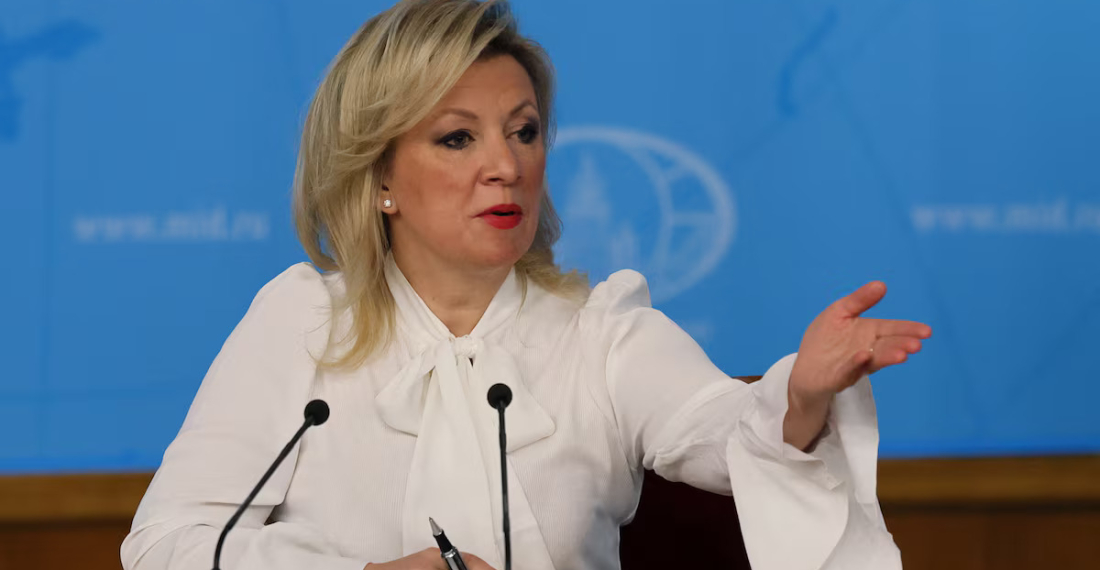
"The Russian Embassy has officially forwarded a letter...stating that if the process of accession to the EU continues, the Russian side will suspend or unilaterally terminate the Agreement on Cooperation in the Supply of Natural Gas, Petroleum Products and Rough Diamonds," Maria Zakharova, Russian Foreign Ministry spokeswoman, told the RIA news agency.

If the agreement is eliminated, Armenia would face supply chain challenges, according to analysts, as the country is heavily dependent on Russian commodities. Russia supplies 85% of Armenia’s gas, at least 62% of its petroleum products, and 50% of its imported diamonds.

Moscow is attempting to influence Yerevan ahead of the 7 June parliamentary elections. In addition to social media campaigns against Prime Minister Nikol Pashinyan, Russia has imposed trade restrictions against Armenia. 

Ties with Moscow have frayed in recent years as Yerevan has sought to deepen its ties to Brussels and Washington. Moscow earlier this month accused Armenia of being drawn into what it described as the EU's "anti‑Russian orbit".

Source: commonspace.eu with Reuters and Meduza

Related articles

Editor's choice
News
NATO LEADERS GATHER IN ANKARA FOR  DEFINING SUMMIT

NATO LEADERS GATHER IN ANKARA FOR DEFINING SUMMIT

NATO leaders gathered in Ankara on Wednesday, for the main day of their annual summit. Ukraine is one of the main topics at the summit. Ukrainian President Volodymyr Zelensky used a speech at the summit on Tuesday to urge Ukraine's allies to deliver the air defence systems it urgently needs to protect it from escalating Russian attacks. Ukraine has been stepping up its own long-range drone and missile attacks against Russia, hitting oil refineries and military targets there and causing significant fuel shortages and power cuts. "Ukraine's Armed Forces have proved that the effective use of long-range systems can have game-changing impacts on the battlefield, giving the Armed Forces the ability to degrade enemy forces far behind the frontline," Number 10 said. "Ukrainian long-range strikes, such as those on key logistics hubs, have significantly impacted Russia's ability to sustain their offensives." Kremlin spokesman Dmitry Peskov said on Tuesday that Russia, which invaded Ukraine in 2022, would closely monitor the summit in Ankara..

Popular

Editor's choice
Interview
Thursday Interview: Murad Muradov

Thursday Interview: Murad Muradov

Today, commonspace.eu starts a new regular weekly series. THURSDAY INTERVIEW, conducted by Lauri Nikulainen, will host  persons who are thinkers, opinion shapers, and implementors in their countries and spheres. We start the series with an interview with Murad Muradov, a leading person in Azerbaijan's think tank community. He is also the first co-chair of the Action Committee for a new Armenian-Azerbaijani Dialogue. Last September he made history by being the first Azerbaijani civil society activist to visit Armenia after the 44 day war, and the start of the peace process. Speaking about this visit Murad Muradov said: "My experience was largely positive. My negative expectations luckily didn’t play out. The discussions were respectful, the panel format bringing together experts from Armenia, Azerbaijan, and Turkey was particularly valuable during the NATO Rose-Roth Seminar in Yerevan, and media coverage, while varied in tone, remained largely constructive. Some media outlets though attempted to represent me as more of a government mouthpiece than an independent expert, which was totally misleading.  Overall, I see these initiatives as important steps in rebuilding trust and normalising professional engagement. The fact that soon a larger Azerbaijani civil society visits to Armenia followed, reinforces the sense that this process is moving in the right direction." (click the image to read the interview in full)


