


This article is part of the "Armenia Season", featuring on commonspace.eu from 1 May -15 June 2026.
It was first published on Armenia Elections Monitor - a LINKS Europe initiative - on 8 May 2026
The registration process for parties and blocs participating in the elections has been completed. A total of 19 political forces—two blocs and 17 parties—will participate in the election race, which begins on May 8 and concludes on June 5. The electoral threshold is set at 4% for parties and 8% for blocs.
Although the official campaign starts on May 8 according to electoral law, many parties de facto launched their campaigns long ago, at least since January of this year.
Key Contenders:
The following forces have a realistic chance of entering the National Assembly of Armenia:
- "Civil Contract" Party: Led by Prime Minister Nikol Pashinyan.
- "Strong Armenia" Party: Led by Samvel Karapetyan, an oligarch based in Russia.
- "Armenia" Bloc: Led by former President Robert Kocharyan.
- "Prosperous Armenia" Party: Led by Gagik Tsarukyan, an oligarch and close friend of Alexander Lukashenko.
It appears that administrative resources and financial capabilities grant these forces a significant advantage. Furthermore, the primary political struggle is unfolding between Nikol Pashinyan on one side and three pro-Russian forces—those of Karapetyan, Kocharyan, and Tsarukyan—on the other. Effectively, a bipolar model has emerged in Armenian domestic politics.
Potential Challengers and Alternatives:
With an active campaign, seats in Parliament could also be secured by parties with more modest financial resources but compelling political programs—forces capable of offering alternative, constructive agendas rather than focusing solely on criticizing the ruling party.
As of early May 2026, two additional political forces may overcome the 4% threshold:
- "Wings of Unity" Party: Led by Arman Tatoyan, the former Human Rights Defender (Ombudsman) of Armenia.
- "Republic" Party: Led by Aram Sargsyan, a former Prime Minister of Armenia.
Unexpected surprises are also possible.
Current Outlook:
Current sociological research indicates that Nikol Pashinyan and his party hold a higher rating than other political forces. In other words, if the elections were held in early May, Pashinyan would come in first.
However, it is difficult to say whether he would secure more than 50% of the vote. There is a visible shift in public sentiment due to several factors, which suggests that while Pashinyan might win, he may not achieve an absolute majority. One thing is certain: we are heading toward a very serious election.
Source:
This article is part of the "Armenia Season", featuring on commonspace.eu from 1 May -15 June 2026.
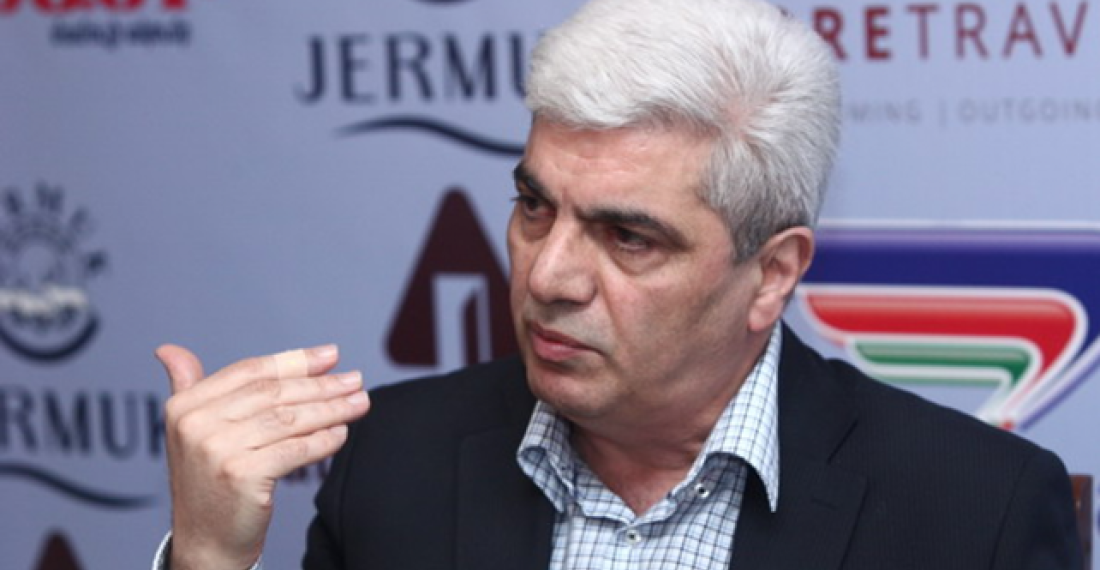
This commentary first appeared on the 8 May issue of the Armenian Election Monitor 2026 newsletter. Dr Stepan Grigoryan, Chairman of the Board of the Analytical Centre on Globalization and Regional Cooperation, is a respected analyst and opinion-shaper in Yerevan. He is also a member of the Armenia-Azerbaijan Expert Strategic Platform, a LINKS Europe initiative to support dialogue in the South Caucasus. Follow Dr. Grigoryan on YouTube, Facebook, and LinkedIn. Follow the Analytical Centre on Globalization and Regional Cooperation on their website, on Facebook, and on YouTube.



