This article is part of the "Armenia Season", featuring on commonspace.eu from 1 May -15 June 2026.
It was first published on Armenia Elections Monitor - a LINKS Europe initiative - on 1 May 2026
BACKGROUND TO THE FORTHCOMING PARLIAMENTARY ELECTIONS IN ARMENIA
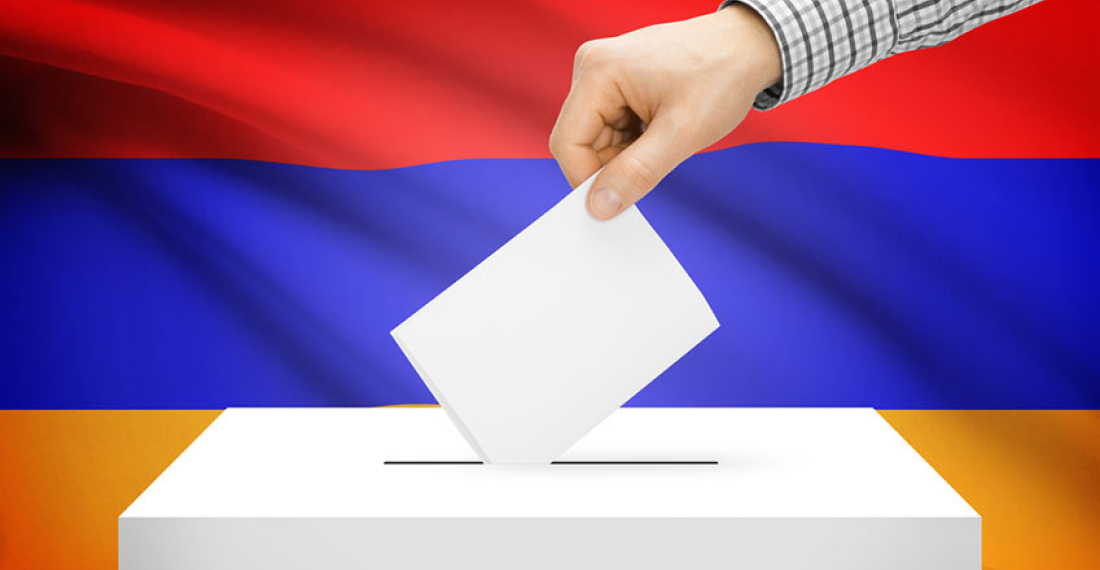
The Armenian Parliamentary Elections will be held on Sunday, 7 June 2026. Citizens who maintain a permanent residence in Armenia and are at least 18 years old can vote. These elections will be the first regularly scheduled national elections since 2017, following two snap elections held in 2018 and 2021 that were triggered by constitutional crises. In these parliamentary elections, the revised thresholds for entering the government are:
- 4% for single parties
- 8% for alliances of two parties
- 9% for three and 10% for alliances of more parties.
Alongside these rules, up to four seats in parliament are reserved for national minorities to ensure their representation (one for each of the four largest national minorities, Yezidis, Russians, Assyrians, and Kurds). There is also no minimum turnout required for parliamentary elections to be considered valid. This means that regardless of how many people vote, the results of the election will still stand.
At least 101 members of parliament are elected using a proportional system for a period of five years. Parties provide closed lists of individual candidates before the elections take place, and voters will only get to vote for the party/block of parties that represents their values the best. After the votes are counted, seats in parliament are distributed based on how much support each party received, as long as they pass the minimum vote threshold. Parties receive seats roughly in proportion to their share of the vote, and those seats are then allocated to candidates according to their position on the party list.
If one party or alliance of parties wins more than half of the seats, it can form a government on its own. If no one has a clear majority, parties have a few days to negotiate and try to form a coalition government together and propose a Prime Minister. If they cannot reach an agreement, a second round of voting is held only between the two parties or blocs that received the highest number of votes running. The winner of the second round is provided with additional mandates to secure the majority in parliament.
According to the Electoral Code of the Republic of Armenia, “Elections are held on the basis of the principles of freedom and voluntariness in the exercise of the right to vote. No one has the right to force a voter to vote for or against any candidate, party (alliance of parties), as well as to force a voter to participate or not to participate in the elections.”
Armenian law treats offering, receiving, or facilitating election bribes as criminal offences. In this case, election bribery covers offering, promising, or giving money, property, services, or any other benefit to a voter to influence how they vote. It also covers disguising payments as salaries, charity, or other benefits during the pre-election period.
Article 219 of the Criminal Code sets out the penalties, with punishments ranging from three to six years in prison for those who promise to bribe or have been found to bribe voters. In addition, people who accept such offers may face imprisonment for up to three years, short-term detention, and/or restriction of liberty for one to three years.
Voting Matters:
In a democratic society, voting is the crucial backbone; you cannot have a democracy without it. Armenian citizens will have the chance to vote for the party that represents their values, needs, and interests in the government. It should not be understated: voting is important, and without it, societies become disconnected from the needs of the public. By voting, citizens reaffirm their commitment to democratic values such as freedom, equality, and justice.
Foreign Information Manipulation and Interference (FIMI):
Several monitoring groups say the 7 June 2026 parliamentary elections face risk from foreign information manipulation and interference, including disinformation, proxy actors, and AI-generated content used on social media. Such acts have been defined as Foreign Information Manipulation and Interference (FIMI). FIMI are different activities that are intentionally coordinated by different state or non-state actors to manipulate public opinion. Some of the main tools are misinformation, media manipulation, and the use of AI texts or images on social media, but also other activities, such as paying journalists or influencers to spread false or biased narratives.
Different countries are seeking to influence the election process, including through proxies in Armenia and through FIMI activities. It is important to remain critical and check the data provided from multiple sources before drawing conclusions. Against this backdrop, the Armenia 2026 Election Monitor aims to provide critical analysis and track key developments surrounding the 2026 parliamentary elections.
Source: This article is part of the "Armenia Season", featuring on commonspace.eu from 1 May -15 June 2026. It was first published on Armenia Elections Monitor - a LINKS Europe initiative - on 1 May 2026