This article is part of the Armenia Season on commonspace.eu between 1 May and 15 June 2026.
The first Armenia-EU summit was held in Yerevan on 5 May 2026. Alex Verge, was commonspace.eu special correspondent at the summit in Yerevan, and he filed this report:
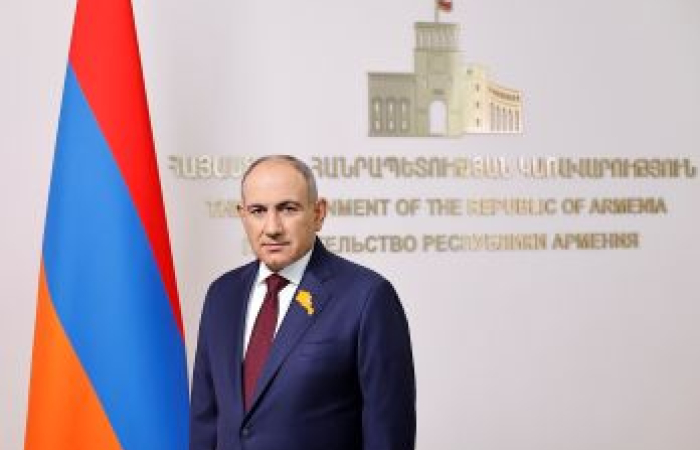
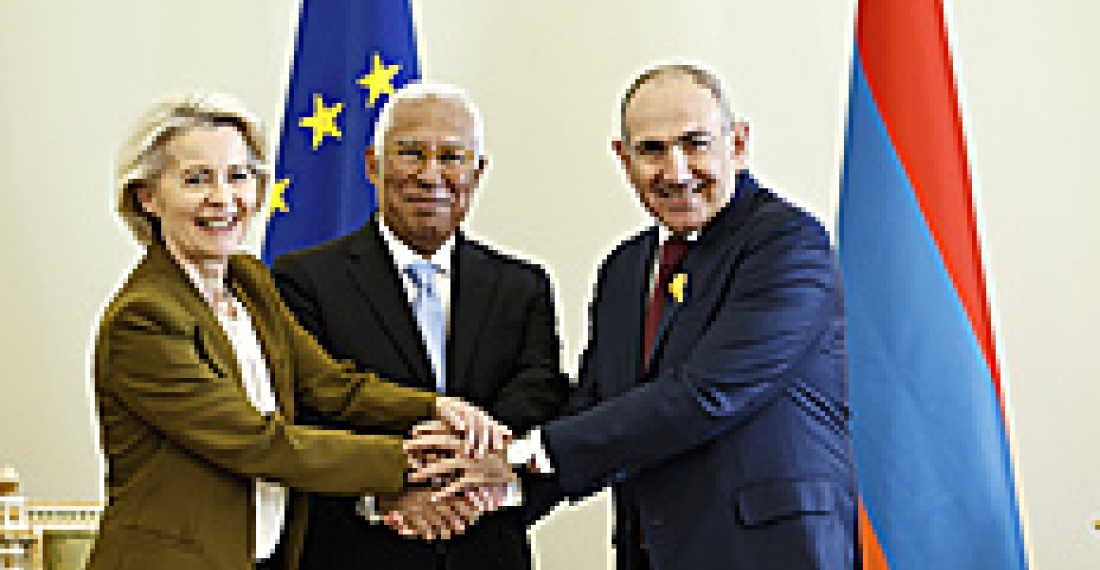
In a landmark diplomatic moment, Armenian Prime Minister Nikol Pashinyan hosted the first-ever bilateral summit between Armenia and the European Union at the presidential residence in Yerevan on 5 May. While it did not deliver any major announcements, the summit reflected the ongoing deepening of the bilateral relation and a show of support from Europe for Pashinyan, who is seeking re-election in parliamentary elections in June.
EU Commission President Ursual von der Leyen and European Council President Antonio Costa were representing Europe at the summit. Both gave significant credit to Pashinyan personally for his role in bringing Armenia closer to the EU, underlining shared values and commitments to democracy, rule of law, peace and stability.
The current prime minister has indeed overseen a significant rapprochement. In 2025, the Armenian parliament adopted a law that officially mandated the government to pursue EU integration.
Accession remains a very distant prospect however. Pashinyan himself commented at the summit that Armenia faced a long road before it could align itself to EU standards, including regarding judiciary independence, and that there was no guarantee that the EU wanted to expand further. He added that a deeper bilateral relationship was highly valuable in and of itself.
Pashinyan’s foreign policy had been motivated in part by an objective to reduce Armenian dependence on Russia as an economic and security partner. This has meant that relations between his administration and the Kremlin have soured. Moscow favours more pro-Russian opposition candidates in the upcoming elections, with many reports pointing to evidence of Russian interference via cyber attacks and disinformation amongst other means. To support the Armenian authorities in dealing with these hybrid threats, the EU deployed a team of experts earlier in the year.
Armenia is therefore having to tread carefully in terms of how it balances between its relations with Russia and rapprochement with the EU and other partners. Prior to the EU summit, Benyamin Poghosyan, a political scientist and senior research fellow at the Applied Policy Research Institute of Armenia (APRI), commented that: “Armenia should be prudent to avoid creating a perception that it is becoming an adversary of Russia. Development of relations with the EU are important for the development of Armenia, and should not be perceived through an anti-Russian prism.” In line with this approach, summit participants avoided direct references to Russia or Russian interference.
No major announcements were made either by Armenia or the EU, though a number of agreements and documents were signed. This included a Connectivity Partnership focused on the transport, energy and digital sectors - though few specific details were disclosed. Other documents included a working arrangement for enhanced cooperation on border and migration management, as well as a series of letters of intent for European investments in Armenian businesses in the artificial intelligence, connectivity, creative, edtech and semi-conductor sectors.
Prior to the summit, there was some anticipation in Yerevan regarding specifically the ongoing process of visa liberalisation between Armenia and the EU, which started in September 2024. Obtaining visas to EU countries remains a difficult and expensive process for many in the country. However, no substantial updates were provided on this front. This will likely have disappointed Pashinyan, who would have hoped for an additional electoral boost. Commenting on the issue, President von der Leyen did say that she was certain that the process would come to fruition.
Nevertheless, alongside the European Political Community gathering that took place the day before, the EU summit will have contributed to the international credibility of Pashinyan and may therefore serve his re-election prospects well. Domestically, it remains to be seen whether Pashinyan will receive similar support from the Armenian electorate come the June parliamentary elections. Outside the presidential palace, a crowd was gathered to call for the release of Armenian prisoners of war held by Azerbaijan - one of the number of issues where large parts of Armenian society have been critical of their current government. Much more than this weekend’s summits, it will be the elections in June that will shape the trajectory of Armenia’s foreign policy.
source: This article is part of the Armenia Season on commonspace.eu between 1 May and 15 June 2026.
The first Armenia-EU summit was held in Yerevan on 5 May 2026. Alex Verge, was commonspace.eu special correspondent at the summit in Yerevan, and he filed this report