Trending
Monday Commentary: The fighting between Armenians and Azerbaijanis has stopped, but landmines keep killing and maiming people in the South Caucasus
11 October 2026
LINKS Europe has announced that it will continue with its campaign Landmine Free South Caucasus in the period October-December 2026. This campaign has been ongoing since 2018 and is implemented in co-operation with partners in Armenia, Azerbaijan and Georgia.
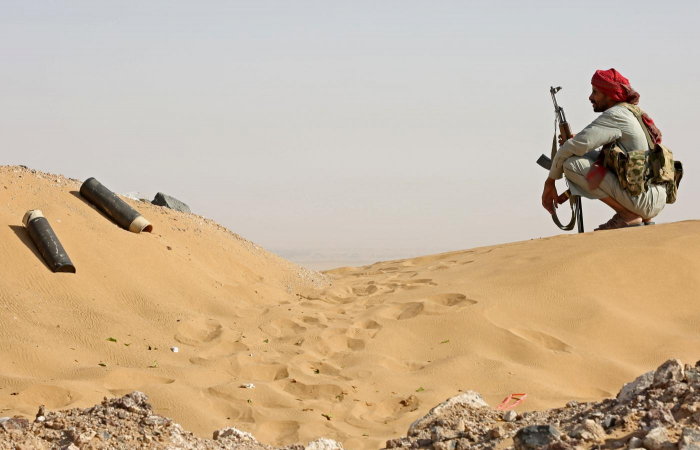
The contamination from landmines and other remnants of war is a heavy legacy from the decades of conflict that the region has experienced. Big areas are not available for agriculture and other economic use, but worse of all is the killing and the maiming of people that occurs on a nearly daily basis, as despite warnings and precautions, the inevitable happens. Incidents involving landmines occur regularly. Landmines, and other remnants of war, cast a shadow over life, over the hope of those who aspire for a new beginning and impede progress. For many, the landmine threat means that for them the conflict is not over yet.
When LINKS Europe launched the Landmine Free South Caucasus campaign in 2018 it envisaged a collaborative regional effort to eradicate landmines. At the time this was a far cry. Armenia and Azerbaijan were still engrossed in a bitter conflict. But LINKS Europe persisted, and the campaign gained momentum. In 2026 things are different. Peace is on the agenda and on the horizon. Landmine clearance is a common goal. But work still needs to be done in order to deal with the problem in a collaborative way. Landmine clearance can and should be a confidence building measure.
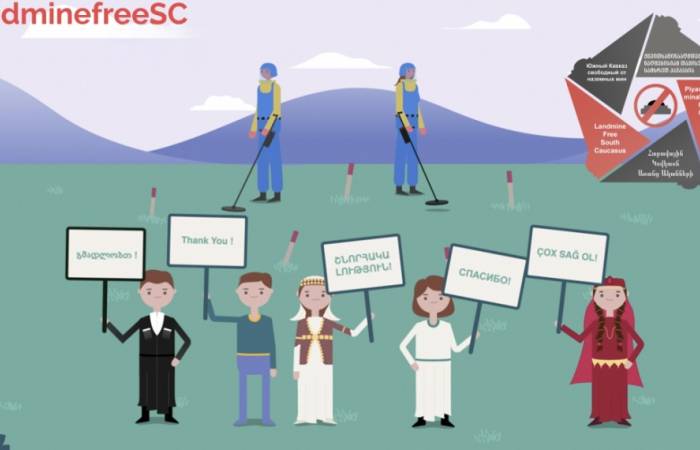
The campaign has also two other important considerations. It says thank you to deminers. Hundreds of people, working with ANAMA in Azerbaijan, or CHDE in Armenia, and other organisations risk their life as they try to make the land safer. They deserve our gratitude. Another consideration is the impact of landmine incidents on victims. The campaign marks 30th November as the regional day of solidarity with the victims of landmines in the South Caucasus. Listening to the testimony of victims in the LFSC events in the past eight years has been a humbling experience.
The Landmine Free South Caucasus campaign has always been a collaborative effort, involving state bodies, such as the Ministry of Foreign Affairs in Azerbaijan and the Security Council in Armenia, the demining agencies, and many NGOs and civil society organisations in Armenia, Azerbaijan and Georgia. For the period 2018-2024 campaign was also a collaborative project with the European Union. We regret that the EU has not joined effort with this campaign this year. This means we depend on the generosity of our partners for funding the campaign in 2026.
Landmines cast a dark shadow over the whole Caucasus region. As long as there is a landmine problem peace is incomplete. Let us work together for a Landmine Free South Caucasus!