Editor's choice
News
Armenia and Iran extend energy swap deal for four years until 2030

Armenia and Iran extend energy swap deal for four years until 2030

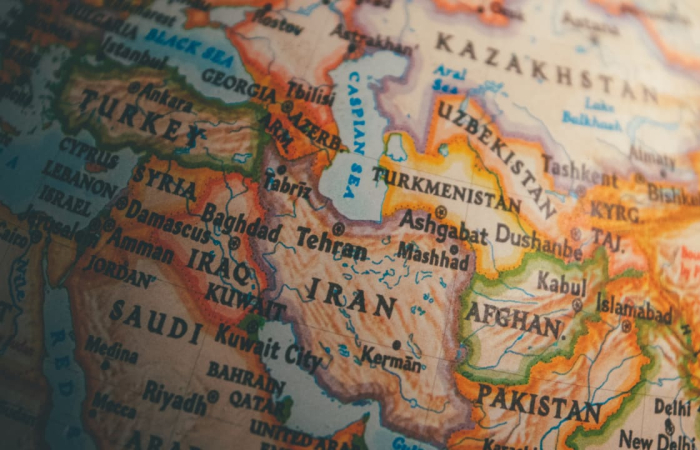
Yesterday on Thursday (10 August), Armenia and Iran signed an agreement to extend an energy swap deal for another for years and increase its volumes. Armenian Minister of Territorial Administration and Infrastructure Gnel Sanosian said that the extension of the agreement is "one of the best manifestations of Armenian-Iranian friendly relations", adding that "the extension of the agreement is a profitable deal for both countries."
Editor's choice
News
Poland to station 10,000 troops on border with Belarus amid Wagner concern

Poland to station 10,000 troops on border with Belarus amid Wagner concern

Poland has announced on Thursday (10 August) that it will station some 10,000 troops on its eastern border with Belarus. The decision comes after the Polish Prime Minister Mateusz Morawiecki said on 29 July that Wagner Group mercenaries could infiltrate Poland from Belarus, where they are currently stationed. The Polish Defense Minister Mariusz Blaszczak said that the 10,000 soldiers will be moved to the country's border with Belarus "to scare away the aggressor so that it does not dare attack us", adding "we have to be ready for various scenarios, we do not exclude anything".
Editor's choice
News
Heaviest fighting in Sudan since the start of civil war reported on Tuesday

Heaviest fighting in Sudan since the start of civil war reported on Tuesday

13 civilians have been killed on Tuesday (8 August) in what is being reported as the heaviest fighting in Sudan since the start of a civil war nearly four months ago. Arab News reports that the Sudanese army launched airstrikes and heavy artillery salvos to try to take a bridge across the Nile used by the rival paramilitary Rapid Support Forces (RSF) to bring reinforcements and weapons from Omdurman to Bahri and Khartoum, the other two cities that comprise the capital.

Focus on Central Asia

Editor's choice
Analysis
Kazakhstan looks back at a difficult 2022, determined to pursue change and reform in 2023

Kazakhstan looks back at a difficult 2022, determined to pursue change and reform in 2023

For the Central Asian republic of Kazakhstan, this year has probably been the most difficult one since its independence in 1991. Yet the country has emerged from it stronger. The process of reform initiated by President Kassym Jomart Tokayev appears to be gathering momentum, despite resistance from parts of the ruling elite still associated with the country’s first president Nursultan Nazarbayev. On Thursday, 29 December, Tokayev addressed the Kazakh Senate in the capital, Astana, where he summed up the year’s results. “This year, the country has been through a lot, but we managed to overcome all difficulties,” said the President. Tokayev paid particular attention to preserving stability and security, and paving the way for the dynamic development of the state is a priority for Kazakhstan. The reforms in all spheres will be continued into the following year. In early January Kazakhstan faced an unprecedented upheaval, initially triggered by price rises, but which soon got hijacked by elements close to the previous president, Nursultan Nazarbayev, who were unhappy with the reforms being implemented, and most of all with the clampdown on corruption which had started to affect them. At this point Nazarbayev still held control over several leverages of power, including as Head of the Security Council and as President of the ruling party. The disturbances were contained but at considerable human and material costs.
Editor's choice
Monday Commentary
Monday Commentary: Why Central Asia matters

Monday Commentary: Why Central Asia matters

Very often, Central Asia is referred to as Russia’s back yard, even though today the region feels more like China’s front garden. But whilst the two “inseparable” friends, compete for influence and resources, the five Central Asian countries have set on a course to integrate themselves in global processes, break out of their geographic - and more importantly their geo-political constraints - and deliver better for their people. In this week's Monday Commentary on commonspace.eu, Dennis Sammut says that the Central Asian states have been reaching out to the EU and the US, whilst domestically some of them have embarked on deep reforms considered all but unimaginable until recently. The visit of European Council president Charles Michel to the region on 27-28 October marked a high point in a new phase in the relationship between the EU and Central Asia. In Kazakhstan, Michel not only met the Kazakh leadership, but also held a summit with the five Central Asian leaders in Astana, before travelling to Uzbekistan. For both the Central Asians and for the EU this is a watershed moment, and the beginning of a long journey. Europe’s approach to Central Asia needs to be respectful, both to the five countries themselves, and to their existing partners. Arrogance, even of the intellectual kind will simply backfire. But respect does not mean meekness. As a heavyweight in international relations, even if for the moment its economic weight dwarfs its political weight, the EU needs to approach Central Asia neither as a supplicant, nor as a benefactor, but simply as a reliable partner. Furthermore, this partnership needs to be diverse, multi-tiered and nuanced. It must take in relations with citizens, where Europe has much to offer both in terms of being a model, but also in terms of what it can share in areas such as education, innovation, youth welfare, women’s rights and diversity.

Voices - Opinion and analysis

Editor's choice
Opinion
Opinion: An eventful year has left many confused on the prospect of Armenia-Azerbaijan peace, and more hard work is needed

Opinion: An eventful year has left many confused on the prospect of Armenia-Azerbaijan peace, and more hard work is needed

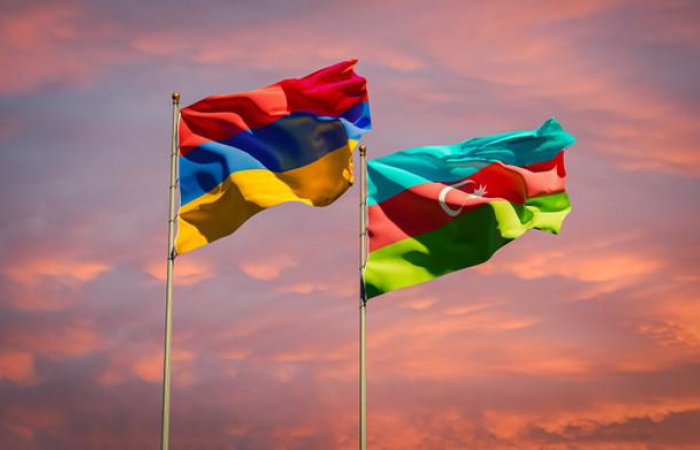
In April 2022 a group of Armenian and Azerbaijani experts published their report “The South Caucasus from war to peace: 30 measures between now and 2030” in which they outlined their vision for the process of building trust and confidence between Armenia and Azerbaijan and between Armenians and Azerbaijanis, in order to contribute to lasting peace in the South Caucasus. One year later, in this joint paper, Ahmad Alili and Benyamin Poghosyan, co-rapporteurs of the group, reflect on events and developments over the eventful past twelve months. They say peace remains within reach, but more hard work is needed.
Editor's choice
News
Landmine Free South Caucasus: message on the occasion of the International Day for Mine Awareness

Landmine Free South Caucasus: message on the occasion of the International Day for Mine Awareness

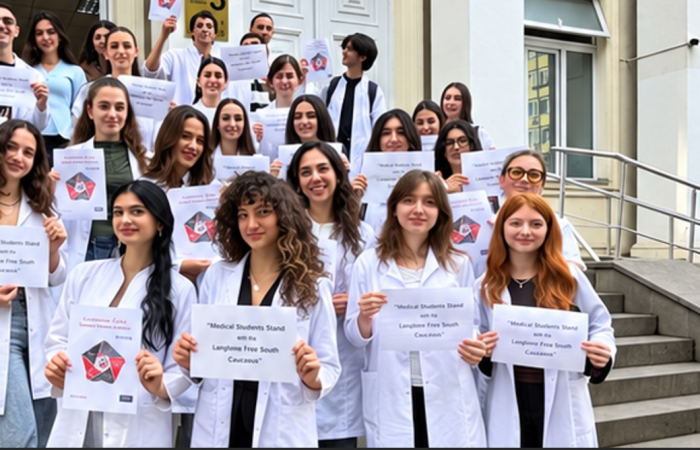
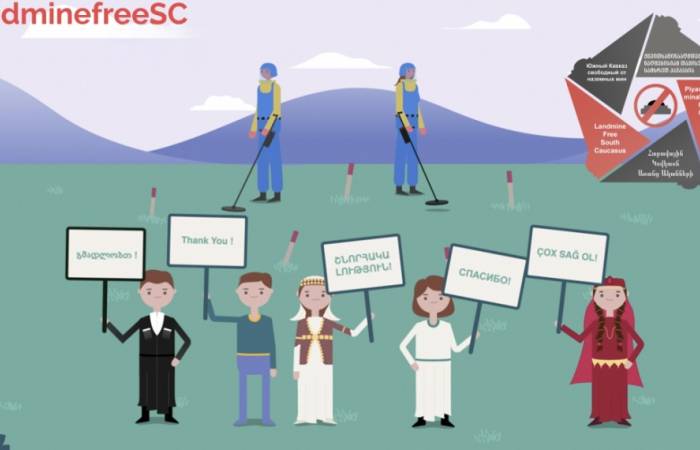
4 April is marked each year as the International Day for Mine Awareness and Assistance in Mine Action by the United Nations and countries, organisations and communities across the world. This year, the theme is “Mine action cannot wait”. This is a particularly poignant theme in the South Caucasus where the problem of landmines is acute and the region is now identified as being amongst the ones with the highest contamination of landmines in the world. The campaign Landmine Free South Caucasus joins the international community to mark this year’s International Day for Mine Awareness and Assistance in Mine Action. In particular, we raise our voice with that of the rest of the international community in saying that “Mine action cannot wait”. Since 2018, the campaign Landmine Free South Caucasus has worked with partners in Armenia, Azerbaijan and Georgia to raise awareness on the issue of landmines across the region, to highlight the good work being done by deminers at considerable personal risk, and to focus on the impact of landmines on victims and their communities.
Editor's choice
Event
Armenian and Azerbaijani experts discuss process of confidence-building with EU officials in Brussels

Armenian and Azerbaijani experts discuss process of confidence-building with EU officials in Brussels

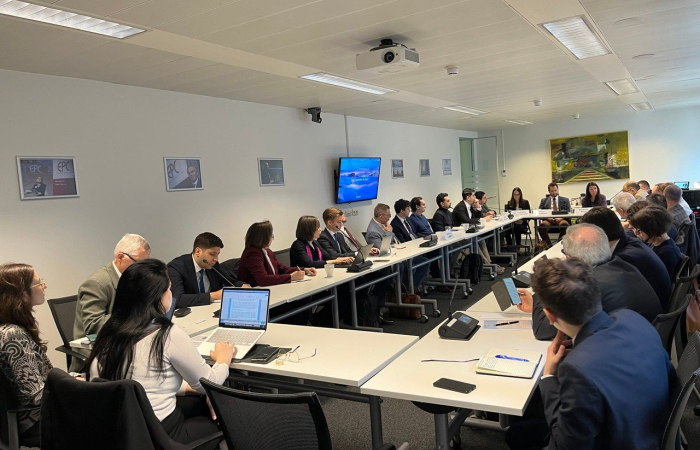
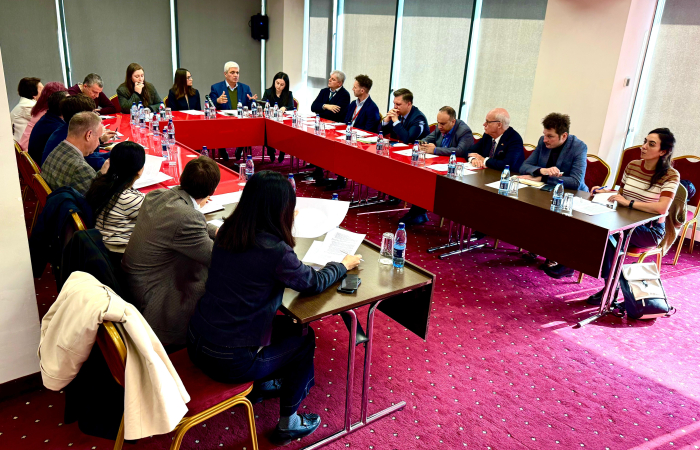
The Joint Armenian-Azerbaijani Liaison Group on Confidence-building measures in support of lasting peace in the South Caucasus (JOLIG) met in Brussels on 1 – 2 February 2023. Armenian and Azerbaijani experts that form part of the Group discussed recent developments in the South Caucasus, developments in the process of normalising Armenia-Azerbaijan relations and establishing peace in the region, and how confidence-building measures can help overcome present and future problems and challenges. On 1 February, the Group had a substantive meeting with the European Union Special Representative for the South Caucasus, Toivo Klaar, who reiterated the continued and ongoing commitment of the European Union in support of peace between Armenia and Azerbaijan. The group asked EUSR Toivo Klaar to convey their appreciation to European Council President Charles Michel for his continuing efforts to mediate between the two sides. The Group expressed its willingness to contribute with tangible actions and initiatives towards on-going European Union peace efforts in the region.
Editor's choice
Monday Commentary
The free market in foreign policy on display as Xi meets the Arabs

The free market in foreign policy on display as Xi meets the Arabs

It appears that the principles of the free market now dominate the international system, not only in areas of trade, but also in defence, security and foreign policy, writes Dennis Sammut in today's Monday Commentary on commonspace.eu. Bigger countries are wooing smaller countries, unashamedly displaying their goods, and dismissing those of others. China’s president Xi was in Saudi Arabia last week, to seal China’s new partnership with the Arabs. This week, it will Joe Biden’s turn to host African leaders at the White House. "For the moment small countries are making the most out of this new free market atmosphere in the international system. But they must also keep in mind that, as in the market, demand sometimes slumps abruptly. It is at this point countries will not need just customers, but also friends."
Editor's choice
Event
Joint Armenian-Azerbaijani expert group on confidence-building measures agrees to intensify efforts

Joint Armenian-Azerbaijani expert group on confidence-building measures agrees to intensify efforts

The Joint Armenian-Azerbaijani Liaison Group on Confidence-building measures in support of lasting peace in the South Caucasus (JOLIG), made up of 11 Armenian and Azerbaijani independent experts and opinion-shapers, met in Kachreti, Georgia on 27 and 28 June 2022 to review its activity, and agree on a strategy as to how its work on confidence-building measures can contribute to efforts aimed at bringing lasting peace in the South Caucasus. Participants discussed ongoing efforts aimed at establishing the right conditions for the normalisation of relations between Armenia and Azerbaijan being undertaken by the governments of the two countries with the support of international players. They called on the leadership of the two countries to remain focused and committed to this mission. The group emphasised its belief that confidence-building measures are necessary to be implemented in the current state of Armenia-Azerbaijan relations, and were indispensable as the governments of Armenia and Azerbaijan seek peaceful solutions to long lasting disputes and controversies between them.

Focus on Yemen

Focus on the South Caucasus

Editor's choice
Opinion
Opinion: Russian obstacles to the peace process are contributing to renewed tensions in the region

Opinion: Russian obstacles to the peace process are contributing to renewed tensions in the region

Statements made by Russian president Putin and foreign minister Lavrov since October have made Armenian prime minister Nikol Pashinyan a target of nationalist groups in Armenia and its diaspora. The result has been Armenian procrastination in the pursuit of the peace process. These Russian attempts to derail the peace process led by the EU are adding to increased tensions in the region. In this op-ed for commonspace.eu, Vasif Huseynov says that "Baku is not planning to engage in extended negotiations with Armenia and its external patrons with no clear prospects for a successful conclusion. Azerbaijan can now more confidently counter the threats to its territorial integrity and its efforts to reintegrate the Karabakh region."
Editor's choice
Interview
Stepan Grigoryan: "The current Armenian government really wants peace"

Stepan Grigoryan: "The current Armenian government really wants peace"

Dr Stepan Grigoryan, the Chairman of the Board of the Analytical Centre on Globalization and Regional Cooperation, is a respected analyst and opinion-shaper in Yerevan who has over many years been a moderate voice in what has often been a toxic inter-Armenian debate on the prospects for peace between Armenia and Azerbaijan and in the wider region. He spoke to commonspace.eu in Tbilisi on 22 October 2022 about the current state of the Armenia-Azerbaijan peace process, recent events surrounding it, and prospects for the future. Speaking about the current political situation in Armenia Stepan Grigoryan said "We have a strong civil society, active NGOs and active experts, and they act like pillars of independence in Armenia. And this civil society also criticises Nikol Pashinyan, but they are trying to help him. Yes, I myself am sometimes not happy with what Nikol Pashinyan is doing, but I try to help him with my advice, with my publications, with my speeches. So in Armenia one should not only look at the political field - which is polarised - but civil society too. We shouldn’t think that we have an ideal government, they have made many mistakes, but they really want peace."
LINKS Europe

commonspace.eu  is an activity of LINKS Europe, an independent foundation based in The Hague, The Netherlands. We focus on issues related to European peace and security, Europe's neighbouring regions, including Eastern Europe, the Caucasus and Central Asia; North Africa and the Sahel, the Horn of Africa and the Arabian Peninsula. LINKS Europe is committed to contribute to a better future by increasing understanding of complex foreign policy issues, by promoting dialogue and confidence-building as tools for helping to resolve conflict, and by engaging citizens in the process of building peace and security on the basis of solidarity and mutual respect. Through commonspace.eu we aim to provide insights and analysis on different topics in our area of interest, and a platform for diverse opinions.

Read or download the 2022 Annual Review of LINKS Europe work, and our work programme for 2023 here