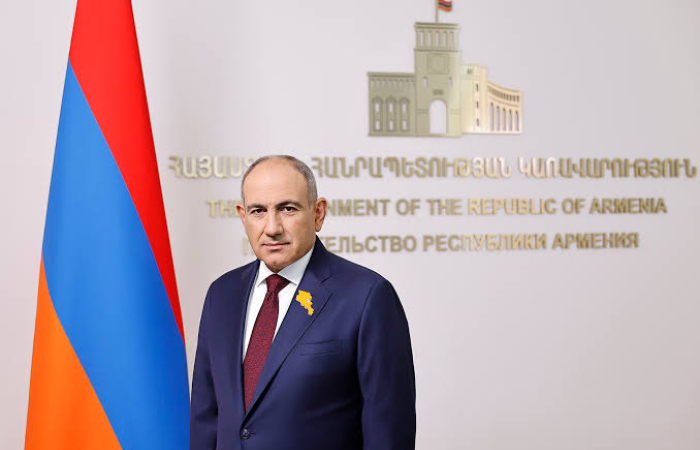
This commentary was prepared by Mr Ahmad Alili for the ninth issue of the Armenia Election Monitor 2026 newsletter.
The upcoming parliamentary elections in Armenia are no longer being discussed only within Armenia itself. Today, the Armenian vote is being closely watched in Azerbaijan, Russia, Türkiye, across Europe, and in the United States. This is not simply another domestic electoral cycle in a small South Caucasus country. It is an event capable of influencing the future geopolitical architecture of the entire region. At the same time, its significance should neither be exaggerated nor underestimated.
For the first time in Armenia’s modern political history, an incumbent leader is approaching elections with an agenda centred on peace and normalisation rather than conflict management or historical mobilisation. This distinction is important. The 2021 elections were not about peace. In the aftermath of the 2020 Karabakh war, Prime Minister Nikol Pashinyan was effectively seeking a mandate connected to the preservation of the Karabakh issue and to a broader post-war political framework shaped by remedial secession narratives. The current political moment is fundamentally different.
What is now emerging is a debate not only about political leadership, but about Armenia’s entire geopolitical worldview and strategic self-perception.
For decades, the dominant Armenian geopolitical narrative rested on a relatively straightforward idea: Armenia is surrounded by hostile powers — primarily Azerbaijan and Türkiye — and therefore can survive only through external protection and asymmetric geopolitical balancing. Within this framework, the military presence of outside actors, particularly Russia, was presented not as a limitation on sovereignty but as the principal guarantee of survival.
This worldview was promoted not only domestically but internationally as well. One of the most recognisable formulations associated with former President Serzh Sargsyan was the portrayal of Armenia as “the last castle of Christendom in the East.” The narrative was designed largely for European and American audiences and sought to embed Armenia into a broader civilisational and emotional framework of geopolitical defence.
Over time, however, reality increasingly challenged this model. The very existence of close Armenia–Iran relations demonstrated that the simplistic dichotomy of a “Christian fortress surrounded by hostile Muslim powers” never fully reflected the complexity of regional politics. More importantly, the 2020 Karabakh war exposed the structural limits of the old geopolitical formula itself. The disappearance of the Karabakh issue in its previous form gradually undermined the logic upon which Armenia’s post-Soviet security architecture had long rested.
This is why one increasingly hears a phrase among parts of Armenian society and expert circles: “Why would we need Russia if there is no more Karabakh?” Behind this seemingly simple question lies a profound strategic transformation. If the unresolved Karabakh conflict historically served as the main justification for external military protection and geopolitical dependency, then its disappearance inevitably raises questions about the future purpose of those arrangements.
At the same time, these debates are unfolding within a deeply traumatised society still shaped by the psychological consequences of war, displacement, defeat, political polarisation, and prolonged insecurity. Public fears remain exceptionally high, and this atmosphere has inevitably become part of the electoral campaign itself. Competing political forces increasingly rely on the language of existential threat for Armenia. One side warns that losing power would inevitably lead to a new war with Azerbaijan and the collapse of Armenian security. The other argues that electoral defeat would expose Armenia to pressure, destabilisation, or confrontation with Russia. In this sense, both camps are actively securitising the elections and mobilising the traumas accumulated over recent years. The campaign therefore reflects not only a struggle over Armenia’s future direction, but also a competition over which fear Armenian society considers more existential.
As a result, the elections are gradually becoming a contest between two broader visions of Armenian statehood.
The first vision is largely rooted in the traditional security paradigm: Armenia remains a besieged state surrounded by enemies and therefore requires permanent external protection and geopolitical patronage in order to survive.
The second vision proposes a fundamentally different trajectory. It argues that Armenia should evolve into a more autonomous and genuinely sovereign regional actor that accepts the geopolitical realities of its neighbourhood and builds pragmatic relations with surrounding states. Within this framework, geography is interpreted not as an existential trap but as a potential foundation for coexistence, trade, connectivity, and regional integration. According to this logic, the development of stable neighbourly relations would gradually reduce Armenia’s dependence on external military guardianship.
These two visions increasingly place the European Union, the United States, Türkiye, and Azerbaijan within one broader geopolitical framework that favours the transformation of Armenia into a more autonomous, regionally integrated, and post-conflict state. At the same time, Russia and, to a certain extent, Iran appear more comfortable with the preservation of the older Armenian security model, in which Armenia’s sense of vulnerability and isolation created an internal political and psychological demand for external security patronage. Within that framework, the continued perception of existential threat legitimised the long-term military, political, and economic presence of outside actors in Armenia.
This transformation is precisely why the Armenian elections are being discussed far beyond Armenia itself. The issue is not merely who governs Yerevan. The broader question is whether Armenia will continue functioning primarily as a heavily securitised geopolitical outpost dependent on outside powers, or whether it will attempt to reposition itself as an integrated participant within the South Caucasus regional system.
The growing involvement of external actors in the electoral environment further reinforces this perception. Russia, European actors, and the United States are no longer passive observers of Armenian domestic politics. Many Armenian opposition figures maintain deep political, economic, or personal ties with Russia, including, in some cases, Russian citizenship itself. Simultaneously, European and American political engagement with Armenia has become increasingly visible through high-level visits, symbolic gestures of support, and expanding diplomatic involvement. Armenia has therefore become part of a broader geopolitical competition among external centres of influence, each attempting — directly or indirectly — to shape the strategic environment in which Armenian political choices are made.
The implications extend well beyond Armenian domestic politics. If the second vision gradually gains ground, it could open the possibility for a qualitatively different South Caucasus. Regional integration projects might become politically sustainable rather than remaining abstract geopolitical concepts. Economic corridors, transport connectivity, energy cooperation, and trade routes would no longer exist merely as instruments of geopolitical competition but as shared interests contributing to long-term regional stability.
More fundamentally, the Armenian debate increasingly concerns the future logic of the South Caucasus itself. Historically, the region became vulnerable precisely because its states often remained isolated from one another while integrating into competing external geopolitical systems. Under such conditions, South Caucasus nations could easily be instrumentalised against each other by larger powers pursuing their own strategic interests. From this perspective, regional integration is not simply an economic or infrastructural ambition; it increasingly appears as a strategic necessity. A more interconnected South Caucasus reduces the space for external manipulation, lowers the incentives for perpetual confrontation, and creates shared interests that strengthen the sovereignty of all regional states simultaneously.
Conversely, the continued fragmentation of the region risks preserving a geopolitical environment defined by dependency, rivalry, militarisation, and recurring external competition. In this sense, the elections concern not only Armenia’s future, but also the future coherence of the South Caucasus as a geopolitical space.
For this reason, the Armenian elections represent neither a civilisational turning point nor a routine domestic political procedure. They are something more nuanced, yet potentially more consequential: a strategic referendum on how Armenia understands sovereignty, security, and its place in the region after the end of the Karabakh era. And Azerbaijan closely watches.
Source: Mr Ahmad Alili is the Director of Caucasus Policy Analysis Centre, an independent think tank based in Baku, Azerbaijan. His LinkedIn can be found here.