Theme

Conflict and Peace

Stories related to violent conflicts, diplomatic tensions, and conflict prevention, mediation and resolution.

Editor's choice
News
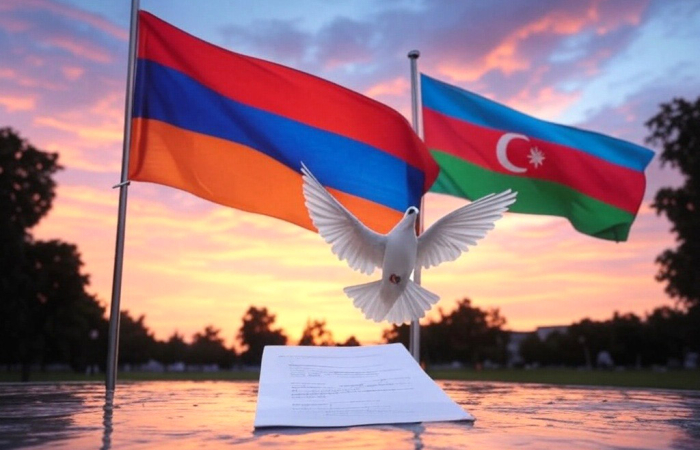
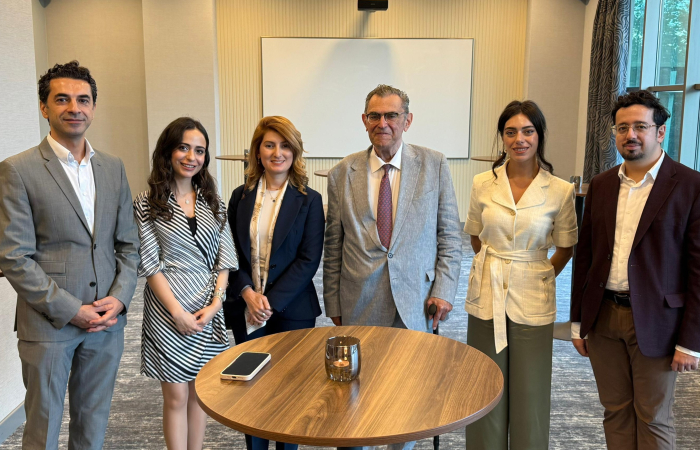
New Armenian-Azerbaijani Dialogue: 42 Armenians and Azerbaijanis set out vision until 2040 in four landmark reports

New Armenian-Azerbaijani Dialogue: 42 Armenians and Azerbaijanis set out vision until 2040 in four landmark reports

The Thematic Groups for a new Armenian-Azerbaijani Dialogue have produced four reports which set out a vision for relations between Armenia and Azerbaijan, and between Armenians and Azerbaijanis, over the next 15 years. The reports cover four key areas: (1) Peace and Security; (2) Regional Connectivity; (3) Good Governance; and (4) Environment. 42 Armenians and Azerbaijanis were directly involved in preparing the reports as part of the Thematic Groups. Another thirty Armenians and Azerbaijanis contributed to the process. The Thematic Groups were an initiative of LINKS Europe within the framework of EU4Peace 3, a programme supported by the European Union. An ACTION COMMITTEE FOR A NEW ARMENIAN AZERBAIJANI DIALOGUE has now been established, made up of the Chair and Deputy Chairs of the four groups that produced and agreed on the reports. The members of the Action Committee are: Murad Muradov, Leonid Nersisian, Narek Minasyan, Fidan Namazova, Sargis Kharatyunyan, Nigar Gurbanli, Aghavni Kharatyunyan, and Ramazan Samadov.  The first co-chairs of the Action Committee, for the 1st eight month semester are Murad Muradov and Leonid Nersisian. The Action Committee is responsible for the dissemination of the four reports, their eventual updating, and for contributing to the Armenian-Azerbaijani Dialogue and Peace and regional co-operation. LINKS Europe has appointed a Special Advisor to the Action Committee and will provide the Secretariat. The committee will work until December 2027. (click to title to read more or to download the reports)

Filter archive

Publication date
Editor's choice
Opinion
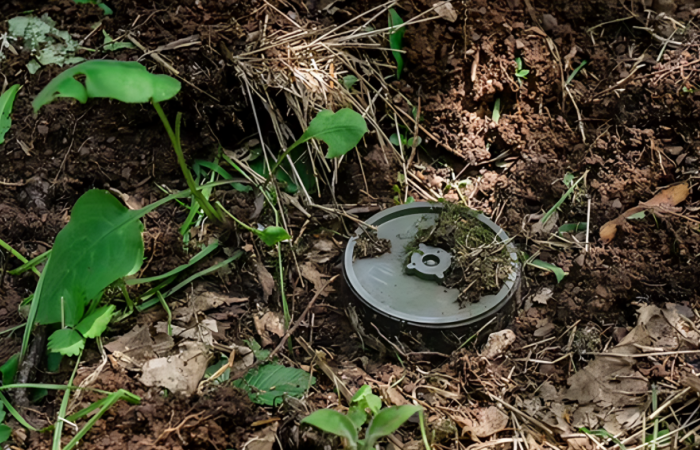
Opinion: Clearing landmines in the South Caucasus is key to peace and regional cooperation

Opinion: Clearing landmines in the South Caucasus is key to peace and regional cooperation

On 1 September 2025, LINKS Europe launched the regional campaign 'Landmine Free South Caucasus 2025'.While the world's attention is focused on new conflicts and crises, and some countries have withdrawn from the Ottawa Treaty due to heightened security concerns, the South Caucasus remains trapped by the deadly remnants of wars, some fought decades ago, others more recent. Although recent months have seen breakthroughs in relations between Armenia and Azerbaijan, suggesting that sustainable peace is within reach, landmines and unexploded ordnance (UXO) continue to pose a daily threat in the region and remain a contentious issue in relations. They claim innocent victims, hinder economic development, and cause ecological damage.
Editor's choice
News
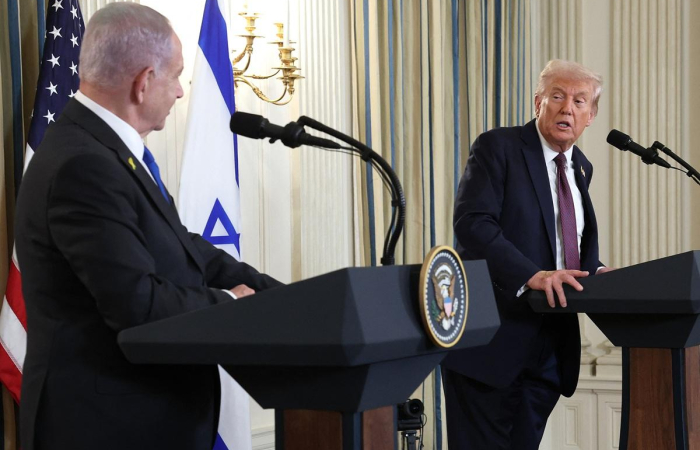
Trump and Netanyahu agree on plan to end the Gaza war and release hostages

Trump and Netanyahu agree on plan to end the Gaza war and release hostages

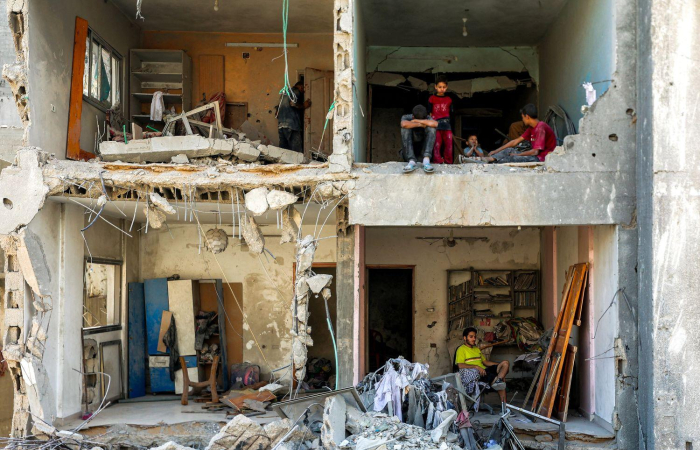
US President  Donald Trump on Monday 29 September laid out a 20-point proposal  supported by Israeli Prime Minister Benjamin Netanyahu that would end the war in Gaza and free remaining hostages, leaning heavily into conditions that Hamas has previously rejected. Hamas is reviewing the plan while the Palestinian government in the occupied West Bank said it welcomed Trump’s plan to end the war and pledged to implement the reforms called for in his plan. Trump’s plan calls for establishing a temporary governing committee that would be headed by Trump and include former British Prime Minister Tony Blair. A Palestinian committee of technocrats would oversee civilian affairs, with power handed over later to a reformed Palestinian Authority. 
Editor's choice
News
Azerbaijani members of thematic groups for dialogue with Armenians briefed, as work on five final reports continues in earnest

Azerbaijani members of thematic groups for dialogue with Armenians briefed, as work on five final reports continues in earnest

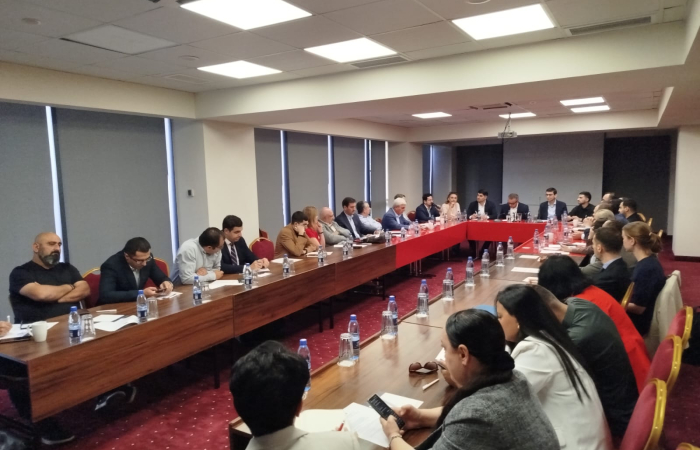
On Friday, (26 September) there was another amazing event in the process of Armenia-Azerbaijan dialogue, this time in Baku. Around twenty five Azerbaijanis involved in five thematic groups established by LINKS Europe earlier this year were briefed by Murad Muradov, co-Chair of the thematic group on Peace and Security; Liman Namazova, Chair of the thematic group on Environment; Lala Jumayeva, Chair of the thematic group on gender and diversity; Nigar Gurbanli, Deputy Chair of the thematic group on regional connectivity; and Ramazan Samadov, Deputy Chair of the thematic group on Governance, on the work done so-far. Murad Muradov spoke about his visit to Yerevan earlier in the week, and his speech to Armenian thematic group members. He said the momentum for peace, dialogue and regional co-operation was stronger than ever before. Ambassadors and other representatives of EU member states and others, as well as representatives of the EU Delegation, the EUSR office and other international institutions were in attendance. In a short speech to the gathering, LINKS Europe Director, Dr Dennis Sammut, said that enemies of peace remained active in both Armenia and Azerbaijan. Many had been warmongers for years, and it was difficult for them to change. However it was important to engage them, and have an open and honest discussion with them. The Azerbaijani members of the thematic groups are eager to meet their Armenian counterparts in person in Tbilisi 27-28 October, when they hope to finish the work on the five reports.
Editor's choice
Opinion
Five Years Later, Armenians and Azerbaijanis Need to See Each Other Differently

Five Years Later, Armenians and Azerbaijanis Need to See Each Other Differently

This Saturday marks the fifth anniversary of the Second Karabakh War. To be honest, and personally speaking, it had always seemed the continuation of the first waged between Armenia and Azerbaijan in the early 1990s. After all, in the three decades between both, the conflict had nearly always been described as ‘frozen’ rather than resolved – at least until it wasn’t.
Editor's choice
News
Thirty Armenian members of the five Armenian-Azerbaijani Thematic Groups meet in Yerevan

Thirty Armenian members of the five Armenian-Azerbaijani Thematic Groups meet in Yerevan

Yesterday (23 September) around thirty Armenians involved in the five Armenian-Azerbaijani Thematic Groups gathered in Yerevan to be briefed by Leonid Narsisian, co-Chair of the thematic group on Peace and Security; Narek Minasyan, Chair of the thematic group on regional connectivity; Sargis Harutyunyan, Chair of the thematic group on Governance; Aghavni Harutyunyan, Deputy Chair of the thematic group on Environment; and Andranik Shirinyan, Deputy Chair of the thematic group on gender and diversity. The Thematic Groups are a LINKS Europe initiative aimed at promoting a new style of Armenia-Azerbaijan dialogue, fit for the new reality. They will present their five reports in mid-November. We were delighted to welcome to the meeting in Yerevan, Murad Muradov, Azerbaijani co-Chair of the thematic group on peace and security who also spoke. Others to address the meeting included Erik Jessen, Political Officer at the EU Delegation in Armenia, Stepan Grigoryan, Senior Member of the Armenia-Azerbaijan Expert Strategic Platform (under the auspices of LINKS Europe), and Dennis Sammut, Director and George Simonishvili, South Caucasus coordinator, of LINKS Europe. It was a very good and engaging meeting, also attended by representatives of various embassies, including HE Marieke Monroy-Winter, the Ambassador of The Netherlands. A similar meeting with Azerbaijani members will take place in Baku on Friday (26 September). The Armenian and Azerbaijani members have been meeting on line since April. On 27 October they will meet together in Tbilisi to finalise their work.
Editor's choice
News
US President Trump mocks UN on peace and migration and attacks European allies

US President Trump mocks UN on peace and migration and attacks European allies

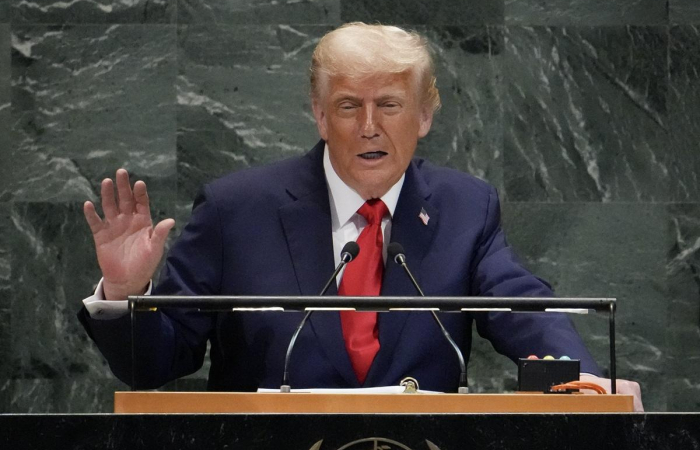
US President Donald Trump relentlessly mocked the United Nations on Tuesday23 September  in his first address since his White House comeback, blasting it for failing to bring peace and claiming the world body encourages illegal migration. In his return to the UN General Assembly podium, Trump accused the UN of fostering an "assault" through migration on Western countries that he said were "going to hell". He likewise used the major forum to denounce efforts to reduce global warming, calling climate change concerns "the greatest con job ever perpetrated on the world". Trump also lashed out at European allies, as well as China and India, for failing to stop oil purchases from Russia, while remaining relatively restrained on Moscow even as he said Washington was ready to impose unspecified sanctions.
Editor's choice
News
France recognises Palestinian state at high profile United Nations summit

France recognises Palestinian state at high profile United Nations summit

As Gaza continues to burn, France recognised Palestinian statehood on Monday 22 September at the start of a summit at the United Nations aimed at galvanizing support for a two-state solution to the Middle East conflict. More nations are following, in defiance of Israel and the United States. French President Emmanuel Macron’s announcement in the U.N. General Assembly hall received loud applause from the more than 140 leaders in attendance. The Palestinian delegation, including its U.N. ambassador, Riyad Mansour, could be seen standing and applauding as the declaration was made. Palestinian president Mahmud Abbas was denied a visa by the US authorities forcing him to attend only virtually.
Editor's choice
News
NATO PA Rose-Roth Seminar in Yerevan opens new horizons in public diplomacy

NATO PA Rose-Roth Seminar in Yerevan opens new horizons in public diplomacy

The 108th Rose Roth Seminar, organised by the NATO Parliamentary Assembly, is taking place in the Armenian Capital, Yerevan 22-23 September 2025. The Rose-Roth Seminar has not been held in Armenia since 2015, and the Armenian National Assembly put effort in ensuring the success of the event. Among the speakers at the opening session on Monday was Defence Minister, Suren Papikyan; Security Council Secretary, Armen Grigoryan; and Deputy Speaker of the Parliament, Ruben Rubenian. But the panel immediately following got a lot of attention because quite uniquely it included an Armenian, an Azerbaijani and a Turkish speaker. Chaired by the Director of LINKS Europe, Dennis Sammut, the panelists were Armine Margaryan, Murad Muradov; and Nigar Goksel. They made robust presentations, but were elegant and courteous in their demeanor. The panel was an expression of a new Armenia and a new South Caucasus. It also marked a new beginning in public diplomacy.
Editor's choice
News
UK, Canada, Australia and Portugal recognise Palestinian State; More EU countries are expected to follow in the next days

UK, Canada, Australia and Portugal recognise Palestinian State; More EU countries are expected to follow in the next days

The United Kingdom, Canada, Australia and Portugal, announced on Sunday (21 September) that they were formally recognising the State of Palestine. British prime minister, Sir Keir Starmer, announced the UK's recognition of a Palestinian state, in what represents a significant change in government policy. In a video statement on X, the prime minister said: "In the face of the growing horror in the Middle East we are acting to keep alive the possibility of peace and a two-state solution." Australia, Canada and Portugal also announced formal recognition of the state of Palestine, with France and other EU states expected to follow. Responding on Sunday, Israeli Prime Minister Benjamin Netanyahu said a Palestinian state "will not happen".