Netanyahu considering seizing all of Gaza strip

Israeli Prime Minister Benjamin Netanyahu is contemplating a complete military takeover of Gaza for the first time in two decades, media reported, and was to meet senior security officials on Tuesday 5 August to finalize a new strategy in the 22-month war. It was unclear, however, whether Netanyahu was foreseeing a prolonged occupation or a short-term operation aimed at dismantling Hamas and freeing Israeli hostages. Mediation between Israel and Palestinian militant group Hamas has collapsed despite intense international pressure for a ceasefire to ease hunger and appalling conditions in the besieged Palestinian enclave.

Eight more people died of starvation or malnutrition between Monday and Tuesday, Gaza’s health ministry said, while another 79 died in the latest Israeli fire. Netanyahu was to meet Defense Minister Israel Katz and military Chief of Staff Eyal Zamir to decide on a strategy to take to cabinet later this week, an Israeli official told Reuters. Strategic Affairs Minister Rob Dermer, a confidant of Netanyahu, will also be present.

Israel’s Channel 12, citing an official from Netanyahu’s office, said the prime minister was leaning toward taking control of the entire territory. That would reverse a 2005 decision to pull settlers and military out of Gaza while retaining control over its borders, a move right-wing parties blame for Hamas gaining power there.

A Palestinian official said it may be a tactic to pressure Hamas into concessions, while the Palestinian Foreign Ministry urged foreign nations to take heed of the reports. “The ministry urges countries and the international community to treat these leaks with utmost seriousness and to intervene urgently to prevent their implementation, whether these leaks are meant to exert pressure, test international reactions, or are genuine and serious,” it said.

Israel’s coalition government, the most right-wing and religiously conservative in its history, includes far-right politicians who advocate for the annexation of both Gaza and the West Bank and encourage Palestinians to leave their homeland.

Nearly two years of fighting in Gaza has strained the military, which has a small standing army and has had to repeatedly mobilise reservists. It has throughout the war pushed back against the idea of Israel fully occupying Gaza and establishing military rule.

In a sign of differences between some members of Israel’s ruling coalition and the military, far-right National Security Minister Itamar Ben Gvir on X challenged military head Zamir to state he would comply with government directives even if a decision was made to take all of Gaza.

Foreign Minister Gideon Saar then said the military chief must give his professional opinion, while Defense Minister Katz weighed in to say the military would professionally implement whatever policy the government set. “Defeating Hamas in Gaza, while creating the conditions for the return of the hostages, are the central goals of the war in Gaza, and we must take all necessary actions to achieve them,” Katz said.

The war was triggered when Hamas-led militants on October 7, 2023, attacked Israel, killing around 1,200 people, mostly civilians, and capturing 251 hostages, taking them into Gaza. Israel’s military response has devastated the tiny, crowded enclave, killing more than 61,000 people, mostly civilians, according to Palestinian health authorities.

Israel’s campaign has forced nearly all of Gaza’s over 2 million people from their homes and caused what a global hunger monitor called last week an unfolding famine. Some 188 Palestinians, including 94 children, have died from hunger since the war began, according to Gaza authorities.

An Israeli security official, in a briefing to reporters, acknowledged there may be hunger in some parts of Gaza but rejected reports of famine or starvation. International anger at the suffering in Gaza has prompted several countries to recognize or announce their intention to recognize Palestine as an independent state.

On Tuesday 5 August, Israeli tanks pushed into central Gaza but it was not clear if the move was part of a larger ground offensive. Palestinians living in the last quarter of territory where Israel has not yet taken military control, via ground incursions or orders for civilians to leave, said any new push would be catastrophic. “If the tanks pushed through, where would we go, into the sea? This will be like a death sentence to the entire population,” said Abu Jehad, a Gaza wood merchant, quoted by Reuters.

The failed mediation in Doha had aimed to clinch agreements on a US-backed proposal for a 60-day truce, during which aid would be flown into Gaza and half of the hostages Hamas is holding would be freed in exchange for Palestinian prisoners in Israel. 
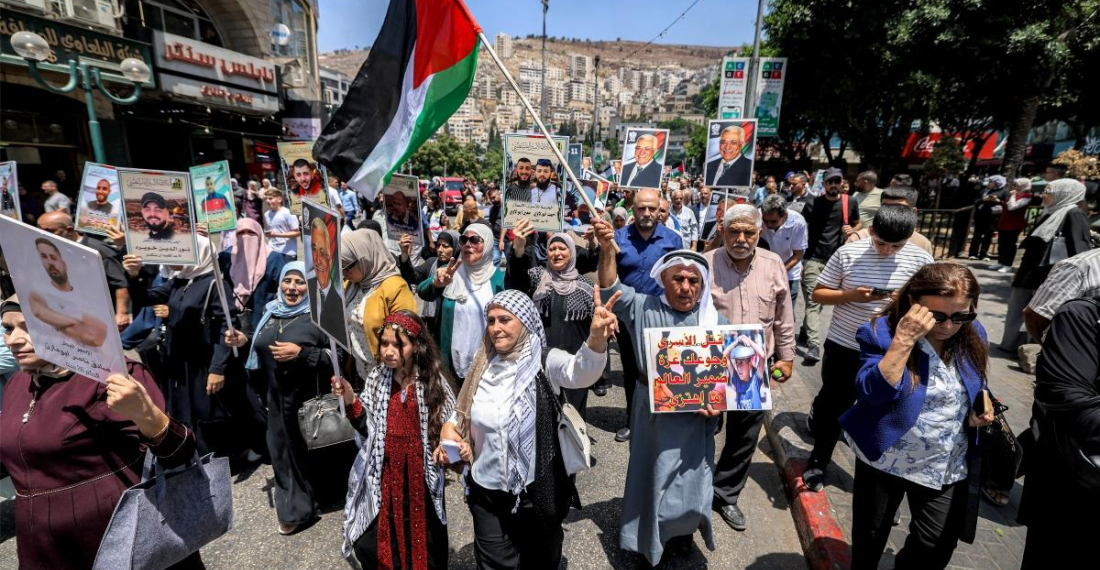
Source: commonspace.eu with Reuters, Arab News, Channel 12 and agencies. Photo: Demonstrators march in a protest in solidarity with the people of the Gaza Strip and Palestinian detainees in protests Sunday 3 August/JAAFAR ASHTIYEH / AFP

Related articles

Editor's choice
News
UAE says it will withdraw from Yemen, but division emerges in Yemeni presidential council

UAE says it will withdraw from Yemen, but division emerges in Yemeni presidential council

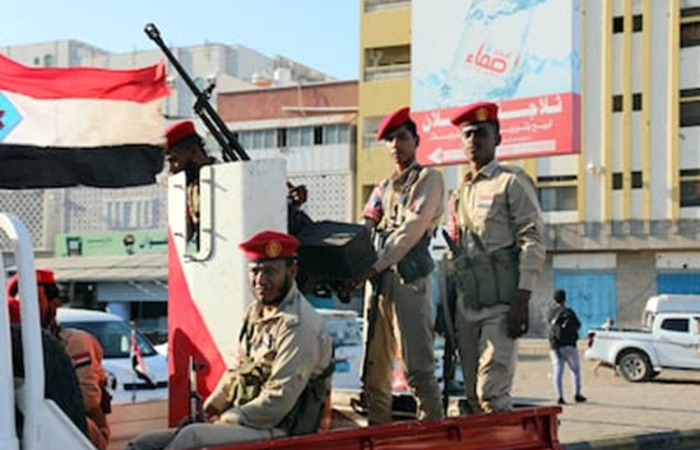
In a move seen as an attempt to de-escalate a crises with Saudi Arabia, the United Arab Emirates, on Tuesday (30th December) announced that it was heeding a call to withdraw its troops from Southern Yemen. UAE says that its presence included counter-terrorism teams that were crucial in fighting against Islamist groups. UAE sources said that parts of Yemen not controlled by the Houthis have had Al Qaeda in the Arab Peninsula (AQAP) operatives using the territory to launch attacks on Europe, the US and Middle East. UAE teams have co-ordinated with American and British special forces and intelligence. The sources added that Emirati forces and their Yemeni allies also helped reverse Houthi gains in the south. including the liberation of Aden port. The small UAE contingent has remained in place since the UAE withdrew most of its military personnel in 2019. The leading English-language newspaper in Abu Dhabi, The National, said that the main UAE force was based at Riyan Mukalla International Airport, with access to fixed-wing aircraft and helicopters, but also operated smaller contingents in the port town Balhaf and Shabwa. "It is understood it also flew a number of drones from the airbase that were able to track terrorist movements, pass information back to its allies and assisted special forces' missions." Meanwhile a division has emerged in Yemen's presidential council after four members denounced what they called the 'unilateral decisions' by the chairman. Four of Yemen’s eight Presidential Leadership Council members on Tuesday denounced an announcement by the council’s chairman accusing him of breaching the governing agreement. Tension between Yemeni leaders has been rising for weeks, underscoring the fragility of the country's already fractured political landscape and further complicating efforts to confront the Iran-backed Houthi rebels. The latest rift took an unprecedented turn on Tuesday morning, marked by a Saudi-led coalition “limited operation” striking combat vehicles Riyadh linked to the Southern Transitional Council, which has three members in the PLC. The PLC Chairman, Rashad al Alimi, on Tuesday said that he was seeking to cancel the joint defence agreement with the UAE. “What has been issued … constitutes a clear violation of the Declaration of the Transfer of Power [agreement], which explicitly stipulates that the Presidential Leadership Council is a collective body whose decisions are taken by consensus, or by majority when consensus is not possible,” the statement by the four members said. “It does not, under any circumstances, allow for unilateral decision-making on sovereign, military, or major political matters." The statement was signed by STC chief Aidarous Al Zubaidi, Faraj Al Bahsani, Tariq Saleh and Abu Zaraa al Muharrami. (click the picture to read the full article).

Popular

Editor's choice
News
UAE says it will withdraw from Yemen, but division emerges in Yemeni presidential council

UAE says it will withdraw from Yemen, but division emerges in Yemeni presidential council

In a move seen as an attempt to de-escalate a crises with Saudi Arabia, the United Arab Emirates, on Tuesday (30th December) announced that it was heeding a call to withdraw its troops from Southern Yemen. UAE says that its presence included counter-terrorism teams that were crucial in fighting against Islamist groups. UAE sources said that parts of Yemen not controlled by the Houthis have had Al Qaeda in the Arab Peninsula (AQAP) operatives using the territory to launch attacks on Europe, the US and Middle East. UAE teams have co-ordinated with American and British special forces and intelligence. The sources added that Emirati forces and their Yemeni allies also helped reverse Houthi gains in the south. including the liberation of Aden port. The small UAE contingent has remained in place since the UAE withdrew most of its military personnel in 2019. The leading English-language newspaper in Abu Dhabi, The National, said that the main UAE force was based at Riyan Mukalla International Airport, with access to fixed-wing aircraft and helicopters, but also operated smaller contingents in the port town Balhaf and Shabwa. "It is understood it also flew a number of drones from the airbase that were able to track terrorist movements, pass information back to its allies and assisted special forces' missions." Meanwhile a division has emerged in Yemen's presidential council after four members denounced what they called the 'unilateral decisions' by the chairman. Four of Yemen’s eight Presidential Leadership Council members on Tuesday denounced an announcement by the council’s chairman accusing him of breaching the governing agreement. Tension between Yemeni leaders has been rising for weeks, underscoring the fragility of the country's already fractured political landscape and further complicating efforts to confront the Iran-backed Houthi rebels. The latest rift took an unprecedented turn on Tuesday morning, marked by a Saudi-led coalition “limited operation” striking combat vehicles Riyadh linked to the Southern Transitional Council, which has three members in the PLC. The PLC Chairman, Rashad al Alimi, on Tuesday said that he was seeking to cancel the joint defence agreement with the UAE. “What has been issued … constitutes a clear violation of the Declaration of the Transfer of Power [agreement], which explicitly stipulates that the Presidential Leadership Council is a collective body whose decisions are taken by consensus, or by majority when consensus is not possible,” the statement by the four members said. “It does not, under any circumstances, allow for unilateral decision-making on sovereign, military, or major political matters." The statement was signed by STC chief Aidarous Al Zubaidi, Faraj Al Bahsani, Tariq Saleh and Abu Zaraa al Muharrami. (click the picture to read the full article).