Theme

Conflict and Peace

Stories related to violent conflicts, diplomatic tensions, and conflict prevention, mediation and resolution.

Editor's choice
News
Pope on Christmas Day: "Peace is a shared responsibility"

Pope on Christmas Day: "Peace is a shared responsibility"

In his Christmas address on St Peter's Square, Pope Leo XIV renewed his plea for peace, reminding the world that it is both God’s gift and humanity’s shared responsibility. Pope Leo XIV renewed his appeal for peace, dialogue, and responsibility, turning to those regions where violence and instability continue to claim innocent lives. The Pope prayed for “justice, peace, and stability for Lebanon, Palestine, Israel, and Syria,” and urged that the promise of peace rooted in righteousness be renewed. He appealed in a particular way for Ukraine, asking that “the clamor of weapons cease,” and that all those involved, with the support of the international community, find the courage to engage in “sincere, direct, and respectful dialogue.” Remembering conflicts that risk being forgotten, Pope Leo XIV expressed closeness to the victims of war and violence in Sudan, South Sudan, Mali, Burkina Faso, and the Democratic Republic of Congo, as well as to all those who suffer as a result of injustice, political instability, religious persecution, and terrorism. The Pope also prayed for Haiti, calling for an end to violence and progress along the path of peace and reconciliation. He also invoked peace for Myanmar, asking that the country be guided towards reconciliation and hope, especially for its younger generations. Turning to Latin America, he encouraged those with political responsibilities to give space to dialogue for the common good, rather than to ideological and partisan divisions. The Pope also prayed for the restoration of the "ancient friendship" between Thailand and Cambodia, and entrusted to God the peoples of South Asia and Oceania, who have been severely affected by recent natural disasters, calling for renewed commitment to assisting those who suffer.

Filter archive

Publication date
Editor's choice
News
France recognises Palestinian state at high profile United Nations summit

France recognises Palestinian state at high profile United Nations summit

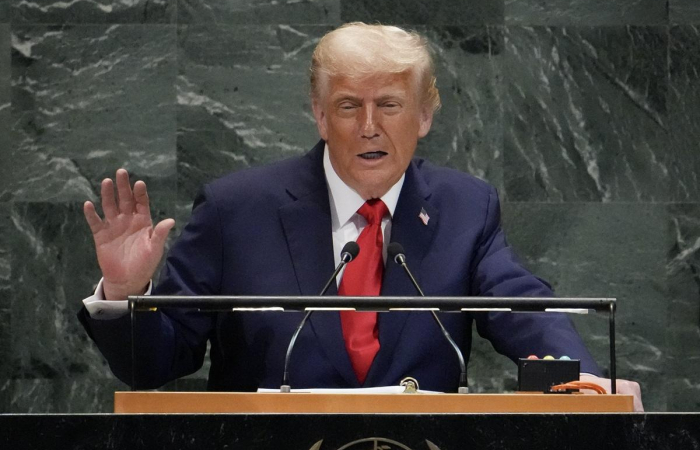
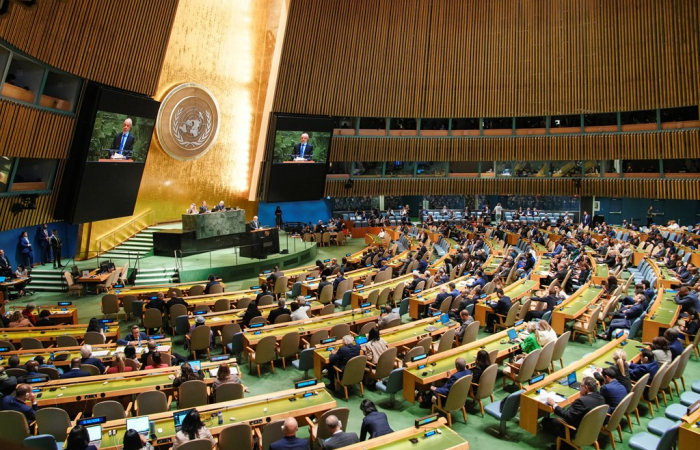
As Gaza continues to burn, France recognised Palestinian statehood on Monday 22 September at the start of a summit at the United Nations aimed at galvanizing support for a two-state solution to the Middle East conflict. More nations are following, in defiance of Israel and the United States. French President Emmanuel Macron’s announcement in the U.N. General Assembly hall received loud applause from the more than 140 leaders in attendance. The Palestinian delegation, including its U.N. ambassador, Riyad Mansour, could be seen standing and applauding as the declaration was made. Palestinian president Mahmud Abbas was denied a visa by the US authorities forcing him to attend only virtually.
Editor's choice
News
NATO PA Rose-Roth Seminar in Yerevan opens new horizons in public diplomacy

NATO PA Rose-Roth Seminar in Yerevan opens new horizons in public diplomacy

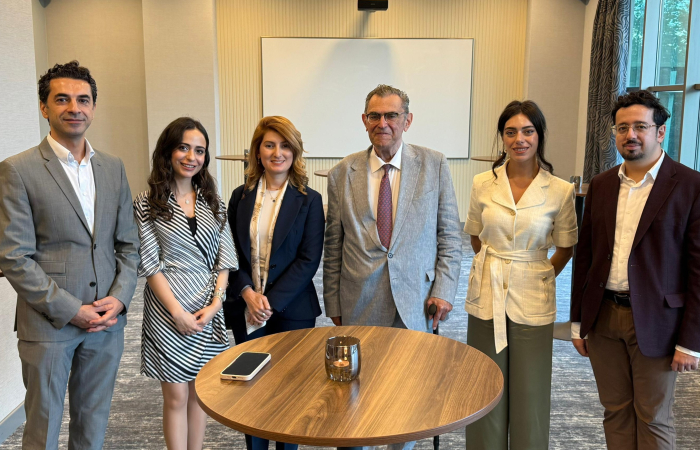
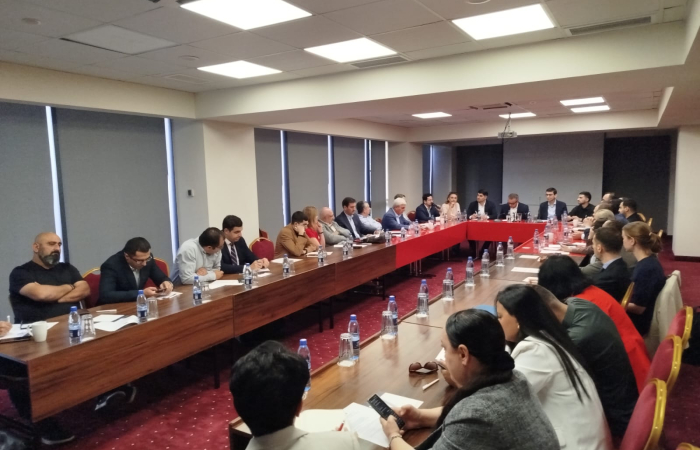
The 108th Rose Roth Seminar, organised by the NATO Parliamentary Assembly, is taking place in the Armenian Capital, Yerevan 22-23 September 2025. The Rose-Roth Seminar has not been held in Armenia since 2015, and the Armenian National Assembly put effort in ensuring the success of the event. Among the speakers at the opening session on Monday was Defence Minister, Suren Papikyan; Security Council Secretary, Armen Grigoryan; and Deputy Speaker of the Parliament, Ruben Rubenian. But the panel immediately following got a lot of attention because quite uniquely it included an Armenian, an Azerbaijani and a Turkish speaker. Chaired by the Director of LINKS Europe, Dennis Sammut, the panelists were Armine Margaryan, Murad Muradov; and Nigar Goksel. They made robust presentations, but were elegant and courteous in their demeanor. The panel was an expression of a new Armenia and a new South Caucasus. It also marked a new beginning in public diplomacy.
Editor's choice
News
UK, Canada, Australia and Portugal recognise Palestinian State; More EU countries are expected to follow in the next days

UK, Canada, Australia and Portugal recognise Palestinian State; More EU countries are expected to follow in the next days

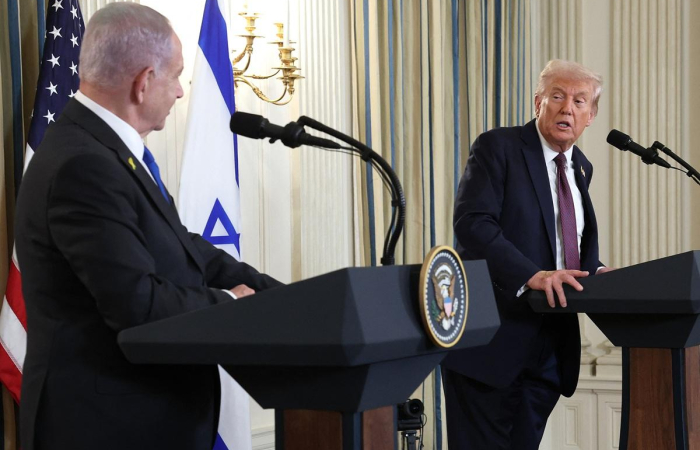
The United Kingdom, Canada, Australia and Portugal, announced on Sunday (21 September) that they were formally recognising the State of Palestine. British prime minister, Sir Keir Starmer, announced the UK's recognition of a Palestinian state, in what represents a significant change in government policy. In a video statement on X, the prime minister said: "In the face of the growing horror in the Middle East we are acting to keep alive the possibility of peace and a two-state solution." Australia, Canada and Portugal also announced formal recognition of the state of Palestine, with France and other EU states expected to follow. Responding on Sunday, Israeli Prime Minister Benjamin Netanyahu said a Palestinian state "will not happen".
Editor's choice
News
US Blocks Again the UN Call for an Immediate Gaza Ceasefire

US Blocks Again the UN Call for an Immediate Gaza Ceasefire

On Thursday (18 September), the United States exercised its veto power at the United Nations Security Council to block a draft resolution that demanded an immediate, unconditional, and permanent ceasefire in Gaza. The resolution also called for the lifting of restrictions on humanitarian aid to the enclave and the unconditional release of all hostages held by Hamas and other groups. Fourteen of the fifteen council members backed the resolution; the US alone opposed it.
Editor's choice
Opinion
The 3+3 Initiative in Retrospect: A Framework Out of Step with Current Realities

The 3+3 Initiative in Retrospect: A Framework Out of Step with Current Realities

On September 8, 2025, during his address at the Moscow State Institute of International Relations (MGIMO), Russian Foreign Minister Sergey Lavrov discussed the potential revival of the “3+3” format in the South Caucasus while commenting on Russia’s relations with regional countries. He noted that the initiative was initially proposed by Turkey and Azerbaijan and highlighted that it is also supported by Iran, signaling broader regional backing. Lavrov further referenced the trilateral agreement between Azerbaijan, Armenia, and Russia on restoring transport links and welcomed the ongoing process of normalization between Armenia and Turkey.
Editor's choice
Opinion
Symbolism Meets Realpolitik in Armenia-Türkiye Normalization Efforts

Symbolism Meets Realpolitik in Armenia-Türkiye Normalization Efforts

The prospect of peace in the South Caucasus may finally be within reach. Following the high-profile meeting between Armenian Prime Minister Nikol Pashinyan and Azerbaijani President Ilham Aliyev at the White House as facilitated by U.S. President Donald Trump on 8 August, hopes are rising that Yerevan and Baku could soon sign a long-anticipated peace treaty. That breakthrough has already been welcomed internationally, sparking renewed movement on the Armenia–Türkiye track as well. Opening the Armenian-Türkiye border has long been a policy objective for successive governments in Yerevan.
Editor's choice
News
Libya government reaches preliminary accord with powerful armed group

Libya government reaches preliminary accord with powerful armed group

Libya’s UN-recognized government based in Tripoli has reached a preliminary accord with a powerful armed group to end months of tensions that have flared into occasional violence, a government adviser and local media said on Saturday 13 September. Negotiations between the government and the Radaa Force were facilitated by Turkiye, according to the same sources quoted by Arab News. Ziyad Deghem, an adviser to the head of the Presidential Council transitional body, said the details of the accord “will be announced to the public at a later date.” Libyan broadcaster Al-Ahrar on Saturday posted on X a video that it said showed defense ministry forces entering an airport controlled by Radaa.
Editor's choice
News
Gaza Burning: Israel expands military operation and warns residents to leave

Gaza Burning: Israel expands military operation and warns residents to leave

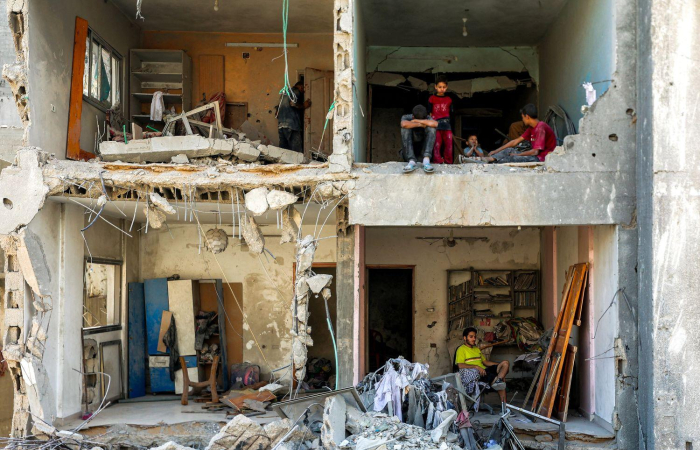
The Israeli military began a ground offensive targeting Gaza city on Tuesday 16 September slowly squeezing in on the Palestinian territory’s largest city that has seen block after block already destroyed in the Israel-Hamas war. Residents still in the city were warned they must leave and head south. The push marks yet another escalation in a conflict that has roiled the Middle East as any potential ceasefire feels even further out of reach despite months of diplomacy. While the military wouldn’t offer a timeline for the offensive, Israeli media outlets suggested it could take months. Earlier in the day, according to Associated Press, Israeli Defense Minister Israel Katz declared that “Gaza is burning” while independent experts commissioned by the United Nations’ Human Rights Council announced that Israel is committing genocide in Gaza, joining a rising international chorus of such accusations.
Editor's choice
News
 UN General Assembly vote highlights Israel's isolation

UN General Assembly vote highlights Israel's isolation

Applause rang out in the UN General Assembly Hall on Friday as countries endorsed a declaration on the peaceful settlement of the question of Palestine and implementation of the two-State solution with Israel.  The New York Declaration is the outcome of an international conference held in July at UN Headquarters, organized by France and Saudi Arabia, which resumes later this month. The General Assembly comprises all 193 UN Member States and 142 countries voted in favour of a resolution backing the document. Israel voted against it, alongside nine other countries – Argentina, Hungary, Micronesia, Nauru, Palau, Papua New Guinea, Paraguay, Tonga and the United States – while 12 nations abstained. The vote highlights the current Israeli international isolation as a result of its current policies. Prior to the vote, French Ambassador Jérôme Bonnafont recalled that the New York Declaration “lays out a single roadmap to deliver the two-State solution”. This involves an immediate ceasefire in Gaza, release of all hostages held there, and the establishment of a Palestinian State that is both viable and sovereign. The roadmap further calls for the disarmament of Hamas and its exclusion from governance in Gaza, normalization between Israel and the Arab countries, as well as collective security guarantees.