Theme

Diplomacy

Editor's choice
Monday Commentary
Monday Commentary: Europe still needs the OSCE

Monday Commentary: Europe still needs the OSCE

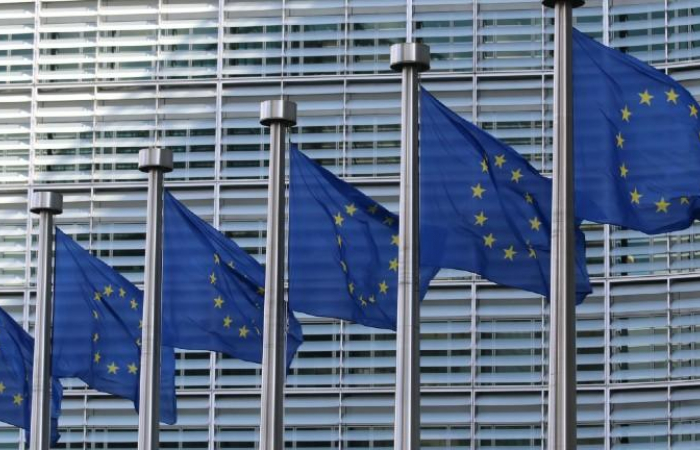
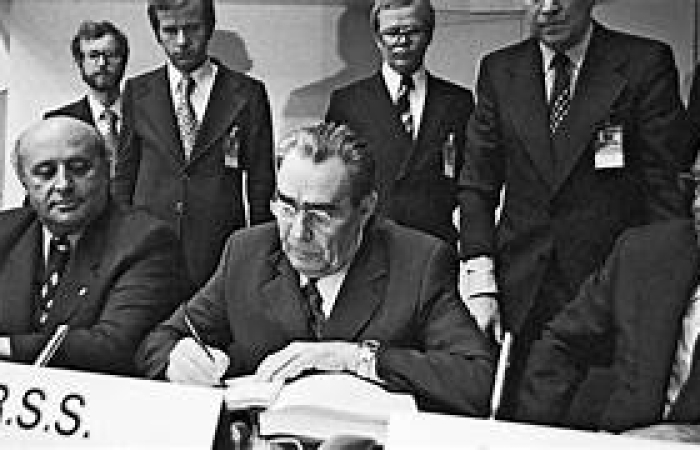
The Ministerial Council of the Organisation for Security and Co-operation in Europe (OSCE) will have its annual meeting in Vienna on 4-5 December. Foreign Ministers from the 57 member states, which also include the United States and Canada, and the Central Asian republics, and 11 partner countries, will congregate to discuss the future of European Security at a time when many believe that war in Europe over the next decade is likely. Ukraine is just a rehearsal for Russia’s ultimate ambitions. British diplomacy used to describe the OSCE as “the organization to manage Russia”. It has not done a good job of that, but this task remains paramount. The Ministerial Council will be the last major business of this year’s chairmanship, Finland, and will launch the new Chairmanship for 2026, Switzerland. The OSCE has been moribund for some time, and Russia’s invasion of Ukraine in February 2022, nearly ended it. But Europe still needs the OSCE, and there is hope that it will take a new lease of life in 2026. Switzerland has held the Chairmanship of the OSCE twice before, successfully. It has the experience, a wide network of embassies, and an able team in Bern, to successfully start what is likely to be a long and laborious journey. The new Chairman-in-office is Swiss Federal Foreign Minister Councillor, Ignazio Cassis. Cassis is also the current Vice President of the Swiss Confederation, and is fluent in Italian, English, German and French. Quite unusual also is the fact that currently the General Secretary of the OSCE is a Turk. Feridun Sinirlioğlu is an experienced Turkish diplomat, who has held the position for a year. Between them, Cassis and Sinirlioğlu will have to craft out the new OSCE, but in the end, it will largely depend on the will of the member states, including Russia. A new, reborn, OSCE, must understand that its core task remains European peace and security. It should resist the temptation of “looking busy” with a lot of secondary things. After peace and security return to Europe, it can consider other tasks. But we are far away from that yet. (Click the image to read the full commentary)
Editor's choice
News
Pope's visit to Türkiye and Lebanon has a strong ecumenical character, and places interreligious dialogue at its centre

Pope's visit to Türkiye and Lebanon has a strong ecumenical character, and places interreligious dialogue at its centre

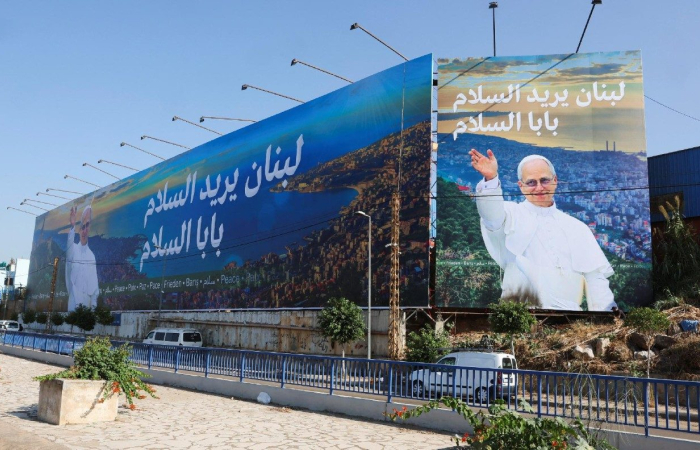
Pope Leo XIV has begun the first overseas trip of his pontificate, a six-day visit to Türkiye and Lebanon, which started yesterday (27 November) and ends on Tuesday (2 December). According to Vatican Radio, the visit "carries a strong ecumenical character and places interreligious dialogue at its centre. It will also be a moment of closeness to Christian communities and local populations across the region".   During nearly a week in the region, Pope Leo XIV will meet civil and religious authorities, visit mosques and ancient churches, pray at Beirut’s port in memory of the victims of the 2020 explosion, and hold private meetings with Presidents Recep Tayyip Erdoğan and Joseph Aoun.   A highlight of the visit will be a visit to Nicaea, where the Pope will mark the anniversary of the Council of Nicaea. Christians of many traditions recognise the Council of Nicaea as a foundation of shared faith. One of the most anticipated moments will be the Pope’s encounter with Lebanese youth in Bkerké, at the Maronite Patriarchate, a meeting expected to carry strong messages of hope in the Jubilee Year. A central event will be the ecumenical celebration in İznik, where the Pope and Ecumenical Patriarch Bartholomew will walk together toward the ruins of the Basilica of St Neophytos. The prayer, held before icons of Christ and the Council, will conclude with the lighting of a candle—a symbolic gesture of unity. The journey will also highlight interreligious engagement.   Memorable moments are expected throughout the trip: a wreath at Atatürk’s mausoleum, prayer inside the Blue Mosque, Mass at Istanbul’s Volkswagen Arena, the planting of a cedar at the presidential palace in Beirut, and prayer at the tomb of St Charbel in Lebanon. The Vatican said that "Pope Leo XIV’s pilgrimage to Türkiye and Lebanon aims to offer a voice of peace, unity, and hope at the heart of the Middle East."

Filter archive

Publication date
Editor's choice
Monday Commentary
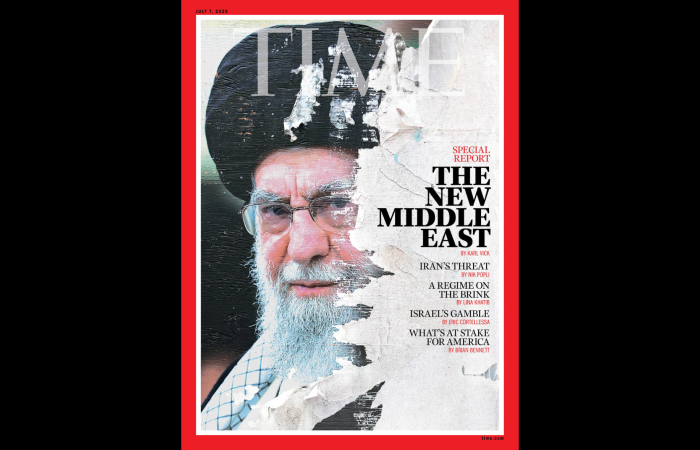
Monday Commentary: The “New Middle East” is not so new after all!

Monday Commentary: The “New Middle East” is not so new after all!

Last month, TIME magazine ran a cover story entitled “A New Middle East Is Unfolding before our eyes”. “The middle of what? East of where?”, asks Tim Marshall in his seminal book ‘Prisoners of Geography’, before quickly reminding us that “The Middle East is one of those places where the past is now”.
Editor's choice
News
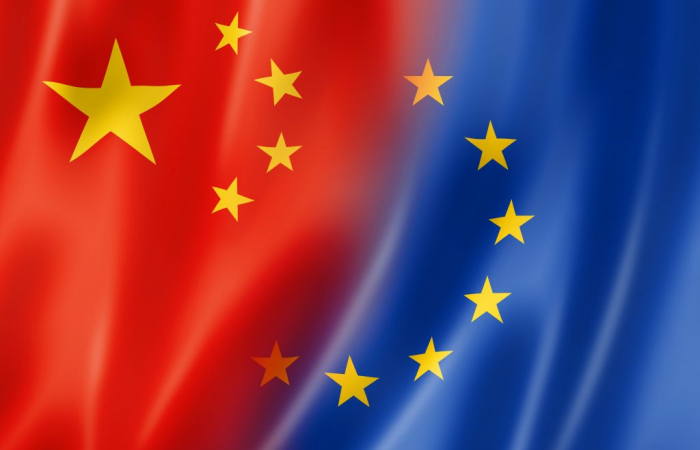
A shortened EU-China summit on Thursday will be a test for both sides

A shortened EU-China summit on Thursday will be a test for both sides

European Council President, Antonio Costa, Commission President, Ursula von der Leyen, and EU High Representative for Foreign and Security Policy, Kaya Kallas, will travel to Beijing next week to participate in the EU-China summit on Thursday (24 July). The summit has already been cut from two days to one, reflecting an increasing realisation on both sides that the chance of making progress on many issues in the bilateral agenda is small. The summit on 24 July, coincides with the 50th anniversary of relations between China and the EU, and no doubt China will want to throw a party. Chinese President, Xi Jinping, and prime minister, Li Qiange, are expected to participate in the summit. But the feeling in Brussels is that in the fifty years China had failed to create a level playing field. Whilst Chinese companies, academics and individuals had a free hand in the open European system across the continent, European companies struggled to exist , let alone compete, in China. In a key speech in 2023, van der Leyen spoke about the need of the EU to “de risk” its ties with China. But the issue that has really marred relations is Ukraine. China has failed to understand the significance of the situation in Ukraine for Europe. Chinese support for the Russian position diplomatically, as well as more tangibly, has cast a serious cloud over relations. This was seen clearly a few days ago in a four hour meeting in Brussels, between Kallas and Chinese foreign minister, Wang Yi, described as being “respectful, but tense”.
Editor's choice
News
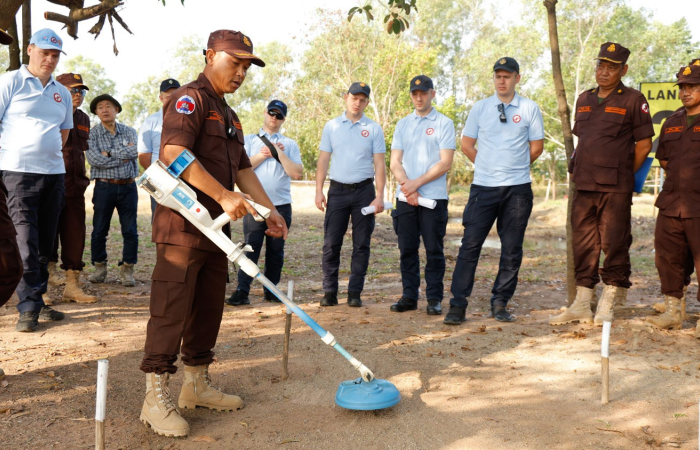
Japanese experts are training Ukrainian teams in landmine detection

Japanese experts are training Ukrainian teams in landmine detection

This week, a team of Japanese professionals conducted a landmine detection training programme for Ukrainian demining teams using equipment supplied by Japan. This initiative is intended to support Ukraine's ongoing efforts to clear explosive remnants of war in the context of Russia's ongoing invasion.
Editor's choice
Opinion
Peace Has Never Been This Close Between Armenia and Azerbaijan

Peace Has Never Been This Close Between Armenia and Azerbaijan

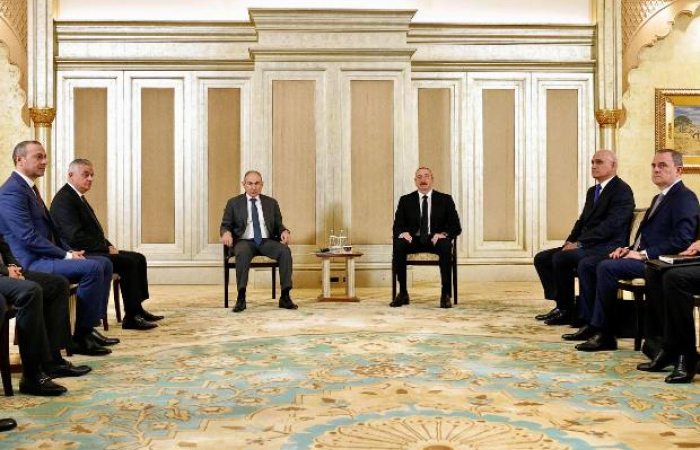
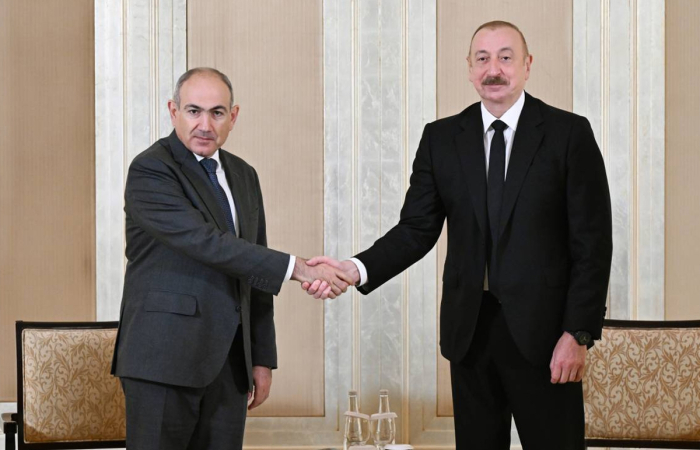
After a long hiatus following the Brussels summit facilitated by Charles Michel, then President of the European Council, in July 2023, the leaders of Armenia and Azerbaijan met on July 10, 2025, in Abu Dhabi, the capital of the United Arab Emirates (UAE), to advance their peace process. Although they had met on several occasions over the past two years, those encounters took place on the sidelines of international gatherings, with substantive negotiations typically conducted by official representatives behind closed doors. The Abu Dhabi meeting was particularly significant as it marked the first bilateral summit in recent years organized directly by the two sides, without the mediation of a major power.
Editor's choice
News
Trump threatens Russia with tariffs if peace deal is not reached within 50 days

Trump threatens Russia with tariffs if peace deal is not reached within 50 days

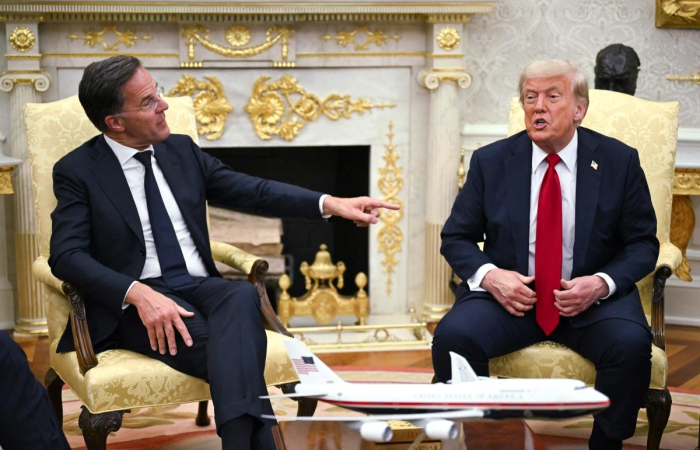
US President Donald Trump on Monday threatened Russia with steep tariffs unless a peace deal is reached within 50 days and announced a rejuvenated pipeline for American weapons to reach Ukraine, hardening his stance toward Moscow after months of frustration about unsuccessful negotiations for ending the war. The latest steps reflect an evolving approach from the Republican president, who promised to swiftly resolve the war started by Russian President Vladimir Putin when he invaded Ukraine three years ago. In the past, Trump focused his criticism on Ukrainian President Volodymyr Zelensky, whom he described as unwilling to compromise, but more recently has expressed growing irritation towards Putin. In addition, Trump said European allies would buy “billions and billions” of dollars of U.S. military equipment to be transferred to Ukraine, replenishing the besieged country’s supplies of weapons. He made the announcement in the Oval Office alongside NATO Secretary-General Mark Rutte.
Editor's choice
Opinion
Abu Dhabi: What Next for Armenia and Azerbaijan?

Abu Dhabi: What Next for Armenia and Azerbaijan?

Depending on whom you ask, last week’s meeting between Armenian Prime Minister Nikol Pashinyan and Azerbaijani President Ilham Aliyev in Abu Dhabi was either a historic development or simply another routine step in the still-fragile peace process. In an interview with Slovak media prior to the talks last week, Azerbaijani presidential advisor Hikmet Hajiyev even claimed the conflict between the sides is now over. Both sides believed that they were now the closest to formalising a peace treaty than at any time before.
Editor's choice
News
Azerbaijan set to become pivotal in Syrian recovery and reconstruction

Azerbaijan set to become pivotal in Syrian recovery and reconstruction

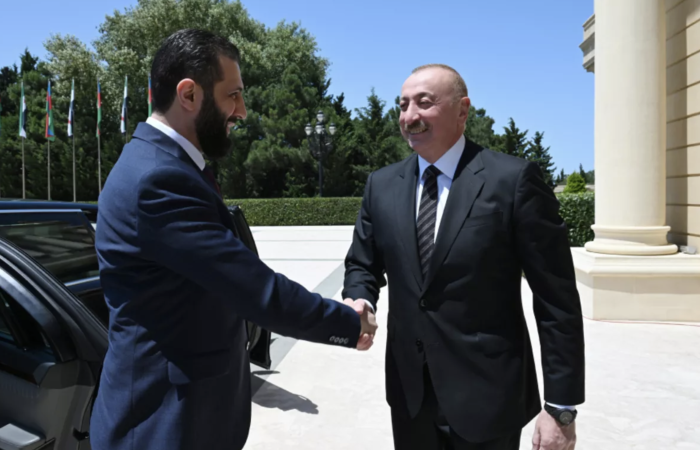
The visit of the Syrian leader, Ahmed al Sharaa to Baku on 12 July was short but highly significant. The discussions between al Sharaa and president Ilham Aliyev of Azerbaijan were substantive and covered a number of areas, including Syria's complicated relationship with Israel, and Syria's energy crises. Talks between Syria and the Azerbaijani oil and gas company SOCAR have been on-going to for several months, and during al Sharaa's visit a Memorandum of Understanding was signed, formalising the relationship. Azerbaijan is reported to be going to supply Syria with gas via Turkiye. During the discussions the possibility of using the facilities of the Turkish State energy company, Botas, was also discussed, and the plan is to use the newly constructed Kilis-Azaz-al Bab-Aleppo pipeline. According to various Syrian, Israeli and Azerbaijani sources a meeting also took place in Baku on 12 July between Syrian and Israeli officials regarding possible normalisation of relations
Editor's choice
News
European States "disturbed and deeply concerned at the deteriorating situation in Georgia"

European States "disturbed and deeply concerned at the deteriorating situation in Georgia"

A number of European states have said that they are "disturbed and deeply concerned at the deteriorating situation in Georgia". In a Joint statement of 11 July 2025 the Foreign Ministers of Belgium, Czechia, Denmark, Estonia, Finland, France, Germany, Iceland, Ireland, Latvia, Lithuania, the Netherlands, Norway, Poland, Spain, Sweden, the United Kingdom and the High Representative of the European Union commented on recent developments in Georgia We, the Foreign Ministers of European democracies, are disturbed and deeply concerned at the deteriorating situation in Georgia. We strongly condemn the recent, politically motivated, imprisonment and detention of the leaders of Georgian opposition, clearly designed to stifle political opposition in Georgia, a few months ahead of the local elections. Their detention, as well as arbitrary arrests and increasing repression of other Georgian authorities` critics, representatives of civil society, peaceful protesters and independent journalists, contribute to dismantling of democracy in Georgia and rapid transformation towards an authoritarian system, in contradiction to European norms and values. Recent legislative changes aim at stifling independent civil society and legitimate protest.