Theme

Diplomacy

Editor's choice
Monday Commentary
Monday Commentary: Europe still needs the OSCE

Monday Commentary: Europe still needs the OSCE

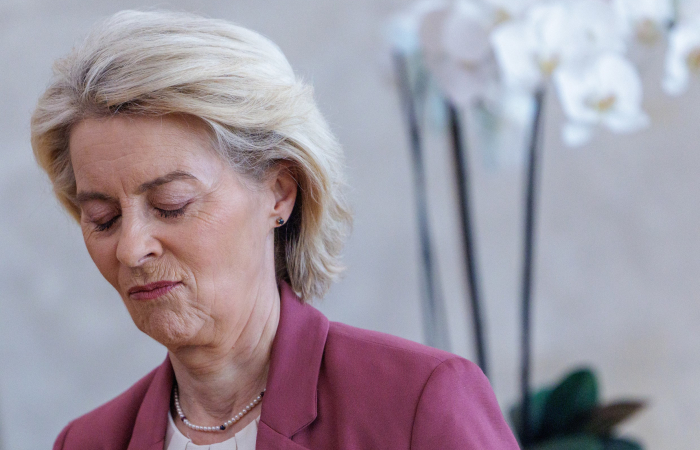
The Ministerial Council of the Organisation for Security and Co-operation in Europe (OSCE) will have its annual meeting in Vienna on 4-5 December. Foreign Ministers from the 57 member states, which also include the United States and Canada, and the Central Asian republics, and 11 partner countries, will congregate to discuss the future of European Security at a time when many believe that war in Europe over the next decade is likely. Ukraine is just a rehearsal for Russia’s ultimate ambitions. British diplomacy used to describe the OSCE as “the organization to manage Russia”. It has not done a good job of that, but this task remains paramount. The Ministerial Council will be the last major business of this year’s chairmanship, Finland, and will launch the new Chairmanship for 2026, Switzerland. The OSCE has been moribund for some time, and Russia’s invasion of Ukraine in February 2022, nearly ended it. But Europe still needs the OSCE, and there is hope that it will take a new lease of life in 2026. Switzerland has held the Chairmanship of the OSCE twice before, successfully. It has the experience, a wide network of embassies, and an able team in Bern, to successfully start what is likely to be a long and laborious journey. The new Chairman-in-office is Swiss Federal Foreign Minister Councillor, Ignazio Cassis. Cassis is also the current Vice President of the Swiss Confederation, and is fluent in Italian, English, German and French. Quite unusual also is the fact that currently the General Secretary of the OSCE is a Turk. Feridun Sinirlioğlu is an experienced Turkish diplomat, who has held the position for a year. Between them, Cassis and Sinirlioğlu will have to craft out the new OSCE, but in the end, it will largely depend on the will of the member states, including Russia. A new, reborn, OSCE, must understand that its core task remains European peace and security. It should resist the temptation of “looking busy” with a lot of secondary things. After peace and security return to Europe, it can consider other tasks. But we are far away from that yet. (Click the image to read the full commentary)
Editor's choice
News
Pope's visit to Türkiye and Lebanon has a strong ecumenical character, and places interreligious dialogue at its centre

Pope's visit to Türkiye and Lebanon has a strong ecumenical character, and places interreligious dialogue at its centre

Pope Leo XIV has begun the first overseas trip of his pontificate, a six-day visit to Türkiye and Lebanon, which started yesterday (27 November) and ends on Tuesday (2 December). According to Vatican Radio, the visit "carries a strong ecumenical character and places interreligious dialogue at its centre. It will also be a moment of closeness to Christian communities and local populations across the region".   During nearly a week in the region, Pope Leo XIV will meet civil and religious authorities, visit mosques and ancient churches, pray at Beirut’s port in memory of the victims of the 2020 explosion, and hold private meetings with Presidents Recep Tayyip Erdoğan and Joseph Aoun.   A highlight of the visit will be a visit to Nicaea, where the Pope will mark the anniversary of the Council of Nicaea. Christians of many traditions recognise the Council of Nicaea as a foundation of shared faith. One of the most anticipated moments will be the Pope’s encounter with Lebanese youth in Bkerké, at the Maronite Patriarchate, a meeting expected to carry strong messages of hope in the Jubilee Year. A central event will be the ecumenical celebration in İznik, where the Pope and Ecumenical Patriarch Bartholomew will walk together toward the ruins of the Basilica of St Neophytos. The prayer, held before icons of Christ and the Council, will conclude with the lighting of a candle—a symbolic gesture of unity. The journey will also highlight interreligious engagement.   Memorable moments are expected throughout the trip: a wreath at Atatürk’s mausoleum, prayer inside the Blue Mosque, Mass at Istanbul’s Volkswagen Arena, the planting of a cedar at the presidential palace in Beirut, and prayer at the tomb of St Charbel in Lebanon. The Vatican said that "Pope Leo XIV’s pilgrimage to Türkiye and Lebanon aims to offer a voice of peace, unity, and hope at the heart of the Middle East."

Filter archive

Publication date
Editor's choice
Opinion
Trump Hosts Aliyev and Pashinyan but Peace Requires More Than Handshakes

Trump Hosts Aliyev and Pashinyan but Peace Requires More Than Handshakes

As diplomatic efforts to resolve the long-running conflict between Armenia and Azerbaijan once again make headlines, the real challenge lies not in high-level meetings or momentary gestures, but in the unfortunate disconnect between the elites and the populations they represent. For almost thirty years, press release after press release declared that talks inched towards peace. Hopes were premature. The sides will next month mark the anniversary of the last war fought five years ago.
Editor's choice
News
Trump aims to bring Azerbaijan, Central Asian nations into Abraham Accords

Trump aims to bring Azerbaijan, Central Asian nations into Abraham Accords

US President Donald Trump's administration is actively discussing with Azerbaijan the possibility of bringing that nation and some Central Asian allies into the Abraham Accords, hoping to deepen their existing ties with Israel, according to five sources with knowledge of the matter who spoke to Reuters. As part of the Abraham Accords, inked in 2020 and 2021 during Trump's first term in office, four Muslim-majority countries agreed to normalise diplomatic relations with Israel after U.S. mediation.
Editor's choice
News
Armenia and Azerbaijan to sign peace memorandum in Washington

Armenia and Azerbaijan to sign peace memorandum in Washington

Azerbaijan and Armenia are expected to sign a memorandum of understanding in Washington on Friday 8 August, committing to the pursuit of peace, according to regional sources who spoke to Middle East Eye (MEE). The move commits the two countries to a future peace deal amid increasing US influence in the South Caucasus. The sources said that US President Donald Trump will host Azerbaijani President Ilham Aliyev and Armenian Prime Minister Nikol Pashinyan at the White House for the signing ceremony.
Editor's choice
News
China dabbles in Horn of Africa but its ability to bring peace to the region is minimal

China dabbles in Horn of Africa but its ability to bring peace to the region is minimal

Beijing’s special envoy for the Horn of Africa, Xue Bing, told a regional conference attended by eight governments from the region that ‘all parties should engage in dialogue’ to achieve common prosperity. In the meeting China reaffirmed its support for peaceful development in the Horn of Africa, saying it would “actively engage” in regional initiatives to promote the concept. But analysts and observers are very skeptical. Whilst China might dabble with the region and its many problems, it ability to impact the situation, and particularly contribute to resolving the conflicts that plague the region is minimal. In his speech at the Kampala Conference, Xue said Beijing would offer military assistance and training, as well as helping to develop the region’s infrastructure and boosting trade. “The world today faces overlapping risks and challenges that threaten peace and development in the Horn of Africa, and all parties should engage in dialogue and cooperation to maintain universal security and achieve common prosperity,” Xue told the event, according to the Chinese foreign ministry. Xue outlined further areas of cooperation, including counterterrorism and landmine eradication, while stressing China’s support for “African-led solutions” through platforms such as the African Union and the Intergovernmental Authority on Development.
Editor's choice
Opinion
Opinion: Saudi diplomacy believes it has achieved what half a century of summitry and rhetoric failed to deliver

Opinion: Saudi diplomacy believes it has achieved what half a century of summitry and rhetoric failed to deliver

"Saudi diplomacy has achieved in 18 months what half a century of summitry and rhetoric failed to deliver'' writes Ali Shihabi in the influential Saudi newspaper, Arab News. "Over the past 18 months, Riyadh has quietly delivered a masterclass in diplomacy, steadily reshaping how Western capitals approach the Palestinian file", the writer says. "The Kingdom has pursued a strategy rooted in hard-nosed pragmatism: Washington’s strategic umbrella over Israel will not fold under fiery speeches or social media storms. Rather than waste energy on theatrics, Saudi Arabia has opted for a patient, cumulative approach — chipping away at Israel’s aura of effortless Western legitimacy until the political calculus inside G7 capitals begins to shift. It may feel slow to the impatient observer, but in a world that rewards persistence over noise, this is how real influence is built." We republish the article in full here.
Editor's choice
Analysis
Analysis: Armenia's July application to join the Shanghai Cooperation Organization underscores its commitment to a diversified foreign policy

Analysis: Armenia's July application to join the Shanghai Cooperation Organization underscores its commitment to a diversified foreign policy

In July 2025, Armenia officially applied to become a full member of the Shanghai Cooperation Organization (SCO), marking a significant step, underscoring its commitment to a diversified foreign policy amidst shifting regional dynamics. In this analysis, Johnny Melikian, Senior Research Fellow at Orbelli Centre in Yerevan, discusses the reasons behind Armenia's move. This application is more than a simple institutional maneuver, he argues; “it encapsulates Yerevan’s strategic search for geopolitical stability, economic partnerships, and regional relevance in an increasingly complex Eurasian theater.” As Prime Minister Nikol Pashinyan confirmed during a press conference on July 16, the move reflects Armenia’s pursuit of a balanced and balancing foreign policy amidst shifting global and regional dynamics.
Editor's choice
Opinion
Armenia-Azerbaijan Transit Requires Bilateral and Regional Dialogue

Armenia-Azerbaijan Transit Requires Bilateral and Regional Dialogue

Uncertainty has again emerged along the Armenia-Iran border as the risk of the long-standing conflict between Armenia and Azerbaijan turning into further geopolitical competition continues. What was once a post-war localised disagreement over territory and sovereignty is now entangled in a web of regional interests and strategic manoeuvring. Increasingly, peace risks being shaped less by the needs of local populations but more by the calculations of distant capitals. External interference has rather delayed progress almost five years since the 2020 war. If peace is the objective, then the region needs inclusive not selective diplomacy and definitely not new geopolitical fault lines.
Editor's choice
News
Azerbaijan hosts Syrian-Israeli ministerial meeting to discuss security situation in Southern Syria

Azerbaijan hosts Syrian-Israeli ministerial meeting to discuss security situation in Southern Syria

A Syrian-Israeli ministerial meeting is taking place on Thursday 31 July in Baku to discuss security matters in southern Syria, a diplomat told AFP. The meeting between Syrian Foreign Minister Asaad al-Shaibani and Israeli Minister of Strategic Affairs Ron Dermer follows a similar meeting between the two ministers in Paris last week. It will take place after an unprecedented visit by al-Shaibani to Moscow on Thursday, added the diplomat, who requested anonymity due to the sensitivity of the matter. Israel and Syria have technically been at war since 1948.