Theme

Diplomacy

Editor's choice
Monday Commentary
Monday Commentary: Europe still needs the OSCE

Monday Commentary: Europe still needs the OSCE

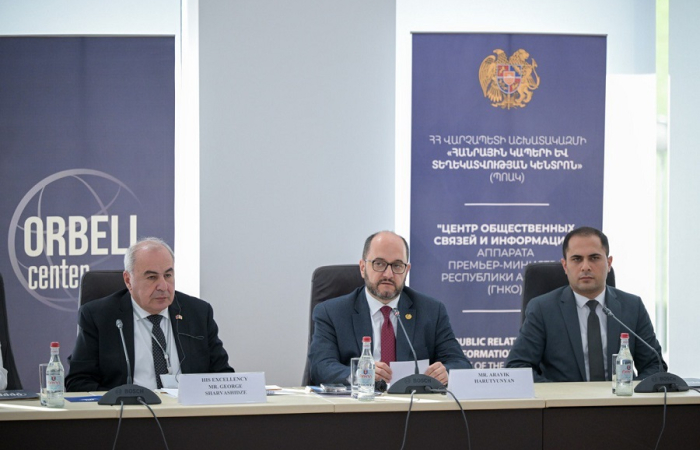
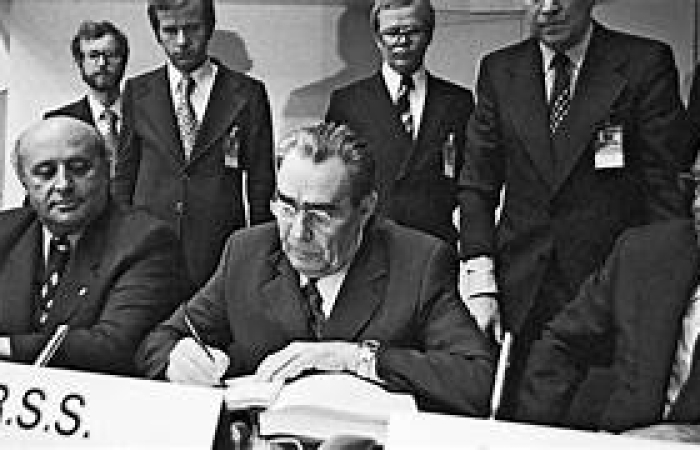
The Ministerial Council of the Organisation for Security and Co-operation in Europe (OSCE) will have its annual meeting in Vienna on 4-5 December. Foreign Ministers from the 57 member states, which also include the United States and Canada, and the Central Asian republics, and 11 partner countries, will congregate to discuss the future of European Security at a time when many believe that war in Europe over the next decade is likely. Ukraine is just a rehearsal for Russia’s ultimate ambitions. British diplomacy used to describe the OSCE as “the organization to manage Russia”. It has not done a good job of that, but this task remains paramount. The Ministerial Council will be the last major business of this year’s chairmanship, Finland, and will launch the new Chairmanship for 2026, Switzerland. The OSCE has been moribund for some time, and Russia’s invasion of Ukraine in February 2022, nearly ended it. But Europe still needs the OSCE, and there is hope that it will take a new lease of life in 2026. Switzerland has held the Chairmanship of the OSCE twice before, successfully. It has the experience, a wide network of embassies, and an able team in Bern, to successfully start what is likely to be a long and laborious journey. The new Chairman-in-office is Swiss Federal Foreign Minister Councillor, Ignazio Cassis. Cassis is also the current Vice President of the Swiss Confederation, and is fluent in Italian, English, German and French. Quite unusual also is the fact that currently the General Secretary of the OSCE is a Turk. Feridun Sinirlioğlu is an experienced Turkish diplomat, who has held the position for a year. Between them, Cassis and Sinirlioğlu will have to craft out the new OSCE, but in the end, it will largely depend on the will of the member states, including Russia. A new, reborn, OSCE, must understand that its core task remains European peace and security. It should resist the temptation of “looking busy” with a lot of secondary things. After peace and security return to Europe, it can consider other tasks. But we are far away from that yet. (Click the image to read the full commentary)
Editor's choice
News
Pope's visit to Türkiye and Lebanon has a strong ecumenical character, and places interreligious dialogue at its centre

Pope's visit to Türkiye and Lebanon has a strong ecumenical character, and places interreligious dialogue at its centre

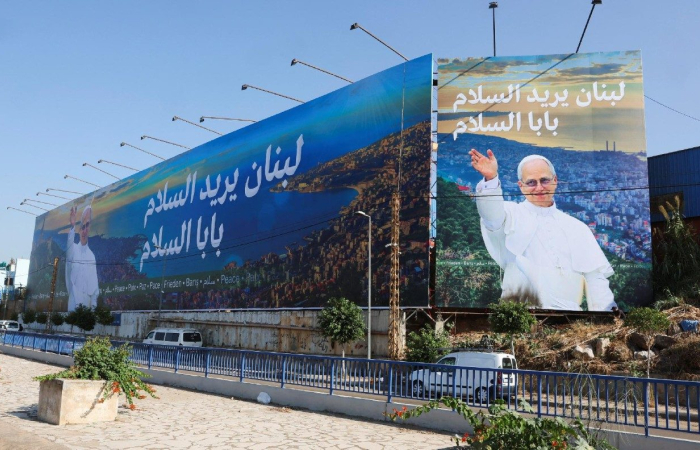
Pope Leo XIV has begun the first overseas trip of his pontificate, a six-day visit to Türkiye and Lebanon, which started yesterday (27 November) and ends on Tuesday (2 December). According to Vatican Radio, the visit "carries a strong ecumenical character and places interreligious dialogue at its centre. It will also be a moment of closeness to Christian communities and local populations across the region".   During nearly a week in the region, Pope Leo XIV will meet civil and religious authorities, visit mosques and ancient churches, pray at Beirut’s port in memory of the victims of the 2020 explosion, and hold private meetings with Presidents Recep Tayyip Erdoğan and Joseph Aoun.   A highlight of the visit will be a visit to Nicaea, where the Pope will mark the anniversary of the Council of Nicaea. Christians of many traditions recognise the Council of Nicaea as a foundation of shared faith. One of the most anticipated moments will be the Pope’s encounter with Lebanese youth in Bkerké, at the Maronite Patriarchate, a meeting expected to carry strong messages of hope in the Jubilee Year. A central event will be the ecumenical celebration in İznik, where the Pope and Ecumenical Patriarch Bartholomew will walk together toward the ruins of the Basilica of St Neophytos. The prayer, held before icons of Christ and the Council, will conclude with the lighting of a candle—a symbolic gesture of unity. The journey will also highlight interreligious engagement.   Memorable moments are expected throughout the trip: a wreath at Atatürk’s mausoleum, prayer inside the Blue Mosque, Mass at Istanbul’s Volkswagen Arena, the planting of a cedar at the presidential palace in Beirut, and prayer at the tomb of St Charbel in Lebanon. The Vatican said that "Pope Leo XIV’s pilgrimage to Türkiye and Lebanon aims to offer a voice of peace, unity, and hope at the heart of the Middle East."

Filter archive

Publication date
Editor's choice
News
US halts delivery of promised ammunition to Ukraine

US halts delivery of promised ammunition to Ukraine

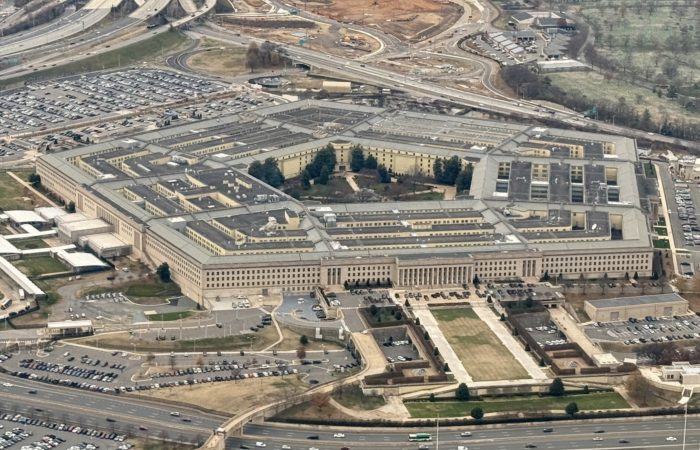
The United States has halted deliveries of certain anti-aircraft missiles and other precision munitions to Ukraine promised by the Biden administration due to fears of dwindling supplies. This was reported by political news site Politico on Tuesday night (1 July), citing three anonymous sources within the US Department of Defence, and was confirmed by the White House after publication.
Editor's choice
News
Luhansk the first Ukrainian region fully occupied by Russia

Luhansk the first Ukrainian region fully occupied by Russia

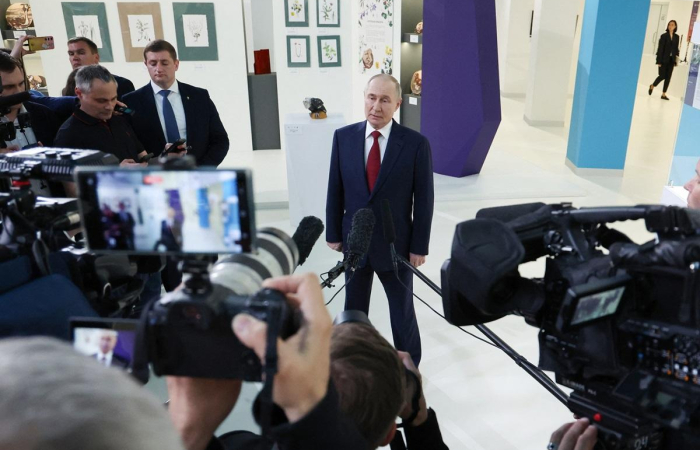
A Russia-appointed official in Ukraine’s occupied Luhansk region was quoted by AP on Monday saying that Moscow’s forces have overrun all of it, one of four regions Russia annexed from Ukraine in September 2022. If confirmed, it would make Luhansk the first Ukrainian region fully occupied by Russia after more than three years of war with international peace efforts led by the US failing to make progress on halting the fighting. Russian President Vladimir Putin has effectively rejected a ceasefire and hasn’t budged from his demands, which include Moscow’s control over the four illegally annexed regions. 
Editor's choice
News
Denmark takes over EU Presidency with a focus on Security, Migration and Enlargement

Denmark takes over EU Presidency with a focus on Security, Migration and Enlargement

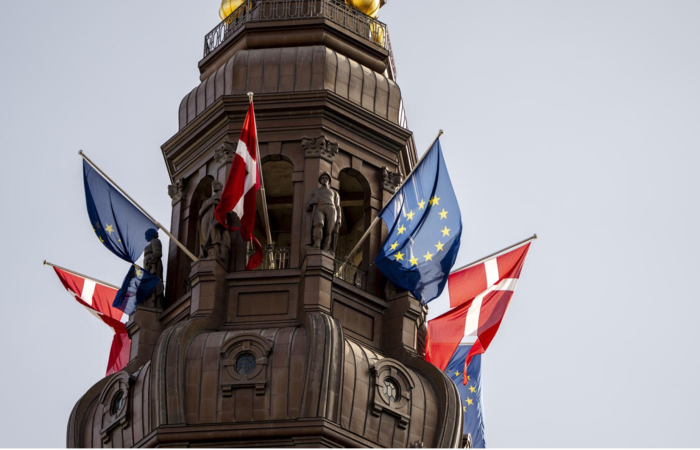
On July 1, Denmark takes over the Presidency of the Council of the European Union for the eighth time. Under the motto ‘A Strong Europe in a Changing World’, the Danish Presidency said its programme of work will ensure that the EU takes responsibility for its own security, while also strengthening its competitiveness. Prime Minister Mette Frederiksen said that priority will be given to boosting defence capabilities in Europe amid Russia's war in Ukraine and US threats to Greenland, a Danish autonomous territory. Pushing countries to keep promises to boost defence spending and bolstering Europe's "dangerous" security will top Denmark’s agenda as it takes over the rotating presidency on Tuesday, according to Prime Minister Mette Frederiksen.
Editor's choice
Monday Commentary
Monday Commentary: NATO Summit in The Hague II: everyone survived, now all eyes on Türkiye

Monday Commentary: NATO Summit in The Hague II: everyone survived, now all eyes on Türkiye

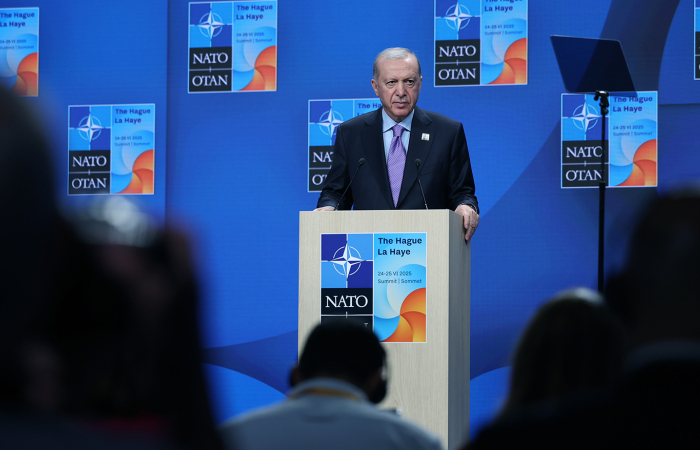
The Nato Summit held in The Hague on 24-25 June was a failure, wrapped in success. It was a success because it avoided public display of divisions, mainly by avoiding issues: it was the shortest summit anyone can remember; it also had a very short final statement that basically had two points, the first a re-commitment to article 5 of the North Atlantic Charter and the principle that an attack on one will be considered an attack on all. The fact that Nato leaders in the Hague had felt the need to re-emphasise this should be a cause of worry not celebration, but in the end, it is good that it was said. The second outcome, the one that received most attention, was the commitment of European countries to spend more on their defence: 5 per cent of GDP, of which 3.5 per cent on hard defence, and 1.5 per cent on related ancillary areas such as infrastructure. You may, if you want, believe that this was a response to US President Donald Trump's insistence. Or, if you are more prudent, understand that countries that matter – Germany, France, Poland and the Scandinavian countries had decided on this course of action quite separately, and as a response to Russia’s invasion of Ukraine, which was a wake-up call. Finland and Sweden’s decision to abandon their neutrality, and join NATO was taken long before Trump returned to the White House. The EU’s decision to spend massively on defence was always to ensure that other European countries are part of this process, willy-nilly.
Editor's choice
News
Fragile Israel – Iran truce brokered by Trump comes into effect but Israel claims Iran violated ceasefire

Fragile Israel – Iran truce brokered by Trump comes into effect but Israel claims Iran violated ceasefire

Hours after US President Donald Trump said his ceasefire had taken effect, Israel said it intercepted two Iranian missiles, with Defence Minister Israel Katz vowing that the military would "respond forcefully". Israel had stated on Tuesday it agreed to Trump's declaration of a ceasefire with Iran, adding that it had achieved all its objectives in the 12-day war with its arch-enemy. According to AFP, Iran denied launching missiles at Israel after the ceasefire announcement, and said it had "compelled" Israel to "unilaterally halt its aggression", while stopping short of officially accepting the ceasefire plan.