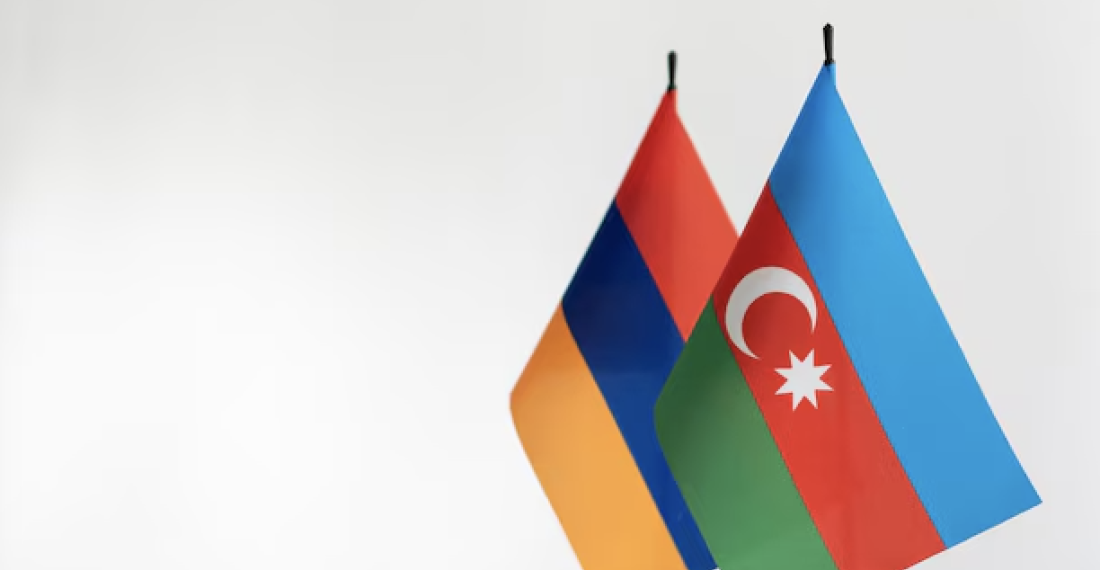
The animosity between Armenians and Azerbaijanis runs deep. The two nations fought many battles against each other. In the wars of the last forty years, tens of thousands of people were killed, hundreds of thousands displaced, and billions of euros were lost in economic harm. On Thursday, 13 March 2025, the two sides finally announced that they had agreed on the text of a peace agreement. The agreement will be signed soon. Within societies, on both sides, there are expectations of what this peace will bring. There is also a sense of uncertainty and confusion, which is being used by spoilers, internal and external. A dialogue involving different segments of society, is now more important than ever. But this dialogue needs to have new characteristics to respond to new realities. LINKS Europe, an organisation that has been involved in many peace initiatives in the South Caucasus in the past, is currently engaged in such a process. It recently launched a new Armenia-Azerbaijan dialogue format in the framework of the European Union's EU4Peace initiative. In the last two weeks, dozens of Armenians and Azerbaijanis, including academics, students, civil society activists, journalists and other professionals, many of them young, were involved. The work is organised in five thematic groups focusing on peace and security, connectivity, environment, governance and gender and equality and in phase 2 of the project, which has just ended, around fifty participants took part in in-person and online meetings, and more than twenty others were involved indirectly. The Chairpersons of the five thematic groups met in Vilnius, 3-6 July to launch the third phase of the program.
Anticipation of exciting times ahead
Turkish President, Recep Tayyip Erdoğan, was in Azerbaijan this weekend to participate in the summit of the Economic Co-operation Organisation. Erdogan met Azerbaijan president Ilham Aliyev, on the margins of the summit. A few days before, he met in Istanbul with Armenian Prime Minister, Nikol Pashinyan, who was on a historic first visit by an Armenian leader to Turkey. At the end of his trip to Azerbaijan, Erdogan referred to the Armenia-Azerbaijan peace agreement, and said it will open new windows of opportunity in the region. “The peace that Armenia and Azerbaijan will conclude will change the climate in the region. Thanks to this, we will witness new windows of opportunity opening one after another”, the Turkish president told journalists.
Some people have been saying this for a long time, but hearing it being said by the Turkish president, is pleasantly reassuring.
Why dialogue now is more important than ever
Dialogue is now more important than ever. Firstly, it is important to strengthen the resolve of the leaders, to take the last steps to cross the finishing-line, and sign the peace agreement. Second, but no less important, the conversation on what this means, and the future, needs to be widened to involve different segments of society.
That is why what is needed now is a different type of dialogue than the heroic, but often marginal initiatives of the past decades.
LINKS Europe new dialogue format
In the last two weeks, dozens of Armenians and Azerbaijanis, including academics, students, civil society activists, journalists and other professionals, many of them young, were involved in a new dialogue format launched by LINKS Europe. The work is organised in five thematic groups focusing on peace and security, connectivity, environment, governance and gender and equality and in phase 2 of the project, which has just ended, around fifty participants took part in in-person and online meetings, and more than twenty others were involved indirectly.
The Chairpersons of the five thematic groups met in Vilnius, 3-6 July, to launch the third phase of the program. The five thematic groups are now working on separate reports, which are expected to be finished in November and presented to the two governments and other stakeholders. The reports will outline a vision, up to 2040.
LINKS is no stranger to Armenia-Azerbaijan issues, and whilst the work has gone nonstop for three decades, three initiatives are worth highlighting:
SCPI - South Caucasus Parliamentary Initiative (2002-2008). It brought together 10 MPs each from Armenia, Azerbaijan and Georgia, for what was, at the time, and since, a unique dialogue format.
JOLIG - Joint Liaison Group of Experts in support of lasting peace in the South Caucasus (2021-2024). The group met for the first time in 2021, shortly after the end of the second Karabakh War, and focused on confidence-building measures. On 2 April 2022, the group published its report “30 measures between now and 2030”. The report remains valid now, and increasingly so on the eve of the signing of a peace agreement.
South Caucasus Youth Peace Summer School and Dialogue Forum (2023). The ten-day summer school, in August 2023, brought together ten young people each from Armenia, Azerbaijan and Georgia. Despite the tensions at the time in the region, the young people were inspiring by their commitment and engagement, and helped make the Dialogue Forum with key stakeholders, at the end of the Summer School, a huge success.
I had the honour, and the pleasure, to lead the LINKS Europe team that supported the three initiatives, and many more in between.
Beware of the spoilers, internal and external
There are, unfortunately, those who do not want to see peace between Armenia and Azerbaijan. Internally, they would be opponents of the current governments in Baku and Yerevan. The internal political situation in the two countries is different, but there are those in both countries who think that their way to power is by rejecting the peace agreement. It is time for those who want peace to stand up and be counted.
Externally, Russia has for a long time used the Armenia-Azerbaijan rivalry as a way of keeping a controlling influence on both. That time is over, but Russia will continue trying to derail the peace process. It has already said that ”it is too early for peace”. Maria Zakkharova, the spokesperson of the Russian foreign ministry, warned Armenia and Azerbaijan not to hurry. It seems the only peace the Russians will tolerate is “Russian Peace”. The two governments must stand firm, and the international community must stand resolutely behind them.
Peace between Armenia and Azerbaijan is now irreversible
Peace between Armenia and Azerbaijan is now irreversible. But that process requires the involvement of wider society, not just governments. This is why dialogue is more important now than ever.