Peace Has Never Been This Close Between Armenia and Azerbaijan

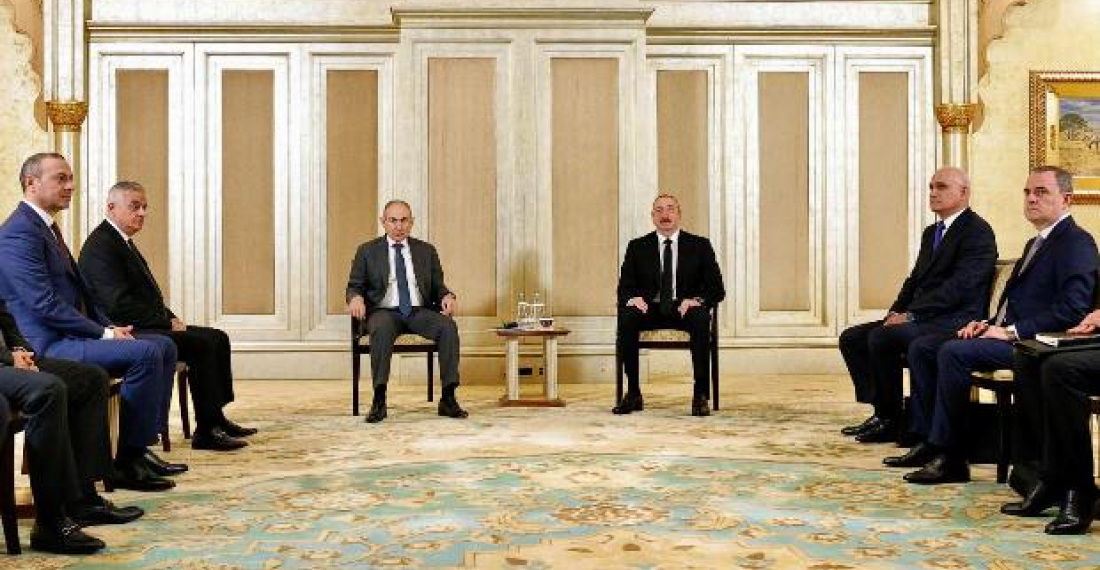
After a long hiatus following the Brussels summit facilitated by Charles Michel, then President of the European Council, in July 2023, the leaders of Armenia and Azerbaijan met on July 10, 2025, in Abu Dhabi, the capital of the United Arab Emirates (UAE), to advance their peace process. Although they had met on several occasions over the past two years, those encounters took place on the sidelines of international gatherings, with substantive negotiations typically conducted by official representatives behind closed doors. The Abu Dhabi meeting was particularly significant as it marked the first bilateral summit in recent years organized directly by the two sides, without the mediation of a major power.

The choice of Abu Dhabi as the venue was deliberate. Unlike previous meetings held in European capitals or Moscow – often overshadowed by the agendas of external actors – the UAE offered a neutral and geopolitically unaligned platform. Its growing reputation as an impartial diplomatic hub lent credibility to the talks, allowing both sides to focus on substance rather than navigate the biases of traditional mediators. According to diplomatic sources, the proposal to hold the summit in Abu Dhabi came from Azerbaijan, reflecting Baku’s preference for sovereignty and direct communication – marked departure from the often-stalled, externally brokered negotiations that struggled to produce tangible outcomes amid competing international interests.

By selecting the UAE as the venue, Baku and Yerevan sent a clear signal to both the West and Russia: they are no longer willing to let their peace process be hijacked by great power rivalries. The significance of this message cannot be overstated. In particular, Azerbaijan's stance underscores a nuanced approach – while distancing itself from Russia’s regional dominance, Baku is not aligning itself with any geopolitical bloc opposed to Moscow. Rather, it is asserting its strategic autonomy. This assertion is especially notable given the increasingly strained relations between Azerbaijan and Russia, which have reached an unprecedented low in recent weeks.

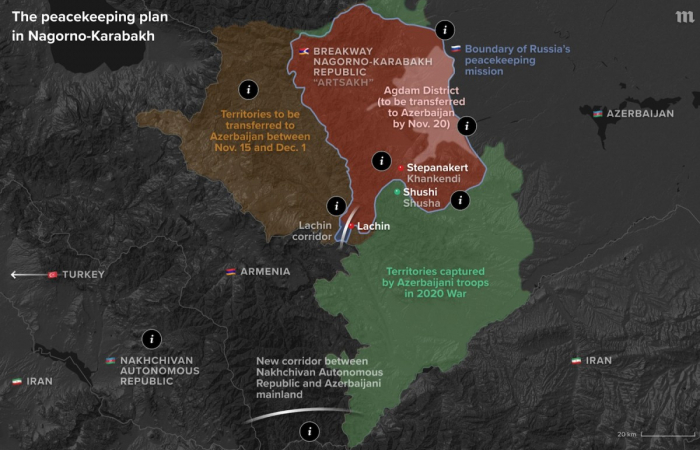
Geopolitically, the timing could not be more conducive to a swift resolution. The South Caucasus, a region historically caught in the crosshairs of great power rivalries, is witnessing a rare alignment of interests. Azerbaijan’s decisive victory in the Second Karabakh War of 2020 and the subsequent withdrawal of Russian peacekeepers from Karabakh in May 2024 have reshaped the regional balance. Armenia, under Pashinyan’s leadership, is actively reducing its dependence on Russia, distancing itself from the CSTO and seeking new partnerships. This convergence of Armenia and Azerbaijan toward greater autonomy in foreign policy creates a unique window for cooperation. The war in Ukraine and heightened tensions between Iran and Israel further underscore the strategic importance of a stable South Caucasus, making peace not just a bilateral goal but a regional imperative.

The constructive atmosphere of the Abu-Dhabi summit, as reported by both Yerevan and Baku, underscores significant potential for tangible advances. Despite this progress, two significant hurdles remain. The first is the presence of territorial claims in Armenia’s constitution, which Azerbaijan views as a potential seed for future conflict. Baku insists that Yerevan amend its constitution to explicitly renounce claims over Karabakh, a demand rooted in the fear of resurgent nationalism. While Pashinyan has signaled openness to constitutional reform, legal and political challenges within Armenia complicate the process which can drag on beyond 2026.

Few days before the Abu-Dhabi meeting, Hikmet Hajiyev, foreign policy advisor to the Azerbaijani president, reiterated that Azerbaijan is not planning to sign a peace deal with Armenia unless the latter removes territorial claims from the constitution. While the messages from the latest summit are positive, it is not clear whether the sides managed to reach a solution in this matter. Given the positive mode in the official circles, there is hope that it can be possible.

The second issue, while not formally part of the peace treaty, is the Zangezur corridor, a proposed transit route connecting mainland Azerbaijan to its Nakhchivan exclave through Armenia’s Syunik region. Azerbaijan views the corridor as a vital economic and strategic link, fostering regional connectivity and integration. Armenia, however, has expressed concerns about sovereignty, resisting Baku’s demand for unimpeded passage. Recent unconfirmed media reports suggest that both sides have reached a tentative arrangement on the corridor.

However, as opposed to what is claimed in the media reports, it is unlikely that the sides would replace Russia as the security provider of the corridor with an American company. Such a move would constitute a departure from the efforts to minimize the geopolitical dimension of the peace efforts and make it a hotbed for another great power confrontation. Some international mission, nevertheless, instead of Border Guard Service of Russia’s Federal Security Service (FSB) would be acceptable to the sides. It is important to recall that President Ilham Aliyev of Azerbaijan had already hinted to this possibility in April 2024, when he said that “Land access from mainland Azerbaijan to the Nakhchivan Autonomous Republic through Armenia must be provided with international control and security mechanism. If they [Armenians] don’t want now due to some reasons, that it should be Russian border security, they should say it.” It looks like Armenians have clearly communicated this message to the Azerbaijani side.

That said, the Abu Dhabi meeting is a historic milestone, but it is not the finish line. The constructive dialogue and bilateral format demonstrate that both nations are ready to take ownership of their future. Resolving the constitutional issue and finalizing the Zangezur corridor arrangement will require compromise and courage, particularly in Armenia, where domestic politics remain fraught. Yet, the geopolitical stars are aligned, and the will to achieve peace is visible. If Armenia and Azerbaijan can overcome these final obstacles, they stand to transform the South Caucasus into a beacon of cooperation, ending the violence of up to four decades and open a new chapter in their relations.
Source: Dr Vasif Huseynov, is a Senior Advisor at the Center of Analysis of International Relations (AIR Center) and Adjunct Lecturer at Khazar University in Baku, Azerbaijan. Photo: Armenian Prime Minister Nikol Pashinyan and Azerbaijani President Ilham Aliyev meeting on Thursday 10 July in Abu Dhabi, United Arab Emirates. 
The views expressed in opinion pieces and commentaries do not necessarily reflect the position of commonspace.eu or its partners

Related articles

Editor's choice
News
UAE says it will withdraw from Yemen, but division emerges in Yemeni presidential council

UAE says it will withdraw from Yemen, but division emerges in Yemeni presidential council

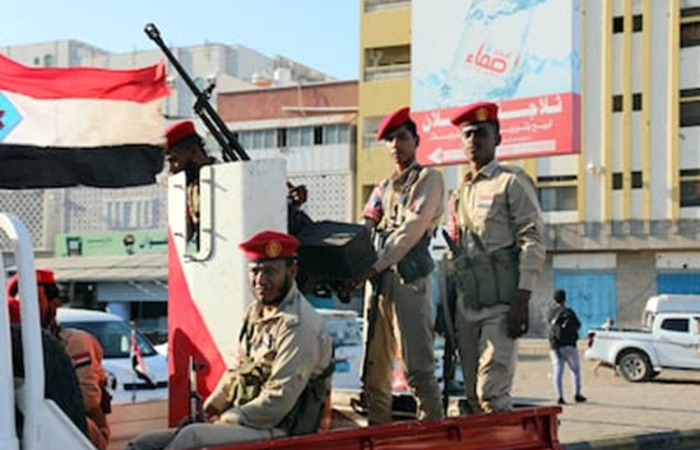
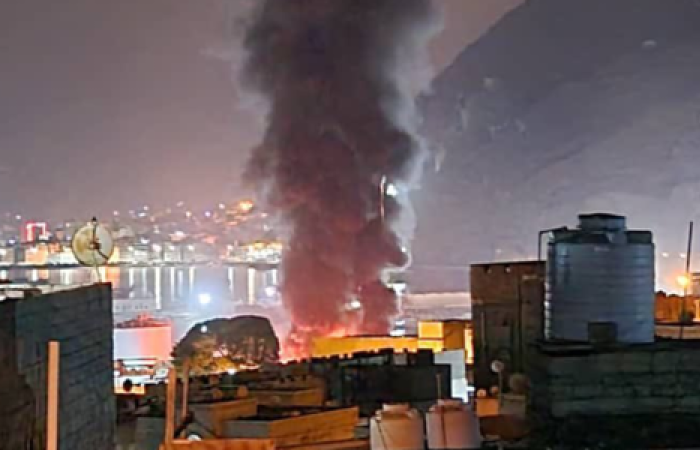
In a move seen as an attempt to de-escalate a crises with Saudi Arabia, the United Arab Emirates, on Tuesday (30th December) announced that it was heeding a call to withdraw its troops from Southern Yemen. UAE says that its presence included counter-terrorism teams that were crucial in fighting against Islamist groups. UAE sources said that parts of Yemen not controlled by the Houthis have had Al Qaeda in the Arab Peninsula (AQAP) operatives using the territory to launch attacks on Europe, the US and Middle East. UAE teams have co-ordinated with American and British special forces and intelligence. The sources added that Emirati forces and their Yemeni allies also helped reverse Houthi gains in the south. including the liberation of Aden port. The small UAE contingent has remained in place since the UAE withdrew most of its military personnel in 2019. The leading English-language newspaper in Abu Dhabi, The National, said that the main UAE force was based at Riyan Mukalla International Airport, with access to fixed-wing aircraft and helicopters, but also operated smaller contingents in the port town Balhaf and Shabwa. "It is understood it also flew a number of drones from the airbase that were able to track terrorist movements, pass information back to its allies and assisted special forces' missions." Meanwhile a division has emerged in Yemen's presidential council after four members denounced what they called the 'unilateral decisions' by the chairman. Four of Yemen’s eight Presidential Leadership Council members on Tuesday denounced an announcement by the council’s chairman accusing him of breaching the governing agreement. Tension between Yemeni leaders has been rising for weeks, underscoring the fragility of the country's already fractured political landscape and further complicating efforts to confront the Iran-backed Houthi rebels. The latest rift took an unprecedented turn on Tuesday morning, marked by a Saudi-led coalition “limited operation” striking combat vehicles Riyadh linked to the Southern Transitional Council, which has three members in the PLC. The PLC Chairman, Rashad al Alimi, on Tuesday said that he was seeking to cancel the joint defence agreement with the UAE. “What has been issued … constitutes a clear violation of the Declaration of the Transfer of Power [agreement], which explicitly stipulates that the Presidential Leadership Council is a collective body whose decisions are taken by consensus, or by majority when consensus is not possible,” the statement by the four members said. “It does not, under any circumstances, allow for unilateral decision-making on sovereign, military, or major political matters." The statement was signed by STC chief Aidarous Al Zubaidi, Faraj Al Bahsani, Tariq Saleh and Abu Zaraa al Muharrami. (click the picture to read the full article).

Popular

Editor's choice
News
UAE says it will withdraw from Yemen, but division emerges in Yemeni presidential council

UAE says it will withdraw from Yemen, but division emerges in Yemeni presidential council

In a move seen as an attempt to de-escalate a crises with Saudi Arabia, the United Arab Emirates, on Tuesday (30th December) announced that it was heeding a call to withdraw its troops from Southern Yemen. UAE says that its presence included counter-terrorism teams that were crucial in fighting against Islamist groups. UAE sources said that parts of Yemen not controlled by the Houthis have had Al Qaeda in the Arab Peninsula (AQAP) operatives using the territory to launch attacks on Europe, the US and Middle East. UAE teams have co-ordinated with American and British special forces and intelligence. The sources added that Emirati forces and their Yemeni allies also helped reverse Houthi gains in the south. including the liberation of Aden port. The small UAE contingent has remained in place since the UAE withdrew most of its military personnel in 2019. The leading English-language newspaper in Abu Dhabi, The National, said that the main UAE force was based at Riyan Mukalla International Airport, with access to fixed-wing aircraft and helicopters, but also operated smaller contingents in the port town Balhaf and Shabwa. "It is understood it also flew a number of drones from the airbase that were able to track terrorist movements, pass information back to its allies and assisted special forces' missions." Meanwhile a division has emerged in Yemen's presidential council after four members denounced what they called the 'unilateral decisions' by the chairman. Four of Yemen’s eight Presidential Leadership Council members on Tuesday denounced an announcement by the council’s chairman accusing him of breaching the governing agreement. Tension between Yemeni leaders has been rising for weeks, underscoring the fragility of the country's already fractured political landscape and further complicating efforts to confront the Iran-backed Houthi rebels. The latest rift took an unprecedented turn on Tuesday morning, marked by a Saudi-led coalition “limited operation” striking combat vehicles Riyadh linked to the Southern Transitional Council, which has three members in the PLC. The PLC Chairman, Rashad al Alimi, on Tuesday said that he was seeking to cancel the joint defence agreement with the UAE. “What has been issued … constitutes a clear violation of the Declaration of the Transfer of Power [agreement], which explicitly stipulates that the Presidential Leadership Council is a collective body whose decisions are taken by consensus, or by majority when consensus is not possible,” the statement by the four members said. “It does not, under any circumstances, allow for unilateral decision-making on sovereign, military, or major political matters." The statement was signed by STC chief Aidarous Al Zubaidi, Faraj Al Bahsani, Tariq Saleh and Abu Zaraa al Muharrami. (click the picture to read the full article).