Filter archive

Publication date
Authors
Editor's choice
Opinion
A new chapter in US relations with the South Caucasus

A new chapter in US relations with the South Caucasus

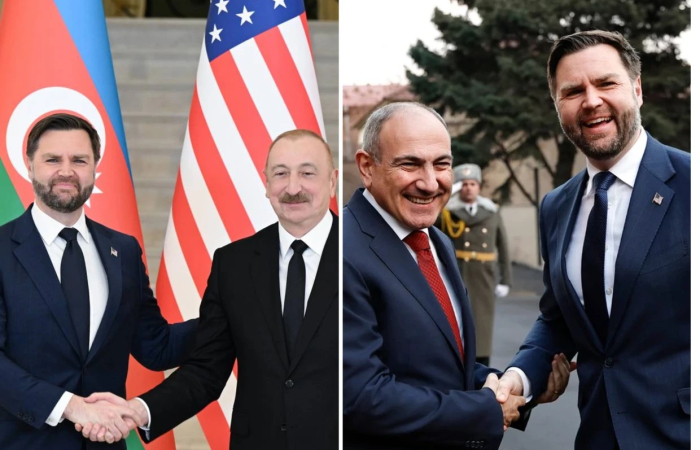
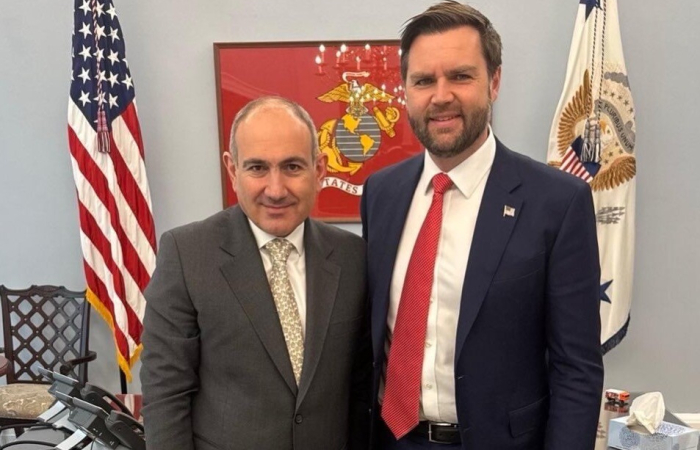
The visit of US Vice President, J.D. Vance, to the South Caucasus was a success and achieved all the main American immediate objectives. And this time the main American partner is not Georgia, but Armenia and Azerbaijan. This was not just a symbolic protocol visit, although there was a lot of that and the significance and symbolism would have come across clearly in both Moscow and Tehran. But there was also substance. The US Vice President visited Armenia on Monday (9th February), and Azerbaijan on Tuesday (10th February). In Yerevan, the Vice President and Armenia’s Prime Minister Nikol Pashinyan signed a joint statement on the completion of negotiations on a 123 Agreement, which establishes a legally binding framework for peaceful nuclear cooperation between the U.S. and partner countries. While in Azerbaijan, Vance and Azerbaijani President Ilham Aliyev signed a Strategic Partnership Charter between the U.S. and Azerbaijan that covers regional connectivity, economic investment, and security and defense issues. The guests were happy, and the hosts were delighted. Not so Russia. The Kremlin has always saw the South Caucasus as its backyard. Armenia had traditionally been compliant; Azerbaijan tried to present a balanced approach, and even Georgia, except for a fleeting moment in the second part of the Saakashvili’s government, never failed to understand Russian interests. The warmth with which the US Vice President was received in Baku  and Yerevan went beyond protocol niceties. It was genuine, and it would have worried the Kremlin. Neither Aliyev, nor Pashinyan, want a long messy problem with Russia. But they both basked in the warmth of the new found peace between them, that now is all but guaranteed by the United States. The visit of J.D. Vance to Armenia and Azerbaijan left the Georgian government looking silly. No amount of verbal massaging could hide the disappointment of being left out. The Georgians had got used to the fact that they were at the centre of the South Caucasus, and nothing could happen in the region without them. They now need to adjust to the new reality. Further mistakes and miscalculations need to be avoided. Where does that leave the EU? The European Union appears to have lost the initiative in the South Caucasus. Whilst there is some soul-searching going on in Brussels, there is a failure to accept that there is lack of strategy. Decisions are often taken as a result of momentary reflexes, or priorities of individual member states. The present lull must be used to articulate a clearer strategy towards the region. The summit of the European Political Community, in Yerevan, on 4 May, offers the EU an excellent opportunity to relaunch its message in the region. What next? The visit of J.D. Vance to the South Caucasus opened a new chapter in American relations with the South Caucasus. Yet for this chapter to be meaningful and long-lasting, there is yet a lot of work to be done.
Editor's choice
Commentary
B5+1 in Bishkek and critical minerals in Washington

B5+1 in Bishkek and critical minerals in Washington

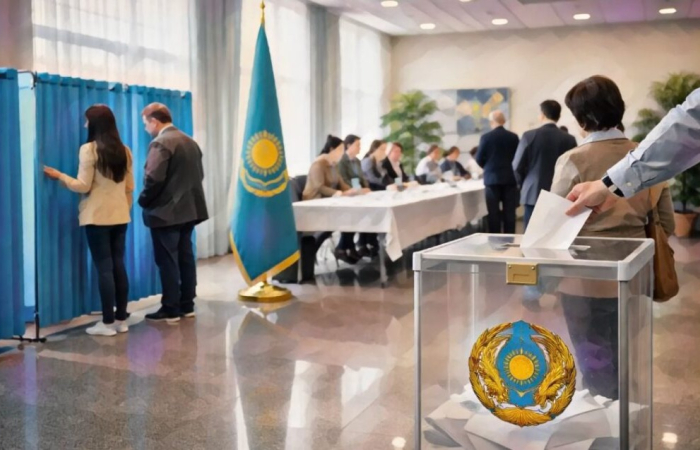
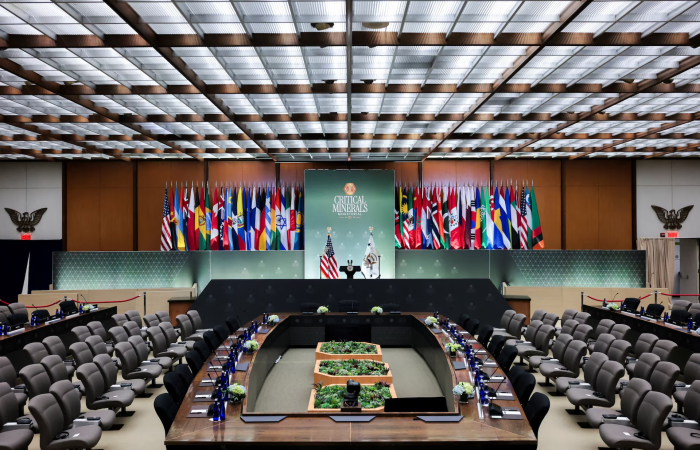
  On Wednesday, February 4, the Kyrgyz government, in coordination with the Center for International Private Enterprise (CIPE), kicked off a two-day B5+1 business forum in Bishkek. This meeting was announced back in December and covered in a previous Central Asia Concise newsletter. As a reminder, the B5 + 1 format is supported by the U.S. Department of State and aims to foster relations as well as high-level engagement between government and business leaders to ultimately advance U.S.-Central Asia economic cooperation in the region. The B5+1 serves as the business counterpart to the political level C5+1 format.  Crucially, the C5+1 was traditionally held between Central Asian and U.S. foreign ministers but recently took place at the heads of state level at the White House in November 2025. The December Central Asia Concise newsletter noted that the upgrading of the C5 + 1 not just shows increased U.S. interest in the region but may indicate if the U.S. is serious about translating its general policy objectives of increasing economic cooperation with the region to concrete outcomes and collaboration with key regional business stakeholders. Although the 2-day forum has not yet concluded, the unprecedented size and prominence of the U.S. business delegation, including over 50 representatives from major corporations, all but confirms this interest. In a commentary on CENTRAL ASIA CONCISE, the commonspace.eu editorial team says that an underreported development last month, but a contextually important one, was Kazakhstan’s Mazhilis (lower house of parliament) accepting two draft laws regulating the activities of the Collective Security Treaty Organization (CSTO). According to Mazhilis deputy Aigul Kuspan. The first law ratifies the amendments to the Agreement on the Status of Forces and Assets of the CSTO Collective Security System that expand the grounds for sending formations to the territory of the participating member states, including crisis prevention, humanitarian assistance and surprise inspections, whereas the second law looks to improve the legal framework for military transportation. Considering the increasingly hostile rhetoric from Russia, the accepted draft laws should certainly raise questions in Kazakhstan’s parliament as well as civil society. Vladimir Solovyov does not speak for the Russian state, but his shows have a clear track record of often floating narratives, talking points, and rhetoric that later become Kremlin policy, most famously framing Ukraine’s government as a corrupt ‘nazi’ infested regime oppressing its people. Overall, for Central Asian countries, which are still dependent on Russia in numerous ways, their response to this rhetoric, but more importantly, any forging of new economic ties, on critical raw minerals, for example, will be important to redefining their relationship with this historically imperial neighbour.  
Editor's choice
Event
commonspace.eu is getting better

commonspace.eu is getting better

Commonspace.eu will this year celebrate its 15th anniversary. In this period we provided space for different opinions, including to persons from the countries and areas we are focused on, which have included Georgians, Armenians, Azerbaijanis, Yemenis, Ukrainians and many others. We have also, as much as is possible for a news outlet that does not have a network of paid journalists, provided accurate information, especially at times of crises. We have done so whilst remaining inspired by our vision for a just and peaceful world, of a Europe that works in peace and collaboration with its neighbourhood, and to give a voice to youth, women, minorities and other groups that struggle to be heard. This week we are launching new features, and strengthening established ones, to make commonspace.eu more effective, and more useful for our eclectic readership. On Thursday, we launch our new series, THURSDAY INTERVIEW. The interviews will be conducted by Lauri Nikulainen, and the first interview is with Murad Muradov, Vice President of the Topchubashov Centre in Baku. On Friday we will have a selection from our regular newsletters: Caucasus Concise, Arabia Concise and Central Asia Concise. We hope to add a fourth newsletter shortly. On Monday, the Monday Commentary by our Managing Editor, Dr Dennis Sammut, is back. The commentaries reflect the author’s years of experience, but equally his passion for change and a better world. On Tuesday and Wednesday, we feature articles by our regular guest contributors, including Onik Krikorian, Benyamin Poghosyan and Vasif Huseynov. We will of course also feature daily news stories from Europe, and the regions around it, the neighbourhood with which we need to build a common future. We hope that you will find commonspace.eu interesting and useful.
Editor's choice
News
Happy New Year 2026

Happy New Year 2026

The Editorial Board and contributors of commonspace.eu extend their best wishes for the New Year 2026 to all our readers and subscribers across the world. It has been our pleasure to provide you in 2025 with news, opinions and analysis. In 2026 commonspace.eu celebrates its 15th anniversary. We will continue to be a platform for diverse views and opinions, but always committed to work for peace and justice across the world. Happy New Year