


The Armenia-Azerbaijan Strategic Expert Platform Statement ahead of the 3rd South Caucasus Regional Dialogue Forum

The Armenia-Azerbaijan Strategic Expert Platform

Statement ahead of the 3rd South Caucasus Regional Dialogue Forum

“Ways for future action”

The Armenia-Azerbaijan Strategic Expert Platform was set up in 2024, with the help of LINKS Europe, to provide a continuous space where Armenian and Azerbaijani experts can hold direct discussions and analysis, in compliment with wider processes involving governments and other initiatives, including those involving civil society and academia.

The current members of the platform, all of who serve in a personal capacity, are: from Armenia, Dr Stepan Grigorian, Dr Benyamin Poghosyan and Mr Johnny Melikyan; and from Azerbaijan, Dr Anar Valiyev, Mr Mehman Aliyev and Mr Ramazan Samadov. Mr Murad Muradov is a guest-member and attends meetings. Dr Dennis Sammut represents LINKS Europe on the Platform.

  • South Caucasus Regional Dialogue Forum

The members of the platform welcome the holding of the 3rd South Caucasus Regional Dialogue Forum. Regional dialogue must form the basis on which  future relations between Armenia, Azerbaijan and Georgia can and should be built.

The members of the platform recall the first South Caucasus Regional Dialogue Forum held in Kachreti in August 2023, and the second forum held in Tbilisi in October 2025, and they recognise the importance of the discussions held at both events which were attended by many participants from Armenia, Azerbaijan and Georgia, as well as leading members of the international community.

We need more open dialogue, we need to involve more stakeholders, and we need to expand the themes under discussion.

It is now time for region co-operation to become tangible, and for the three countries to work together on matters of strategic importance.

  • The quest for peace in the South Caucasus

The signing of the Washington declaration, and the initialling of the   Armenia - Azerbaijan peace agreement, at the White House on 8th August 2025, was truly historic event and a potential game changer for the whole region. Yet this process is incomplete – the peace agreement has not yet been signed. And as Armenian Prime Minister Nikol Pashinyan and Azerbaijani President   Ilham Aliyev emphasized several times, “peace is still fragile, and it needs to be protected and  needs to be consolidated”.

Armenian and Azerbaijani members of the platform warn against complacency in supporting peace efforts. The task is not yet finished, and efforts must be exerted to ensure lasting peace, stability and prosperity in South Caucasus. Work for peace must be sustained.

The members of the platform welcome the four reports of the Thematic Groups that brought together 42 Armenian and Azerbaijani experts. The four reports agreed in November 2025, contain many important and useful ideas many of which are essential if Armenia-Azerbaijan peace is going to be build on solid and sustainable grounds. This work must be sustained.

Lasting and sustainable peace is only possible if there is a better understanding between two societies.                       


  • The South Caucasus is a key – not just a transit corridor: a region connecting regions

We, Armenian and Azerbaijani members  of the Strategic Expert Platform strongly believe in the importance of the South Caucasus, as a region connecting regions, of its huge potential, and its resourcefulness. It is however important to underline that the region is a key, not a transit corridor. Those who think of it simply as a transit point are mistaken. The countries of the South Caucasus have hundreds of years of experience of engaging, to the north, to the south, the East and the west. They are the key that opens and connects. Russia, Turkey, Iran, the European Union, Central Asia, Ukraine, the Arab Gulf countries, and others, are the potential partners of the South Caucasus, and the future must be built together, based on mutual respect.

  • Iran is a neighbour; the South Caucasus should provide a space for a new Euro-Iranian Dialogue

Iran is our neighbour and has historically played a significant role in the lives of the peoples of the South Caucasus.

The Armenian and Azerbaijani members of the Strategic Platform appreciate the nuanced and sophisticated way that Armenia, Azerbaijan and Georgia have dealt with Iran, and Iranian issues, since June 2025

We believe that Armenia and Azerbaijan can and should actively help reduce tensions surrounding Iran.

Within its capabilities, our expert platform is ready to support contacts between experts and civil society representatives, put forward proposals to build trust, and facilitate dialogue between Iran and Europe.

Such a contribution to peacebuilding efforts is needed now since the future of our neighbouring country, and the well-being of its population, are directly linked to the security and sustainable development of our region.

  • The South Caucasus and Central Asia

The countries of the South Caucasus and Central Asia share a common recent history. Economic, social and human ties developed over decades, and this included the common experience of building independent statehood following the dissolution of the USSR. Despite differences in their development paths, the South Caucasus and Central Asia face common tasks: strengthening sovereignty, developing state institutions, modernising economies and improving the well-being of citizens. This shared experience and these common goals provide a basis for cooperation on an equal footing.

Combining the efforts of the countries of the South Caucasus and Central Asia can foster regional integration based on respect for sovereignty and mutual benefit. The members of the Armenia-Azerbaijan Strategic Expert Platform advocate developing links between the two regions in production, transport, energy, education and humanitarian cooperation. The expansion of the Middle Corridor connecting Central Asia, the Caucasus and Europe should also serve the development of local economies and strengthen direct ties between societies.

  • The European Union is an important partner for the South Caucasus; its engagement must be more strategic and focused.

The members of the Armenia-Azerbaijan Strategic Expert Platform positively assess the role of the European Union in the South Caucasus over the last three decades. They appreciate the contribution and consistency of the European Union and its member states, as well as other countries members of the European Political Community, in supporting the independence and statehood of the South Caucasus countries over the years.

The region has in front of it new opportunities, and new challenges. This requires a more focused and strategic approach on  the part of the European Union towards the region. It also requires the countries of the region to be more active in engaging with European initiatives. An assessment of future relations is now necessary, and the members of the platform declare their readiness to contribute to this essential dialogue.

The members of the Platform call on the EU to use its political, moral and knowledge capital to contribute to the progress on humanitarian issues that are of concern for Armenia and Azerbaijan.

  • Humanitarian issues, Environment, Water, Landmines

There are some problems that simply are too big for any one country to deal with, or the solution lays in a wider context. Humanitarian issues, Water, environment and landmines are such topics, where urgent, common action is needed.

Landmines, and remaining humanitarian issues   constitute one of the biggest and most serious problems facing the region. The countries of the region must work together on these issues, and we support a regional approach. The members of the platform welcome the efforts of the regional campaign Landmine Free South Caucasus and commend its objectives. 

  • Investing in people

The Armenian and Azerbaijani members of the Strategic Platform strongly believe in the importance of investing in people and developing human capital if the future of the region is to be secured. This requires as a priority investment in young people and education. The members of the platform wish to propose that a South Caucasus Youth Centre be established in the region, initially in Georgia, modelled on the European Youth Centre in Strasbourg, with the participation of the regional countries and the international community, and that this could be a living example of the new South Caucasus build on the basis of friendship, mutual respect and solidarity.

  • Working in partnership

Peace, prosperity, regional-co-operation and solidarity  can be achieved by the people of the South Caucasus, working in partnership together and with the people of neighbouring regions. We, the Armenian and Azerbaijani members of the Strategic Expert Platform, commit ourselves to this objective .

Dr Stepan Grigorian

Dr Benyamin Poghosyan

Johnny Melikyan

Dr Anar Valiyev

Mehman Aliyev

Ramazan Samadov

Murad Muradov

Dr Dennis Sammut

1 November 2026
Latest

Editor's choice
News
Kazakhstan set for major construction program after Tokayev’s speech

Kazakhstan set for major construction program after Tokayev’s speech

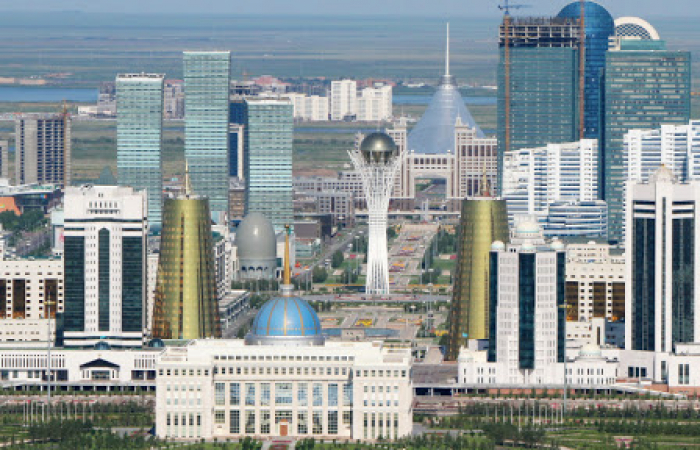
Kazakh President Kassym-Jomart Tokayev called for the construction and renovation of public infrastructure across all regions of Kazakhstan, and proposed declaring 2027 “the Year of Large-scale Construction”. Delivering his address to the people of Kazakhstan in his “state of the union” address, Tokayev stressed the need to launch construction and renovation projects in regional centers, districts and settlements throughout the country. Our collective nationwide response to the approaching era of artificial intelligence should be to build — and, once again, to build!, Tokayev emphasized. According to the President, key priorities include the construction of roads, airports, railway stations and healthcare facilities. Special attention will also be given to rehabilitation centres for children with special needs. In addition, every region should have creative development centres, sports complexes, libraries and scientific centres. Tokayev also highlighted housing construction as an important priority. Kazakhstan’s large-scale “People’s Construction” program, announced by the President, will pave the way for major infrastructure development and reforms across all sectors of the economy, Kazakh Prime Minister Olzhas Bektenov said at a government meeting. Bektenov stressed the need to develop a clear action plan to implement President Kassym-Jomart Tokayev’s state-of-the-nation address, delivered on October 28. The Prime Minister said the address sets out the central goal of building a fair, strong, clean and progressive Kazakhstan. Achieving this objective will require making the fullest possible use of the country’s existing potential and the opportunities emerging from modern innovation. Bektenov highlighted the significance of the “People’s Construction” initiative, describing it as the starting point for major infrastructure transformations and comprehensive reforms throughout the economy. “This large-scale project will provide significant momentum for employment growth and improving citizens’ well-being. This address is the most substantive policy document for the near future. We must have a clear action plan for its implementation”, he said. Kazakhstan also plans to build nearly 70 new healthcare facilities across the country. (click image to read more)

Popular

Editor's choice
Monday Commentary
Monday Commentary: European-Azerbaijan relations need an intensive and multifaceted dialogue that is frank and honest

Monday Commentary: European-Azerbaijan relations need an intensive and multifaceted dialogue that is frank and honest

Last week I visited Baku, Azerbaijan. My visit was relatively short, but very intensive, and had many meetings with stakeholders and colleagues. When I arrived in Baku first time in 1996,  Azerbaijan was a different country: weak, poor, and shaken by defeat in war. For thirty year the Karabakh issue dominated the agenda: the political agenda but also the popular mindset. Now, thirty years later, Azerbaijan has returned to Karabakh, and peace with Armenia is on the horizon. It is a new era for Armenia-Azerbaijan relations, for the South Caucasus, but also for Europe.  But we cannot be complacent: the Peace agreement has been initialed but not signed; borders remain closed; TRIPP is ambitious but remains an idea; and there are spoilers who want to turn the clock back. We must not allow them, and in this Europe and Azerbaijan must work together. Europe’ vanguard organization is the European Union – it is a free union of 27 member states; it is a strong global economic force, and increasingly a diplomatic and military force too. But it remains “work in progress” and can often appear dysfunctional. It often lacks collective and institutional memory. In its dealings with Azerbaijan the EU has made many mistakes – not least opening the delegation here late – in 2008. It sometimes appears condescending. Some utterances from the European Parliament and from some quarters in some member states are not understandable even for me. They irritate the Azerbaijanis, but serve no other purpose But Azerbaijan has also not handled relations with the EU well. It has failed to respond when the hand of friendship reached out; and it confused irritating actions, sometimes by well-meaning people; sometimes by outright spoilers, with strategic action. In short, EU-Azerbaijan relations have suffered from a lack of proper dialogue. This dialogue must be frank, honest and multi-faceted involving different segments of society on both sides.   Is Azerbaijan Europe? When Azerbaijan applied to join the Council of Europe in the 1990s, there were some who opposed, saying this was not Europe. I was one of the people who argued that Armenia and Azerbaijan may be on the periphery of the continent geographically, but were European in essence. Certainly their elites. During the discussion on 4 September in Baku, my friend Farhad Mammedov, mentioned that Azerbaijan is not interested in joining the EU, and was now close to the Central Asian countries in the 5 plus 1 format. Neither things mean that Azerbaijan is not Europe. There are several European countries that are not in the EU, and do not want to be, for example Norway and Switzerland. Iceland has recently voted to stay out of the EU. The UK was a member and left. Europe is bigger than the EU, and the holding of the European Political Community summit in Baku in 2027 proves that. Despite all the rhetoric, I never heard the president of Azerbaijan  saying that Azerbaijan is not Europe, nor have I heard any European president say it either. Not wanting to join the EU and forging close relations with neighbouring regions does not make Azerbaijan any less European. It is only logical that when Europeans talk to Azerbaijan they talk like family. The conversation is often frank. It must also be honest, and Europeans need always to remember this too. A frank, honest and multi-faceted dialogue A frank, honest and multifaceted dialogue will contribute to relations between Azerbaijan and the rest of Europe: it will avoid misperception, which unfortunately is very common on both sides; it will provide a forum where problems can be discussed and resolved, and it will increase mutual trust, so that together common problems can be addressed. (click image to read the full Monday Commentary)
Editor's choice
Monday Commentary
Monday Commentary: “The barren rocks of Aden” and “These lands of Yemen are so ruthless”

Monday Commentary: “The barren rocks of Aden” and “These lands of Yemen are so ruthless”

There are two early 20th-century tunes that mark foreign attempts to occupy and “pacify” Yemen. The Scottish tune “The barren rocks of Aden” marks the mobilisation of Highland soldiers, enlisted to be deployed to the Yemeni port of Aden, that in 1837 became the last colony to be incorporated into the British Empire. The tune talks of the harshness of the terrain, but is celebratory, It was even played as a farewell tune to Sir William Luce at the parade in Sharjah celebrating his end as “British Viceroy” in the Middle East in 1966. The second tune is an Anatolian lament. As Ilker Sezer reminded us this weekend, in his weekly feature on “Turkiye Today”, it “mourns the tragic fate of Ottoman soldiers dispatched to the harsh, remote deserts of Yemen during the fall of the empire, young men who marched away from their villages and never returned home. Most of their names, and numbers, were never recorded. Yet, their fate left a mark on the Turkish psyche.” Subsequent invaders have discovered that Yemen is a grave that cannot be overcome by the strength of modern technology, and that whilst Yemeni society is splintered and divided, building a reliable alliance with Yemeni factions is difficult. These are the harsh lessons facing Saudi Arabia, as the Kingdom faces its biggest challenge in its modern history. The leadership of the Kingdom now has to respond decisively. At stake is their very credibility. This is likely to be a long and messy conflict. Saudi military objectives need to be focused: to box in the Houthis rather than destroy them. This is likely to include: (a) regaining territory lost on the Red Sea coast; (b) control over Bab el Mandeb Strait; (c) some kind of cordon sanitaire on the Saudi-Yemeni border; and if things go well (d) the capture of Sanaa. All this would not eliminate the Houthi problem, but it will contain it. In the end the Saudis will have to continue managing Yemen with a mixture of carrot and stick. For the moment, the stick is likely, but the carrot cannot be forgotten either. (click the image to read the Monday Commentary in full)

