Editor's choice
Interview
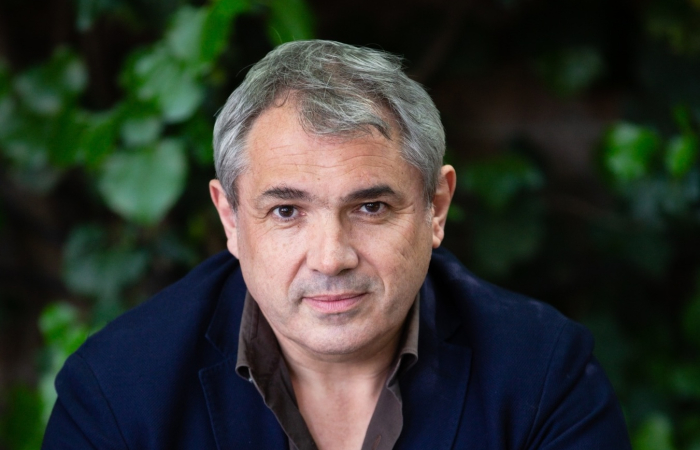
Thursday Interview: Dr. Jamie Shea

Thursday Interview: Dr. Jamie Shea

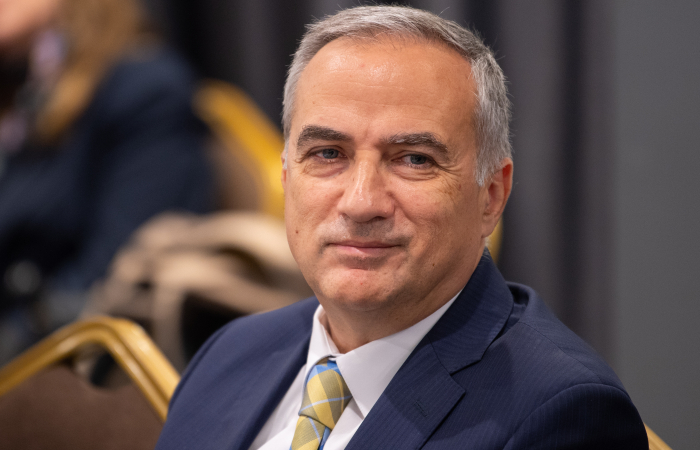
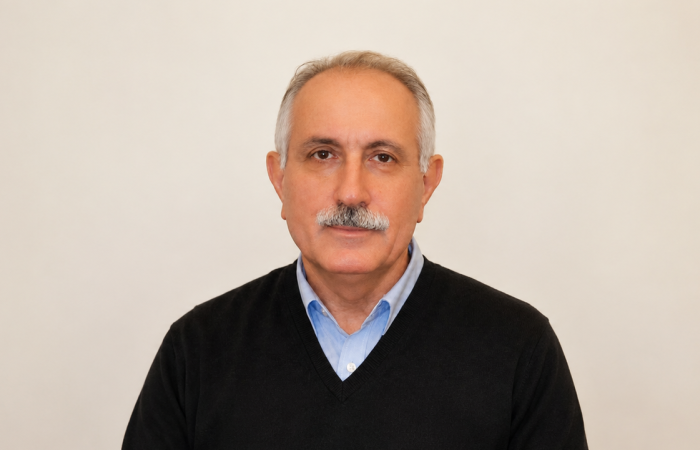
Tensions are rising in Iran and across the Middle East, uncertainty hangs over Donald Trump’s commitment to the Euro-Atlantic security umbrella, and war continues along Europe’s eastern border. Against this backdrop, commonspace.eu spoke this week with Dr. Jamie Shea, the former Deputy Assistant Secretary General for Emerging Security Challenges at NATO (North Atlantic Treaty Organization), about what lies ahead. He held several senior positions during a 38-year career at NATO, and represented the Alliance on the international stage as its spokesperson during the 1999 Kosovo War, when he briefed the international press throughout NATO’s air campaign against Yugoslavia. Since retiring from NATO in 2018, he has continued his work as a professor, lecturer, speaker and adviser on European and transatlantic security affairs. Dr. Shea discusses the strategic consequences of Russia’s war against Ukraine for NATO’s future, the need for the Alliance to adapt to a rapidly changing battlefield shaped by drones and technological innovation, and the importance of cooperation between NATO and the European Union in strengthening Europe’s defence capabilities.  He argues that instability in the Middle East could reshape the strategic balance for Europe: “The one who smiles is Vladimir Putin, because an oil price of over $100 a barrel for a long period of time is going to refill the Russian war chest, as Putin funds a lot of his Ukraine war effort from his energy resources. You can see that the Americans have already lifted sanctions on Russia to allow Russia to export oil to India to keep international markets flowing. This is what we call ‘robbing Peter to pay Paul’. Yes, it helps the situation in the Gulf temporarily. It removes pressure on the oil market. But the impacts of the war will also mean more inflation, higher energy prices, and higher gas prices in Europe. You are then going to get a lot of European countries saying, ‘well, sorry, but I can’t spend 5 percent of GDP on my defence any longer.’” To read the full interview, click on the image above.
Editor's choice
Interview
Thursday Interview: Fidan Namazova

Thursday Interview: Fidan Namazova

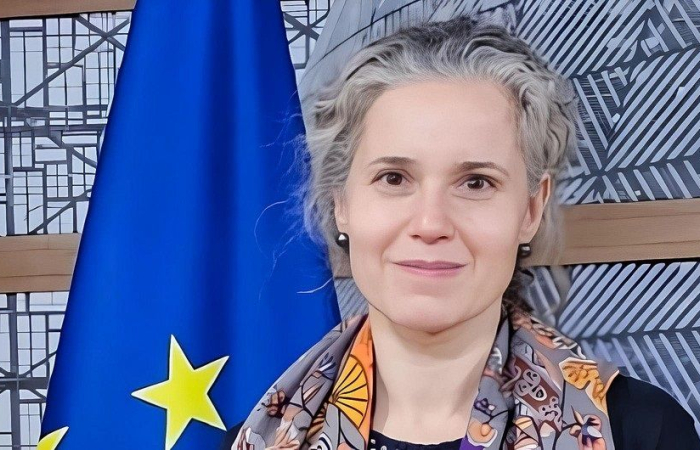
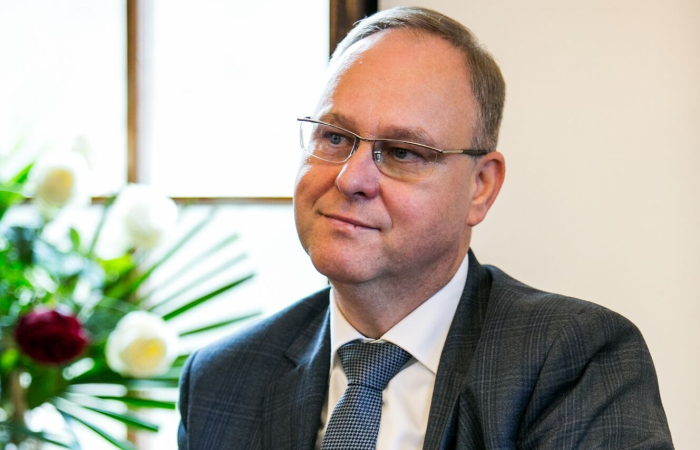
Ahead of International Women’s Day on 8 March, commonspace.eu spoke with Fidan Namazova, an Azerbaijani peace-building practitioner and researcher, about women’s inclusion in regional dialogue, environmental cooperation as a pathway to confidence-building, and her work on gender-sensitive urban development in the South Caucasus. She was joined in conversation by Alexandra Dumitrescu, Program Manager and International Coordinator at LINKS Europe. Ms. Namazova has been closely involved in LINKS Europe’s Thematic Groups for a New Armenian–Azerbaijani Dialogue, serving as Chair of the Thematic Group on Environment. In this capacity, she contributed to shaping the Report of the Thematic Group on Environment, advancing the idea that environmental cooperation can provide practical entry points for rebuilding trust and fostering sustainable peace between Armenia and Azerbaijan. Read the full interview by clicking on the image above.
Editor's choice
Interview
Thursday Interview: Dr. Anar Valiyev

Thursday Interview: Dr. Anar Valiyev

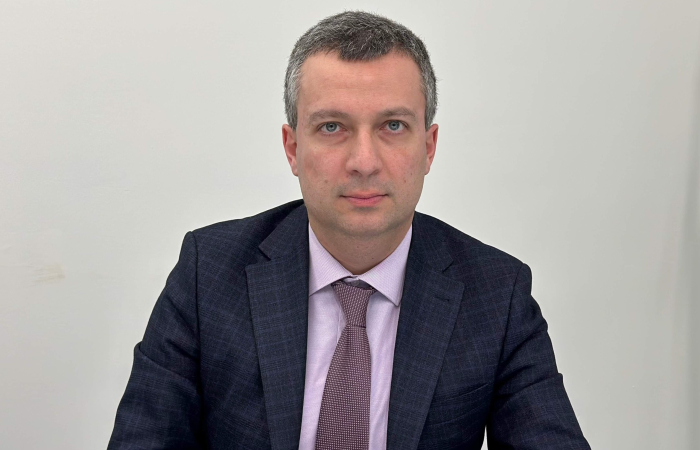
Dr. Anar Valiyev is an Associate Professor of Urban and Public Affairs at ADA University in Baku, Azerbaijan, with more than 18 years of experience in higher education. His research focuses on public policy, urban development, governance, and post-Soviet regional affairs. He holds a PhD in Urban and Public Affairs from the University of Louisville and has published widely on urbanisation, policy reform, and regional connectivity in the South Caucasus and beyond. This week, commonspace.eu spoke with Dr. Valiyev in Brussels ahead of a roundtable jointly organised by LINKS Europe Foundation and the European Policy Centre. He is taking part in a panel discussion focusing on the Armenia–Azerbaijan peace process, its implications for both countries and the wider region, the involvement of the European Union and the United States, and the challenges that lie ahead. In this interview, he reflects on how his research has evolved over nearly two decades in academia, examines the transformative potential of regional connectivity and trade, discusses the strategic role of energy in Azerbaijan’s foreign policy, and highlights the importance of people-to-people ties through education as a form of long-term soft power. (Read the full interview by clicking on the image above)
Editor's choice
Interview
Thursday Interview: Ambassador Akan Rakhmetullin

Thursday Interview: Ambassador Akan Rakhmetullin

His Excellency Mr. Akan Rakhmetullin is the Ambassador of the Republic of Kazakhstan to the Kingdom of the Netherlands and Permanent Representative to the Organisation for the Prohibition of Chemical Weapons (OPCW). A career diplomat with more than three decades of experience across bilateral and multilateral postings, he has represented Kazakhstan at the United Nations (UN) and the Organization for Security and Co-operation in Europe (OSCE), and played a central role in shaping the country’s multi-vector foreign policy and engagement with international institutions. Speaking to commonspace.eu, Ambassador Rakhmetullin reflected on his experience of representing a newly independent state in the 1990s, Kazakhstan’s ongoing domestic reform agenda, and how internal political changes shape the country’s external posture. He also discussed opportunities for deeper cooperation with Europe, particularly in energy, technology, and agriculture, defended the relevance of multilateral institutions under growing political strain, and explained why Kazakhstan continues to pursue a multi-vector foreign policy aimed at maintaining balanced relations with major powers. (Read the full interview by clicking the image above)
Editor's choice
Interview
Thursday Interview: Johnny Melikyan

Thursday Interview: Johnny Melikyan

Johnny Melikyan is a Yerevan-based political analyst and foreign policy specialist. As a head of department at the Public Relations and Information Center (The Office of the Prime Minister of Armenia) and senior fellow at the Orbeli Center, he has spent more than 15 years studying Georgia and regional dynamics, and today focuses on how diplomacy, connectivity, and economic cooperation can shape stability in the South Caucasus. Speaking to commonspace.eu this week, Melikyan reflected on what he calls a “half-diplomatic” profession, discussed regional developments, including Armenia-Georgia relations, and argued why small states increasingly rely on multi-vector foreign policy strategies to manage external pressures. “For small states, foreign policy is about smart power: being flexible, innovative, and balancing the interests of bigger powers with your own”. (Read the full interview by clicking the image above)
Editor's choice
Interview
Thursday Interview: Dr. Sarah Njeri

Thursday Interview: Dr. Sarah Njeri

Dr. Njeri is a peace and conflict scholar and mine action activist whose work sits at the intersection of humanitarian practice, critical theory, and policy reform. In closing off a successful first month of commonspace.eu’s Thursday Interview series, she reflects on how lived experience in humanitarian action has shaped her scholarship, how hierarchies within knowledge production shape peace-building practice, and what mine action, the work of clearing landmines and other Explosive Remnants of War (ERW), reveals about power and politics on the ground. Dr. Njeri was instrumental in the success of LINKS Europe’s Bonn Contact Group on Climate, Peace and Security, where she co-authored a report on the nexus between climate change and land contamination and degradation resulting from the remnants of armed conflict. Read “Land degradation: The ‘double exposure’ of ERW contamination and climate change” by Dr. Sarah Njeri and Dr. Christina Greene. “Across contexts like Somaliland, Iraq, Ukraine, and the South Caucasus, the core barriers to translating evidence into mine action policy are less about ‘missing data’ and more about politics, incentives, and entrenched governance structures”. (Read the full interview by clicking the image above)
Editor's choice
Interview
Thursday Interview: Mykhailyna Skoryk-Shkarivska

Thursday Interview: Mykhailyna Skoryk-Shkarivska

In 2022, Russian forces advanced towards Kyiv from Belarus. Bucha, only a 30-minute drive from the capital, became the site of mass atrocities, including summary executions, torture chambers, and the deliberate hunting of civilians. Ukrainian officials described this as “a plan of terror against the population.” This week, commonspace.eu welcomes Mykhailyna Skoryk-Shkarivska, who served on Bucha’s city council during the invasion and was later appointed deputy mayor to support the city’s recovery. Mykhailyna shares the story of how a suburb of Kyiv grieved, became a global symbol of Russian atrocity, and ultimately rebuilt.
Editor's choice
Interview
Thursday Interview: Dr Stepan Grigoryan

Thursday Interview: Dr Stepan Grigoryan

The editorial team of commonspace.eu continues to provide a forum for informed discussion on Europe and its neighbourhood. This week, we welcome Armenian political personality, Dr. Stepan Grigoryan, who reflects on his early entry into Armenian politics under the Iron Curtain, his firsthand experience of its collapse, and his ongoing efforts to combat election interference and propaganda through social media. The results of Armenia’s parliamentary elections, expected to take place in June 2026, could either establish a path toward long-lasting diplomatic relations with Azerbaijan or risk derailing the peace process entirely, along with its hopes of deepening integration with Western political and economic spheres. Dr. Grigoryan warns of Kremlin conduits exploiting public anxieties of ongoing negotiations following the landmark peace agreement in August: “Rather than serving as a genuine national opposition… It is these political forces that disseminate fear and uncertainty within Armenian society regarding the ongoing peace process with Azerbaijan.” However, Stepan Grigoryan is optimistic. “I think the peace process with Azerbaijan will keep moving forward and Armenia will meet its goals with the EU, provided we don't face the kind of military force that Vladimir Solovyov has hinted at. (Read the full conversation with Dr. Grigoryan by clicking on the image).
Editor's choice
Interview
Thursday Interview: Murad Muradov

Thursday Interview: Murad Muradov

Today, commonspace.eu starts a new regular weekly series. THURSDAY INTERVIEW, conducted by Lauri Nikulainen, will host  persons who are thinkers, opinion shapers, and implementors in their countries and spheres. We start the series with an interview with Murad Muradov, a leading person in Azerbaijan's think tank community. He is also the first co-chair of the Action Committee for a new Armenian-Azerbaijani Dialogue. Last September he made history by being the first Azerbaijani civil society activist to visit Armenia after the 44 day war, and the start of the peace process. Speaking about this visit Murad Muradov said: "My experience was largely positive. My negative expectations luckily didn’t play out. The discussions were respectful, the panel format bringing together experts from Armenia, Azerbaijan, and Turkey was particularly valuable during the NATO Rose-Roth Seminar in Yerevan, and media coverage, while varied in tone, remained largely constructive. Some media outlets though attempted to represent me as more of a government mouthpiece than an independent expert, which was totally misleading.  Overall, I see these initiatives as important steps in rebuilding trust and normalising professional engagement. The fact that soon a larger Azerbaijani civil society visits to Armenia followed, reinforces the sense that this process is moving in the right direction." (click the image to read the interview in full)