Already navigating competing geopolitical pressures since Russia’s 2022 invasion of Ukraine, Central Asian countries now face new spillover effects from two southern conflicts. The first conflict affecting the region is the “open warfare” between Afghanistan and Pakistan that has been ongoing since late February. At the core of the conflict is Pakistan’s claim that the Afghan Taliban is allowing the militant group, Tehrik-e-Taliban Pakistan (TTP), to operate from Afghan territory, an allegation that the Afghan Taliban consistently denies. Although Pakistan and Afghanistan have agreed to a ceasefire for Eid al Fitr, the situation remains highly volatile. While none of the five republics have been directly involved in this conflict, they all face its spillover economic and security burdens.
Despite the Taliban's return to power in Afghanistan in 2021, Central Asian states have continued to advocate for cautious economic integration and the development of trade routes through Afghanistan, viewing these as potential means to reduce instability in the country. The republics view Afghanistan as a critical gateway to accessing markets in India and have long discussed possibilities of rail and energy links connecting Central Asia to South Asia. However, the conflict has led the five republics to question whether these trade routes are strategically viable. In addition, concerns around border security, illicit trafficking, and the potential of a high influx of refugees fleeing war have become priorities for Uzbekistan, Tajikistan, and Turkmenistan, which share a border with Afghanistan.
The second conflict that is affecting the region is the war launched by Israel and the United States against Iran, which began on 28 February. As with the conflict between Afghanistan and Pakistan, the landlocked republics’ trade routes are the ones mainly affected. The war in Iran significantly disrupts two key transport corridors: the International North–South Transport Corridor (linking Russia, the Caspian Sea, Iran, and India) and the southern branch of the Eurasian East–West corridor passing through Iran.
While the previous issue of Central Asia Concise has discussed the negative impact of this conflict on the five republics, it is important to recognise that the rising oil prices as a result of the Hormuz Crisis have had a positive impact on Kazakhstan, which is a major oil exporter. Turkmenistan may also benefit, albeit to a lesser extent. Its economy is heavily dependent on natural gas exports, primarily to China, and while it is not a significant oil exporter, gas pricing is partly linked to oil and broader energy market trends. As a result, higher oil prices can translate into increased revenues, though the effect is more indirect. Uzbekistan is in a more mixed position; it produces some oil and gas but not at levels that make it a major exporter, and it remains partly dependent on energy imports. As a result, higher oil prices generate limited gains alongside economic pressures for Uzbekistan. For the energy-importing economies of Kyrgyzstan and Tajikistan, rising oil prices create economic pressures.
The five republics will need to strengthen cooperation on both economic and security matters to mitigate the spillover effects of these two conflicts.
Kazakhstan votes to replace its constitution
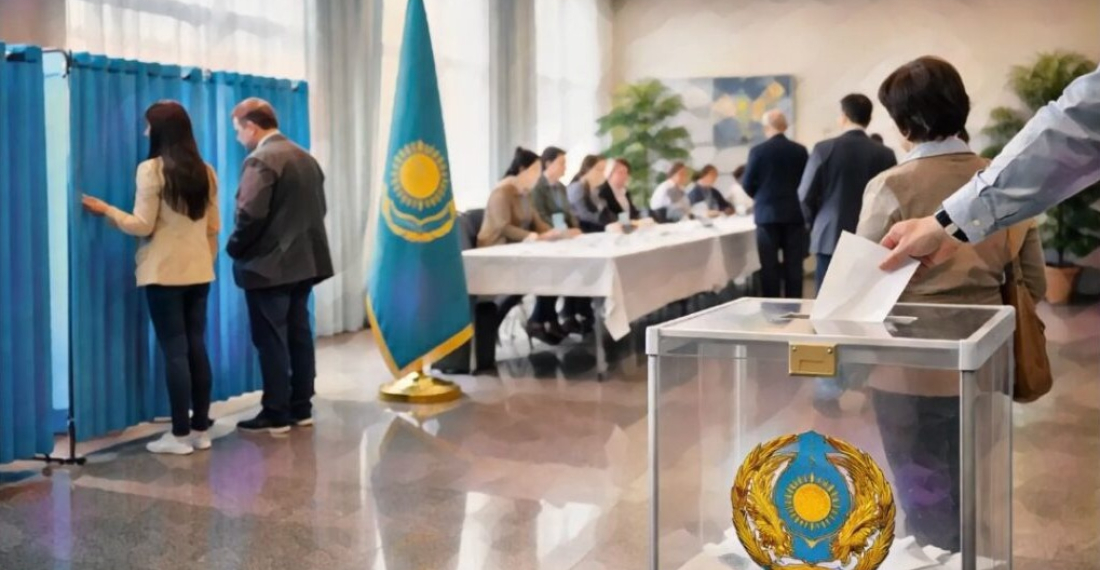
In the midst of these conflicts, on Sunday (15 March), Kazakhstan held a national referendum on a new constitution, marking an important political moment for the country. Voters were asked whether they approve of the proposed constitution, which suggests modernizing governance by clarifying the roles of state institutions, recreating the office of the vice president, strengthening legal frameworks, and improving the protection of fundamental rights. According to the Central Election Commission of Kazakhstan, more than 85 percent voted in favour of the new constitutional draft, with preliminary figures indicating that more than 72 percent of Kazakhstan’s eligible voters took part.
Kate Mallinson argues in her article for Chatham House that when it comes to the proposed changes in Kazakhstan, “China is likely to welcome the transition to a more stable and institutionalized system more akin to its own. But Russia will be wary that the new constitution cements Kazakhstan’s sovereignty and territorial integrity in the face of increasing Russian attempts to assert its influence.”
Human Rights Watch has warned that certain proposed changes could weaken checks on executive power and introduce new restrictions on civil society, including limits on foreign funding for political parties and NGOs, as well as increased reporting requirements. Moreover, there are concerns as the draft removes the reference to international law taking precedence over domestic law.
Proponents of the new constitution argue that the new constitution would “initiate a process of moving Kazakhstan away from authoritarianism towards a system featuring stronger checks and balances.” Whether the new constitution achieves these goals depends on how its 95 provisions will be interpreted and applied.
Source: This briefing was first published on Central Asia Concise on 19 March 2026