War arrives at Central Asia’s doorstep

The Foreign Ministers of the 5 Central Asian countries, as well as Azerbaijan, held an emergency call to discuss and coordinate responses to the conflict in Iran. The meeting not only served for the C6 governments to conduct a dialogue on the situation, but also to coordinate necessary and short-term responses to the evolving situation.

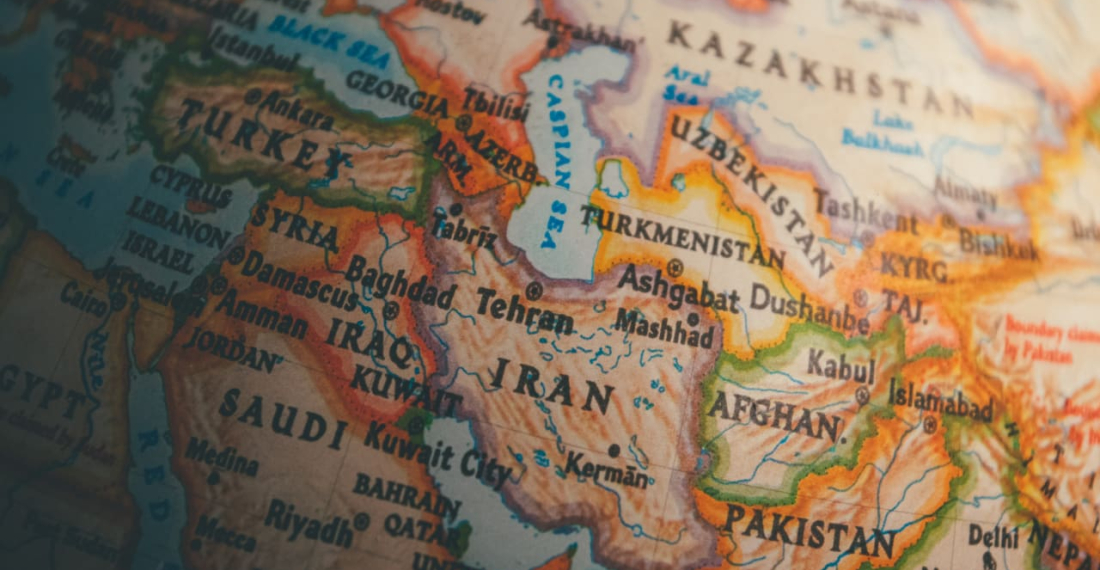
Iran is in close proximity to Central Asian countries, and many Central Asian citizens are present in Gulf countries as well as Iran itself. Uzbekistan has already deployed its diplomats and embassy staff in Ashgabat to the Turkmen border in order to assist Uzbek citizens leaving Iran. Iran and Turkmenistan share a border stretching over 1000km, but Uzbekistan has chosen the Iranian city of Sarakhs for their embassy staff to stand by for Uzbek citizens fleeing the conflict.

Turkmenistan has reportedly opened another four paths alongside the Sarakhs crossing to facilitate foreign nationals leaving Iran. The Russian embassy in Ashgabat has also directed its citizens to leave Iran through these crossings as air travel is heavily restricted. According to Kyrgyz state news, up to 800 citizens are stuck in Qatar, as well as 1,000 in the United Arab Emirates. Furthermore, a significant number of Kyrgyz citizens are currently making their way back to Kyrgyzstan from Saudi Arabia, where they were performing Umrah, the pilgrimage to Mecca.

In contrast to Central Asian governments’ silence on the Iranian protests in 2025, all 5 countries have put out official statements regarding the situation. In brief, the statements called for resolution through peaceful means, restraint, and expressed regret at the human toll the conflict reaps on the region. However, none of them addressed the obvious nature of the war, as a US-Israeli surprise attack on Iran. This should not come as a surprise, as the region, particularly Kazakhstan and Uzbekistan, have moved closer to the US and engaged in key Trump administration initiatives such as the ‘Board of Peace’ and ‘Critical Minerals Ministerial’. Nonetheless, Central Asia has a long history of cooperation with Iran, as is typical of regional neighbours, with Tajikistan also sharing a deeply rooted shared Persian heritage, culture, and language.

As for how the war affects the economic situation of Central Asian countries, the impact remains to be seen. Turkmenistan, whose capital city is only 25km away from the Iranian border, is most exposed, as the country depends on Iranian imports, most critically for food and household items. Uzbekistan is less, but still somewhat exposed, as Iran is a top supplier of dairy and oil. Conversely, for the remaining Central Asian economies, losing the Iranian market is not a massive blow to imports or exports, but further direct and indirect ripple effects may be on the horizon. Iran is a significant trade route to and from Central Asia, as goods were able to travel through the country by truck or rail after arriving in Iranian ports. In contrast to other corridors, this ‘Southern Corridor’ was considered shorter and safer than alternatives. Of course, the war also disrupts major transit hubs outside of Iran, such as the Jebel Ali port in Dubai, a major gateway for goods to Central Asia.

Finally, overall rising energy prices may also have follow-on economic effects, potentially leading to increasing budget expenditures and overall inflation. Questions on how Central Asia will continue to interface with Iran in the long term, both economically and diplomatically, can only begin to be answered after it becomes clear if the Ayatollahs will endure and outlast the US-Israeli assault, or if a new force will emerge to define the future of the Iranian government.

source: This briefing was first published on Central Asia Concise on 5 March 2026
Related articles

Editor's choice
News
Russia adds pressure on Armenia ahead of key elections; recalls Ambassador in Yerevan for consultations

Russia adds pressure on Armenia ahead of key elections; recalls Ambassador in Yerevan for consultations

Ahead of key parliamentary elections,scheduled to be held in Armenia on Sunday, 7 June, Russia continues to attempt to put pressure on the Armenian Government led by prime minister Nikol Pashinyan. On 30 May, Russia recalled its Ambassador to Yerevan for consultations. A terse statement, published on the website of the Russian Foreign Ministry, said, "The Ambassador of the Russian Federation to the Republic of Armenia , S.P. Kopyrkin, has been summoned to Moscow for consultations in connection with the steps taken by the Armenian leadership to move closer to the European Union, which are detrimental to cooperation within the EAEU." This followed a statement issued the day before, by the leaders of the Eurasian Economic Union (EAEU) that challenges the Armenian trajectory towards approximating to the European Union. Vladimir Putin is undertood to have personally pushed the other four EAEU leaders to issue the statement, which said: "Taking into account the significant risks to the economic security of the member states of the Eurasian Economic Union (hereinafter referred to as the Union) arising in connection with the preparation of the Republic of Armenia for accession to the European Union, as well as the need to prevent the associated damage to the member states of the Union: decided that the members of the Eurasian Intergovernmental Council from the Republic of Belarus, the Republic of Kazakhstan, the Kyrgyz Republic and the Russian Federation will report at the next meeting of the Supreme Eurasian Economic Council in December 2026 on the possible consequences of the suspension of the Treaty on the Eurasian Economic Union with respect to the Republic of Armenia. We share the position on the need to hold a national referendum in the Republic of Armenia as soon as possible on joining the European Union or continuing to be part of the Eurasian Economic Union."
Editor's choice
News
The leaders of the states of the Eurasian Economic Union issued a tough statement warning fellow-member state Armenia of the consequences of its desire to join the European Union.

The leaders of the states of the Eurasian Economic Union issued a tough statement warning fellow-member state Armenia of the consequences of its desire to join the European Union.

The leaders of the states of the Eurasian Economic Union (EEAS) issued a tough statement warning fellow-member state Armenia of the consequences of its desire to join the European Union. The stark, sharply worded,  warning, comes days before crucial parliamentary elections in Armenia, scheduled for 7 June. The full statement said, “We, the Presidents of the Republic of Belarus, the Republic of Kazakhstan, the Kyrgyz Republic and the Russian Federation, Taking into account the actions of the Republic of Armenia aimed at joining the European Union, including the approval in 2025 by the National Assembly of the Republic of Armenia and the signing by the President of the Republic of Armenia of the Law of the Republic of Armenia "On the Start of the Process of Accession of the Republic of Armenia to the European Union", as well as the confirmation by the European Union of the European aspirations of the Government of the Republic of Armenia, expressed in the joint declaration following the first Armenia-European Union summit, adopted on 5 May 2026, Taking into account the significant risks to the economic security of the member states of the Eurasian Economic Union (hereinafter referred to as the Union) arising in connection with the preparation of the Republic of Armenia for accession to the European Union, as well as the need to prevent the associated damage to the member states of the Union: decided that the members of the Eurasian Intergovernmental Council from the Republic of Belarus, the Republic of Kazakhstan, the Kyrgyz Republic and the Russian Federation will report at the next meeting of the Supreme Eurasian Economic Council in December 2026 on the possible consequences of the suspension of the Treaty on the Eurasian Economic Union with respect to the Republic of Armenia. We share the position on the need to hold a national referendum in the Republic of Armenia as soon as possible on joining the European Union or continuing to be part of the Eurasian Economic Union. Astana, May 29, 2026” A meeting of the Supreme Eurasian Economic Council was held in Astana, Kazakhstan, on May 29, 2026. The meeting of the Supreme Eurasian Economic Council in a restricted format was attended by Russian President Vladimir Putin, Belarusian President Alexander Lukashenko , Kazakh President Kassym-Jomart Tokayev , Kyrgyz President Sadyr Japarov , Armenian Deputy Prime Minister Mher Grigoryan, and Chairman of the Board of the Eurasian Economic Commission Bakytzhan Sagintayev. From the Russian side, the meeting was also attended by Deputy Prime Minister and member of the Council of the Eurasian Economic Commission Alexey Overchuk and Presidential Aide Yury Ushakov . The heads of delegations from EAEU observer states, including President of Uzbekistan Shavkat Mirziyoyev , Vice President of Cuba Salvador Valdés Mesa, Minister of Industry, Mines, and Trade of Iran Mohammad Atabak, and CIS Secretary General Sergei Lebedev, joined the expanded meeting . Following the meeting of the Supreme Eurasian Economic Council, a number of documents were signed .

Popular

Editor's choice
Interview
Thursday Interview: Murad Muradov

Thursday Interview: Murad Muradov

Today, commonspace.eu starts a new regular weekly series. THURSDAY INTERVIEW, conducted by Lauri Nikulainen, will host  persons who are thinkers, opinion shapers, and implementors in their countries and spheres. We start the series with an interview with Murad Muradov, a leading person in Azerbaijan's think tank community. He is also the first co-chair of the Action Committee for a new Armenian-Azerbaijani Dialogue. Last September he made history by being the first Azerbaijani civil society activist to visit Armenia after the 44 day war, and the start of the peace process. Speaking about this visit Murad Muradov said: "My experience was largely positive. My negative expectations luckily didn’t play out. The discussions were respectful, the panel format bringing together experts from Armenia, Azerbaijan, and Turkey was particularly valuable during the NATO Rose-Roth Seminar in Yerevan, and media coverage, while varied in tone, remained largely constructive. Some media outlets though attempted to represent me as more of a government mouthpiece than an independent expert, which was totally misleading.  Overall, I see these initiatives as important steps in rebuilding trust and normalising professional engagement. The fact that soon a larger Azerbaijani civil society visits to Armenia followed, reinforces the sense that this process is moving in the right direction." (click the image to read the interview in full)