Region

EU plus

Stories in this section cover the EU-27 countries plus the UK, Norway, Switzerland, Iceland, Liechtenstein, Monaco, Andorra and the Balkan Countries (Albania, Serbia, Montenegro, Bosnia-Herzegovina, Kosovo, North Macedonia).

Editor's choice
News
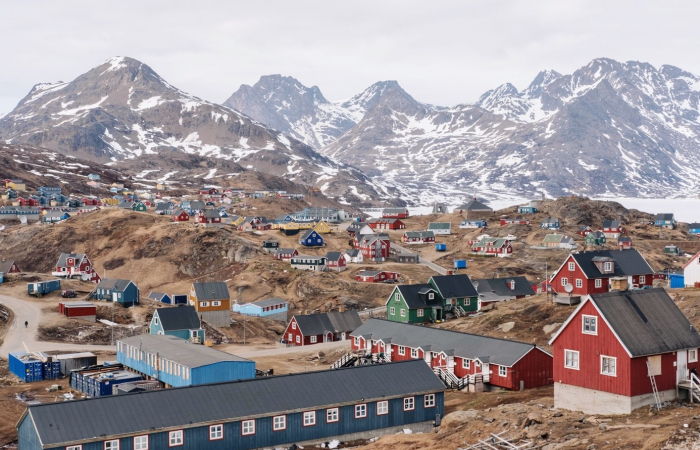
Key European countries back Denmark in the face of Trump's continuing insistence on taking over Greenland

Key European countries back Denmark in the face of Trump's continuing insistence on taking over Greenland

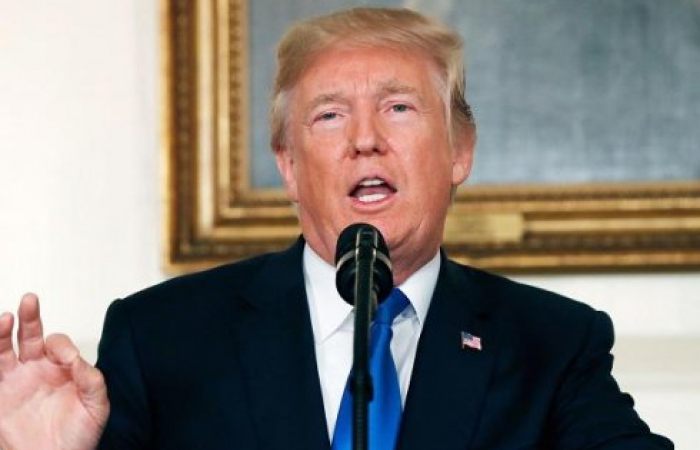
 Six major European countries have declared their support to Denmark following renewed insistence by the US that it must have control over Greenland. "Greenland belongs to its people, and only Denmark and Greenland can decide on matters concerning their relations," said the leaders of the UK, France, Germany, Italy, Poland, and Spain, in a joint statement, issued on Tuesday (6 January), together with Denmark. On Sunday, Donald Trump said the US "needed" Greenland - a semi-autonomous region of fellow Nato member Denmark - for security reasons. He has refused to rule out the use of force to take control of the territory, and Danish Prime Minister Mette Frederiksen warned on Monday that an attack by the US would spell the end of Nato. The issue of Greenland's future resurfaced in the wake of the US military intervention in Venezuela, during which elite troops went in to seize the country's President Nicolás Maduro and take him to face drugs and weapons charges in New York. Following the raid, Trump said the US would "run" Venezuela for an unspecified period of time. He also said the US was returning to an 1823 policy of US supremacy in its sphere of influence in the Western hemisphere - and he warned a number of countries the US could turn its attention to them. The US military raid in Venezuela has reignited fears that the US may consider using force to secure control of Greenland. A day after the raid, Katie Miller - the wife of one of Trump's senior aides - posted on social media a map of Greenland in the colours of the American flag, alongside the word "SOON". On Monday, her husband Stephen Miller said it was "the formal position of the US government that Greenland should be part of the US". In an interview with CNN, he also said the US "is the power of Nato. For the US to secure the Arctic region, to protect and defend Nato and Nato interests, obviously Greenland should be part of the US." Asked repeatedly whether the US would rule out using force to annex it, Miller responded: "Nobody's going to fight the US over the future of Greenland." Stressing they were as keen as the US in Arctic security, the seven European signatories of Tuesday's joint statement said this must be achieved by Nato allies, including the US "collectively" - whilst "upholding the principles of the UN Charter, including sovereignty, territorial integrity and the inviolability of borders". Greenland's Prime Minister Jens-Frederik Nielsen welcomed the statement and called for "respectful dialogue". "The dialogue must take place with respect for the fact that Greenland's status is rooted in international law and the principle of territorial integrity," Nielsen said. Trump has claimed that making Greenland part of the US would serve American security interests due to its strategic location and its abundance of minerals critical to high-tech sectors. Greenland, which has a population of 57,000 people, has had extensive self-government since 1979, though defence and foreign policy remain in Danish hands. While most Greenlanders favour eventual independence from Denmark, opinion polls show overwhelming opposition to becoming part of the US.
Editor's choice
News
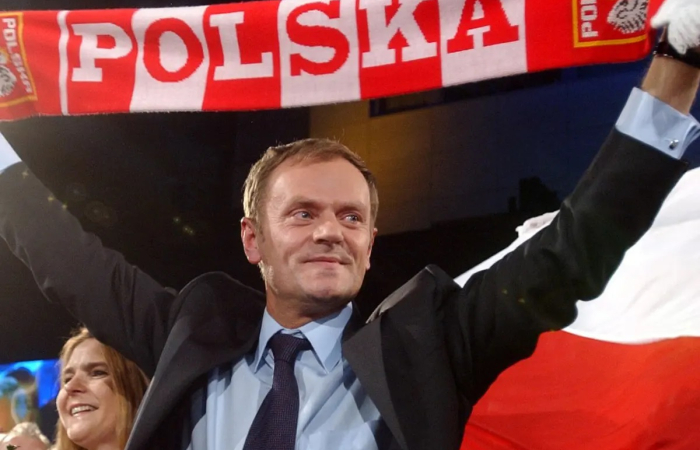
Donald Tusk: "One for all, and all for one! Otherwise we are finished."

Donald Tusk: "One for all, and all for one! Otherwise we are finished."

Europe is rattled by events in Venezuela, and there are serious concerns that US disregard for international law may have consequences close to home.  The BBC diplomatic correspondent, James Landale, said, the question is how Europe may respond in the longer term to America's military operation in Venezuela. Will it provide a catalyst for the continent to take greater responsibility for its own security in the face of so much instability from what many see as an unreliable ally? Polish prime minister, Donald Tusk, appears to have answered the question, saying on social media: "No-one will take seriously a weak and divided Europe: neither enemy nor ally. It is already clear now. "We must finally believe in our own strength, we must continue to arm ourselves, we must stay united like never before. One for all, and all for one. Otherwise, we are finished." The US seizing of Venezuela's leader has faced strong criticism from both America's friends and foes at an emergency meeting of the United Nations Security Council, held on Monday, 5 January. Many member states agreed with the US that Nicolás Maduro had been an illegitimate and repressive leader. But many also condemned the US military action as a breach of international law and the UN Charter, and they demanded a democratic transition that reflected the will of the Venezuelan people. (click the image to read the full article).

Filter archive

Publication date
Editor's choice
Monday Commentary
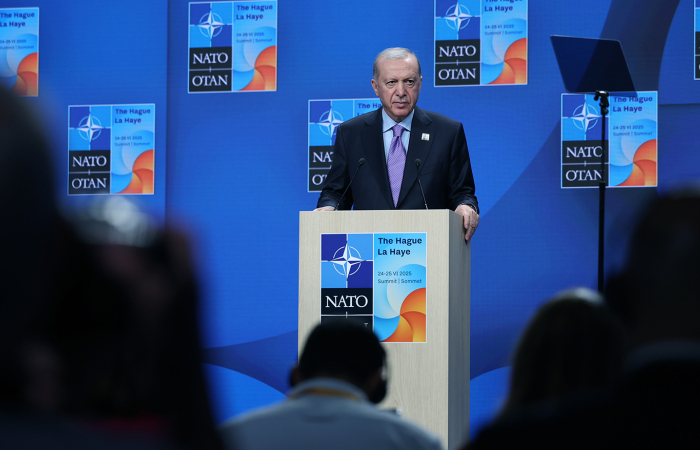
Monday Commentary: NATO Summit in The Hague II: everyone survived, now all eyes on Türkiye

Monday Commentary: NATO Summit in The Hague II: everyone survived, now all eyes on Türkiye

The Nato Summit held in The Hague on 24-25 June was a failure, wrapped in success. It was a success because it avoided public display of divisions, mainly by avoiding issues: it was the shortest summit anyone can remember; it also had a very short final statement that basically had two points, the first a re-commitment to article 5 of the North Atlantic Charter and the principle that an attack on one will be considered an attack on all. The fact that Nato leaders in the Hague had felt the need to re-emphasise this should be a cause of worry not celebration, but in the end, it is good that it was said. The second outcome, the one that received most attention, was the commitment of European countries to spend more on their defence: 5 per cent of GDP, of which 3.5 per cent on hard defence, and 1.5 per cent on related ancillary areas such as infrastructure. You may, if you want, believe that this was a response to US President Donald Trump's insistence. Or, if you are more prudent, understand that countries that matter – Germany, France, Poland and the Scandinavian countries had decided on this course of action quite separately, and as a response to Russia’s invasion of Ukraine, which was a wake-up call. Finland and Sweden’s decision to abandon their neutrality, and join NATO was taken long before Trump returned to the White House. The EU’s decision to spend massively on defence was always to ensure that other European countries are part of this process, willy-nilly.
Editor's choice
News
Several countries bordering Russia will leave the Ottawa Convention which bans land mines

Several countries bordering Russia will leave the Ottawa Convention which bans land mines

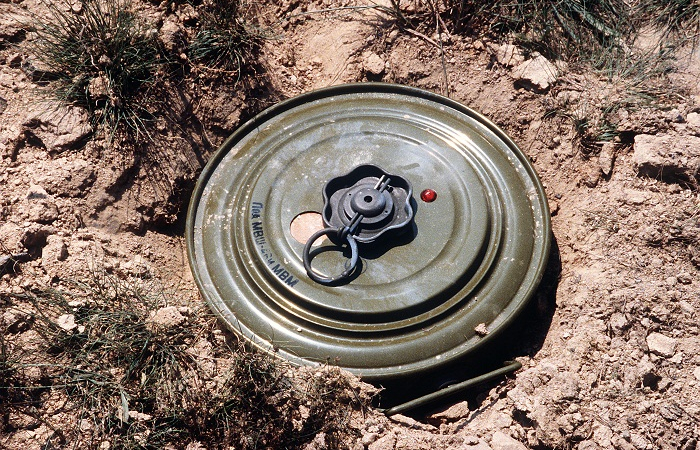
Several countries that border Russia intend to leave the Ottawa Convention which bans anti personnel land mines. They include EU member states Finland, Poland, Latvia, Lithuania and Estonia, as well as Ukraine. Russia has not signed the Ottawa treaty and continues to stockpile and use landmines. Ukraine is withdrawing from the Ottawa Convention, which prohibits the use, stockpiling and production of anti-personnel mines, according to Roman Kostenko, People's Deputy of the Golos party and Secretary of the Committee on National Security, Defense and Intelligence of the Verkhovna Rada of Ukraine . He said this is a step that the realities of war have long required. "Russia is not a party to this convention and is massively using mines against our military and civilians. We cannot remain constrained in conditions where the enemy has no restrictions," the MP noted.
Editor's choice
News
Georgian Parliament Speaker says EU Funding is Promoting ‘Hatred, Violence, and Propaganda’ in Georgia

Georgian Parliament Speaker says EU Funding is Promoting ‘Hatred, Violence, and Propaganda’ in Georgia

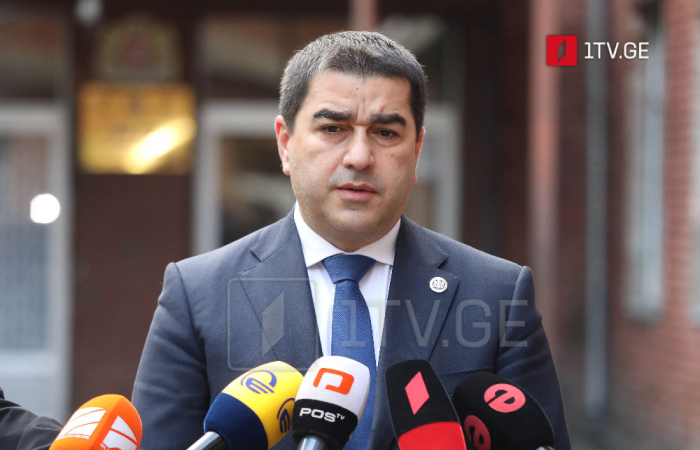
Georgian Parliament Speaker Shalva Papuashvili has severely criticised how funding from the European Union is being implemented in Georgia saying that ministers from European Union Member States and EU Commissioners are making unjustified critical statements about Georgia while hatred, violence, and propaganda are being encouraged in the country with EU funding. According to the Georgian Public Broadcaster, Papuashvili said he was troubled by the narrative heard from various ministers from EU Member States before the meeting of the Foreign Affairs Council held on 23rd June claiming that “disinformation is being spread about some alleged democratic backsliding or walking the wrong path”.
Editor's choice
News
Spain wants the EU to immediately suspend its association agreement with Israel

Spain wants the EU to immediately suspend its association agreement with Israel

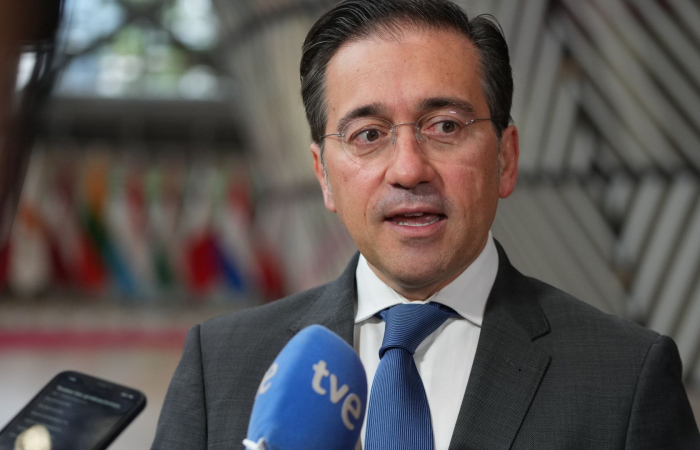
​​​​​​​Spanish Foreign Minister José Manuel Albares will ask EU ministers in Brussels to suspend the agreement with Israel with immediate effect. According to Albares, "The time for words and statements is over", and he added that "The Palestinians in Gaza have no time to lose."
Editor's choice
Monday Commentary
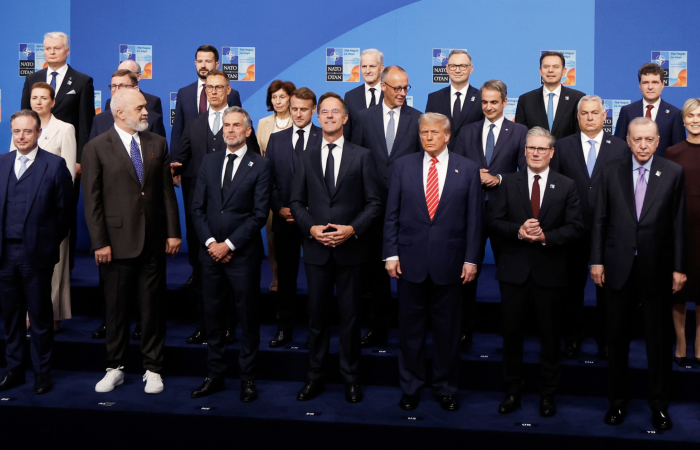
Monday Commentary: NATO in The Hague: a summit like no other

Monday Commentary: NATO in The Hague: a summit like no other

NATO summits are usually orderly affairs, prepared well in advance, and an opportunity for the partners in the military alliance to show unity and resolve. The forthcoming Nato Summit in The Hague, on Tuesday and Wednesday, 24 and 25 June is different. As the BBC put it, there will be 32 leaders from Europe and North America present, but “only one man matters  - NATO's summit is all about Trump”. With three wars on its borders, NATO needed a good summit in The Hague. Whilst managing Mr Trump, the 31 other leaders in The Hague need to think of the future.