Region

EU plus

Stories in this section cover the EU-27 countries plus the UK, Norway, Switzerland, Iceland, Liechtenstein, Monaco, Andorra and the Balkan Countries (Albania, Serbia, Montenegro, Bosnia-Herzegovina, Kosovo, North Macedonia).

Editor's choice
News
Key European countries back Denmark in the face of Trump's continuing insistence on taking over Greenland

Key European countries back Denmark in the face of Trump's continuing insistence on taking over Greenland

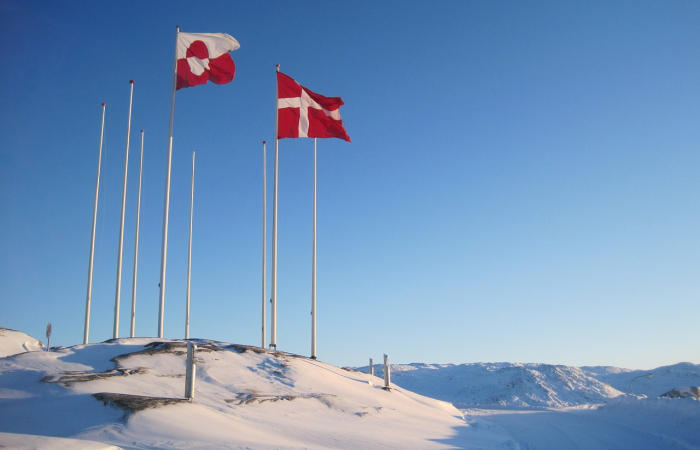
 Six major European countries have declared their support to Denmark following renewed insistence by the US that it must have control over Greenland. "Greenland belongs to its people, and only Denmark and Greenland can decide on matters concerning their relations," said the leaders of the UK, France, Germany, Italy, Poland, and Spain, in a joint statement, issued on Tuesday (6 January), together with Denmark. On Sunday, Donald Trump said the US "needed" Greenland - a semi-autonomous region of fellow Nato member Denmark - for security reasons. He has refused to rule out the use of force to take control of the territory, and Danish Prime Minister Mette Frederiksen warned on Monday that an attack by the US would spell the end of Nato. The issue of Greenland's future resurfaced in the wake of the US military intervention in Venezuela, during which elite troops went in to seize the country's President Nicolás Maduro and take him to face drugs and weapons charges in New York. Following the raid, Trump said the US would "run" Venezuela for an unspecified period of time. He also said the US was returning to an 1823 policy of US supremacy in its sphere of influence in the Western hemisphere - and he warned a number of countries the US could turn its attention to them. The US military raid in Venezuela has reignited fears that the US may consider using force to secure control of Greenland. A day after the raid, Katie Miller - the wife of one of Trump's senior aides - posted on social media a map of Greenland in the colours of the American flag, alongside the word "SOON". On Monday, her husband Stephen Miller said it was "the formal position of the US government that Greenland should be part of the US". In an interview with CNN, he also said the US "is the power of Nato. For the US to secure the Arctic region, to protect and defend Nato and Nato interests, obviously Greenland should be part of the US." Asked repeatedly whether the US would rule out using force to annex it, Miller responded: "Nobody's going to fight the US over the future of Greenland." Stressing they were as keen as the US in Arctic security, the seven European signatories of Tuesday's joint statement said this must be achieved by Nato allies, including the US "collectively" - whilst "upholding the principles of the UN Charter, including sovereignty, territorial integrity and the inviolability of borders". Greenland's Prime Minister Jens-Frederik Nielsen welcomed the statement and called for "respectful dialogue". "The dialogue must take place with respect for the fact that Greenland's status is rooted in international law and the principle of territorial integrity," Nielsen said. Trump has claimed that making Greenland part of the US would serve American security interests due to its strategic location and its abundance of minerals critical to high-tech sectors. Greenland, which has a population of 57,000 people, has had extensive self-government since 1979, though defence and foreign policy remain in Danish hands. While most Greenlanders favour eventual independence from Denmark, opinion polls show overwhelming opposition to becoming part of the US.
Editor's choice
News
Donald Tusk: "One for all, and all for one! Otherwise we are finished."

Donald Tusk: "One for all, and all for one! Otherwise we are finished."

Europe is rattled by events in Venezuela, and there are serious concerns that US disregard for international law may have consequences close to home.  The BBC diplomatic correspondent, James Landale, said, the question is how Europe may respond in the longer term to America's military operation in Venezuela. Will it provide a catalyst for the continent to take greater responsibility for its own security in the face of so much instability from what many see as an unreliable ally? Polish prime minister, Donald Tusk, appears to have answered the question, saying on social media: "No-one will take seriously a weak and divided Europe: neither enemy nor ally. It is already clear now. "We must finally believe in our own strength, we must continue to arm ourselves, we must stay united like never before. One for all, and all for one. Otherwise, we are finished." The US seizing of Venezuela's leader has faced strong criticism from both America's friends and foes at an emergency meeting of the United Nations Security Council, held on Monday, 5 January. Many member states agreed with the US that Nicolás Maduro had been an illegitimate and repressive leader. But many also condemned the US military action as a breach of international law and the UN Charter, and they demanded a democratic transition that reflected the will of the Venezuelan people. (click the image to read the full article).

Filter archive

Publication date
Editor's choice
News
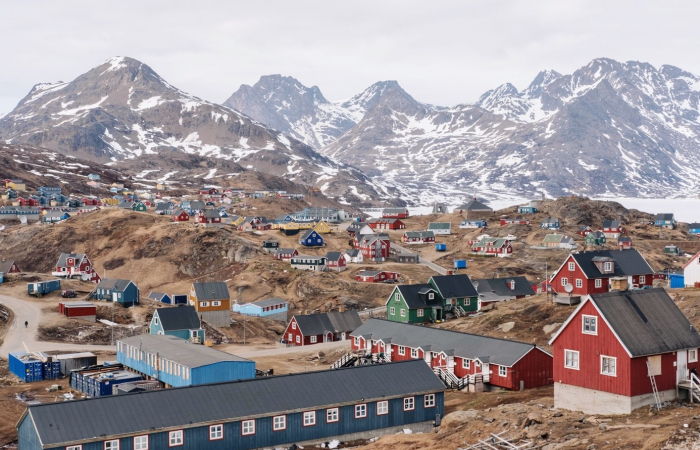
Key European countries back Denmark in the face of Trump's continuing insistence on taking over Greenland

Key European countries back Denmark in the face of Trump's continuing insistence on taking over Greenland

 Six major European countries have declared their support to Denmark following renewed insistence by the US that it must have control over Greenland. "Greenland belongs to its people, and only Denmark and Greenland can decide on matters concerning their relations," said the leaders of the UK, France, Germany, Italy, Poland, and Spain, in a joint statement, issued on Tuesday (6 January), together with Denmark. On Sunday, Donald Trump said the US "needed" Greenland - a semi-autonomous region of fellow Nato member Denmark - for security reasons. He has refused to rule out the use of force to take control of the territory, and Danish Prime Minister Mette Frederiksen warned on Monday that an attack by the US would spell the end of Nato. The issue of Greenland's future resurfaced in the wake of the US military intervention in Venezuela, during which elite troops went in to seize the country's President Nicolás Maduro and take him to face drugs and weapons charges in New York. Following the raid, Trump said the US would "run" Venezuela for an unspecified period of time. He also said the US was returning to an 1823 policy of US supremacy in its sphere of influence in the Western hemisphere - and he warned a number of countries the US could turn its attention to them. The US military raid in Venezuela has reignited fears that the US may consider using force to secure control of Greenland. A day after the raid, Katie Miller - the wife of one of Trump's senior aides - posted on social media a map of Greenland in the colours of the American flag, alongside the word "SOON". On Monday, her husband Stephen Miller said it was "the formal position of the US government that Greenland should be part of the US". In an interview with CNN, he also said the US "is the power of Nato. For the US to secure the Arctic region, to protect and defend Nato and Nato interests, obviously Greenland should be part of the US." Asked repeatedly whether the US would rule out using force to annex it, Miller responded: "Nobody's going to fight the US over the future of Greenland." Stressing they were as keen as the US in Arctic security, the seven European signatories of Tuesday's joint statement said this must be achieved by Nato allies, including the US "collectively" - whilst "upholding the principles of the UN Charter, including sovereignty, territorial integrity and the inviolability of borders". Greenland's Prime Minister Jens-Frederik Nielsen welcomed the statement and called for "respectful dialogue". "The dialogue must take place with respect for the fact that Greenland's status is rooted in international law and the principle of territorial integrity," Nielsen said. Trump has claimed that making Greenland part of the US would serve American security interests due to its strategic location and its abundance of minerals critical to high-tech sectors. Greenland, which has a population of 57,000 people, has had extensive self-government since 1979, though defence and foreign policy remain in Danish hands. While most Greenlanders favour eventual independence from Denmark, opinion polls show overwhelming opposition to becoming part of the US.
Editor's choice
News
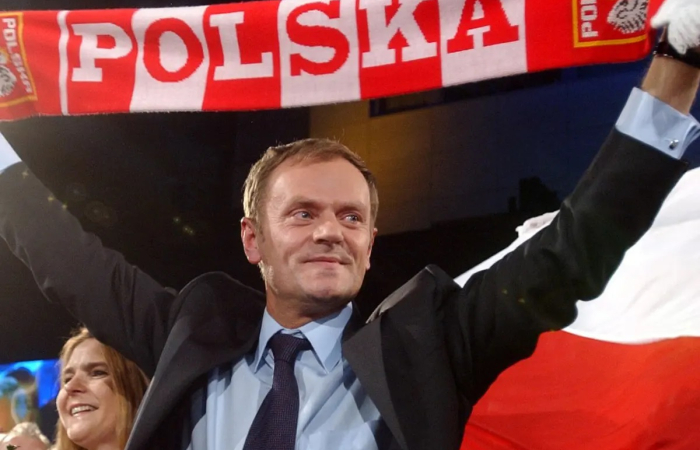
Donald Tusk: "One for all, and all for one! Otherwise we are finished."

Donald Tusk: "One for all, and all for one! Otherwise we are finished."

Europe is rattled by events in Venezuela, and there are serious concerns that US disregard for international law may have consequences close to home.  The BBC diplomatic correspondent, James Landale, said, the question is how Europe may respond in the longer term to America's military operation in Venezuela. Will it provide a catalyst for the continent to take greater responsibility for its own security in the face of so much instability from what many see as an unreliable ally? Polish prime minister, Donald Tusk, appears to have answered the question, saying on social media: "No-one will take seriously a weak and divided Europe: neither enemy nor ally. It is already clear now. "We must finally believe in our own strength, we must continue to arm ourselves, we must stay united like never before. One for all, and all for one. Otherwise, we are finished." The US seizing of Venezuela's leader has faced strong criticism from both America's friends and foes at an emergency meeting of the United Nations Security Council, held on Monday, 5 January. Many member states agreed with the US that Nicolás Maduro had been an illegitimate and repressive leader. But many also condemned the US military action as a breach of international law and the UN Charter, and they demanded a democratic transition that reflected the will of the Venezuelan people. (click the image to read the full article).
Editor's choice
News
Keir Starmer: Only Greenland and Denmark should decide the future of Greenland

Keir Starmer: Only Greenland and Denmark should decide the future of Greenland

Only Greenland and Denmark should decide the future of Greenland, British Prime Minister Sir Keir Starmer has told the BBC. It comes after President Trump again said "we need Greenland from the standpoint of national security". Both Greenland's prime minister and Denmark's prime minister strongly rejected the idea over the weekend. Greenland's Prime Minister Jens Frederik Nielsen responded to Trump's latest comments by saying "that's enough now" and described the notion of US control over the island as a "fantasy". Meanwhile, Denmark's Prime Minister Mette Frederiksen had said "the US has no right to annex any of the three nations in the Danish kingdom". Asked whether he would also say to President Trump "hands off Greenland", Sir Keir's response was definitive, when so often in diplomacy answers are caveated and nuanced. "Yes," he replied. "Greenland and the Kingdom of Denmark must decide the future of Greenland and only Greenland and the Kingdom of Denmark. "And Denmark is a close ally in Europe, is a Nato ally and it is very important that the future of Greenland is for the Kingdom of Denmark and for Greenland themselves and only for Greenland and the Kingdom of Denmark."
Editor's choice
News
Trump still wants Greenland. "We have to have it", he insists.

Trump still wants Greenland. "We have to have it", he insists.

Donald Trump still wants Greenland. "We have to have it", the US president insists. He has sparked a fresh row with Denmark after appointing a special envoy to Greenland.   In response to a question from the BBC about the new role of Jeff Landry, the Republican governor of Louisiana, Trump said the US needed Greenland for "national protection" and that "we have to have it". Trump specifically mentioned Chinese and Russian ships as potential threats in the nearby seas. Greenland, home to about 57,000 people, has had extensive self-government since 1979, though defence and foreign policy remain in Danish hands. While most Greenlanders favour eventual independence from Denmark, opinion polls show overwhelming opposition to becoming part of the US. (click the image to read the full story).
Editor's choice
News
European leaders set out their plan for Ukraine

European leaders set out their plan for Ukraine

The leaders of Germany, Denmark, Finland, France, Italy, Netherlands, Norway, Poland, Sweden, and United Kingdom, together with the President of the European Council, and the President of the European Commission, o  Monday (15 December) issued a statement, outlining their plan for Ukraine. In their statement, Chancellor Merz, Prime Minister Frederiksen, President Stubb, President Macron, Prime Minister Meloni, Prime Minister Schoof, Prime Minister Støre, Prime Minister Tusk, Prime Minister Kristersson, Prime Minister Starmer, as well as President Costa and President von der Leyen spoke about "Peace for Ukraine". The Leaders welcomed significant progress on President Trump’s efforts to secure a just and lasting peace in Ukraine. They also welcomed the close work between President Zelenskyy’s and President Trump’s teams as well as European teams over the recent days and weeks. They agreed to work together with President Trump and President Zelenskyy to get to a lasting peace which preserves Ukrainian sovereignty and European security. Leaders appreciated the strong convergence between the United States, Ukraine and Europe. Leaders agreed that ensuring the security, sovereignty, and prosperity of Ukraine was integral for wider Euro-Atlantic security. They were clear that Ukraine and its people deserved a prosperous, independent, and sovereign future, free from fear of future Russian aggression. Both the US and European leaders committed to work together to provide robust security guarantees and economic recovery support measures for Ukraine in the context of an agreement on ending the war. This would include commitments to: Provide sustained and significant support to Ukraine to build its armed forces, which should remain at a peacetime level of 800,000 to be able to deter conflict and defend Ukraine’s territory. A European-led ‘multinational force Ukraine’ made up from contributions from willing nations within the framework of the Coalition of the Willing and supported by the US. It will assist in the regeneration of Ukraine’s forces, in securing Ukraine’s skies, and in supporting safer seas, including through operating inside Ukraine. (Click the image to read the statement in full).
Editor's choice
News
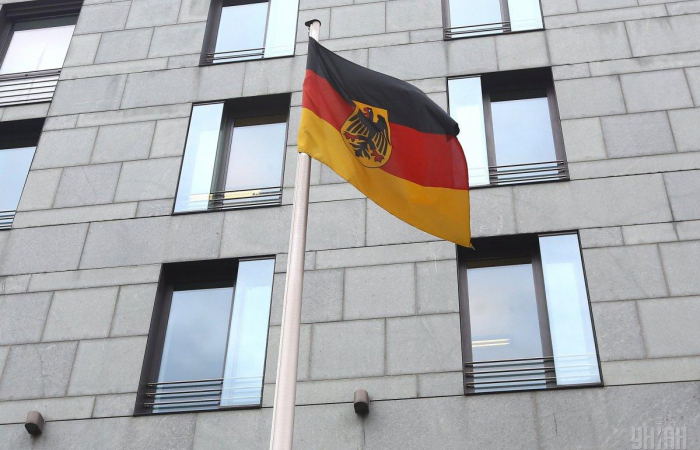
Germany accuses Russia of cyberattacks and disinformation campaign

Germany accuses Russia of cyberattacks and disinformation campaign

The German government holds Russia responsible for a cyberattack on German air traffic control, and for targeted disinformation campaigns before the last federal election. According to the German Foreign Office in Berlin, the incidents could be clearly attributed to the Russian military intelligence service, the GRU. In response, the Russian ambassador to Berlin was summoned to the Foreign Ministry. "We have been observing a massive increase in threatening hybrid activities by Russia for some time now," a spokesperson for the Foreign Ministry stated. These range from disinformation campaigns and espionage to cyberattacks and sabotage attempts. The aim is to divide society, sow distrust, and undermine confidence in democratic institutions. The spokesperson added that with these actions, Russia is "very concretely threatening our security, not only through its war of aggression against Ukraine, but also here in Germany."  The Foreign Ministry spokesperson explained that the cyberattack on air traffic control in August 2024 was clearly attributed to the hacker collective "APT28," known as "Fancy Bear," and to the responsibility of the Russian military intelligence service, the GRU. Furthermore, it could now be "conclusively stated" that Russia had attempted "to influence and destabilize both the last Federal election and the ongoing internal affairs of the Federal Republic of Germany." There was "absolutely irrefutable evidence" for this". The so-called "Storm 1516" campaign, which has been running since 2024, is allegedly backed by "reliable information" that the Moscow-based think tank "Center for Geopolitical Expertise" is behind it. The Center is also said to be supported by Russian military intelligence. Its primary aim is to influence democratic elections in the West. (Click the image to read more).
Editor's choice
News
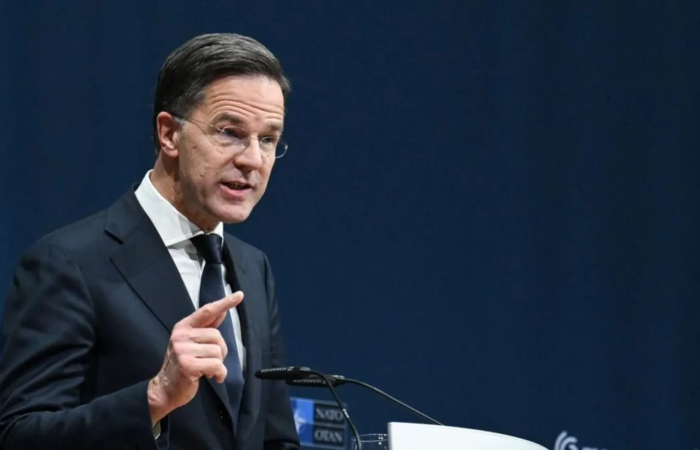
NATO Chief says war is on Europe's doorstep, and warns against complacency

NATO Chief says war is on Europe's doorstep, and warns against complacency

Russia could attack a NATO country within the next five years, the Secretary General of NATO, Mark Rutte, said in a stark new warning. "NATO's own defences can hold for now," Rutte warned in Berlin, but conflict was "next door" to Europe, and he feared "too many are quietly complacent, and too many don't feel the urgency, too many believe that time is on our side. "Russia is already escalating its covert campaign against our societies," Rutte said in a speech in Germany. "We must be prepared for the scale of war our grandparents or great-grandparents endured." Earlier this month, Russia's President Vladimir Putin said his country was not planning to go to war with Europe, but it was ready "right now" if Europe wanted to - or started a war. But similar reassurances were given by Moscow in 2022, just before 200,000 Russian troops crossed the border and invaded Ukraine. Putin has accused European countries of hindering US efforts to bring peace in Ukraine - a reference to the role Ukraine's European allies have recently played in trying to change a US peace plan to end the war, whose initial draft was seen as favouring Russia. But Putin was not sincere, Nato's secretary-general said in the German capital, Berlin. Supporting Ukraine, he added, was a guarantee for European security. "Just imagine if Putin got his way; Ukraine under the boot of Russian occupation, his forces pressing against a longer border with Nato, and the significantly increased risk of an armed attack against us." Russia's economy has been on a war footing for more than three years now - its factories churn out ever more supplies of drones, missiles and artillery shells. According to a recent report by the Kiel Institute for the World Economy, Russia has been producing each month around 150 tanks, 550 infantry fighting vehicles, 120 Lancet drones and more than 50 artillery pieces. The UK, and most of its Western allies, are simply not anywhere near this point. Analysts say it would take years for Western Europe's factories to come close to matching Russia's mass-production of weapons. "Allied defence spending and production must rise rapidly, our armed forces must have what they need to keep us safe," the Nato chief said.