Region

EU plus

Stories in this section cover the EU-27 countries plus the UK, Norway, Switzerland, Iceland, Liechtenstein, Monaco, Andorra and the Balkan Countries (Albania, Serbia, Montenegro, Bosnia-Herzegovina, Kosovo, North Macedonia).

Editor's choice
News
Key European countries back Denmark in the face of Trump's continuing insistence on taking over Greenland

Key European countries back Denmark in the face of Trump's continuing insistence on taking over Greenland

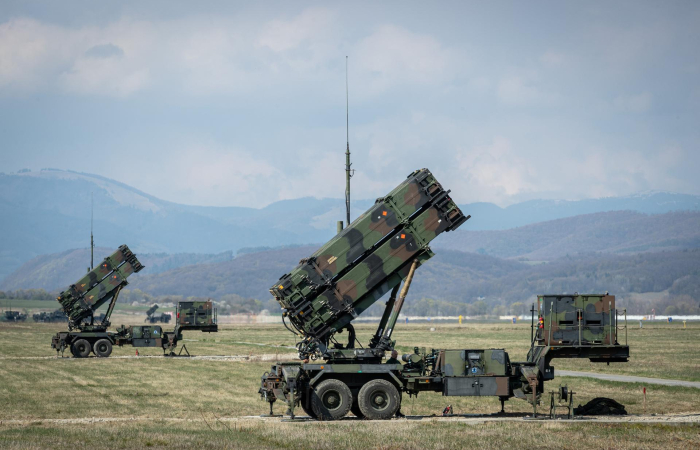
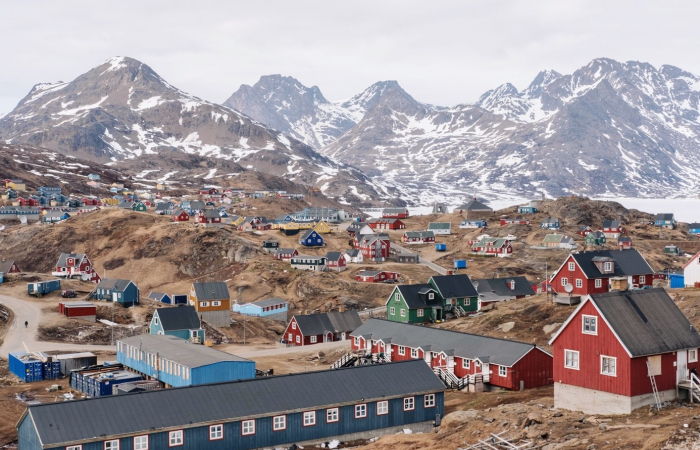
 Six major European countries have declared their support to Denmark following renewed insistence by the US that it must have control over Greenland. "Greenland belongs to its people, and only Denmark and Greenland can decide on matters concerning their relations," said the leaders of the UK, France, Germany, Italy, Poland, and Spain, in a joint statement, issued on Tuesday (6 January), together with Denmark. On Sunday, Donald Trump said the US "needed" Greenland - a semi-autonomous region of fellow Nato member Denmark - for security reasons. He has refused to rule out the use of force to take control of the territory, and Danish Prime Minister Mette Frederiksen warned on Monday that an attack by the US would spell the end of Nato. The issue of Greenland's future resurfaced in the wake of the US military intervention in Venezuela, during which elite troops went in to seize the country's President Nicolás Maduro and take him to face drugs and weapons charges in New York. Following the raid, Trump said the US would "run" Venezuela for an unspecified period of time. He also said the US was returning to an 1823 policy of US supremacy in its sphere of influence in the Western hemisphere - and he warned a number of countries the US could turn its attention to them. The US military raid in Venezuela has reignited fears that the US may consider using force to secure control of Greenland. A day after the raid, Katie Miller - the wife of one of Trump's senior aides - posted on social media a map of Greenland in the colours of the American flag, alongside the word "SOON". On Monday, her husband Stephen Miller said it was "the formal position of the US government that Greenland should be part of the US". In an interview with CNN, he also said the US "is the power of Nato. For the US to secure the Arctic region, to protect and defend Nato and Nato interests, obviously Greenland should be part of the US." Asked repeatedly whether the US would rule out using force to annex it, Miller responded: "Nobody's going to fight the US over the future of Greenland." Stressing they were as keen as the US in Arctic security, the seven European signatories of Tuesday's joint statement said this must be achieved by Nato allies, including the US "collectively" - whilst "upholding the principles of the UN Charter, including sovereignty, territorial integrity and the inviolability of borders". Greenland's Prime Minister Jens-Frederik Nielsen welcomed the statement and called for "respectful dialogue". "The dialogue must take place with respect for the fact that Greenland's status is rooted in international law and the principle of territorial integrity," Nielsen said. Trump has claimed that making Greenland part of the US would serve American security interests due to its strategic location and its abundance of minerals critical to high-tech sectors. Greenland, which has a population of 57,000 people, has had extensive self-government since 1979, though defence and foreign policy remain in Danish hands. While most Greenlanders favour eventual independence from Denmark, opinion polls show overwhelming opposition to becoming part of the US.
Editor's choice
News
Donald Tusk: "One for all, and all for one! Otherwise we are finished."

Donald Tusk: "One for all, and all for one! Otherwise we are finished."

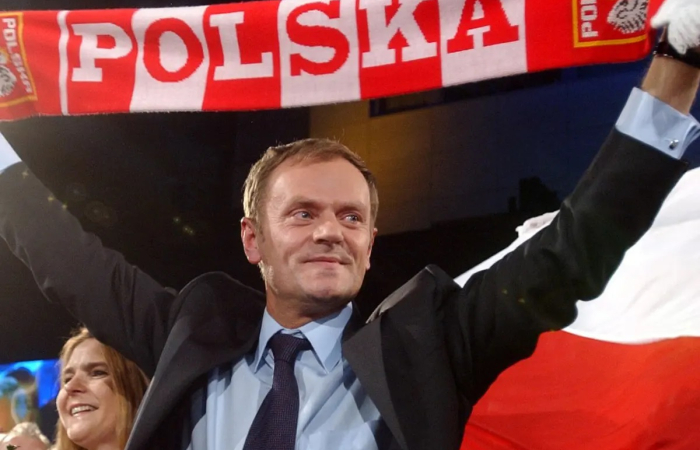
Europe is rattled by events in Venezuela, and there are serious concerns that US disregard for international law may have consequences close to home.  The BBC diplomatic correspondent, James Landale, said, the question is how Europe may respond in the longer term to America's military operation in Venezuela. Will it provide a catalyst for the continent to take greater responsibility for its own security in the face of so much instability from what many see as an unreliable ally? Polish prime minister, Donald Tusk, appears to have answered the question, saying on social media: "No-one will take seriously a weak and divided Europe: neither enemy nor ally. It is already clear now. "We must finally believe in our own strength, we must continue to arm ourselves, we must stay united like never before. One for all, and all for one. Otherwise, we are finished." The US seizing of Venezuela's leader has faced strong criticism from both America's friends and foes at an emergency meeting of the United Nations Security Council, held on Monday, 5 January. Many member states agreed with the US that Nicolás Maduro had been an illegitimate and repressive leader. But many also condemned the US military action as a breach of international law and the UN Charter, and they demanded a democratic transition that reflected the will of the Venezuelan people. (click the image to read the full article).

Filter archive

Publication date
Editor's choice
News
France to Recognise Palestine at UN General Assembly in September

France to Recognise Palestine at UN General Assembly in September

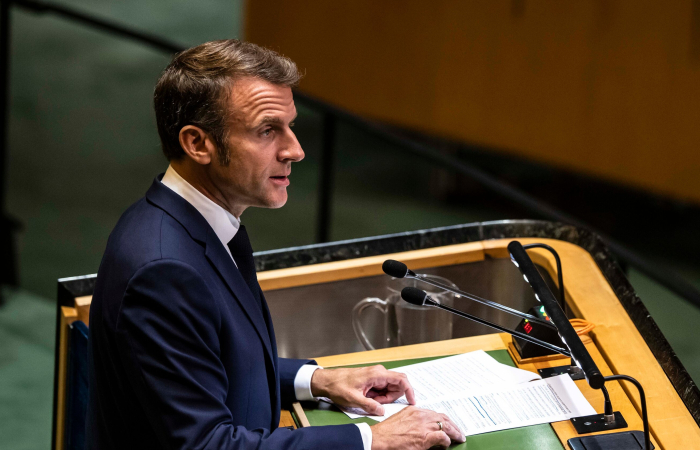
French President Emmanuel Macron announced on X last night (24 July) that France will officially recognise the State of Palestine at the United Nations General Assembly in September. He described this as a "solemn" act in support of a lasting and just peace in the Middle East.
Editor's choice
News
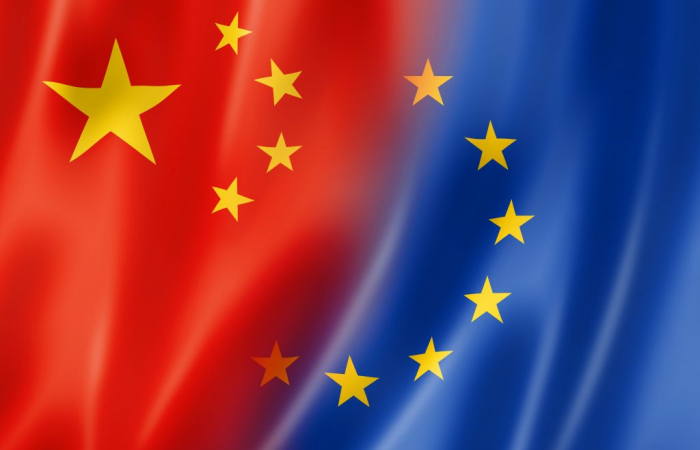
China and the EU agree on climate change action in Beijing summit but disagree on trade and Ukraine

China and the EU agree on climate change action in Beijing summit but disagree on trade and Ukraine

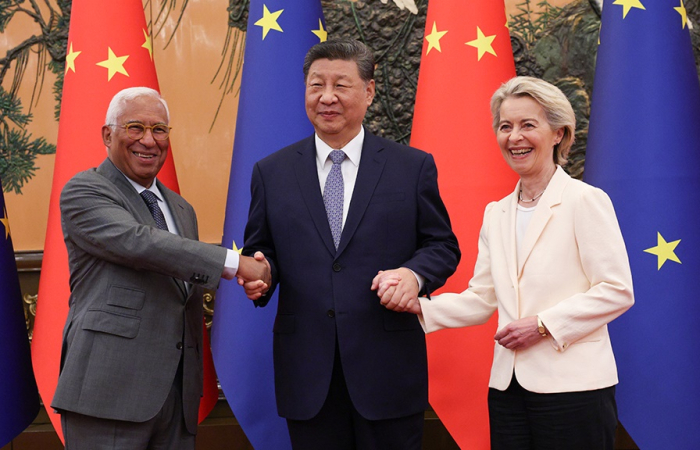
China and the European Union have issued a joint call to action on climate change during an otherwise tense bilateral summit in Beijing on Thursday 24 July but major disagreements remain over trade and the war in Ukraine.  The two sides issued a joint statement on climate change, urging more emission cuts and greater use of green technology and affirming their support for the Paris Climate Agreement as well as calling for strong action at the upcoming COP30 climate summit in Brazil. European Council President António Costa called on China to use its influence over Russia to bring an end to the war in Ukraine, a long-standing plea from European leaders that is likely to fall once again on deaf ears.
Editor's choice
News
Ukraine protests continue as Zelenskyy offers new anti-corruption bill after European pressure

Ukraine protests continue as Zelenskyy offers new anti-corruption bill after European pressure

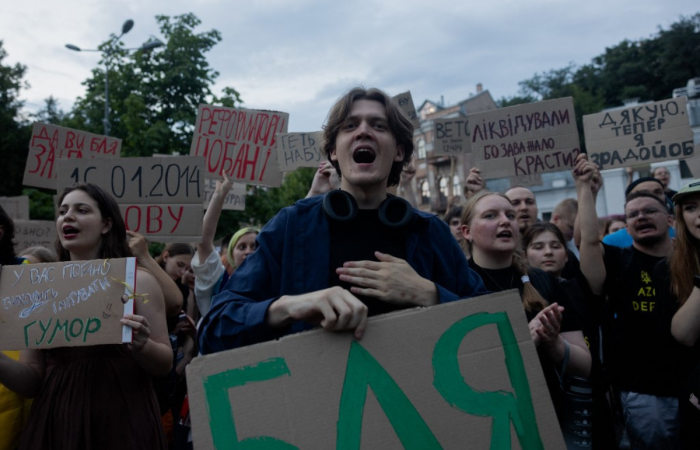
Ukrainians are taking to the streets to protest a new law they worry will undermine the work of two key anti-corruption agencies and erode the independence of bodies meant to provide a check on power. Protests are growing and spreading around the country even as President Volodymyr Zelenskyy offered a vague new bill to alleviate demonstrators’ concerns. After a day of pressure from Ukrainian citizens, the European Commission and many European governments, Zelenskyy said he “heard the public opinion” and promised to fix the situation with a new bill that he pledged would preserve the independence of corruption agencies.
Editor's choice
News
UK, Canada and majority of EU Member States condemn Israel for ‘inhumane killing’ and say the war in Gaza ‘must end now’.

UK, Canada and majority of EU Member States condemn Israel for ‘inhumane killing’ and say the war in Gaza ‘must end now’.

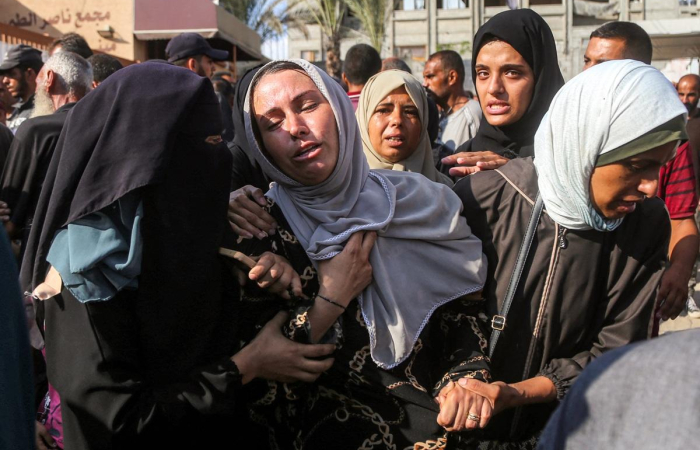
Israel’s isolation is increasing as twenty eight countries including the United Kingdom and a majority of Member States of the European Union issued a joint statement on Monday 21 July saying the war in Gaza “must end now” and condemning Israel over 'inhumane killing' of Gaza civilians seeking aid. The foreign ministers of countries, also including Australia, Canada, the Netherlands, France, Italy and Japan, said “the suffering of civilians in Gaza has reached new depths.” The statement described as “horrifying” the recent deaths of over 800 Palestinians who were seeking aid, according to the figures released by Gaza’s Health Ministry and the U.N. human rights office.
Editor's choice
News
A shortened EU-China summit on Thursday will be a test for both sides

A shortened EU-China summit on Thursday will be a test for both sides

European Council President, Antonio Costa, Commission President, Ursula von der Leyen, and EU High Representative for Foreign and Security Policy, Kaya Kallas, will travel to Beijing next week to participate in the EU-China summit on Thursday (24 July). The summit has already been cut from two days to one, reflecting an increasing realisation on both sides that the chance of making progress on many issues in the bilateral agenda is small. The summit on 24 July, coincides with the 50th anniversary of relations between China and the EU, and no doubt China will want to throw a party. Chinese President, Xi Jinping, and prime minister, Li Qiange, are expected to participate in the summit. But the feeling in Brussels is that in the fifty years China had failed to create a level playing field. Whilst Chinese companies, academics and individuals had a free hand in the open European system across the continent, European companies struggled to exist , let alone compete, in China. In a key speech in 2023, van der Leyen spoke about the need of the EU to “de risk” its ties with China. But the issue that has really marred relations is Ukraine. China has failed to understand the significance of the situation in Ukraine for Europe. Chinese support for the Russian position diplomatically, as well as more tangibly, has cast a serious cloud over relations. This was seen clearly a few days ago in a four hour meeting in Brussels, between Kallas and Chinese foreign minister, Wang Yi, described as being “respectful, but tense”.
Editor's choice
News
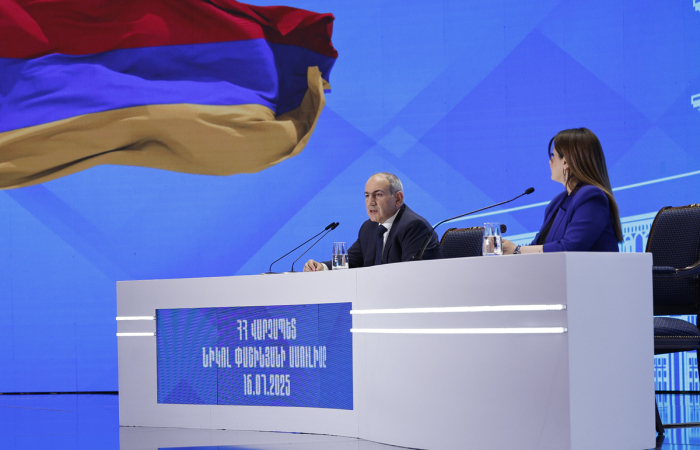
Armenian Prime Minister confirms ambitous reform programme and EU membership bid

Armenian Prime Minister confirms ambitous reform programme and EU membership bid

Prime Minister Nikol Pashinyan said Armenia wanted to become a member of the European Union within twenty years and will commit to an ambitous reform programme to meet the criteria of EU accession. In a press conference on 16 July, Pashinyan referred to his recent visit in Brussels and said the law adopted by the Armenian parliament meant the country seeks to join the EU. He acknowledged that this was not a simple process and all EU member states needed to agree to Armenia’s membership. He emphasised that regardless of whether Armenia ultimately joins the EU, the country will continue its ambitious reform programme.
Editor's choice
News
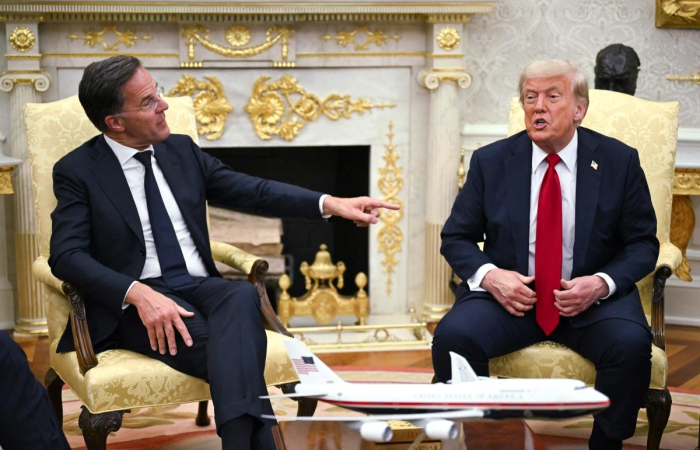
Trump threatens Russia with tariffs if peace deal is not reached within 50 days

Trump threatens Russia with tariffs if peace deal is not reached within 50 days

US President Donald Trump on Monday threatened Russia with steep tariffs unless a peace deal is reached within 50 days and announced a rejuvenated pipeline for American weapons to reach Ukraine, hardening his stance toward Moscow after months of frustration about unsuccessful negotiations for ending the war. The latest steps reflect an evolving approach from the Republican president, who promised to swiftly resolve the war started by Russian President Vladimir Putin when he invaded Ukraine three years ago. In the past, Trump focused his criticism on Ukrainian President Volodymyr Zelensky, whom he described as unwilling to compromise, but more recently has expressed growing irritation towards Putin. In addition, Trump said European allies would buy “billions and billions” of dollars of U.S. military equipment to be transferred to Ukraine, replenishing the besieged country’s supplies of weapons. He made the announcement in the Oval Office alongside NATO Secretary-General Mark Rutte.
Editor's choice
Opinion
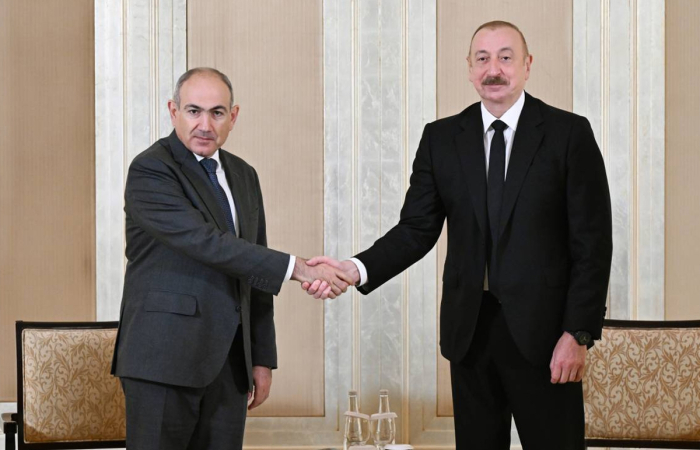
Abu Dhabi: What Next for Armenia and Azerbaijan?

Abu Dhabi: What Next for Armenia and Azerbaijan?

Depending on whom you ask, last week’s meeting between Armenian Prime Minister Nikol Pashinyan and Azerbaijani President Ilham Aliyev in Abu Dhabi was either a historic development or simply another routine step in the still-fragile peace process. In an interview with Slovak media prior to the talks last week, Azerbaijani presidential advisor Hikmet Hajiyev even claimed the conflict between the sides is now over. Both sides believed that they were now the closest to formalising a peace treaty than at any time before.