UK pauses trade talks and EU reviews relations as pressure grows on Israel to stop siege on Gaza

International pressure is mounting on Israel amid its renewed military operation in the Gaza strip, as both the United Kingdom and the European Union announced measures distancing themselves from the country on Tuesday. The United Kingdom paused trade negotiations with Israel and sanctioned West Bank settlers, as Britain’s top diplomat slammed Israel’s operation in Gaza as “morally unjustifiable” and “wholly disproportionate.” Meanwhile, the European Union announced that it would review its relationship with Israel, with the EU’s foreign policy chief calling the situation on the ground in Gaza “catastrophic.”

The announcements came a day after the UK, France and Canada threatened to take “concrete actions,” including targeted sanctions, if Israel does not halt its fresh offensive and continues to block aid from entering Gaza. On Tuesday, however, the Israeli military vowed to “expand” its operations in the enclave.

Since May 5, Israel has been conducting a new offensive in Gaza with Prime Minister Benjamin Netanyahu saying on Monday that his country plans to “take control of the entire Gaza Strip.” Hundreds have been killed and an Israeli blockade has meant that no aid entered the strip for 11 weeks until Monday, when five trucks were allowed in – a tiny fraction of the 500 trucks that authorities say are required each day to sustain the population.

British Prime Minister Keir Starmer called the humanitarian situation in Gaza “intolerable” on Tuesday, stressing that aid needs to enter the strip “at pace.”

Speaking to lawmakers on Tuesday, British Foreign Secretary David Lammy stressed that the UK backed Israel’s right to defend itself after the Hamas attacks on October 7, 2023, but said the conflict was “entering a dark new phase.”

Israel’s ambassador to the UK, Tzipura Hotovely, was summoned over the Israeli offensive in Gaza, as well as Israeli settler violence and the expansion of Israeli settlements in the occupied West Bank, the British Foreign Office said in a statement.

Israel’s foreign ministry called the sanctions against the settlers “puzzling, unjustified, and particularly regrettable,” adding that “external pressure will not divert Israel from its path in the fight for its existence and security against enemies seeking its destruction.”

Shortly after the UK’s announcement, Kaja Kallas, the EU’s foreign policy chief, announced that the bloc would review its association agreement with Israel due to its blockade of humanitarian aid into Gaza. The EU-Israel Association Agreement covers various forms of cooperation between the two parties, including political dialogue, the free movement of goods, and scientific collaboration.

Article two of the document outlines that “relations between the parties … shall be based on respect for human rights and democratic principles.” A “strong majority” of EU members voted in favor of a review of article two in the agreement with Israel, Kallas said. “So, we will launch this exercise,” she said. “In the meantime, it is up to Israel to unblock the humanitarian aid.”

Israel slammed Kallas’ statement, saying it indicates a “misunderstanding of the complex reality Israel is facing.” The foreign ministry accused the EU of “ignoring” an American-backed initiative to send aid to Gaza without it reaching Hamas, and Israel’s decision to facilitate the entry of some aid into the enclave.

On top of the ongoing military offensive in Gaza, Israel’s long blockade of aid has left one in five people in the enclave facing starvation as the entire territory edges closer to famine, according to the United Nations.
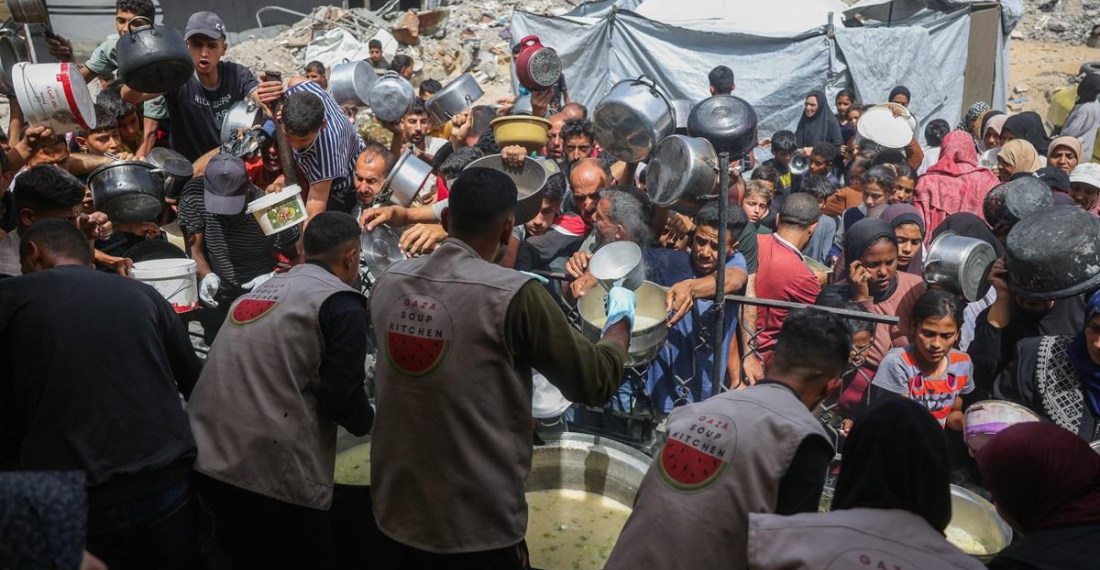
Source: commonspace.eu with agencies. Photo: Volunteers at a charity kitchen provide portions of cooked food to displaced Palestinians in Jabalia in the northern Gaza Strip. AFP

Related articles

Editor's choice
News
Key European countries back Denmark in the face of Trump's continuing insistence on taking over Greenland

Key European countries back Denmark in the face of Trump's continuing insistence on taking over Greenland

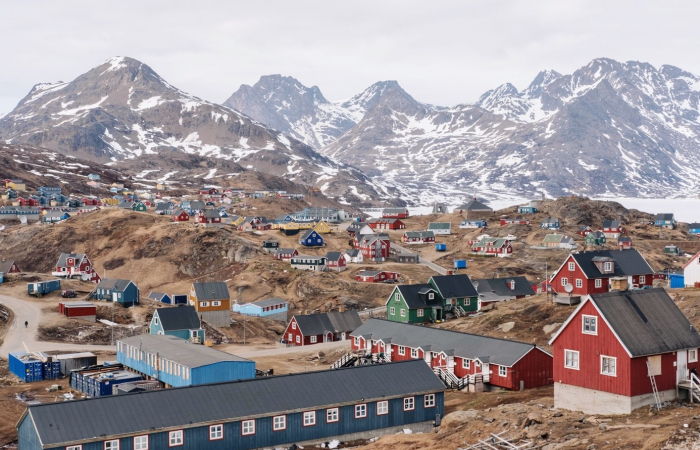
 Six major European countries have declared their support to Denmark following renewed insistence by the US that it must have control over Greenland. "Greenland belongs to its people, and only Denmark and Greenland can decide on matters concerning their relations," said the leaders of the UK, France, Germany, Italy, Poland, and Spain, in a joint statement, issued on Tuesday (6 January), together with Denmark. On Sunday, Donald Trump said the US "needed" Greenland - a semi-autonomous region of fellow Nato member Denmark - for security reasons. He has refused to rule out the use of force to take control of the territory, and Danish Prime Minister Mette Frederiksen warned on Monday that an attack by the US would spell the end of Nato. The issue of Greenland's future resurfaced in the wake of the US military intervention in Venezuela, during which elite troops went in to seize the country's President Nicolás Maduro and take him to face drugs and weapons charges in New York. Following the raid, Trump said the US would "run" Venezuela for an unspecified period of time. He also said the US was returning to an 1823 policy of US supremacy in its sphere of influence in the Western hemisphere - and he warned a number of countries the US could turn its attention to them. The US military raid in Venezuela has reignited fears that the US may consider using force to secure control of Greenland. A day after the raid, Katie Miller - the wife of one of Trump's senior aides - posted on social media a map of Greenland in the colours of the American flag, alongside the word "SOON". On Monday, her husband Stephen Miller said it was "the formal position of the US government that Greenland should be part of the US". In an interview with CNN, he also said the US "is the power of Nato. For the US to secure the Arctic region, to protect and defend Nato and Nato interests, obviously Greenland should be part of the US." Asked repeatedly whether the US would rule out using force to annex it, Miller responded: "Nobody's going to fight the US over the future of Greenland." Stressing they were as keen as the US in Arctic security, the seven European signatories of Tuesday's joint statement said this must be achieved by Nato allies, including the US "collectively" - whilst "upholding the principles of the UN Charter, including sovereignty, territorial integrity and the inviolability of borders". Greenland's Prime Minister Jens-Frederik Nielsen welcomed the statement and called for "respectful dialogue". "The dialogue must take place with respect for the fact that Greenland's status is rooted in international law and the principle of territorial integrity," Nielsen said. Trump has claimed that making Greenland part of the US would serve American security interests due to its strategic location and its abundance of minerals critical to high-tech sectors. Greenland, which has a population of 57,000 people, has had extensive self-government since 1979, though defence and foreign policy remain in Danish hands. While most Greenlanders favour eventual independence from Denmark, opinion polls show overwhelming opposition to becoming part of the US.
Editor's choice
News
Donald Tusk: "One for all, and all for one! Otherwise we are finished."

Donald Tusk: "One for all, and all for one! Otherwise we are finished."

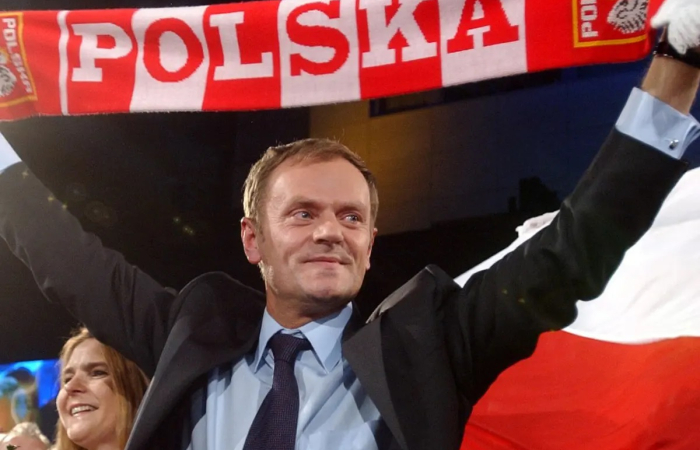
Europe is rattled by events in Venezuela, and there are serious concerns that US disregard for international law may have consequences close to home.  The BBC diplomatic correspondent, James Landale, said, the question is how Europe may respond in the longer term to America's military operation in Venezuela. Will it provide a catalyst for the continent to take greater responsibility for its own security in the face of so much instability from what many see as an unreliable ally? Polish prime minister, Donald Tusk, appears to have answered the question, saying on social media: "No-one will take seriously a weak and divided Europe: neither enemy nor ally. It is already clear now. "We must finally believe in our own strength, we must continue to arm ourselves, we must stay united like never before. One for all, and all for one. Otherwise, we are finished." The US seizing of Venezuela's leader has faced strong criticism from both America's friends and foes at an emergency meeting of the United Nations Security Council, held on Monday, 5 January. Many member states agreed with the US that Nicolás Maduro had been an illegitimate and repressive leader. But many also condemned the US military action as a breach of international law and the UN Charter, and they demanded a democratic transition that reflected the will of the Venezuelan people. (click the image to read the full article).

Popular

Editor's choice
News
Key European countries back Denmark in the face of Trump's continuing insistence on taking over Greenland

Key European countries back Denmark in the face of Trump's continuing insistence on taking over Greenland

 Six major European countries have declared their support to Denmark following renewed insistence by the US that it must have control over Greenland. "Greenland belongs to its people, and only Denmark and Greenland can decide on matters concerning their relations," said the leaders of the UK, France, Germany, Italy, Poland, and Spain, in a joint statement, issued on Tuesday (6 January), together with Denmark. On Sunday, Donald Trump said the US "needed" Greenland - a semi-autonomous region of fellow Nato member Denmark - for security reasons. He has refused to rule out the use of force to take control of the territory, and Danish Prime Minister Mette Frederiksen warned on Monday that an attack by the US would spell the end of Nato. The issue of Greenland's future resurfaced in the wake of the US military intervention in Venezuela, during which elite troops went in to seize the country's President Nicolás Maduro and take him to face drugs and weapons charges in New York. Following the raid, Trump said the US would "run" Venezuela for an unspecified period of time. He also said the US was returning to an 1823 policy of US supremacy in its sphere of influence in the Western hemisphere - and he warned a number of countries the US could turn its attention to them. The US military raid in Venezuela has reignited fears that the US may consider using force to secure control of Greenland. A day after the raid, Katie Miller - the wife of one of Trump's senior aides - posted on social media a map of Greenland in the colours of the American flag, alongside the word "SOON". On Monday, her husband Stephen Miller said it was "the formal position of the US government that Greenland should be part of the US". In an interview with CNN, he also said the US "is the power of Nato. For the US to secure the Arctic region, to protect and defend Nato and Nato interests, obviously Greenland should be part of the US." Asked repeatedly whether the US would rule out using force to annex it, Miller responded: "Nobody's going to fight the US over the future of Greenland." Stressing they were as keen as the US in Arctic security, the seven European signatories of Tuesday's joint statement said this must be achieved by Nato allies, including the US "collectively" - whilst "upholding the principles of the UN Charter, including sovereignty, territorial integrity and the inviolability of borders". Greenland's Prime Minister Jens-Frederik Nielsen welcomed the statement and called for "respectful dialogue". "The dialogue must take place with respect for the fact that Greenland's status is rooted in international law and the principle of territorial integrity," Nielsen said. Trump has claimed that making Greenland part of the US would serve American security interests due to its strategic location and its abundance of minerals critical to high-tech sectors. Greenland, which has a population of 57,000 people, has had extensive self-government since 1979, though defence and foreign policy remain in Danish hands. While most Greenlanders favour eventual independence from Denmark, opinion polls show overwhelming opposition to becoming part of the US.