Region

EU plus

Stories in this section cover the EU-27 countries plus the UK, Norway, Switzerland, Iceland, Liechtenstein, Monaco, Andorra and the Balkan Countries (Albania, Serbia, Montenegro, Bosnia-Herzegovina, Kosovo, North Macedonia).

Editor's choice
News
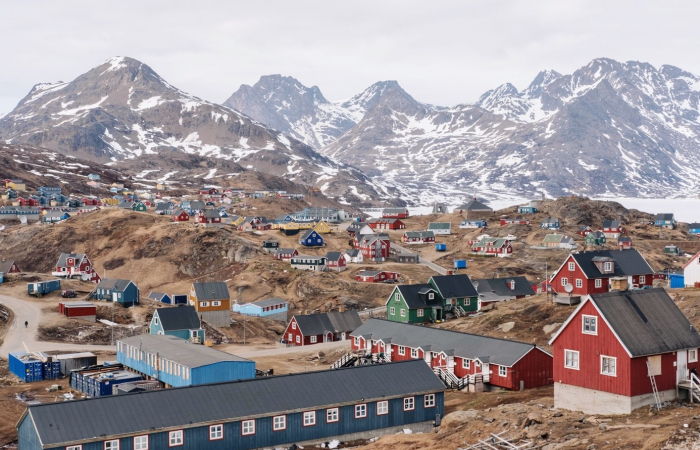
Key European countries back Denmark in the face of Trump's continuing insistence on taking over Greenland

Key European countries back Denmark in the face of Trump's continuing insistence on taking over Greenland

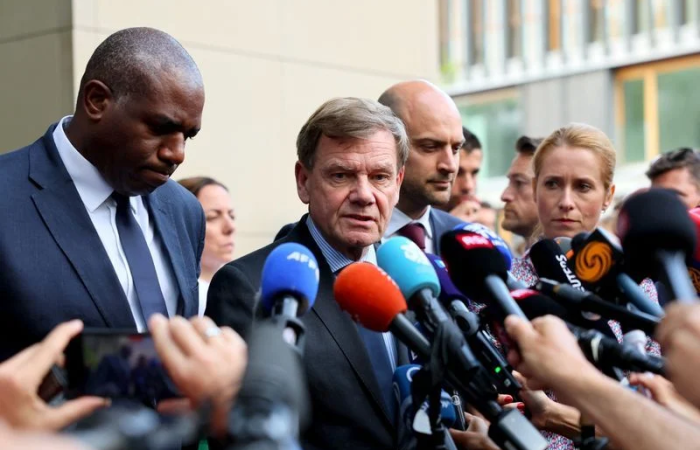
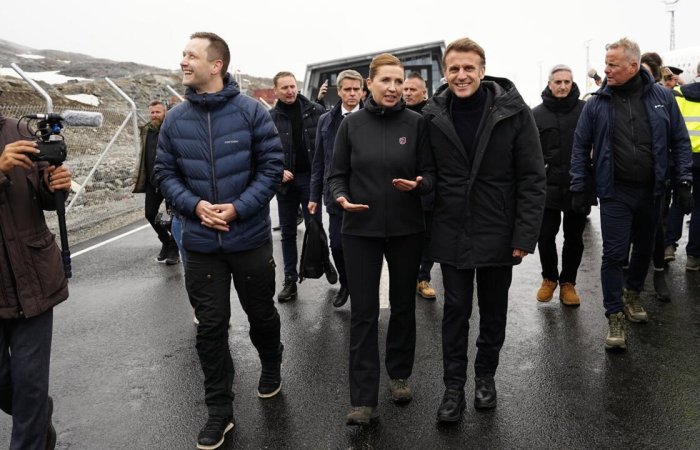
 Six major European countries have declared their support to Denmark following renewed insistence by the US that it must have control over Greenland. "Greenland belongs to its people, and only Denmark and Greenland can decide on matters concerning their relations," said the leaders of the UK, France, Germany, Italy, Poland, and Spain, in a joint statement, issued on Tuesday (6 January), together with Denmark. On Sunday, Donald Trump said the US "needed" Greenland - a semi-autonomous region of fellow Nato member Denmark - for security reasons. He has refused to rule out the use of force to take control of the territory, and Danish Prime Minister Mette Frederiksen warned on Monday that an attack by the US would spell the end of Nato. The issue of Greenland's future resurfaced in the wake of the US military intervention in Venezuela, during which elite troops went in to seize the country's President Nicolás Maduro and take him to face drugs and weapons charges in New York. Following the raid, Trump said the US would "run" Venezuela for an unspecified period of time. He also said the US was returning to an 1823 policy of US supremacy in its sphere of influence in the Western hemisphere - and he warned a number of countries the US could turn its attention to them. The US military raid in Venezuela has reignited fears that the US may consider using force to secure control of Greenland. A day after the raid, Katie Miller - the wife of one of Trump's senior aides - posted on social media a map of Greenland in the colours of the American flag, alongside the word "SOON". On Monday, her husband Stephen Miller said it was "the formal position of the US government that Greenland should be part of the US". In an interview with CNN, he also said the US "is the power of Nato. For the US to secure the Arctic region, to protect and defend Nato and Nato interests, obviously Greenland should be part of the US." Asked repeatedly whether the US would rule out using force to annex it, Miller responded: "Nobody's going to fight the US over the future of Greenland." Stressing they were as keen as the US in Arctic security, the seven European signatories of Tuesday's joint statement said this must be achieved by Nato allies, including the US "collectively" - whilst "upholding the principles of the UN Charter, including sovereignty, territorial integrity and the inviolability of borders". Greenland's Prime Minister Jens-Frederik Nielsen welcomed the statement and called for "respectful dialogue". "The dialogue must take place with respect for the fact that Greenland's status is rooted in international law and the principle of territorial integrity," Nielsen said. Trump has claimed that making Greenland part of the US would serve American security interests due to its strategic location and its abundance of minerals critical to high-tech sectors. Greenland, which has a population of 57,000 people, has had extensive self-government since 1979, though defence and foreign policy remain in Danish hands. While most Greenlanders favour eventual independence from Denmark, opinion polls show overwhelming opposition to becoming part of the US.
Editor's choice
News
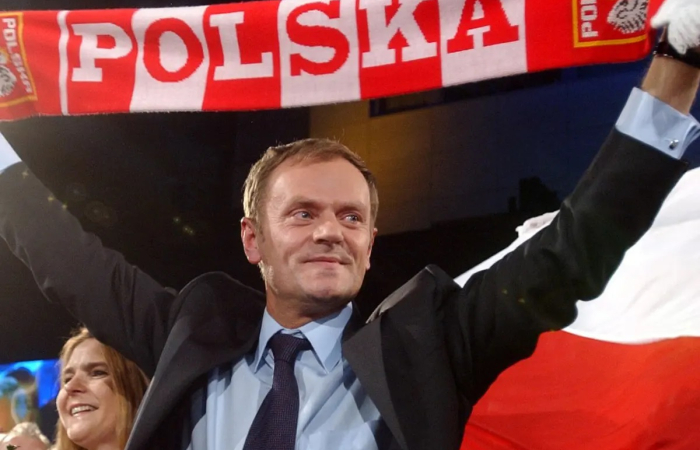
Donald Tusk: "One for all, and all for one! Otherwise we are finished."

Donald Tusk: "One for all, and all for one! Otherwise we are finished."

Europe is rattled by events in Venezuela, and there are serious concerns that US disregard for international law may have consequences close to home.  The BBC diplomatic correspondent, James Landale, said, the question is how Europe may respond in the longer term to America's military operation in Venezuela. Will it provide a catalyst for the continent to take greater responsibility for its own security in the face of so much instability from what many see as an unreliable ally? Polish prime minister, Donald Tusk, appears to have answered the question, saying on social media: "No-one will take seriously a weak and divided Europe: neither enemy nor ally. It is already clear now. "We must finally believe in our own strength, we must continue to arm ourselves, we must stay united like never before. One for all, and all for one. Otherwise, we are finished." The US seizing of Venezuela's leader has faced strong criticism from both America's friends and foes at an emergency meeting of the United Nations Security Council, held on Monday, 5 January. Many member states agreed with the US that Nicolás Maduro had been an illegitimate and repressive leader. But many also condemned the US military action as a breach of international law and the UN Charter, and they demanded a democratic transition that reflected the will of the Venezuelan people. (click the image to read the full article).

Filter archive

Publication date
Editor's choice
News
Putin offers to broker a deal between Iran and Israel as Trump warns of US military action

Putin offers to broker a deal between Iran and Israel as Trump warns of US military action

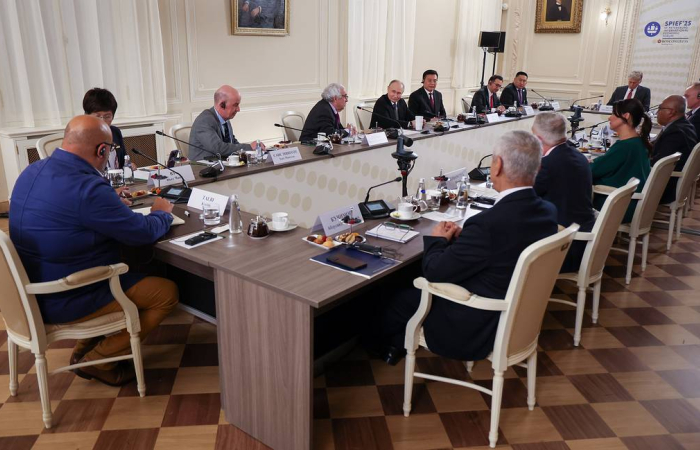
Russian President Vladimir Putin offered Wednesday to help mediate an end to the conflict between Israel and Iran, suggesting Moscow could help negotiate a settlement that could allow Tehran to pursue a peaceful atomic program while assuaging Israeli security concerns, AP reported. Speaking to senior news leaders of international news agencies on the sidelines of the St. Petersburg International Economic Forum, Putin noted that “it’s a delicate issue,” but added that “in my view, a solution could be found.” Meanwhile, Iran launched a fresh salvo of missiles at Israel on Thursday, with a hospital reported hit, as US President Donald Trump warned he was weighing US military action in the conflict.
Editor's choice
News
Leaders urge 'de-escalation' as G7 Summit in Canada is overshadowed by Middle East conflict

Leaders urge 'de-escalation' as G7 Summit in Canada is overshadowed by Middle East conflict

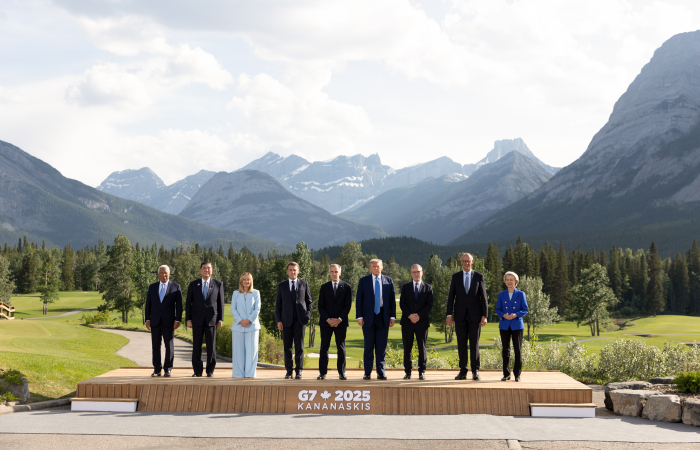
The G7 summit, a gathering of major world leaders meeting at Kananaskis, in the Canadian Rockies, has concluded with a joint leaders statement urging a "de-escalation of hostilities in the Middle East, including a ceasefire in Gaza". It stopped short of calling for a ceasefire between Israel and Iran. The leaders' statement, published as US President Trump left Canada, said Israel had a right to defend itself, and that Iran was a source of terror that should not have a nuclear weapon. According to the BBC, its call for a resolution of the crisis that led to a broader de-escalation of hostilities in the Middle East amounted to a diplomatic compromise that preserved G7 unity but watered down the statement's impact.
Editor's choice
News
Sweden leads EU effort to harden position against Israel

Sweden leads EU effort to harden position against Israel

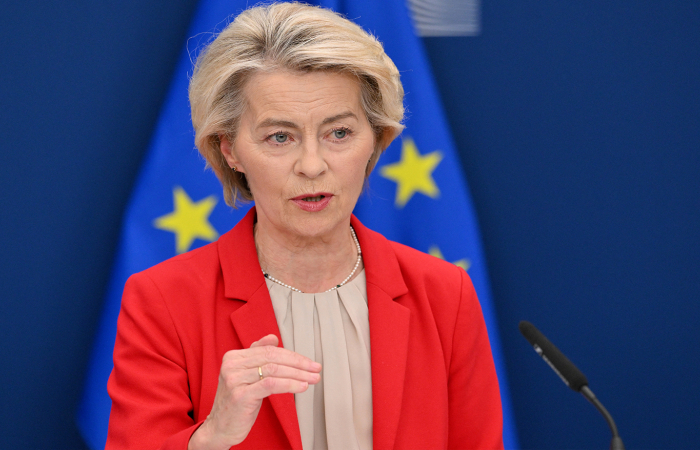
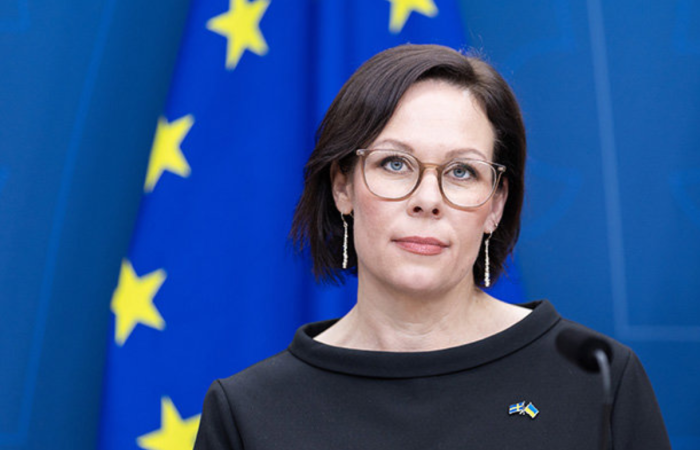
The European Union should harden its stance against Israel and follow in the footsteps of the United Kingdom and other Western allies by issuing sanctions against far-right members of Israeli Prime Minister Benjamin Netanyahu’s Cabinet, Sweden’s foreign minister told Politico. Maria Malmer Stenergard said after meeting in Brussels with Kaja Kallas, the EU’s top diplomat, that the EU now needs to take a stronger position and increase pressure on the Israeli government.
Editor's choice
News
EU Council Delegation holds Partnership talks in Kazakhstan

EU Council Delegation holds Partnership talks in Kazakhstan

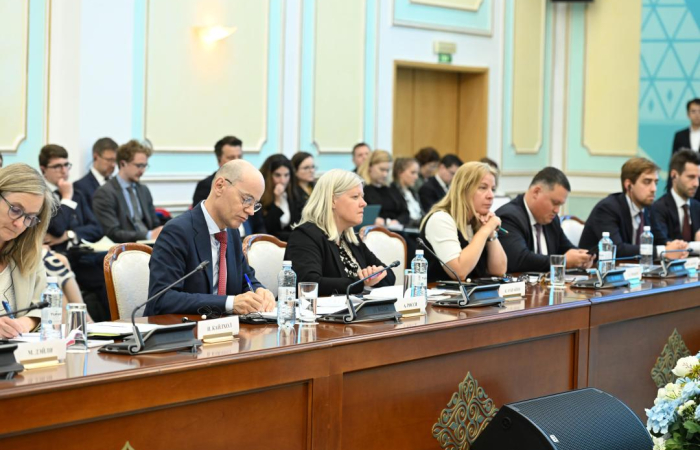
A delegation from the Council of the European Union’s Working Party on Eastern Europe and Central Asia (COEST) visited Kazakhstan on June 8-10 to hold talks with government officials in Kazakhstan. The visit, which included the cities of Aktau and Astana, was part of the practical implementation of the Enhanced Partnership and Cooperation Agreement (EPCA) between Kazakhstan and the European Union and its member states. According to the Astana Times quoting the Kazakh Foreign Ministry, the discussions demonstrated a high level of dialogue and mutual commitment aiming to strengthen the Kazakhstan-EU partnership.