Region

EU plus

Stories in this section cover the EU-27 countries plus the UK, Norway, Switzerland, Iceland, Liechtenstein, Monaco, Andorra and the Balkan Countries (Albania, Serbia, Montenegro, Bosnia-Herzegovina, Kosovo, North Macedonia).

Editor's choice
News
Key European countries back Denmark in the face of Trump's continuing insistence on taking over Greenland

Key European countries back Denmark in the face of Trump's continuing insistence on taking over Greenland

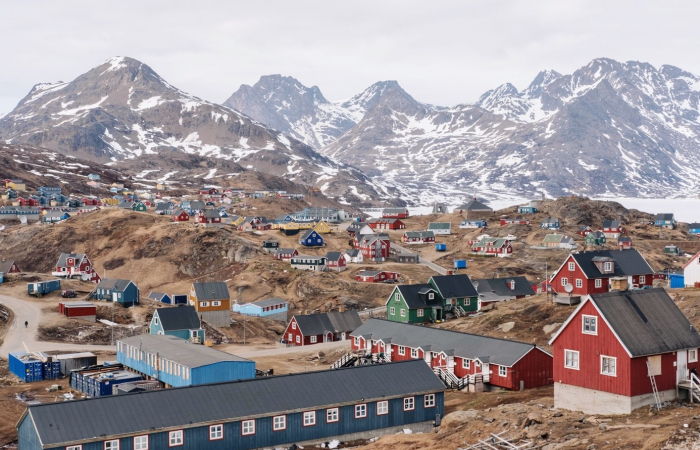
 Six major European countries have declared their support to Denmark following renewed insistence by the US that it must have control over Greenland. "Greenland belongs to its people, and only Denmark and Greenland can decide on matters concerning their relations," said the leaders of the UK, France, Germany, Italy, Poland, and Spain, in a joint statement, issued on Tuesday (6 January), together with Denmark. On Sunday, Donald Trump said the US "needed" Greenland - a semi-autonomous region of fellow Nato member Denmark - for security reasons. He has refused to rule out the use of force to take control of the territory, and Danish Prime Minister Mette Frederiksen warned on Monday that an attack by the US would spell the end of Nato. The issue of Greenland's future resurfaced in the wake of the US military intervention in Venezuela, during which elite troops went in to seize the country's President Nicolás Maduro and take him to face drugs and weapons charges in New York. Following the raid, Trump said the US would "run" Venezuela for an unspecified period of time. He also said the US was returning to an 1823 policy of US supremacy in its sphere of influence in the Western hemisphere - and he warned a number of countries the US could turn its attention to them. The US military raid in Venezuela has reignited fears that the US may consider using force to secure control of Greenland. A day after the raid, Katie Miller - the wife of one of Trump's senior aides - posted on social media a map of Greenland in the colours of the American flag, alongside the word "SOON". On Monday, her husband Stephen Miller said it was "the formal position of the US government that Greenland should be part of the US". In an interview with CNN, he also said the US "is the power of Nato. For the US to secure the Arctic region, to protect and defend Nato and Nato interests, obviously Greenland should be part of the US." Asked repeatedly whether the US would rule out using force to annex it, Miller responded: "Nobody's going to fight the US over the future of Greenland." Stressing they were as keen as the US in Arctic security, the seven European signatories of Tuesday's joint statement said this must be achieved by Nato allies, including the US "collectively" - whilst "upholding the principles of the UN Charter, including sovereignty, territorial integrity and the inviolability of borders". Greenland's Prime Minister Jens-Frederik Nielsen welcomed the statement and called for "respectful dialogue". "The dialogue must take place with respect for the fact that Greenland's status is rooted in international law and the principle of territorial integrity," Nielsen said. Trump has claimed that making Greenland part of the US would serve American security interests due to its strategic location and its abundance of minerals critical to high-tech sectors. Greenland, which has a population of 57,000 people, has had extensive self-government since 1979, though defence and foreign policy remain in Danish hands. While most Greenlanders favour eventual independence from Denmark, opinion polls show overwhelming opposition to becoming part of the US.
Editor's choice
News
Donald Tusk: "One for all, and all for one! Otherwise we are finished."

Donald Tusk: "One for all, and all for one! Otherwise we are finished."

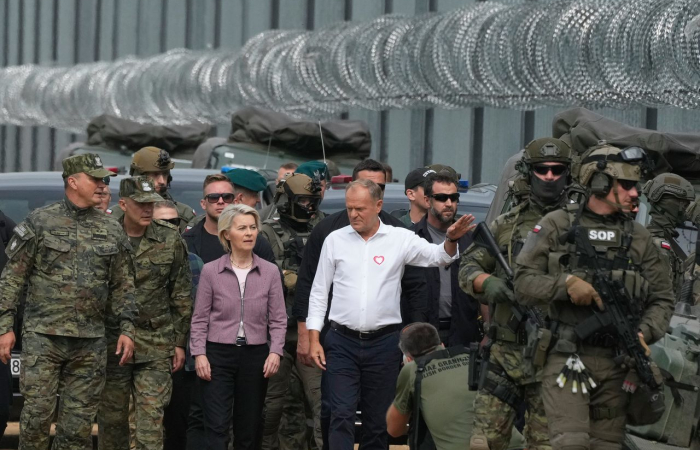
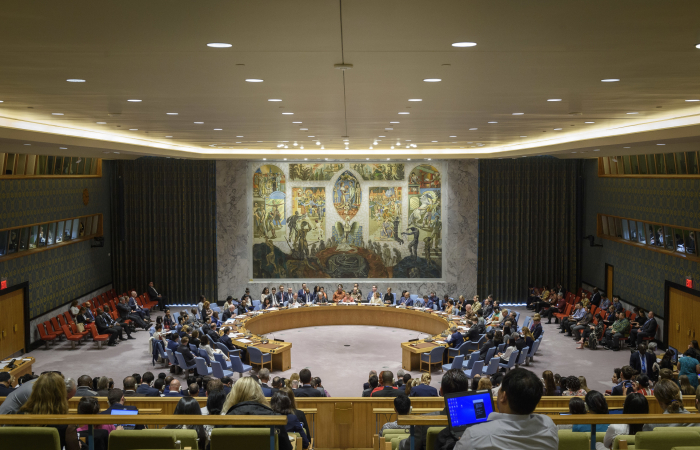
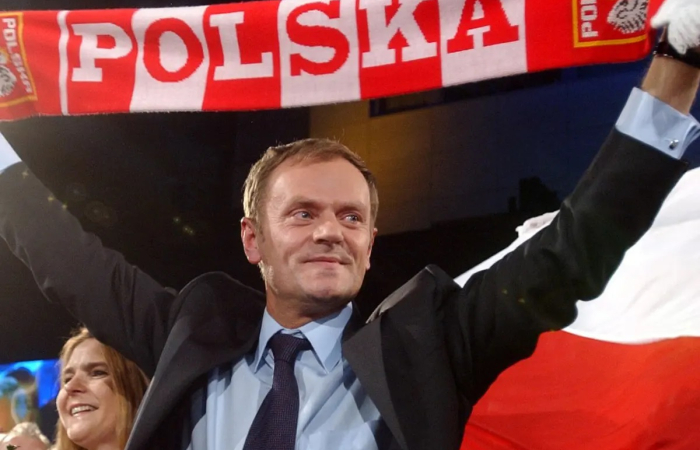
Europe is rattled by events in Venezuela, and there are serious concerns that US disregard for international law may have consequences close to home.  The BBC diplomatic correspondent, James Landale, said, the question is how Europe may respond in the longer term to America's military operation in Venezuela. Will it provide a catalyst for the continent to take greater responsibility for its own security in the face of so much instability from what many see as an unreliable ally? Polish prime minister, Donald Tusk, appears to have answered the question, saying on social media: "No-one will take seriously a weak and divided Europe: neither enemy nor ally. It is already clear now. "We must finally believe in our own strength, we must continue to arm ourselves, we must stay united like never before. One for all, and all for one. Otherwise, we are finished." The US seizing of Venezuela's leader has faced strong criticism from both America's friends and foes at an emergency meeting of the United Nations Security Council, held on Monday, 5 January. Many member states agreed with the US that Nicolás Maduro had been an illegitimate and repressive leader. But many also condemned the US military action as a breach of international law and the UN Charter, and they demanded a democratic transition that reflected the will of the Venezuelan people. (click the image to read the full article).

Filter archive

Publication date
Editor's choice
News
EU to push for sanctions on Israel ministers and suspend bilateral support

EU to push for sanctions on Israel ministers and suspend bilateral support

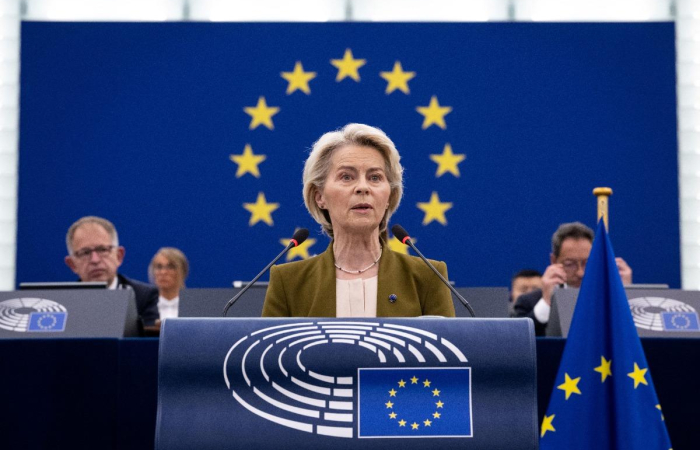
The President of the European Commission Ursula von der Leyen stated she would push to sanction "extremist" Israeli ministers and curb trade ties over Gaza, as she warned famine should not be used as a "weapon of war". Addressing the European Parliament on 10 September in the annual State of the Union, von der Leyen lamented that divisions among member states were holding back a European response but insisted the European Commission "will do all that it can on its own". "What is happening in Gaza has shaken the conscience of the world. People killed while begging for food. Mothers holding lifeless babies. These images are simply catastrophic," von der Leyen said. The German politician said the Commission would put its bilateral support to Israel on hold, stopping all payments, but without affecting work with civil society groups and Israel's Yad Vashem Holocaust memorial.
Editor's choice
Opinion
What role for the EU in the post-Washington South Caucasus?

What role for the EU in the post-Washington South Caucasus?

The agreements reached in the US-mediated summit of the Armenian and Azerbaijani leaders in Washington on August 8 are poised to fundamentally reshape the region's future. Particularly, the deal concerning the Zangezur corridor – rebranded as the “Trump Route for Peace and Prosperity” (TRIPP) – holds significant geopolitical importance. If implemented, the TRIPP agreement would deal a severe blow to the regional standing of Russia and Iran. More importantly, it would pave the way for a strategic U.S. presence in this critical geography. This outcome represents a success that few would have predicted for the United States, especially for the Trump administration, given the region's notoriously complex and volatile geopolitics.
Editor's choice
News
French Prime Minister Francois Bayrou ousted after just nine months in office

French Prime Minister Francois Bayrou ousted after just nine months in office

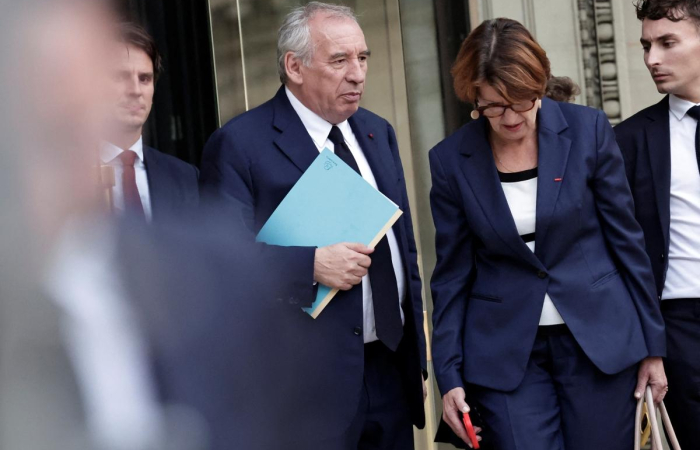
Legislators toppled France’s government in a confidence vote on Monday 8 September, a new crisis for Europe’s second-largest economy that obliges President Emmanuel Macron to search for a fourth prime minister in 12 months. Prime Minister Francois Bayrou was ousted overwhelmingly in a 364-194 vote against him. Bayrou paid the price for what appeared to be a staggering political miscalculation, gambling that lawmakers would back his view that France must slash public spending to rein in its debts. Instead, they seized on the vote that Bayrou called to gang up against the 74-year-old centrist who was appointed by Macron last December.
Editor's choice
News
UN Security Council meets in an emergency session to discuss Ukraine

UN Security Council meets in an emergency session to discuss Ukraine

On Friday afternoon (29 August), the United Nations Security Council held an emergency open briefing on Ukraine   The meeting was requested by Ukraine in a letter it sent on Thursday (28 August) following large-scale Russian aerial attacks conducted overnight on Kyiv and other cities across Ukraine. Council members Denmark, France, Greece, the Republic of Korea (ROK), Slovenia, and the UK supported the meeting request. Assistant Secretary-General for Europe, Central Asia and the Americas Miroslav Jenča briefed the Council at the start of the two-hour meeting. Among the participants and speakers was the Ukrainian prime minister, Yulia Svyrydenko. Addressing the session, the Head of the EU Delegation to the UN, Ambassador Ambassador Stavros Lambrinidis, said that the EU objective remains clear: the EU supports an immediate, full and unconditional ceasefire. We also welcome the efforts by the US to seek an end to Russia’s war of aggression and to stop the killing. As EU, we contribute to these efforts in order to achieve a just and lasting peace and long-term security for Ukraine and our continent. I urge all members of this Council to use their influence and maximize pressure on Russia to accept an immediate ceasefire and work towards a just and lasting peace in Ukraine.” He said that the EU will remain united in providing political, financial, economic, humanitarian, military and diplomatic support to Ukraine, as it exercises its inherent right of self-defence. We will continue to stand shoulder to shoulder with Ukraine and in defence of the UN Charter and international law. I respectfully submit that this Council, without any wavering or any hesitation, do the same, at a time when Russia intensifies its killings and continues to pursue its illegal objectives, instead of peace.”
Editor's choice
Opinion
Russia-Azerbaijan Relations in Freefall with No End in Sight

Russia-Azerbaijan Relations in Freefall with No End in Sight

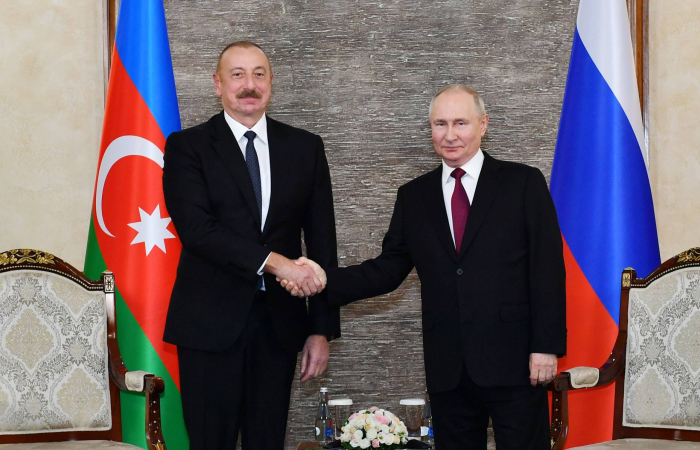
Tensions between Azerbaijan and Russia have been on an escalatory track since the crash of the Azerbaijani Airlines commercial airplane in December 2024. In the past, similar disputes were usually resolved quickly, leaving little lasting impact. This time, however, the crisis is far more complex and shows no signs of de-escalation. On the contrary, almost every month since the crash has marked new record lows in Baku–Moscow relations and appears likely to have a lasting impact on future bilateral ties. The situation has become so intricate and unpredictable that further deterioration cannot be ruled out.
Editor's choice
News
Ukrainian suspect in the Nord Stream pipeline blasts arrested in Italy

Ukrainian suspect in the Nord Stream pipeline blasts arrested in Italy

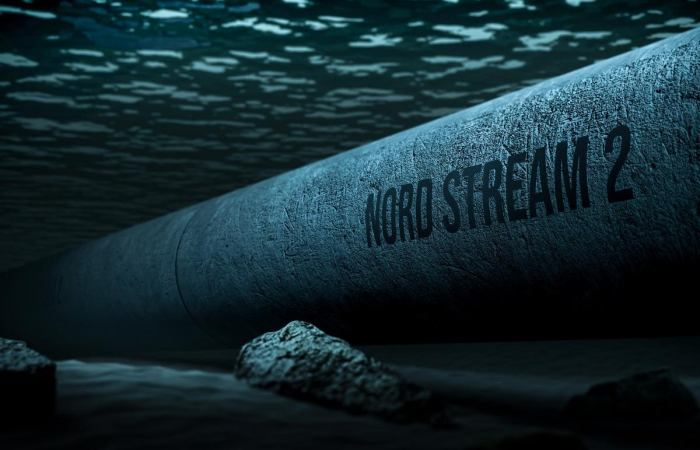
A Ukrainian citizen suspected of participating in the undersea explosions in 2022 that damaged the Nord Stream gas pipelines between Russia and Germany has been arrested, German prosecutors said on Thursday 21 August. The suspect, identified only as Serhii K. in line with German privacy rules, was arrested overnight in Italy’s Rimini province, federal prosecutors said. According to an AP report, they added that he is believed to be one of the coordinators of the operation.
Editor's choice
News
Trump plans Putin-Zelensky peace summit after talks in Washington

Trump plans Putin-Zelensky peace summit after talks in Washington

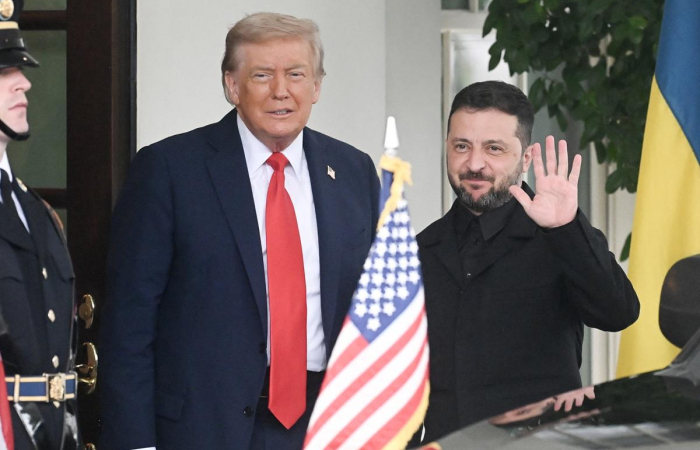
Russian President Vladimir Putin Ukrainian president Volodymyr Zelensky look set for a peace summit after fast-moving talks on Monday 18 August between Donald Trump and European leaders that focused on the key issue of long-term security guarantees for Kyiv. Hopes of a breakthrough rose after Trump said he had spoken by phone with Russian counterpart Putin, whom he met in Alaska last week, following a "very good" meeting with the Europeans and the Ukrainian president at the White House on Monday.
Editor's choice
News
In a show of solidarity, key European leaders will join Zelensky in Washington

In a show of solidarity, key European leaders will join Zelensky in Washington

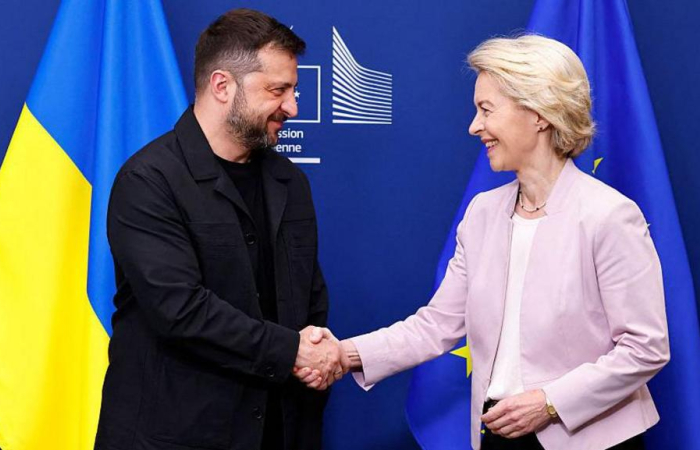
Key European leaders will join Ukrainian president Zelensky at talks with US president, Donald Trump, in Washington on Monday (18 August). Zelensky is currently in Brussels where he met with European Commission president, Ursula von der Leyen. European leaders have announced they will be joining Ukrainian President Volodymyr Zelensky on a trip to the White House on Monday. They include UK Prime Minister Keir Starmer, Italian Prime Minister Giorgia Meloni, German Chancellor Friedrich Merz, Finnish President Alexander Stubb, French President Emmanuel Macron, Nato Secretary-General Mark Rutte and European Commission President Ursula von der Leyen. Speaking to the press after her meeting with president Zelensky, Von der Leyen said she is glad to be accompanying Zelensky and other European leaders to Washington tomorrow.