Region

EU plus

Stories in this section cover the EU-27 countries plus the UK, Norway, Switzerland, Iceland, Liechtenstein, Monaco, Andorra and the Balkan Countries (Albania, Serbia, Montenegro, Bosnia-Herzegovina, Kosovo, North Macedonia).

Editor's choice
News
Key European countries back Denmark in the face of Trump's continuing insistence on taking over Greenland

Key European countries back Denmark in the face of Trump's continuing insistence on taking over Greenland

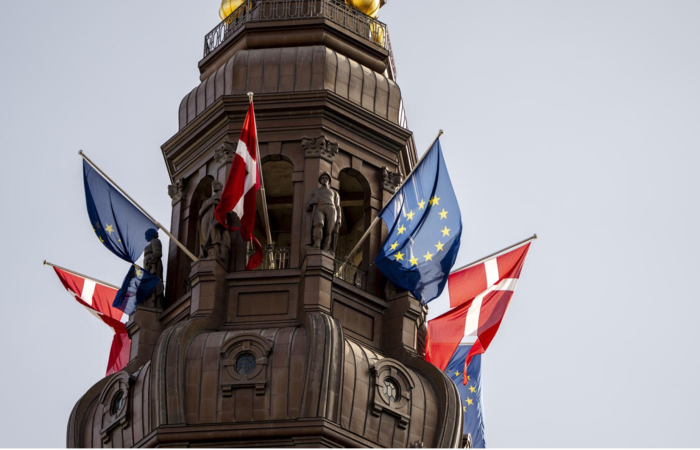
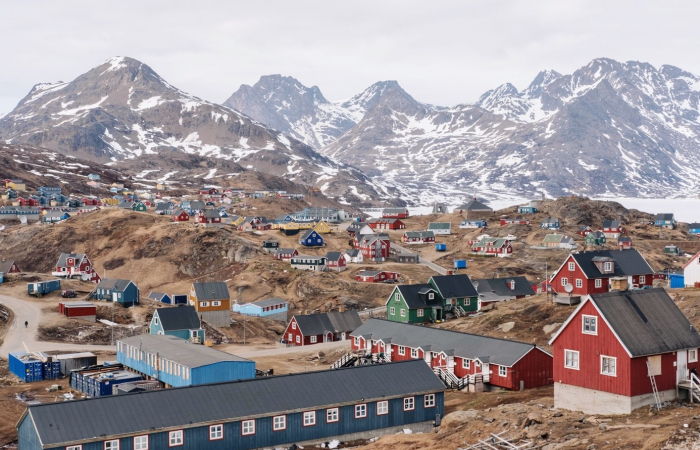
 Six major European countries have declared their support to Denmark following renewed insistence by the US that it must have control over Greenland. "Greenland belongs to its people, and only Denmark and Greenland can decide on matters concerning their relations," said the leaders of the UK, France, Germany, Italy, Poland, and Spain, in a joint statement, issued on Tuesday (6 January), together with Denmark. On Sunday, Donald Trump said the US "needed" Greenland - a semi-autonomous region of fellow Nato member Denmark - for security reasons. He has refused to rule out the use of force to take control of the territory, and Danish Prime Minister Mette Frederiksen warned on Monday that an attack by the US would spell the end of Nato. The issue of Greenland's future resurfaced in the wake of the US military intervention in Venezuela, during which elite troops went in to seize the country's President Nicolás Maduro and take him to face drugs and weapons charges in New York. Following the raid, Trump said the US would "run" Venezuela for an unspecified period of time. He also said the US was returning to an 1823 policy of US supremacy in its sphere of influence in the Western hemisphere - and he warned a number of countries the US could turn its attention to them. The US military raid in Venezuela has reignited fears that the US may consider using force to secure control of Greenland. A day after the raid, Katie Miller - the wife of one of Trump's senior aides - posted on social media a map of Greenland in the colours of the American flag, alongside the word "SOON". On Monday, her husband Stephen Miller said it was "the formal position of the US government that Greenland should be part of the US". In an interview with CNN, he also said the US "is the power of Nato. For the US to secure the Arctic region, to protect and defend Nato and Nato interests, obviously Greenland should be part of the US." Asked repeatedly whether the US would rule out using force to annex it, Miller responded: "Nobody's going to fight the US over the future of Greenland." Stressing they were as keen as the US in Arctic security, the seven European signatories of Tuesday's joint statement said this must be achieved by Nato allies, including the US "collectively" - whilst "upholding the principles of the UN Charter, including sovereignty, territorial integrity and the inviolability of borders". Greenland's Prime Minister Jens-Frederik Nielsen welcomed the statement and called for "respectful dialogue". "The dialogue must take place with respect for the fact that Greenland's status is rooted in international law and the principle of territorial integrity," Nielsen said. Trump has claimed that making Greenland part of the US would serve American security interests due to its strategic location and its abundance of minerals critical to high-tech sectors. Greenland, which has a population of 57,000 people, has had extensive self-government since 1979, though defence and foreign policy remain in Danish hands. While most Greenlanders favour eventual independence from Denmark, opinion polls show overwhelming opposition to becoming part of the US.
Editor's choice
News
Donald Tusk: "One for all, and all for one! Otherwise we are finished."

Donald Tusk: "One for all, and all for one! Otherwise we are finished."

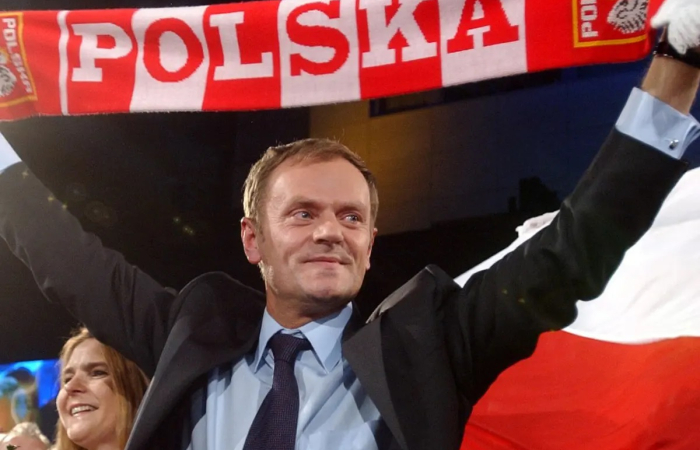
Europe is rattled by events in Venezuela, and there are serious concerns that US disregard for international law may have consequences close to home.  The BBC diplomatic correspondent, James Landale, said, the question is how Europe may respond in the longer term to America's military operation in Venezuela. Will it provide a catalyst for the continent to take greater responsibility for its own security in the face of so much instability from what many see as an unreliable ally? Polish prime minister, Donald Tusk, appears to have answered the question, saying on social media: "No-one will take seriously a weak and divided Europe: neither enemy nor ally. It is already clear now. "We must finally believe in our own strength, we must continue to arm ourselves, we must stay united like never before. One for all, and all for one. Otherwise, we are finished." The US seizing of Venezuela's leader has faced strong criticism from both America's friends and foes at an emergency meeting of the United Nations Security Council, held on Monday, 5 January. Many member states agreed with the US that Nicolás Maduro had been an illegitimate and repressive leader. But many also condemned the US military action as a breach of international law and the UN Charter, and they demanded a democratic transition that reflected the will of the Venezuelan people. (click the image to read the full article).

Filter archive

Publication date
Editor's choice
Monday Commentary
Monday Commentary: The War in Ukraine is Europe’s War

Monday Commentary: The War in Ukraine is Europe’s War

The war in Ukraine, following Russia’s unprovoked invasion in February 2022, has now raged on for three and a half years. Thousands of Ukrainians, military and civilian, have died, and millions of Ukrainians have been displaced. Vladimir Putin brought this calamity on the Ukrainian people, and on his nation too, for political capriciousness and naked ambition. Leaders of European countries understood the seriousness and significance of the moment, not only those near Russia, such as Poland, the Baltic States, Finland and Sweden, but in wider Europe too, including Germany, France, the UK, the Netherlands and beyond. Yet whilst the leaders rose to the occasion, the European public has remained largely indifferent. The majority of Europeans have so far acquiesced to the decision of their leaders to pour billions of euros into the Ukrainian war effort, but the conflict remains distant, and most Europeans carry on with their lives as usual. Putin is perceived more as an oddity than a threat. There is a great risk in this. The European Union High Representative for Foreign and Security Policy, and former Estonian politician, Kaja Kallas, is quoted as saying “Ukraine fights today so that we may not have to fight tomorrow. Their fight is our fight.” True! But that is not the full story.
Editor's choice
News
European States "disturbed and deeply concerned at the deteriorating situation in Georgia"

European States "disturbed and deeply concerned at the deteriorating situation in Georgia"

A number of European states have said that they are "disturbed and deeply concerned at the deteriorating situation in Georgia". In a Joint statement of 11 July 2025 the Foreign Ministers of Belgium, Czechia, Denmark, Estonia, Finland, France, Germany, Iceland, Ireland, Latvia, Lithuania, the Netherlands, Norway, Poland, Spain, Sweden, the United Kingdom and the High Representative of the European Union commented on recent developments in Georgia We, the Foreign Ministers of European democracies, are disturbed and deeply concerned at the deteriorating situation in Georgia. We strongly condemn the recent, politically motivated, imprisonment and detention of the leaders of Georgian opposition, clearly designed to stifle political opposition in Georgia, a few months ahead of the local elections. Their detention, as well as arbitrary arrests and increasing repression of other Georgian authorities` critics, representatives of civil society, peaceful protesters and independent journalists, contribute to dismantling of democracy in Georgia and rapid transformation towards an authoritarian system, in contradiction to European norms and values. Recent legislative changes aim at stifling independent civil society and legitimate protest.
Editor's choice
News
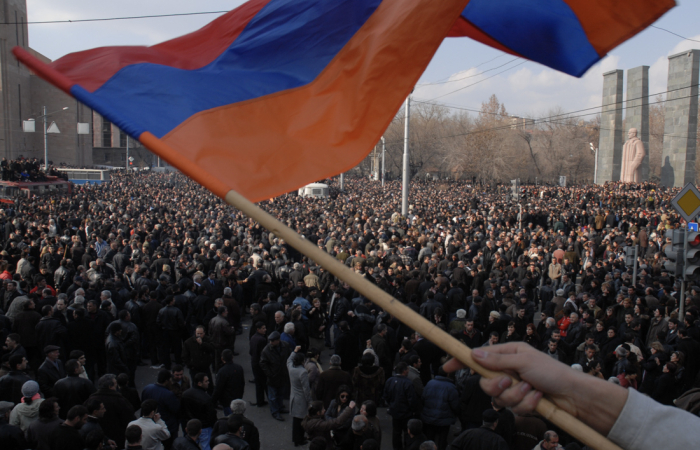
Leaders of Armenia and Azerbaijan meet in Abu Dhabi to finalise peace agreement

Leaders of Armenia and Azerbaijan meet in Abu Dhabi to finalise peace agreement

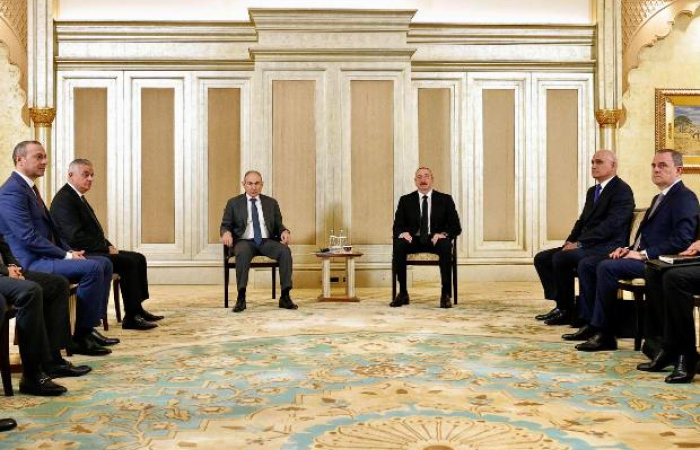
Armenian Prime Minister Nikol Pashinyan and Azerbaijani President Ilham Aliyev are meeting on Thursday 10 July in Abu Dhabi, United Arab Emirates, to discuss the next steps in finalising the peace agreement, their offices have confirmed to international news agencies. This is the first formal bilateral meeting between the leaders of Armenia and Azerbaijan since they agreed on the draft text of the peace agreement, following nearly four decades of conflict. The results of this meeting will shape the future of the South Caucasus and how the two countries can live peacefully next to each other after decades of conflict.
Editor's choice
News
The European Commissioner for Internal Affairs and Migration was expelled from eastern Libya immediately upon arrival

The European Commissioner for Internal Affairs and Migration was expelled from eastern Libya immediately upon arrival

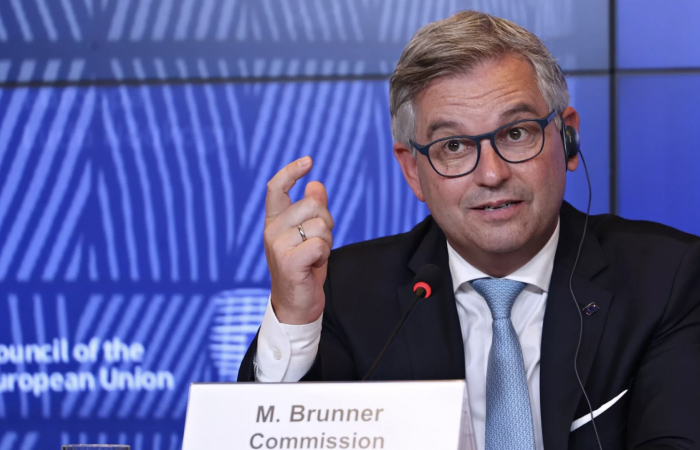
On Tuesday (8 July), Magnus Brunner, the European Commissioner for Internal Affairs and Migration, was expelled from the country by the internationally unrecognised government of eastern Libya, along with three European ministers. The delegation had hoped to reach an agreement with the government of army leader Khalifa Haftar to stop migrants leaving the country.
Editor's choice
News
Luhansk the first Ukrainian region fully occupied by Russia

Luhansk the first Ukrainian region fully occupied by Russia

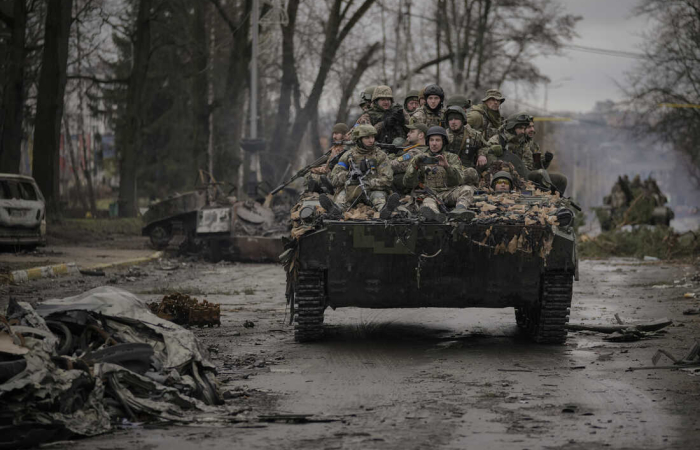
A Russia-appointed official in Ukraine’s occupied Luhansk region was quoted by AP on Monday saying that Moscow’s forces have overrun all of it, one of four regions Russia annexed from Ukraine in September 2022. If confirmed, it would make Luhansk the first Ukrainian region fully occupied by Russia after more than three years of war with international peace efforts led by the US failing to make progress on halting the fighting. Russian President Vladimir Putin has effectively rejected a ceasefire and hasn’t budged from his demands, which include Moscow’s control over the four illegally annexed regions. 
Editor's choice
News
Denmark takes over EU Presidency with a focus on Security, Migration and Enlargement

Denmark takes over EU Presidency with a focus on Security, Migration and Enlargement

On July 1, Denmark takes over the Presidency of the Council of the European Union for the eighth time. Under the motto ‘A Strong Europe in a Changing World’, the Danish Presidency said its programme of work will ensure that the EU takes responsibility for its own security, while also strengthening its competitiveness. Prime Minister Mette Frederiksen said that priority will be given to boosting defence capabilities in Europe amid Russia's war in Ukraine and US threats to Greenland, a Danish autonomous territory. Pushing countries to keep promises to boost defence spending and bolstering Europe's "dangerous" security will top Denmark’s agenda as it takes over the rotating presidency on Tuesday, according to Prime Minister Mette Frederiksen.