Filter archive

Publication date
Editor's choice
GULF CRISIS
Houthis capture Perim Island, consolidating their hold on Bab el Mandeb

Houthis capture Perim Island, consolidating their hold on Bab el Mandeb

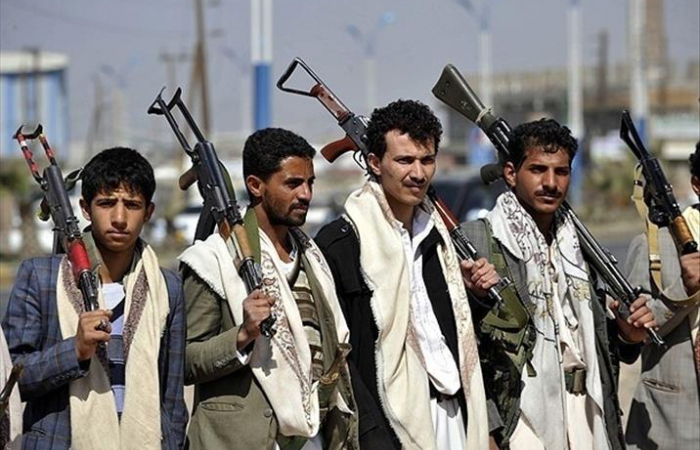
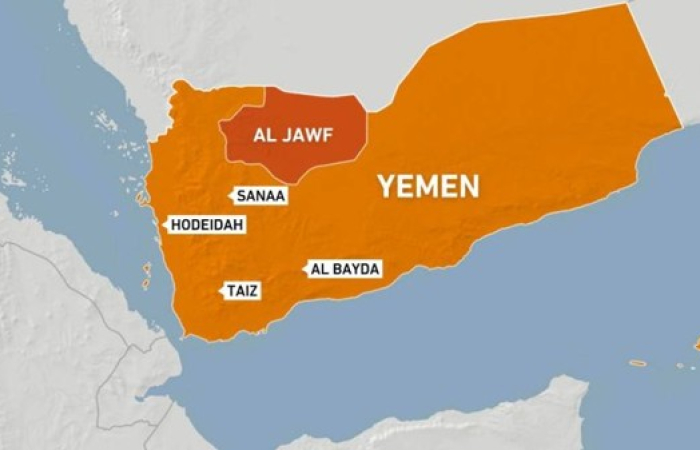
​ In a move that throws the Middle East into further turmoil, Yemen's Houthi movement are now in control of the entire western coast of Yemen and the strategic island of Perim, effectively giving them unmatched control over the Bab Al Mandeb strait, the Red Sea's key entry and exit point, Yemeni officials told Abu Dhabi's leading English-language newspaper, The National. "They took it all," one Yemeni security official said. "All of the west has fallen, and Perim Island too. They have everything now," he added. A second security official confirmed the details and said the Iran-backed Houthis had also taken control of Zuqar, another strategic Red Sea island. After taking control of Mokha on Thursday, the Houthis continued their offensive southwards and seized Dhubab, the last major town on Yemen's western coast and one that directly overlooks the Bab Al Mandeb Strait and Perim Island, also known as Mayyun. ​​ Yemen's Houthi rebels are now in control of the entire western coast of Yemen and the strategic island of Perim, effectively giving them unmatched control over the Bab Al Mandeb strait, the Red Sea's key entry and exit point, Yemeni officials told The National. "They took it all," one Yemeni security official said. "All of the west has fallen, and Perim Island too. They have everything now," he added. A second security official confirmed the details and said the Iran-backed Houthis had also taken control of Zuqar, another strategic Red Sea island. After taking control of Mokha on Thursday, the Houthis continued their offensive southwards and seized Dhubab, the last major town on Yemen's western coast and one that directly overlooks the Bab Al Mandeb Strait and Perim Island, also known as Mayyun. Yemen's Houthi rebels are now in control of the entire western coast of Yemen and the strategic island of Perim, effectively giving them unmatched control over the Bab Al Mandeb strait, the Red Sea's key entry and exit point, Yemeni officials told The National. "They took it all," one Yemeni security official said. "All of the west has fallen, and Perim Island too. They have everything now," he added. A second security official confirmed the details and said the Iran-backed Houthis had also taken control of Zuqar, another strategic Red Sea island. After taking control of Mokha on Thursday, the Houthis continued their offensive southwards and seized Dhubab, the last major town on Yemen's western coast and one that directly overlooks the Bab Al Mandeb Strait and Perim Island, also known as Mayyun. ​

Editor's choice
GULF CRISIS
Houthis seize the strategic port city of Mokha

Houthis seize the strategic port city of Mokha

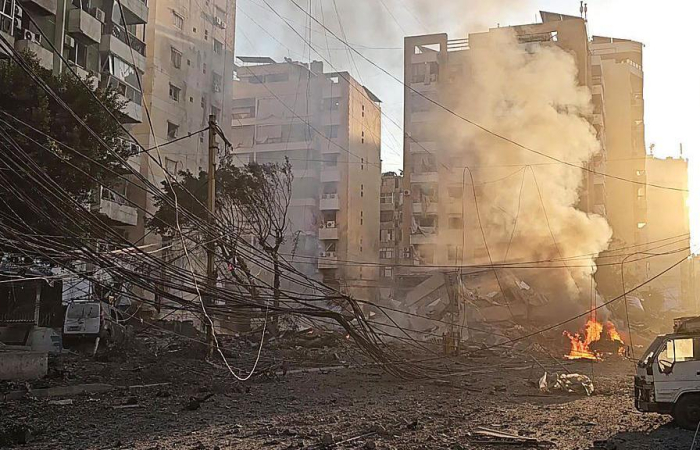
Iran-backed Houthi militants have seized the strategic port city of Mokha on Yemen’s western coast after days of fighting with pro-government forces, further expanding their control along the Red Sea and near the Bab Al Mandeb shipping route. “Resistance groups have left Mokha and are now deployed south of the city,” a Yemeni official told The National, referring to pro-government forces. In a statement, Yemen’s Presidential Leadership Council Vice Chairman Tareq Saleh said government forces, including the National Resistance, Giants Brigades and Nation’s Shield forces, as well as units from Taiz, had suffered deaths and injuries during several days of Houthi attacks. “We ordered the formation of an alternative command centre in a safe location to regroup the forces in consultation with the Arab coalition command and the Presidential Leadership Council,” he said. Yemeni government sources also confirmed the loss of Mokha to Reuters. Mokha, about 150km south of the Houthi-held port city of Hodeidah, has been a major base for government forces operating along Yemen’s Red Sea coast and seeking to push the rebels out of their positions. The capture marks a significant advantage for the Houthis, giving them control of another strategically important point on Yemen’s western coastline overlooking one of the world’s most important shipping corridors. It comes amid intensifying clashes between the rebels and government forces across several parts of Yemen, while the Houthis have also escalated attacks on Saudi Arabia and shipping in the Red Sea in support of Iran. (click image to read more).
Editor's choice
GULF CRISIS
Heavy fighting in the Gulf as the conflict that started in February appears to have no end

Heavy fighting in the Gulf as the conflict that started in February appears to have no end

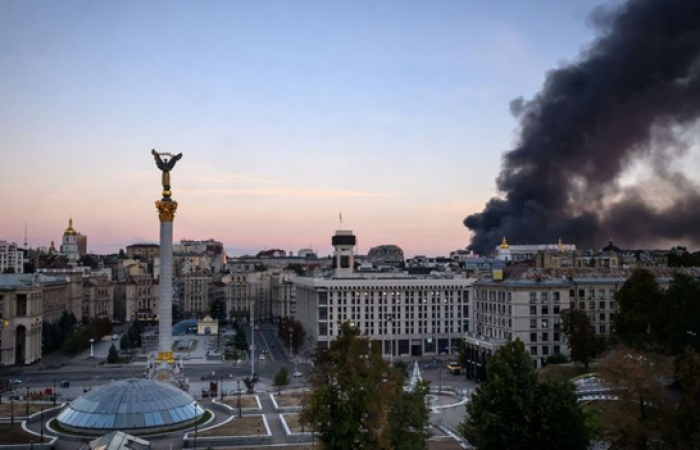
The situation in the Gulf has deteriorated considerably in the last twenty four hours, with Iran and the United States targeting oil tankers and strategic sites and military targets. The Arab Gulf States continue to pay a heavy price. The conflict that started in February has now dragged out longer than their worst nightmare. The United States has attacked five Iranian oil tankers in the Gulf of Oman and near Kharg Island after accusing Tehran of launching ballistic missiles at a US warship twice in two days. Iran responded to Tuesday’s attacks by firing missiles at US forces stationed at the Al Azraq base in Jordan. It also claimed additional strikes on at least two US vessels and eight tankers in the region, saying the assaults caused “great damage”. The exchange of fire comes amid escalating tensions in the Gulf six months into the US and Israel’s war on Iran, with Tehran closing the Strait of Hormuz and Washington enforcing a naval blockade on Iranian ports. The hostilities drove oil prices to $99.49 a barrel in early trading on Wednesday. In a statement late on Tuesday (8 September), the US Central Command (CENTCOM) said Iran’s Islamic Revolutionary Guard Corps (IRGC) had sought to target a US warship twice over the past two days, but that the vessel “successfully evaded the attempted Iranian attacks”. “No American personnel were harmed,” it said. CENTCOM said it responded by striking and destroying the Iranian oil carriers, M/T Kaviz, M/T Charminar, M/T Horizon 1, and M/T Riesco in the Gulf of Oman, as well as M/T Derya near Kharg Island. “American forces directed the crews to abandon ship before the vessels were struck and rendered inoperable,” CENTCOM added. It later published a video that it said showed the M/T Riesco sinking in the Gulf of Oman. Iran’s IRIB state broadcaster confirmed the attack near Kharg Island, which handled some 90 percent of the country’s oil exports before the war. It reported that the crew was evacuated and said a second tanker was hit near the southern port of Jask in the Gulf of Oman. It said it retaliated by subjecting Al Azraq base in Jordan to “fierce missile strikes” and claimed that hangars used by US fighter jets were destroyed in the attacks. (read the full report by clicking the image)
Editor's choice
Analysis
Russia continues to pile pressure on Armenia,  and after Bishkek, it is now also using its Iranian proxy

Russia continues to pile pressure on Armenia, and after Bishkek, it is now also using its Iranian proxy

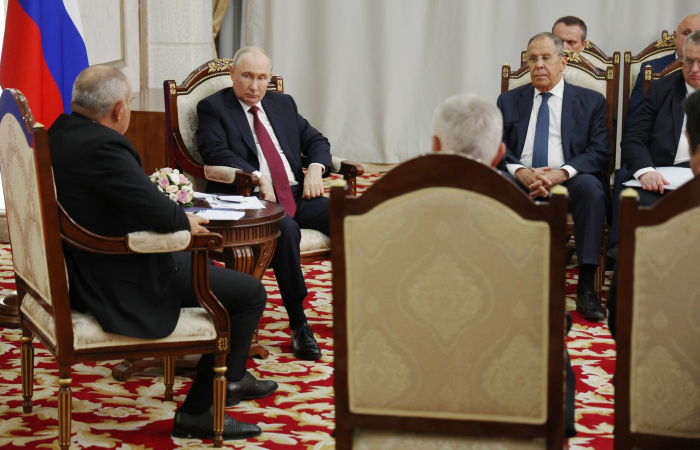
Russia continues to pile pressure on Armenia. It realises it is loosing the grip that it has had on the country ever since its independence in 1991. Now, Russia is also using its influence on Iran, a country that borders Armenia, to add pressure on the government of Nikol Pashinyan. According to some Armenian media outlets Iran has demanded that security for the TRIPP project in Armenia be ensured exclusively by the Armenian Armed Forces or the armed forces of a third country already present on Armenian territory. The only such third country at the moment is Russia. Iranian authorities fear that American forces can be deployed to protect the TRIPP route and this could result in the encirclement of Iran. Yet the deployment of US troops has never been under consideration. The Armenian authorities have assured that the implementation of the TRIPP project will not create any challenges or threats for Iran. This latest development follows a tense meeting between Russian president Vladimir Putin and Armenia prime minister, Nikol Pashinyan in Bishkek. The Russian president was transmiting "hot and cold" in Bishkek. With Pashinyan, the atmosphere was certainly cold. This politicial pressure comes on top of a series of economic measures that Moscow has ordered that try to stifle the Armenian economy. But Pashinyan and his government remain defiant. The governent plan for 2026-31 speaks about a balanced foreign policy. Russia's primary role in Armenia is over.This politicial pressure comes on top of a series of economic measures that Moscow has ordered that try to stifle the Armenian economy. But Pashinyan and his government remain defiant. The governent plan for 2026-31 speaks about a balanced foreign policy. Russia's primary role in Armenia is over. (click image to read the analysis in full)