Filter archive

Publication date
Editor's choice
GULF CRISIS
Monday Commentary: For the Arab states of the Gulf the US-Iran war is a big test of their resilience

Monday Commentary: For the Arab states of the Gulf the US-Iran war is a big test of their resilience

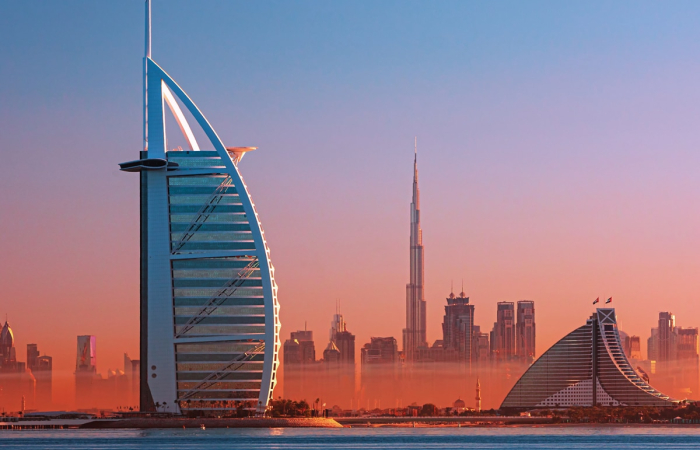
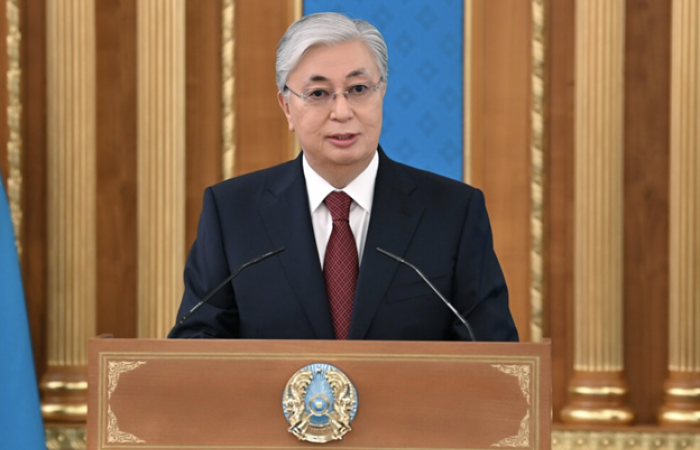
In this week's Monday Commentary, Dr. Dennis Sammut discusses the impact of the US-Iran war on the Arab states of the Gulf. He argues that the crises is a test of their resilience, and that change is inevitable. "On 28 February, Donald Trump connived with Israel to attack Iran, thinking that the US military strength will easily sweep away the Islamic Republic. He did so without seeking the views of experts within the American bureaucracy, getting the necessary congressional and cross-party support, and importantly without consulting with his allies in the region, in NATO, and beyond. The result has been a terrible and costly failure. The Islamic Republic has survived, despite loosing its supreme leader and top officials, and is even emboldened. The limits of US military power has been exposed, and China and others are watching carefully. Allies are distancing themselves from the US, and the cost for global and American economy, has been huge." "But the harshest costs of Trump’s miscalculation is being paid by the Arab states, on and around the Arabian peninsula. Over the last five decades the GCC countries have largely bought themselves out of any problems which they faced. Three of them at least – Saudi Arabia, Qatar and UAE, have the stamina to do so again if necessary. But the question remains, will it be enough this time?" The world must be prepared for a changing region. Europe in particular needs to be able to deal with the new reality, and to do this with an open mind. In March of this year I wrote that by attacking Iran, Trump had opened “pandora’s box”. That has definitely been the case for the US. Others however may take heart from the saying that “from every crises, an opportunity arises”. (click the image to read the Monday Commentary in full)
Editor's choice
News
Finland hosts European Arctic Summit

Finland hosts European Arctic Summit

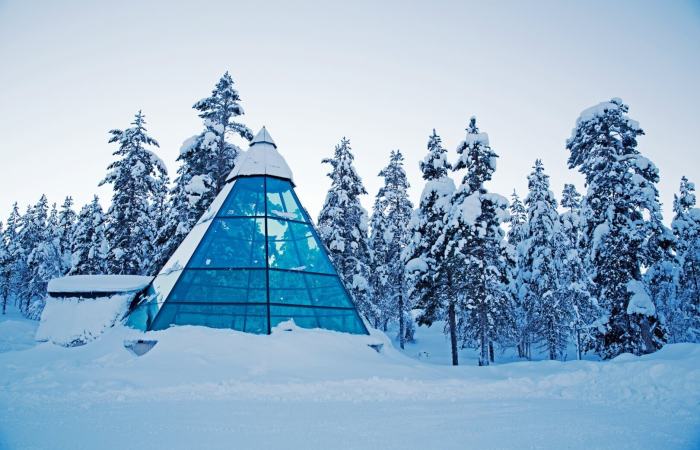
The Arctic summit of European leaders will be held in Rovaniemi, a municipality in Northern Finland on 13–14 September. Prime Minister Petteri Orpo has invited a group of EU leaders to the summit. The aim of the summit is to strengthen the EU’s common strategic approach to the Arctic region as its geopolitical significance continues to grow rapidly. “The Arctic region is an increasingly important part of Europe's security environment. The European Union has direct interests in its stability, security and sustainable development. It is very valuable to be able to discuss these issues together with a comprehensive group of EU leaders,” said Orpo. The summit will be attended by German Chancellor Friedrich Merz, Prime Minister of Poland Donald Tusk, Prime Minister of Denmark Mette Frederiksen, Prime Minister of Estonia Kristen Michal, Prime Minister of Latvia Andris Kulbergs, President of Lithuania Gitanas Nausėda and President of Romania Nicușor Dan. President of the European Council António Costa and High Representative of the Union for Foreign Affairs and Security Policy Kaja Kallas will also take part in the summit. The summit is taking place against an extremely dynamic backdrop. In the face of accelerating climate change and geopolitical tensions in the Strait of Hormuz, the economic importance of the northeast passage is growing. For 2026, more than forty million tonnes of freight are expected to pass through the Northern Sea Route for the first time, primarily due to expanded trade between Russia and China. Furthermore, in August, China launched its first regular container service through the Arctic. Finally, the EU’s Arctic policy itself is set for a reorientation: the Commission intends to present an updated Arctic strategy this autumn, in which security is to play a central role for the first time. Kaja Kallas had already advocated for this at the Arctic Frontiers conference in Tromsø earlier this year, stating that the Arctic needed more attention, more resources, and more hard power. The summit in Rovaniemi can therefore also be seen as a dress rehearsal for the new strategy. Finland brings a unique perspective to this debate: over 95 per cent of Finland’s foreign trade in goods is conducted by sea, and its ports freeze over almost every winter. This structural peculiarity has given rise to a strong export sector in the field of icebreakers: Finnish companies have designed around 80 per cent of all icebreakers worldwide and built around 60 per cent; even the US Coast Guard is having the first vessels of its new Arctic Security Cutter class built in Finland because the domestic alternative could not meet the schedule. The fact that this leverage can also be utilised geopolitically has already been successfully demonstrated. At the end of September 2022, the Finnish Ministry of Foreign Affairs refused to grant an export licence for an LNG icebreaker ordered by the Russian mining group Norilsk Nickel, thereby bringing to an end a project that would have created around 2,100 person-years of employment. (click the image to read more).
Editor's choice
GULF CRISIS
Saudi Arabia shuts down east-west strategic pipeline after attack

Saudi Arabia shuts down east-west strategic pipeline after attack

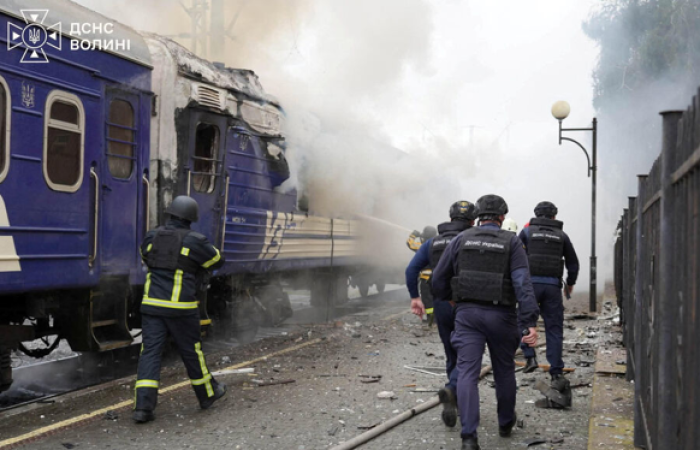
Saudi Arabia has closed a critical oil pipeline after it was attacked by drones launched from Iraq, as conflict in the Middle East widens. Iraq said it had fired a military commander and launched an investigation after admitting the drone attack on its neighbour's East-West pipeline had originated in one of its provinces bordering Iran. The 1,200km (745 mile) pipeline has helped Saudi Arabia - the world's largest crude oil exporter - bypass the Strait of Hormuz. The incident comes amid a major advance by the Iranian-backed Houthi rebels in Yemen, putting more pressure on global oil shipping routes as the US-Iran war stretches into its seventh month. Riyadh on Friday said it had shut the pipeline as a precaution, as satellite images of scorched ground and smoke near the site emerged. The foreign ministry said the attack resulted in some injuries and damage, which was still being assessed. The pipeline has been moving 4% to 5% of global oil supply, news agency Reuters has reported, citing ship tracking companies and analysts. Saudi Arabia has chosen not to retaliate at this stage, its foreign ministry says, following a call from Iraq's prime minister. It said the kingdom would "support the efforts of the Iraqi government" to "prevent attacks" launched from the country against neighbouring states. "The Kingdom of Saudi Arabia affirms that it reserves its right to take all necessary measures to safeguard its sovereignty and security, protect its facilities, and ensure the safety of its citizens and residents," the statement added. The Iraqi prime minister's office in its own statement said the operations commander in the Maysan governorate - a province which borders Iran - had been removed from his post following confirmation the drone attack had been launched from that region. (Click image to read more).