Region

EU plus

Stories in this section cover the EU-27 countries plus the UK, Norway, Switzerland, Iceland, Liechtenstein, Monaco, Andorra and the Balkan Countries (Albania, Serbia, Montenegro, Bosnia-Herzegovina, Kosovo, North Macedonia).

Editor's choice
News
Key European countries back Denmark in the face of Trump's continuing insistence on taking over Greenland

Key European countries back Denmark in the face of Trump's continuing insistence on taking over Greenland

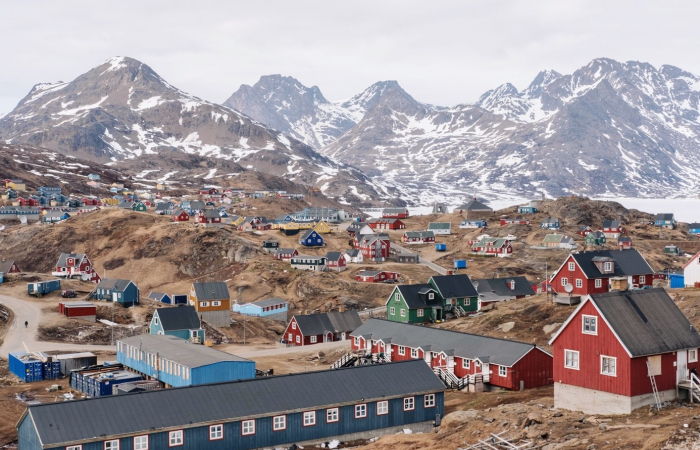
 Six major European countries have declared their support to Denmark following renewed insistence by the US that it must have control over Greenland. "Greenland belongs to its people, and only Denmark and Greenland can decide on matters concerning their relations," said the leaders of the UK, France, Germany, Italy, Poland, and Spain, in a joint statement, issued on Tuesday (6 January), together with Denmark. On Sunday, Donald Trump said the US "needed" Greenland - a semi-autonomous region of fellow Nato member Denmark - for security reasons. He has refused to rule out the use of force to take control of the territory, and Danish Prime Minister Mette Frederiksen warned on Monday that an attack by the US would spell the end of Nato. The issue of Greenland's future resurfaced in the wake of the US military intervention in Venezuela, during which elite troops went in to seize the country's President Nicolás Maduro and take him to face drugs and weapons charges in New York. Following the raid, Trump said the US would "run" Venezuela for an unspecified period of time. He also said the US was returning to an 1823 policy of US supremacy in its sphere of influence in the Western hemisphere - and he warned a number of countries the US could turn its attention to them. The US military raid in Venezuela has reignited fears that the US may consider using force to secure control of Greenland. A day after the raid, Katie Miller - the wife of one of Trump's senior aides - posted on social media a map of Greenland in the colours of the American flag, alongside the word "SOON". On Monday, her husband Stephen Miller said it was "the formal position of the US government that Greenland should be part of the US". In an interview with CNN, he also said the US "is the power of Nato. For the US to secure the Arctic region, to protect and defend Nato and Nato interests, obviously Greenland should be part of the US." Asked repeatedly whether the US would rule out using force to annex it, Miller responded: "Nobody's going to fight the US over the future of Greenland." Stressing they were as keen as the US in Arctic security, the seven European signatories of Tuesday's joint statement said this must be achieved by Nato allies, including the US "collectively" - whilst "upholding the principles of the UN Charter, including sovereignty, territorial integrity and the inviolability of borders". Greenland's Prime Minister Jens-Frederik Nielsen welcomed the statement and called for "respectful dialogue". "The dialogue must take place with respect for the fact that Greenland's status is rooted in international law and the principle of territorial integrity," Nielsen said. Trump has claimed that making Greenland part of the US would serve American security interests due to its strategic location and its abundance of minerals critical to high-tech sectors. Greenland, which has a population of 57,000 people, has had extensive self-government since 1979, though defence and foreign policy remain in Danish hands. While most Greenlanders favour eventual independence from Denmark, opinion polls show overwhelming opposition to becoming part of the US.
Editor's choice
News
Donald Tusk: "One for all, and all for one! Otherwise we are finished."

Donald Tusk: "One for all, and all for one! Otherwise we are finished."

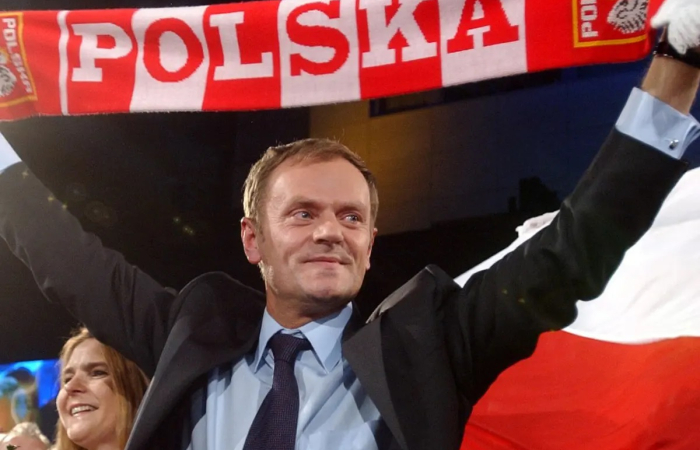
Europe is rattled by events in Venezuela, and there are serious concerns that US disregard for international law may have consequences close to home.  The BBC diplomatic correspondent, James Landale, said, the question is how Europe may respond in the longer term to America's military operation in Venezuela. Will it provide a catalyst for the continent to take greater responsibility for its own security in the face of so much instability from what many see as an unreliable ally? Polish prime minister, Donald Tusk, appears to have answered the question, saying on social media: "No-one will take seriously a weak and divided Europe: neither enemy nor ally. It is already clear now. "We must finally believe in our own strength, we must continue to arm ourselves, we must stay united like never before. One for all, and all for one. Otherwise, we are finished." The US seizing of Venezuela's leader has faced strong criticism from both America's friends and foes at an emergency meeting of the United Nations Security Council, held on Monday, 5 January. Many member states agreed with the US that Nicolás Maduro had been an illegitimate and repressive leader. But many also condemned the US military action as a breach of international law and the UN Charter, and they demanded a democratic transition that reflected the will of the Venezuelan people. (click the image to read the full article).

Filter archive

Publication date
Editor's choice
News
Ukraine and its allies push for 30-day ceasefire 

Ukraine and its allies push for 30-day ceasefire 

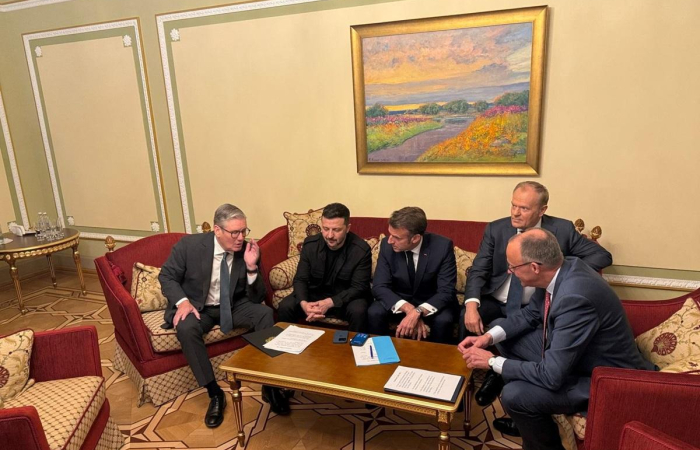
Ukraine and its allies are ready for a “full, unconditional ceasefire” with Russia for at least 30 days starting on Monday, Ukrainian FM Andrii Sybiha said on Saturday.  His remarks came as the leaders of four major European countries visited Kyiv, amid a push for Moscow to agree to a truce and launch peace talks on ending the nearly three-year war. They followed what Sybiha said was a “constructive” phone call between them, U.S. President Donald Trump and his Ukrainian counterpart, Volodymyr Zelenskyy. 
Editor's choice
News
Turkey's accession to the European Union frozen due to lack of progress

Turkey's accession to the European Union frozen due to lack of progress

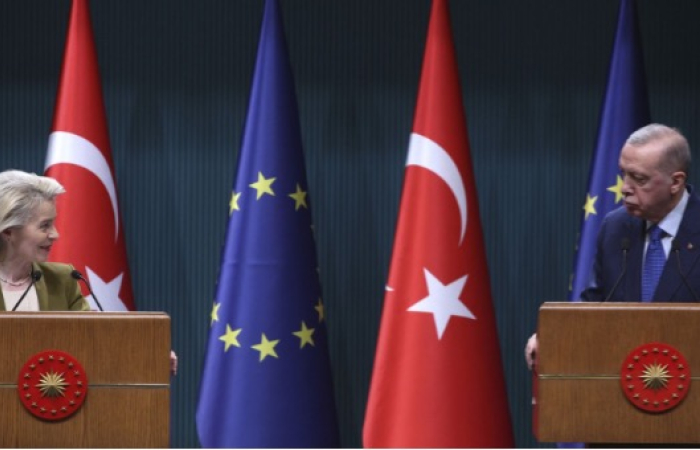
Turkey's EU accession process remains frozen due to democratic backsliding, despite the Mediterranean country's strategic importance and cooperation on migration, the European Parliament has stated in a report approved by MEPS in Strasbourg. Turkey's EU accession process, which has been at a standstill since 2018, cannot be relaunched in the current circumstances, despite Ankara's geopolitical and strategic importance, the report says. MEPs in Strasbourg approved the report on Wednesday 7 April, with 367 votes in favour, 74 against and 188 abstentions.
Editor's choice
News
Russia holds Victory Day parade marking 80th anniversary of Nazi Germany defeat

Russia holds Victory Day parade marking 80th anniversary of Nazi Germany defeat

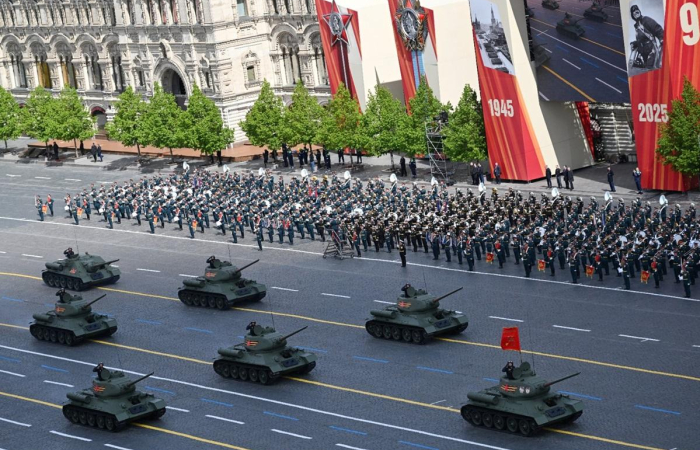
Russia marked the 80th anniversary of the defeat of Nazi Germany in World War II with a massive military parade on Red Square on Friday attended by President Vladimir Putin and foreign leaders, including Chinese President Xi Jinping and Brazilian President Luiz Inácio Lula da Silva. The parade and other ceremonies underline Moscow’s efforts to project its global power and cement the alliances it has forged while seeking a counterbalance to the West amid the conflict in Ukraine that has dragged into a fourth year.
Editor's choice
News
The rise of George Simion, a nationalist who topped Romania’s presidential election

The rise of George Simion, a nationalist who topped Romania’s presidential election

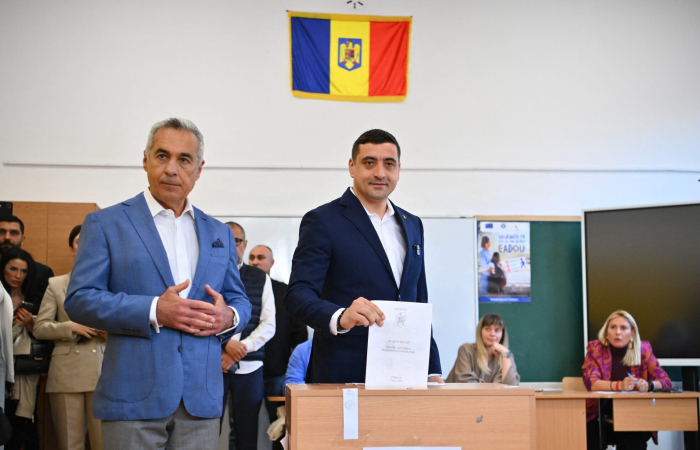
George Simion, a nationalist and vocal supporter of U.S. President Donald Trump, won Romania’s first-round presidential election on Sunday by a landslide after capitalizing on widespread anti-establishment sentiment. The 38-year-old leader of the Alliance for the Unity of Romanians (AUR), will face a pro-Western reformist in a May 18 runoff that could reshape the European Union and NATO member country’s geopolitical direction.
Editor's choice
News
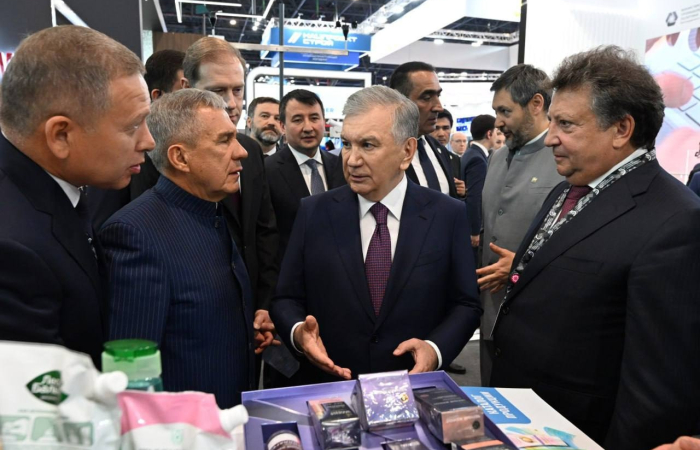
Great power interest in Central Asia putting Uzbekistan in the spotlight

Great power interest in Central Asia putting Uzbekistan in the spotlight

In recent times, Central Asia’s most populous nation has become the centre of attention for great powers, underscored by high level diplomatic contacts with the United States, the hosting of a regional summit with the leadership of the European Union and a high profile visit by hundreds of Russian officials and executives who participated in a trade fair in Tashkent. Western interest centres on Uzbekistan’s abundant reserves of critical minerals and a desire to develop clean energy  sources, including nuclear power. Russia, along with China, has broader trade interests, including developing manufacturing capacity.
Editor's choice
News
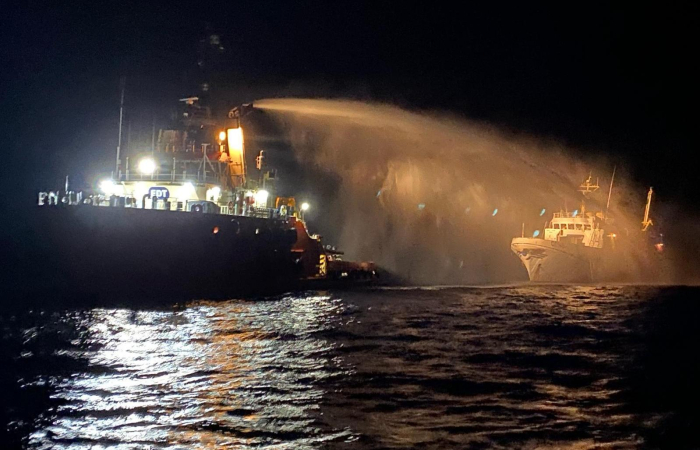
Drones attacked a vessel carrying aid to Gaza in international waters

Drones attacked a vessel carrying aid to Gaza in international waters

Drones attacked a vessel carrying aid to Gaza while it was in international waters off Malta on Friday, the group organizing the shipment said. A fire broke out but was brought under control, according to authorities. A nearby tugboat responded to a distress call from the Conscience, which was carrying 12 crew members and four civilians, Malta’s government said, adding that those aboard refused to leave their ship. The group was safe and no injuries were reported, it said.
Editor's choice
Monday Commentary
Is the Sahel Europe’s soft underbelly?

Is the Sahel Europe’s soft underbelly?

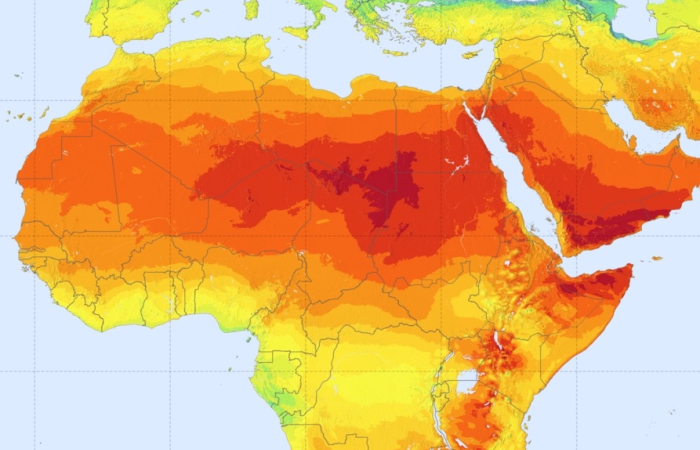
The Sahel region stretches from the Atlantic Ocean to the Red Sea and consists, according to the UN, of ten countries which sit, wholly or partly, within it: Senegal,  Gambia, Mauritania, Guinea, Mali, Burkina Faso, Niger, Chad, Cameroon and Nigeria Other neighbouring countries however, such as Benin, Togo Sudan and Central African Republic, due to their proximity, and to the fact that they increasingly share the same problems, are often included when the Sahel is discussed.
Editor's choice
News
High level U.S. talks with Europeans on ending the Russia-Ukraine war

High level U.S. talks with Europeans on ending the Russia-Ukraine war

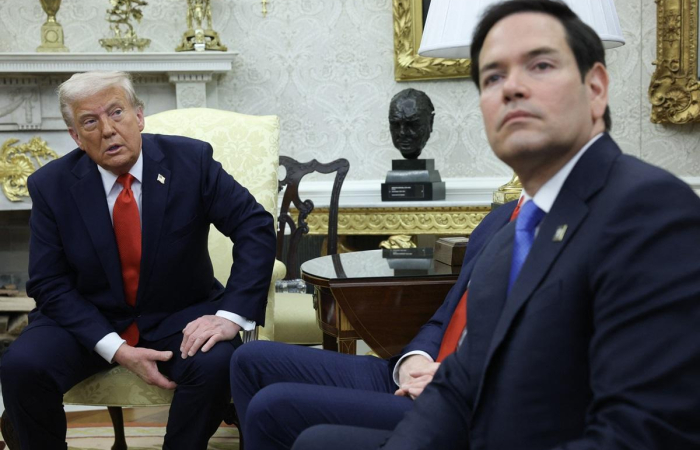
Secretary of State Marco Rubio and Steve Witkoff, President Donald Trump’s special envoy, is travelling to Paris for talks with European allies on U.S. efforts to negotiate a peace deal between Russia and Ukraine. The State Department said Rubio and Witkoff would be in the French capital Thursday for the meetings. The officials will have “talks with European counterparts to advance President Trump’s goal to end the Russia-Ukraine war and stop the bloodshed,” department spokeswoman Tammy Bruce said in a statement on Wednesday.
Editor's choice
Monday Commentary
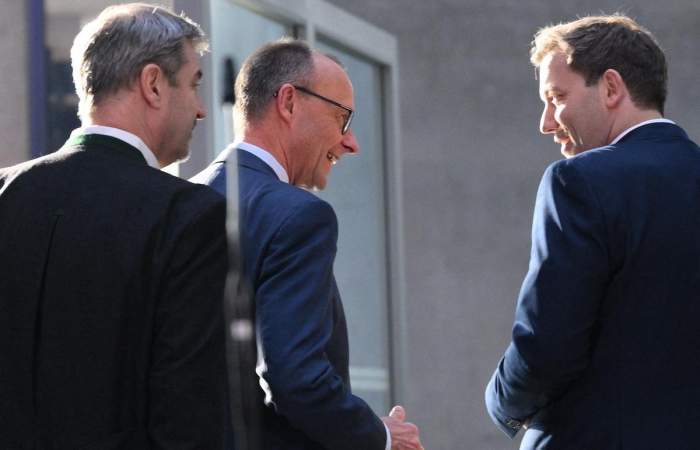
“Germany is Back on Track” ……..and Europeans should be Happy about it!

“Germany is Back on Track” ……..and Europeans should be Happy about it!

On Wednesday (9 April) a new coalition government was announced in Germany bringing back a CDU chancellor working with the centre-left SPD as junior partners. It is an arrangement that Germans are familiar with. Many post-war German governments were similarly constituted, and the German people are comfortable with this arrangement. It buries the prospect of the far-right Alternative fur Deutschland  (AfD), which came second in recent elections, having a role in government. The 146 pages coalition agreement was hammered out in a relatively short time, with those negotiating fully aware of the urgency of giving the country a stable government at a time of global uncertainty and serious domestic challenges. “Germany is back on track” announced the Chancellor-designate, Friedrich Merz, who is expected to take office in early May. Europeans should be happy. A strong Germany is the backbone of Europe, and the new coalition is the best guarantee of that.