High level U.S. talks with Europeans on ending the Russia-Ukraine war

Secretary of State Marco Rubio and Steve Witkoff, President Donald Trump’s special envoy, is travelling to Paris for talks with European allies on U.S. efforts to negotiate a peace deal between Russia and Ukraine. The State Department said Rubio and Witkoff would be in the French capital Thursday for the meetings. The officials will have “talks with European counterparts to advance President Trump’s goal to end the Russia-Ukraine war and stop the bloodshed,” department spokeswoman Tammy Bruce said in a statement on Wednesday.

Rubio will also “discuss ways to advance shared interests in the region,” she said. French President Emmanuel Macron will meet Rubio and Witkoff, according to Macron’s office. They also will hold talks with Foreign Minister Jean-Noel Barrot on the war in Ukraine, the Middle East and the Iranian nuclear program.

Vice President JD Vance is visiting Italy later in the week, meeting with Prime Minister Giorgia Meloni. The meetings come as concerns grow about Trump’s readiness to draw closer to Russia as the U.S. seeks to broker a ceasefire in Ukraine. There is wariness about other Trump administration moves, from tariffs on some of its closest partners to rhetoric about NATO and Greenland

Rubio and Witkoff have helped lead U.S. efforts to seek peace more than three years after Russia launched the war. Several rounds of negotiations have been held in Saudi Arabia and Witkoff met last week with Russian President Vladimir Putin. Moscow and Kyiv agreed last month to implement a 30-day halt on strikes on energy facilities, but Russia has kept up daily strikes.

Both parties have differed on the start time for stopping strikes and alleged daily breaches by the other side. Moscow has effectively refused to accept a comprehensive ceasefire that Trump has pushed and Ukraine has endorsed. Russia has made it conditional on a halt in Ukraine’s mobilization efforts and Western arms supplies, which are demands rejected by Ukraine.
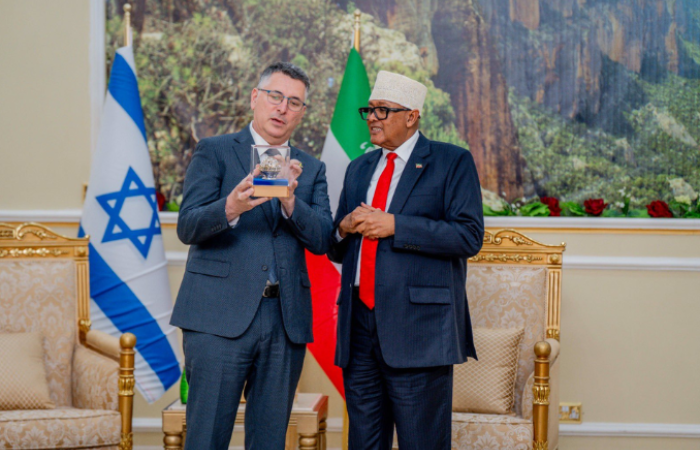
Source: commonspace.eu with agencies. Photo: US Secretary of State Marco Rubio with President Donald Trump. AFP

Related articles

Editor's choice
News
Situation in South Yemen strains relations between Saudi Arabia and UAE

Situation in South Yemen strains relations between Saudi Arabia and UAE

The relations between Saudi Arabia and the United Arab Emirates (UAE) are increasingly strained as a result of the different approach of the two countries towards Yemen. Whilst both countries were initially together in resisting the Houthi take over in Yemen, the UAE subsequently focused on the South of the country, backing the Southern Movement (STC), which seeks to restore the independence of South Yemen. South Yemen became an independent country in 1967, at the end of British rule, and only unified with the north in 1990. The Saudi-led “Coalition to Support Legitimacy in Yemen” on Tuesday, 30 December, said it conducted a “limited” airstrike targeting two ships “that smuggled weapons and other military hardware into Mukalla in southern Yemen”. The ships originated in the UAE port of Furjeirah. In a statement carried by the Saudi Press Agency (SPA), the Coalition Forces spokesman, Major General Turki Al-Maliki, said that two ships coming from the port of Fujairah in the United Arab Emirates entered the Port of Mukalla in Hadramaut without obtaining official permits from the Joint Forces Command of the Coalition. He stressed the Coalition's "continued commitment to de-escalation and enforcing calm in the governorates of Hadramawt and Al-Mahra, and to prevent any military support from any country to any Yemeni faction without coordination with the legitimate Yemeni government and the Coalition. The Southern Transitional Council (STC), launched a sweeping military campaign early in December, seizing the governorates of Hadramaut along the Saudi border and the eastern governorate of Al-Mahra in Yemen’s border with Oman. The UAE-backed STC forces captured the city of Seiyun, including its international airport and the presidential palace. They also took control of the strategic PetroMasila oilfields, which account for a massive portion of Yemen’s remaining oil wealth. (click the image to read the article in full).

Popular