


Karabakh: Both sides report serious incidents during "tense" weekend. (Updated)

Armenia and Azerbaijan report serious incidents over the weekend in the Nagorno-Karabakh conflict zone during which they claim to have killed and wounded several of their opponents. Armenia described the situation on the front-line during the weekend as tense, whilst Azerbaijan described it as a "new escalation". Both sides give different account of the incidents.

The Azerbaijani Ministry of Defence in its account of the incidents says that on August 22, Armenian forces "violated the ceasefire regime, firing with large-caliber machine guns and 60mm and 82mm mortar launchers at Azerbaijani army positions located in the Aghdam and Khojavand directions along the line of contact". According to the ministry, after a careful assessment of the operational conditions along the front line, Azerbaijani forces responded with mortal shelling of what it describes as both front line units and "units deep in the enemy defence".

The statement of the Ministry says that 5 Armenian soldiers have been killed and 8 wounded in the incident. It added that after the short but intensive gunfight, the command staff decided to temporarily cease fire in order to allow the other side to pick up the dead and aid the wounded. In its statement the Azerbaijani Defence Ministry blames the Armenian political and military leadership for the "new escalation".

Azerbaijan says that during the incident 3 Azerbaijani soldiers got light sharpnel wounds but that they have now returned to their units after having been treated at a field hospital.The Armenian side confirms incidents over the weekend but give a different account of events.

The Armenian News Agency Armenpress, citing the official spokesperson of the Ministry of Defence of the self-declared Nagorno-Karabakh Republic (NKR), said that Armenian NKR forces "made a counterattack to silence the rival's activeness". According to this source four Azerbaijani soldiers were killed and fifteen injured as a result. It does not give any figures for Armenian casualties.

By the end of the day, (Monday, 24 August) both Armenian and Azerbaijani Defence Ministries issued strong denials that they had suffered any casualties and accused each other of spreading disinformation. They both however reiterated that they had inflicted casualties on their opponents, repeating the numbers cited earlier in the day.

source: commonspace.eu with agencies

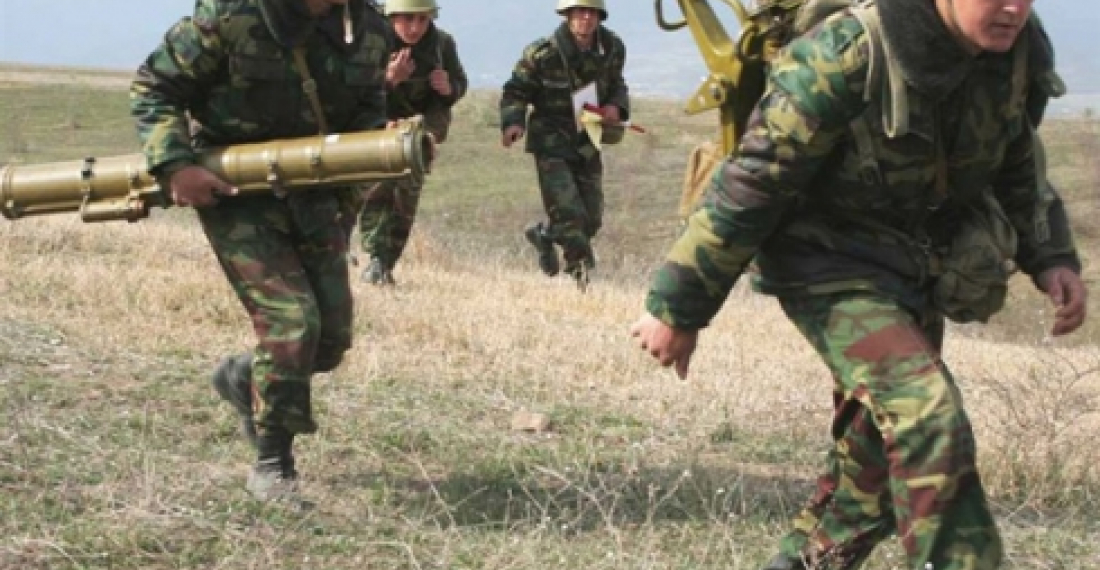
photo: Soldiers carrying mortar guns on the line of contact in the Nagorno-Karabakh conflict zone (archive picture).
Related articles

Editor's choice
News
STC announces two year transitional period and referendum ahead of self-determination for South Yemen

STC announces two year transitional period and referendum ahead of self-determination for South Yemen

Tensions remain high in South Yemen, one week after an unprecedented rift between Saudi Arabia and UAE, as a result of which UAE withdrew its forces from Yemen. On Friday (2 January), the UAE backed Southern Transitional Council (STC), an umbrella group of groups in the South, announced a two-year transition period leading to a popular referendum and self-determination for the South. The announcement came after political tensions spiraled into clashes on the ground as Hadhramaut's governor, backed by the Presidential Leadership Council (PLC) chief, launched a military operation to retake STC-held positions. The STC said the transitional period would be used to agree “a clear path and mechanisms that guarantee the right of the southern people within a defined time frame”. Its statement added that the process would include a referendum regulating the exercise of the southern people’s right to self-determination, through peaceful and transparent mechanisms consistent with recognised international rules and practices, and with the participation of international observers,” the STC said. It said the move was based on a popular mandate and growing risks facing the political partnership in Yemen, warning that failure to address southern demands could lead to further instability. The STC also called on the international community to play a direct role in overseeing dialogue between the parties “south and north” to ensure the process remains peaceful and time-bound. STC Vice President Ahmed bin Breik responded by called for a “general mobilisation of the southern people” to confront what he described as a “coming invasion”. Hours later, a spokesman for forces within the STC said “brave fighters of southern armed forces succeeded in repelling a large-scale attack”. It was not immediately clear where the attack took place or whether it resulted in casualties. The Hadhramaut governor, who has been out overall in charge of coalition forces in the region, later said that forces took control of the camp of the 37th Brigade, the largest in the province. It is also understood that Saudi Naval Forces have been active in the Arabian Sea. The STC, which seeks the restoration of an independent South Yemen, took control of Hadhramaut and Mahra from other pro-government forces, effectively consolidating its grip over all southern governorates. It said the developments followed the failure of other pro-government factions to launch a serious campaign against the Houthis in their northern strongholds, including the capital, Sanaa. Saudi Arabia, which hosts senior Yemeni government and PLC figures, condemned the STC’s takeover. The kingdom has led the anti-Houthi alliance since 2015, with the UAE playing a key role in the south Tensions took an unprecedented turn this week, marked by a Saudi strike on Emirati armoured vehicles in the southern port of Mukalla. Saudi Arabia’s foreign ministry has invited factions in south Yemen to hold a dialogue in Riyadh to “discuss just solutions to the southern cause.” The ministry statement said the conference in the Saudi capital had been requested by Rashad Al-Alimi, President of the Yemeni Presidential Leadership Council, and the Kingdom urged all factions to participate “to develop a comprehensive vision” that would fulfill the aspirations of the southern people.  

Popular

Editor's choice
News
STC announces two year transitional period and referendum ahead of self-determination for South Yemen

STC announces two year transitional period and referendum ahead of self-determination for South Yemen

Tensions remain high in South Yemen, one week after an unprecedented rift between Saudi Arabia and UAE, as a result of which UAE withdrew its forces from Yemen. On Friday (2 January), the UAE backed Southern Transitional Council (STC), an umbrella group of groups in the South, announced a two-year transition period leading to a popular referendum and self-determination for the South. The announcement came after political tensions spiraled into clashes on the ground as Hadhramaut's governor, backed by the Presidential Leadership Council (PLC) chief, launched a military operation to retake STC-held positions. The STC said the transitional period would be used to agree “a clear path and mechanisms that guarantee the right of the southern people within a defined time frame”. Its statement added that the process would include a referendum regulating the exercise of the southern people’s right to self-determination, through peaceful and transparent mechanisms consistent with recognised international rules and practices, and with the participation of international observers,” the STC said. It said the move was based on a popular mandate and growing risks facing the political partnership in Yemen, warning that failure to address southern demands could lead to further instability. The STC also called on the international community to play a direct role in overseeing dialogue between the parties “south and north” to ensure the process remains peaceful and time-bound. STC Vice President Ahmed bin Breik responded by called for a “general mobilisation of the southern people” to confront what he described as a “coming invasion”. Hours later, a spokesman for forces within the STC said “brave fighters of southern armed forces succeeded in repelling a large-scale attack”. It was not immediately clear where the attack took place or whether it resulted in casualties. The Hadhramaut governor, who has been out overall in charge of coalition forces in the region, later said that forces took control of the camp of the 37th Brigade, the largest in the province. It is also understood that Saudi Naval Forces have been active in the Arabian Sea. The STC, which seeks the restoration of an independent South Yemen, took control of Hadhramaut and Mahra from other pro-government forces, effectively consolidating its grip over all southern governorates. It said the developments followed the failure of other pro-government factions to launch a serious campaign against the Houthis in their northern strongholds, including the capital, Sanaa. Saudi Arabia, which hosts senior Yemeni government and PLC figures, condemned the STC’s takeover. The kingdom has led the anti-Houthi alliance since 2015, with the UAE playing a key role in the south Tensions took an unprecedented turn this week, marked by a Saudi strike on Emirati armoured vehicles in the southern port of Mukalla. Saudi Arabia’s foreign ministry has invited factions in south Yemen to hold a dialogue in Riyadh to “discuss just solutions to the southern cause.” The ministry statement said the conference in the Saudi capital had been requested by Rashad Al-Alimi, President of the Yemeni Presidential Leadership Council, and the Kingdom urged all factions to participate “to develop a comprehensive vision” that would fulfill the aspirations of the southern people.

