


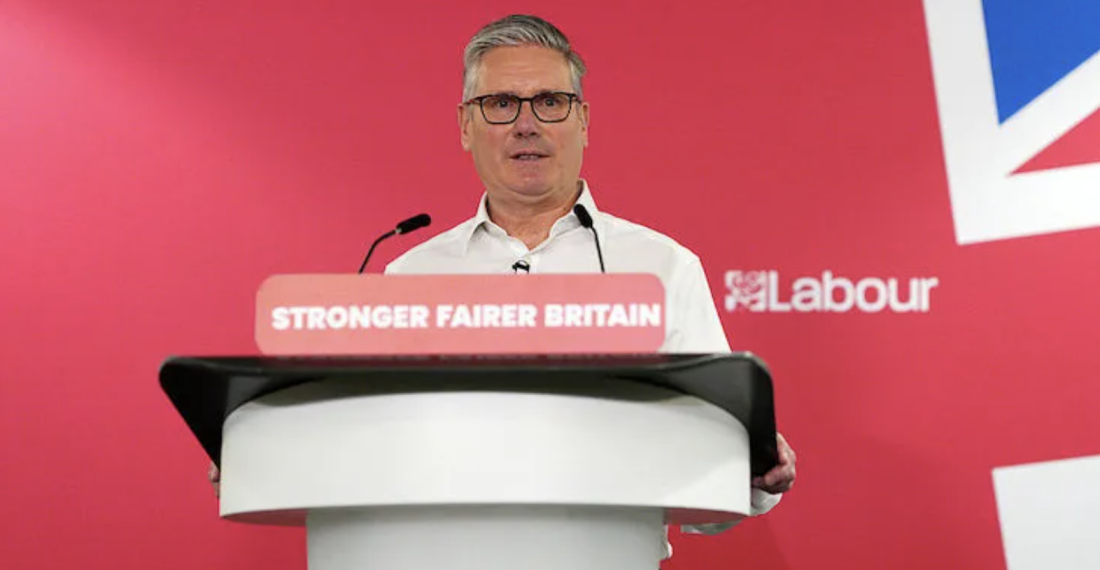
PM Starmer tells cabinet that he will not resign

UK Prime Minister Keir Starmer has rejected calls to resign after Labour suffered heavy losses in the UK’s local elections on 7 May.

Labour lost more than 1,400 seats in English councils and faced further setbacks in Wales and Scotland, with Reform UK making significant gains.

At a cabinet meeting on Tuesday (12 May), Starmer said he would “get on with governing” and would not step down unless a formal leadership challenge was mounted. Several cabinet members backed him, although more than 80 Labour MPs have publicly called for him to resign or set a timetable for his departure.

CNN described the local election results as the “final straw” for many Labour lawmakers, following months of political difficulties for Starmer. These included controversial welfare and winter fuel payment decisions, shifting positions on immigration, weak economic growth, and criticism over his appointment of Peter Mandelson as ambassador to Washington. Supporters point to progress on NHS waiting lists, workers’ rights and relations with Europe, but critics say Starmer has failed to communicate Labour’s achievements effectively.

Source: commonspace.eu with CNN and BBC

Related articles

Popular

Editor's choice
Interview
Thursday Interview: Murad Muradov

Thursday Interview: Murad Muradov

Today, commonspace.eu starts a new regular weekly series. THURSDAY INTERVIEW, conducted by Lauri Nikulainen, will host  persons who are thinkers, opinion shapers, and implementors in their countries and spheres. We start the series with an interview with Murad Muradov, a leading person in Azerbaijan's think tank community. He is also the first co-chair of the Action Committee for a new Armenian-Azerbaijani Dialogue. Last September he made history by being the first Azerbaijani civil society activist to visit Armenia after the 44 day war, and the start of the peace process. Speaking about this visit Murad Muradov said: "My experience was largely positive. My negative expectations luckily didn’t play out. The discussions were respectful, the panel format bringing together experts from Armenia, Azerbaijan, and Turkey was particularly valuable during the NATO Rose-Roth Seminar in Yerevan, and media coverage, while varied in tone, remained largely constructive. Some media outlets though attempted to represent me as more of a government mouthpiece than an independent expert, which was totally misleading.  Overall, I see these initiatives as important steps in rebuilding trust and normalising professional engagement. The fact that soon a larger Azerbaijani civil society visits to Armenia followed, reinforces the sense that this process is moving in the right direction." (click the image to read the interview in full)


