


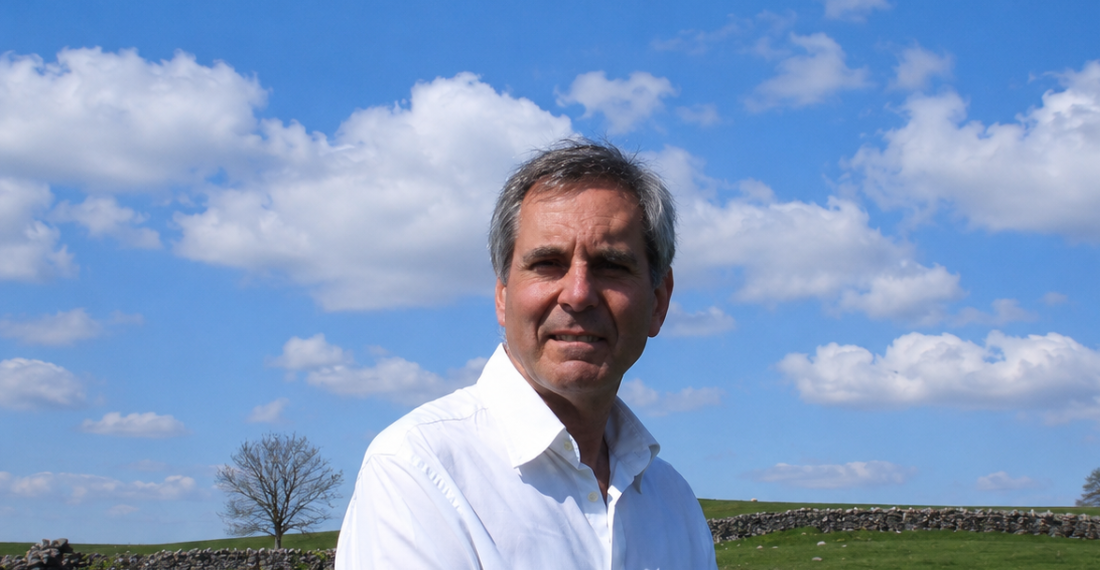
This week, commonspace.eu spoke to Nigel Ellway about his work on landmines, explosive weapons and victim assistance, and his mission to make conflict-affected communities safer and more humane places to live.
Nigel Ellway is a former international journalist and Whitehall media adviser who has dedicated more than a decade to raise political awareness of landmines, explosive weapons and victim assistance. In 2011, he created an All-Party Parliamentary Group on Landmines, and in 2018 founded the REVIVE Campaign, a humanitarian NGO focused on research and advocacy.
We spoke to Mr. Ellway about the long-term impact of landmines and explosive weapons, why victim assistance is too often politically neglected, and why mine action should be measured not only by land cleared or devices removed, but by lives rebuilt, livelihoods restored and communities made safe again.
“When I founded REVIVE, we adopted the phrase: “Reduce explosive violence, increase victim empowerment.” That is actually where the organisation’s name comes from.
But over time, I became increasingly realistic about what NGOs can and cannot achieve. Conflict will always exist, and human beings are endlessly inventive in the ways they wage war. Historically, landmines were seen as effective weapons of deterrence because they were cheap to deploy but expensive to remove. Today, however, warfare is evolving rapidly. Drone warfare is transforming the battlefield.”
Read the full interview below:
Welcome, Mr. Ellway. Would you mind telling us about your professional journey and what first drew you towards the issues of landmines, explosive weapons, and long-term victim assistance?
I have spent most of my life travelling the world, living and working in different countries. My parents were peripatetic, so from a very early age I was exposed to different environments and became aware that many people’s lives were made miserable by conflict through no fault of their own.
After university, I returned to Hong Kong and began working as a freelance journalist. One of the first major stories I worked on examined mail-order brides travelling from the Philippines to the United States. We would now clearly recognise this as human trafficking, though this was before the term had entered common usage. At the same time, I travelled extensively across Southeast Asia, the Middle East, and Africa, witnessing the long-term consequences of conflict and, in particular, the devastating impact of explosive weapons.
These weapons are especially dangerous because they remain long after conflicts end, are often indiscriminate, and frequently affect children.
As a child myself in Hong Kong’s New Territories, I once picked up a Second World War mortar bomb. Had it still been live, I could easily have become one of the victims. So I had a very early personal experience with the dangers posed by explosive remnants of war.
The first victim of an explosive weapon I ever knew was actually my father, who had been wounded during Operation Market Garden at Nijmegen in the Second World War. So this has always been an issue close to me.
When I later took early retirement from the UK civil service, I decided to move into humanitarian mine action. In the 1990s, landmines had become a highly visible political issue, largely because of the public attention generated by Diana, Princess of Wales. Politicians found mine clearance easy to engage with because it produced clear and measurable results: mines removed, percentage of land released, communities reopened.
But by the time I entered the sector, much of the political attention had faded. I established an All-Party Parliamentary Group on Landmines. because I felt the issue needed to return to the political agenda.
How would you explain the mission of the REVIVE Campaign to someone who doesn’t know about the organisation, or about de-mining in general?
Over time, I realised that politicians were mostly only willing to focus on mine action in 5-year terms, but not necessarily on the people left behind. When parliamentarians visited countries such as Angola or Cambodia, they spoke enthusiastically about the amount of land cleared. Yet when discussions turned to victims, the conversation almost always narrowed to amputees alone.
I kept arguing that blast injury is far more complex than the loss of a limb. It includes internal injuries, blast-wave trauma, hearing and eyesight damage, and long-term psychological effects that shape survivors’ entire lives. Too often, victims receive emergency treatment and then disappear from public policy discussions altogether.
I remember asking ministers why long-term victim assistance was so rarely prioritised. The response was usually that aid budgets already supported healthcare systems in affected countries. But that completely misses the reality on the ground. A field hospital outside Mogadishu, for example, may simultaneously be treating pregnant women, snake bites, traffic injuries, assault victims, and a landmine survivor. To pretend a generic healthcare budget can adequately provide the specialised, lifelong care blast victims often require is unrealistic.
That frustration eventually led me to establish the REVIVE Campaign. The purpose of REVIVE is to bring together academics, medical specialists, researchers, and practitioners to produce rigorous, peer-reviewed evidence that policymakers cannot dismiss. We want governments to understand that the impacts of explosive weapons reverberate far beyond the battlefield.
That includes environmental damage. In July, we are holding a conference examining how explosive weapons affect soil, water, and air quality, which are issues that directly affect human health and livelihoods long after wars end.
It also includes cultural destruction. We are exploring work on the impact of explosive violence on cultural and historical environments because one of the central tools of ethnic cleansing and genocide is the destruction of identity, memory, and heritage. When cultural sites are destroyed, communities lose part of their collective history and sense of self.
Ultimately, all of this comes back to people. Mine action should not only be measured in land cleared or devices removed, but in lives rebuilt, communities restored, and futures made possible again.
REVIVE is not a pressure group. We are not trying to dictate policy to governments or parliamentarians. Our role is to bring together the people who understand these issues best. These are the academics, medical experts, researchers, and practitioners, and we aim to produce robust evidence that can shape policy discussions both in the UK Parliament and internationally.
How would you imagine the ideal division of labour between governments and organisations such as REVIVE in reducing explosive violence globally?
When I founded REVIVE, we adopted the phrase: “Reduce explosive violence, increase victim empowerment.” That is actually where the organisation’s name comes from.
But over time, I became increasingly realistic about what NGOs can and cannot achieve. Conflict will always exist, and human beings are endlessly inventive in the ways they wage war. Historically, landmines were seen as effective weapons of deterrence because they were cheap to deploy but expensive to remove. Today, however, warfare is evolving rapidly. Drone warfare is transforming the battlefield.
Landmines are still being used, and several countries have recently withdrawn from the Ottawa Treaty because they still regard them as militarily useful. Yet the nature of warfare has changed. A drone can now observe where mines are being laid in real time, allowing opposing forces to adapt immediately.
Increasingly, explosive weapons are delivered through airborne systems rather than through static minefields alone. That is why we shifted our focus away from trying to reduce explosive violence directly.
Ultimately, that is a political and diplomatic challenge that governments must address. Governments have the power to negotiate treaties, apply diplomatic pressure, and build international coalitions. NGOs do not.
Our role is to provide governments with evidence they can use. We try to remind policymakers that victims exist on all sides of conflict, and that civilian protection provisions in international treaties should be treated far more seriously than they often are today.
Conflict is expensive, destructive, and overwhelmingly harmful to innocent people. Governments need to build coalitions capable of putting pressure on those most responsible for perpetuating violence. That is where meaningful reductions in explosive violence can happen.
For organisations like ours, the most effective contribution is to gather evidence, build networks of specialists, and produce research that can shape policy and funding priorities.
Governments themselves must generate the political will and coordination necessary to move such initiatives forward.
Another issue that often emerges in mine action debates concerns how impact is measured. What should we actually be looking at when assessing the success of mine action?
This is a debate currently taking place in the UK Parliament and within international policy circles more broadly. One of the recurring concerns is that too much emphasis is placed on statistics that sound impressive politically but may not actually reflect meaningful outcomes. A recent article was looking at the amount of money spent on clearing areas that probably didn’t need to be cleared.
Politicians like being able to announce that they funded the clearance of thousands of square kilometres of land. But the real question is: what was that land cleared for? If we know where the threats are, just fence them off, and leave them until it’s convenient to clear them if you don’t need the land.
Has the land been returned to agriculture? Has it generated jobs or supported local development? Or is it simply an unused area that nobody actually needed?
Likewise, counting the number of explosive items removed can also be misleading. Some statistics include loose cartridges or low-risk remnants that pose little realistic danger, even though they are counted alongside genuinely dangerous explosive devices.
Such materials should still be cleared, but these metrics can distort our understanding of impact. What matters more, in my view, is whether mine action has genuinely improved people’s lives.
How many survivors have been able to return to economic activity because they received proper support? How many communities have regained productive farmland? How many livelihoods have been restored?
Mine action should ultimately be measured in human terms, not simply by the number of mines removed or square kilometres cleared.
How has the British Parliament responded to that argument?
Every political system functions differently, but one thing I often say in lectures on the politics of mine action is that politics can bring out both the best and the worst in people. Because politics revolves around power, it often attracts individuals more interested in visibility and influence than in long-term humanitarian thinking.
The challenge, then, is identifying the people within political systems who are genuinely capable of making a difference and who are personally invested in these issues.
The loudest voices in parliament are often not the most useful ones. Politics rewards visibility, and humanitarian issues can easily become secondary to performance and rhetoric. Over the past 15 years, I have tried to approach things differently.
I have been fortunate that I have been allowed to engage with influential figures who may not dominate headlines but who carry real weight behind the scenes. Much of the most important political work happens quietly in corridors and small meetings.
Engaging with backbench parliamentarians early in their careers can be useful. Some later become ministers, and suddenly you find that someone you first met as a junior parliamentarian is now sitting on the government front bench with the ability to influence policy directly.
I would not claim to have transformed government policy, but I do believe I have helped shape certain conversations. One moment that stayed with me was a discussion with a UNICEF representative in Geneva, who told me that one of the inquiry reports I had commissioned had contributed to the creation of a new policy within the organisation. That was one of the few moments where I could point to a concrete example and think: yes, this work has genuinely made a difference.
Of course, there are also many parliamentarians who regard me as a nuisance, and many others who simply are not interested because their priorities lie elsewhere. But there is also a small group of very committed individuals who consistently support this work.
Beyond parliament itself, I have found ambassadors and diplomats to be particularly important partners. Mine action and victim assistance can become powerful tools of local diplomacy. Conversations that begin at embassy level can eventually feed back into ministries and influence wider foreign policy discussions.
That is why our advocacy is not aimed only at politicians. We engage diplomats, civil servants, policy advisers, academics, and international organisations, or anyone capable of carrying these ideas into systems where decisions are actually made.
At the moment, the world’s attention is dominated by two very major conflicts, while countless smaller conflicts receive almost no international attention at all. Our aim is to gather evidence wherever we can work and ensure that knowledge spreads beyond a single region or war.
Partnerships are central to that effort. REVIVE is currently formulating partnerships with other mine action NGOs, and we are already working with universities, think tanks, and organisations far beyond the traditional mine action sector.
One of the things I find most important is bringing in expertise from outside the usual policy circles. For example, our planned work on cultural heritage and conflict will involve archaeologists and historians alongside mine action specialists.
This is why I found the work LINKS Europe is doing in the South Caucasus interesting, particularly the effort to frame de-mining as a confidence-building measure between Armenia, Azerbaijan, and Georgia. Mine action is not only technical; it can also become a pathway towards cooperation and dialogue.
We may not be able to change the entire world, but we can at least try to make a small part of it safer and more humane for the people who live there.
That, in many ways, is the central idea behind all of this work.
Find the REVIVE Campaign here



