Armenia’s parliamentary elections: Polarisation and hybrid threats

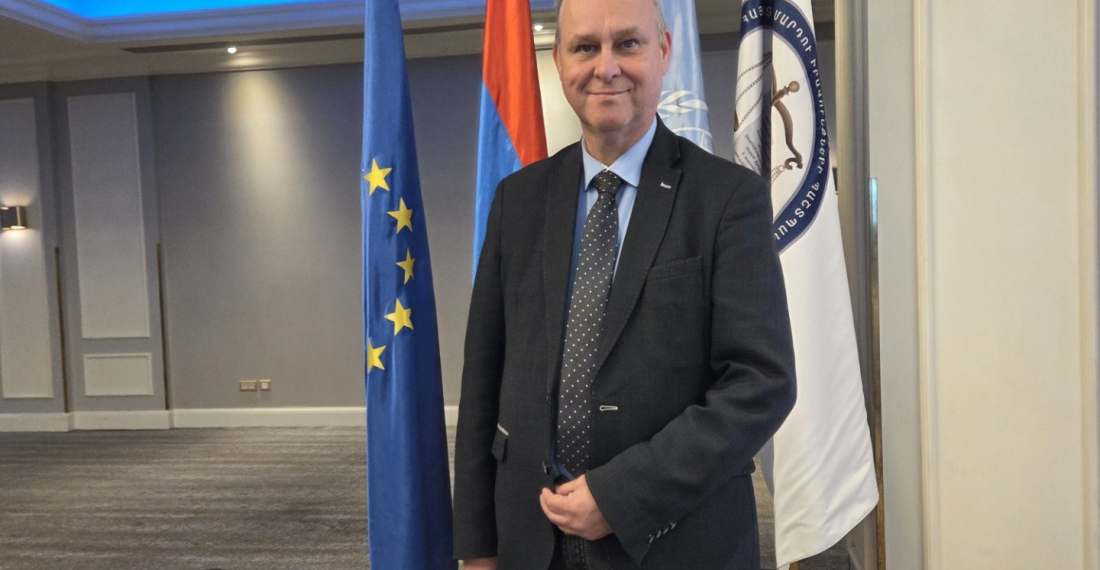
This commentary was prepared by Dr Andrzej Klimczyk for the Armenian Election Monitor 2026. 

The upcoming parliamentary elections in Armenia will undoubtedly be crucial for the country’s future. We can already observe significant social polarisation, the use of hate speech, and brutal media attacks by competing electoral entities on each other. Unlike Georgia or Moldova, Armenia is operating under intense and immediate security pressure following the end of the Nagorno-Karabakh conflict. Border issues, normalisation of relations with Azerbaijan, and relations with Türkiye are not just foreign policy issues; they are existential political issues. This raises the stakes of the election and increases the likelihood of hardline rhetoric that could complicate post-election management.

Armenia continues to hold genuinely competitive, free elections. Compared to countries such as Russia, this remains an important strength. The main problem is not the lack of competition, but the quality of it.  Currently, politics is highly polarised and often based on support for or opposition to Nikol Pashinyan. This risks narrowing the political debate and turning elections into referendums on leadership rather than on future-oriented programmes.

There are real threats and risks of disinformation or hybrid interference in these elections.

Not only during the campaign, but also on election day and afterwards. The greatest threat is the constant flow of hate-driven narratives, which reinforce existing polarisation rather than creating a stable pre-election environment.

Disinformation can also target the diaspora. Armenia’s large diaspora is an asset, but it also allows narratives to spread outside the country and return through social media platforms.

Armenia is partly prepared to counter external disinformation. For sure, Armenia is better prepared than it was a decade ago, but its defences against hybrid interference are still not fully integrated.

There are many organisations, civil society groups, and independent media outlets actively engaged in fact-checking and monitoring, often with support from the European Union. This is an important strength.

In this context is worth noting that on April 21, the EU approved a new civilian mission in Armenia, EUPM (EU Partnership Mission to Armenia), aimed at combating hybrid threats (election interference, cyberattacks, illicit financing).

The mission was created at the request of the Armenian side ahead of the parliamentary elections scheduled for June 7. Yerevan asked Brussels to deploy a "rapid response team" to protect against external interference.

The European Council established the EUPM Armenia within the framework of the Common Security and Defence Policy (CSDP), further contributing to efforts to strengthen Armenia's democratic resilience and crisis management capacity. The mission will support Armenia in countering multifaceted threats, such as foreign information manipulation and interference (FIMI), cyberattacks, and illicit financial flows. EUPM Armenia will provide strategic advice and capacity-building to various ministries and government institutions in developing policies to counter the threats facing society and government, as well as support the development of a horizontal, whole-of-government approach.

Key objectives of the mission are,

  • Combating disinformation and cyberthreats
  • Preventing illicit financial flows in politics
  • Advising security agencies

EUPM should help Armenia to fill out institutional gaps, including the lack of a fully integrated, state-led strategy that combines cybersecurity, strategic communications, platform engagement, and crisis response. Faster and clearer communication from authorities is needed to prevent information vacuums. Coordination across social platforms and closer cooperation with major technology companies may also be necessary to detect coordinated behaviour at an early stage.

The greatest risk is not that the elections will be technically manipulated, but that the information environment becomes so polarised that the outcome is widely questioned.

Another problem is low public awareness, which causes weak or poorly documented claims to quickly gain popularity.

There is a need for faster official communication. Clear, timely updates from authorities are necessary to prevent an information vacuum.

  • In summary, elections will be competitive in a very polarized electoral environment. Compared to countries like Russia, Armenia continues to hold truly competitive elections. The bigger problem isn't the lack of competition, but the quality of it. Politics is highly polarized, largely based on support for or opposition to Nikol Pashinyan. This polarization risks narrowing the political debate and turning elections into referendums on leadership rather than on forward-looking agendas. On April 23, the Central Election Commission registered 19 entities: 17 political parties and 2 electoral unions, as candidates to participate in the elections. At present, I do not observe a real contest over programmes, but rather a contest over names. Voters are being asked to choose between party leaders, not between program proposals.
  • A specific problem for the opposition is its difficulty uniting. In Armenia, opposition forces often coalesce around protest movements but struggle to maintain cohesive electoral coalitions. This situation favours the ruling party, despite persistently high levels of public dissatisfaction with Nikol Pashinyan's rule.
  • There are real threats, not only during the election campaign, but also on election day and the day after. In my opinion, the greatest threat is the constant flow of “hate” narratives that reinforce existing polarization rather than creating a stable and peaceful pre-election atmosphere.
  • Armenia has made real strides in electoral administration since 2018—better transparency, more credible vote counting, fewer blatant abuses of administrative resources compared to earlier periods. But public trust in institutions remains uneven. Many voters still suspect elite bargaining or external influence behind political outcomes, even when procedures are sound.  Post-election stability: Even a technically well-run election could be followed by protests if the result is politically contested.

The main challenge isn’t whether votes are counted correctly; it’s whether the outcome is broadly accepted as legitimate in a society under significant internal and external strain.

Armenia is better prepared than it was a decade ago, but its defences against hybrid interference are not yet fully integrated. The greatest risk isn't that the elections will be "hacked," but that the information environment will become so controversial that the legal outcome will be widely questioned—a problem that is both political and technical.

Source: Dr Andrzej Klimczyk is a former Polish diplomat with over 25 years of experience in post-Soviet countries. Dr. Klimczyk is an expert in fields such as the promotion of democracy and human rights pertaining to electoral systems, as well as freedom of speech in mass media. Moreover, he has broad experience in the security and defense sector. Dr Klimczyk is a former Political Officer in the OSCE Mission to Moldova (2001-2008) and Political Officer in the NATO Liaison Office in Georgia ( 2010-2017). Additionally, he has served as a former journalist and press attaché in the Polish Embassy in Moscow (1996-2000). Dr Klimczyk has significant experience observing general, local, and municipal elections in Russia, Ukraine, Georgia, and Moldova. He is the founder of the“Anush Klimczyk Foundation”.The foundation was established in March 2025 in Yerevan, Armenia. 

Latest

Editor's choice
Monday Commentary
Monday Commentary: PEACE IN OUR TIME?

Monday Commentary: PEACE IN OUR TIME?

Making peace between Armenia and Azerbaijan was never going to be simple, nor easy, nor quick. It is taking time, writes Dennis Sammut in this Monday Commentary. “There is a sense of realism coming from the leaders of the two countries – President Ilham Aliyev of Azerbaijan and prime minister Nikol Pashinyan of Armenia, that frankly, is necessary and welcome”, he writes. At a time when conflicts are raging all over the world – from Ukraine to the Gulf, from Africa to South Asia, the prospect that Armenia and Azerbaijan had finally, after decades of conflict that left thousands of dead and many more displaced, decided on embarking on a journey of peace was welcomed. Peace between Armenia and Azerbaijan can be top-down up to a point. Both leaders have spent political capital preparing for a peace deal. But both are aware that their people are not ready for peace yet. In fact, in Armenia, most of the elite are negative toward a peace deal with Azerbaijan. Pashinyan needs time to persuade his countryfolk. That is why 2031 is realistic. Ilham Aliyev runs a tighter shop, but he is also not immune to public opinion. Every time someone hits a landmine in Karabakh, which unfortunately happens often, peace comes into question. Which is why Aliyev chooses to sound hardline, more often than not. In pursuing the peace agenda, both Aliyev and Pashinyan need to proceed cautiously. But they are right in making peace the central issue in their agenda. It is the main issue, and the one that will define them in history. So forward, cautiously but resolutely! In pursuing the peace agenda, Aliyev and Pashinyan need to be supported clearly and unambiguously. There are too many people in Baku and Yerevan who are sitting on the sides, waiting. The international community is not doing enough. It is time to be counted. Otherwise, the spoilers will win, and the region will go back to its bad habits. (Click the image to read the full commentary).
Editor's choice
News
Azerbaijan and UK sign Joint Declaration on Strategic Partnership

Azerbaijan and UK sign Joint Declaration on Strategic Partnership

On November 12, President of the Republic of Azerbaijan Ilham Aliyev met with Prime Minister of the United Kingdom of Great Britain and Northern Ireland Andy Burnham in Dublin. They first exchanged the “Joint Declaration on Strategic Partnership between the Republic of Azerbaijan and the United Kingdom of Great Britain and Northern Ireland.” During the conversation, it was emphasized that the adoption of the Declaration would formally elevate relations between the two countries to a qualitatively new level. They noted that even before the adoption of the document, relations between Azerbaijan and the United Kingdom of Great Britain and Northern Ireland had already been characterized by a strategic partnership. Touching upon more than 30 years of successful energy cooperation between the two countries, the head of state said that the United Kingdom is the largest European investor in Azerbaijan. The sides noted that broad opportunities also exist for cooperation in renewable energy, high technologies and artificial intelligence. In this regard, the two leaders highlighted the importance of high-level official visits from the United Kingdom to Azerbaijan and discussions held in recent months. The meeting also included an exchange of views on issues on the international agenda.

Popular

Editor's choice
Monday Commentary
Monday Commentary: European-Azerbaijan relations need an intensive and multifaceted dialogue that is frank and honest

Monday Commentary: European-Azerbaijan relations need an intensive and multifaceted dialogue that is frank and honest

Last week I visited Baku, Azerbaijan. My visit was relatively short, but very intensive, and had many meetings with stakeholders and colleagues. When I arrived in Baku first time in 1996,  Azerbaijan was a different country: weak, poor, and shaken by defeat in war. For thirty year the Karabakh issue dominated the agenda: the political agenda but also the popular mindset. Now, thirty years later, Azerbaijan has returned to Karabakh, and peace with Armenia is on the horizon. It is a new era for Armenia-Azerbaijan relations, for the South Caucasus, but also for Europe.  But we cannot be complacent: the Peace agreement has been initialed but not signed; borders remain closed; TRIPP is ambitious but remains an idea; and there are spoilers who want to turn the clock back. We must not allow them, and in this Europe and Azerbaijan must work together. Europe’ vanguard organization is the European Union – it is a free union of 27 member states; it is a strong global economic force, and increasingly a diplomatic and military force too. But it remains “work in progress” and can often appear dysfunctional. It often lacks collective and institutional memory. In its dealings with Azerbaijan the EU has made many mistakes – not least opening the delegation here late – in 2008. It sometimes appears condescending. Some utterances from the European Parliament and from some quarters in some member states are not understandable even for me. They irritate the Azerbaijanis, but serve no other purpose But Azerbaijan has also not handled relations with the EU well. It has failed to respond when the hand of friendship reached out; and it confused irritating actions, sometimes by well-meaning people; sometimes by outright spoilers, with strategic action. In short, EU-Azerbaijan relations have suffered from a lack of proper dialogue. This dialogue must be frank, honest and multi-faceted involving different segments of society on both sides.   Is Azerbaijan Europe? When Azerbaijan applied to join the Council of Europe in the 1990s, there were some who opposed, saying this was not Europe. I was one of the people who argued that Armenia and Azerbaijan may be on the periphery of the continent geographically, but were European in essence. Certainly their elites. During the discussion on 4 September in Baku, my friend Farhad Mammedov, mentioned that Azerbaijan is not interested in joining the EU, and was now close to the Central Asian countries in the 5 plus 1 format. Neither things mean that Azerbaijan is not Europe. There are several European countries that are not in the EU, and do not want to be, for example Norway and Switzerland. Iceland has recently voted to stay out of the EU. The UK was a member and left. Europe is bigger than the EU, and the holding of the European Political Community summit in Baku in 2027 proves that. Despite all the rhetoric, I never heard the president of Azerbaijan  saying that Azerbaijan is not Europe, nor have I heard any European president say it either. Not wanting to join the EU and forging close relations with neighbouring regions does not make Azerbaijan any less European. It is only logical that when Europeans talk to Azerbaijan they talk like family. The conversation is often frank. It must also be honest, and Europeans need always to remember this too. A frank, honest and multi-faceted dialogue A frank, honest and multifaceted dialogue will contribute to relations between Azerbaijan and the rest of Europe: it will avoid misperception, which unfortunately is very common on both sides; it will provide a forum where problems can be discussed and resolved, and it will increase mutual trust, so that together common problems can be addressed. (click image to read the full Monday Commentary)
Editor's choice
Monday Commentary
Monday Commentary: “The barren rocks of Aden” and “These lands of Yemen are so ruthless”

Monday Commentary: “The barren rocks of Aden” and “These lands of Yemen are so ruthless”

There are two early 20th-century tunes that mark foreign attempts to occupy and “pacify” Yemen. The Scottish tune “The barren rocks of Aden” marks the mobilisation of Highland soldiers, enlisted to be deployed to the Yemeni port of Aden, that in 1837 became the last colony to be incorporated into the British Empire. The tune talks of the harshness of the terrain, but is celebratory, It was even played as a farewell tune to Sir William Luce at the parade in Sharjah celebrating his end as “British Viceroy” in the Middle East in 1966. The second tune is an Anatolian lament. As Ilker Sezer reminded us this weekend, in his weekly feature on “Turkiye Today”, it “mourns the tragic fate of Ottoman soldiers dispatched to the harsh, remote deserts of Yemen during the fall of the empire, young men who marched away from their villages and never returned home. Most of their names, and numbers, were never recorded. Yet, their fate left a mark on the Turkish psyche.” Subsequent invaders have discovered that Yemen is a grave that cannot be overcome by the strength of modern technology, and that whilst Yemeni society is splintered and divided, building a reliable alliance with Yemeni factions is difficult. These are the harsh lessons facing Saudi Arabia, as the Kingdom faces its biggest challenge in its modern history. The leadership of the Kingdom now has to respond decisively. At stake is their very credibility. This is likely to be a long and messy conflict. Saudi military objectives need to be focused: to box in the Houthis rather than destroy them. This is likely to include: (a) regaining territory lost on the Red Sea coast; (b) control over Bab el Mandeb Strait; (c) some kind of cordon sanitaire on the Saudi-Yemeni border; and if things go well (d) the capture of Sanaa. All this would not eliminate the Houthi problem, but it will contain it. In the end the Saudis will have to continue managing Yemen with a mixture of carrot and stick. For the moment, the stick is likely, but the carrot cannot be forgotten either. (click the image to read the Monday Commentary in full)