In this op-ed for commonspace.eu Dennis Sammut says the next three months should be a time for reflection on the Karabakh conflict, but a pause in hostilities should also be accompanied by the reinvigoration of the peace efforts.
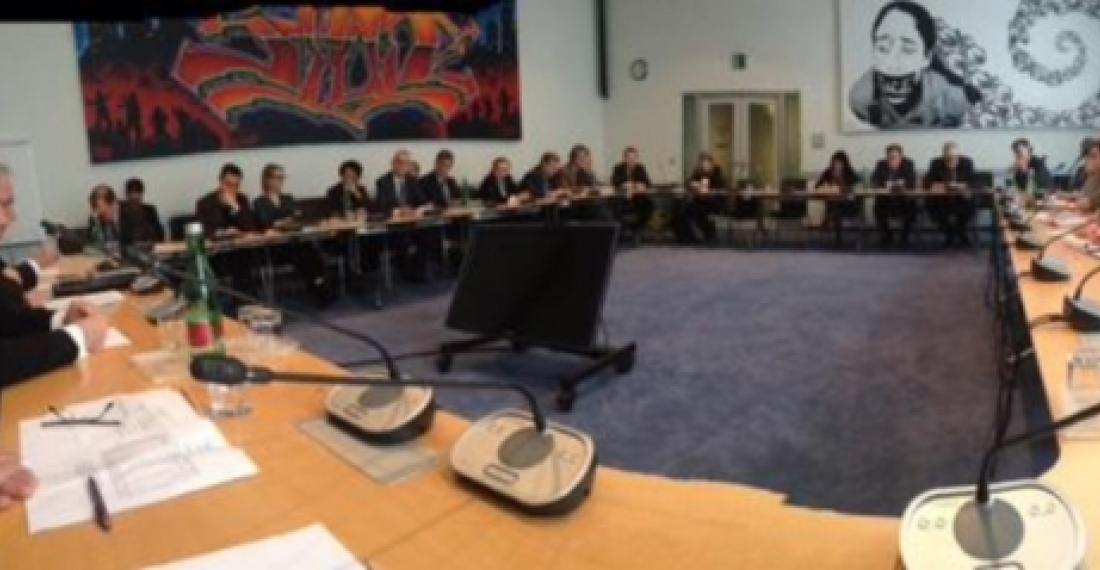
The US co-Chair of the OSCE Minsk Process - the diplomatic mechanism mandated by the international community to help bring about a resolution of the Nagorno-Karabakh conflict - has been quoted by the news agency APA as saying that they "are hopeful that the sides will respect the ceasefire during upcoming holidays, commemorations, and international events in the region". Ambassador James Warlick added that "While we have no means to monitor or verify these commitments, such stability would create a more positive dynamic for negotiations". Last week Warlick and diplomats from the other two co-Chair countries, France and Russia, briefed the full Minsk Group, consisting of Belarus, Germany, Italy, Sweden, Finland, and Turkey, as well as Armenia and Azerbaijan, on the current situation
In April Armenia will commemorate the 100th anniversary of the massacres in Anatolia, sometimes characterised as the Armenian Genocide; in June Azerbaijan will host the 1st European Games in Baku; and in May both countries will commemorate the 70th anniversary of the end of World War II in which tens of thousands of Armenians and Azerbaijanis lost their life in the common struggle against fascism. These three months will therefore be the time when in both Armenia and Azerbaijan people will be thinking about the pains of the past, and wondering about the hopes for the future. This is therefore indeed a time for a pause in hostilities, and of reflection on where the process to resolve the painful and costly Karabakh conflict is, and where it is going.
The daily incidents that have been ongoing for the last year, and which increased since the new year, prove nothing except the failures of all the sides to bring this pain on their people to an end. No amount of medals to the deceased, or rhetoric, is going to change that.
However, slowly but surely, people in both Armenia and Azerbaijan, and in the conflict zone itself, are starting to question the present reality. In these tightly controlled societies, where public opinion is often stifled, or at best muffled, just to what extent there is a demand for peace will never be completely clear. But what is certain is that the daily toll of casualties on both sides is starting to unsettle even the most cold-hearted.
How could this period of reflection, if it was to happen, be used?
Whilst there should be a pause in the hostilities, there should be no pause in the efforts to resolve the conflict peacefully. Everybody needs to reflect, including the co-Chair, who should no longer expect unquestioned acquiescence by the international community. Once this period of reflection ends they need to be ready with new and creative initiatives to help the sides snap out of their current impasse. The sides need to be extracted out of the dangerous and unsustainable comfort zone in which they have dug themselves in.
Is the present Minsk Process mechanism able to do this? The answer is yes if it is used properly. This process has not yet exhausted itself, but it needs to be reinvigorated. This is not going to happen on its own. The process needs to be put under the constant scrutiny of the international community and international public opinion. The OSCE as the organisation under whose mandate the Minsk Group operates needs also to be held to account, as do the member countries of the Minsk Group themselves. Up to know they have all shrugged off responsibility pointing to the three co-Chair countries. Yet what the co-Chair do (or do not do), is being done (or not done), in their name.
In the end however the two persons that need to reflect most during this time are president Serzh Sargsyan and president Ilham Aliev. The political systems that they preside over give them both plenty of scope and authority to make things better. So far they may have considered intransigence as their best policy. It is time they give compromise a chance.