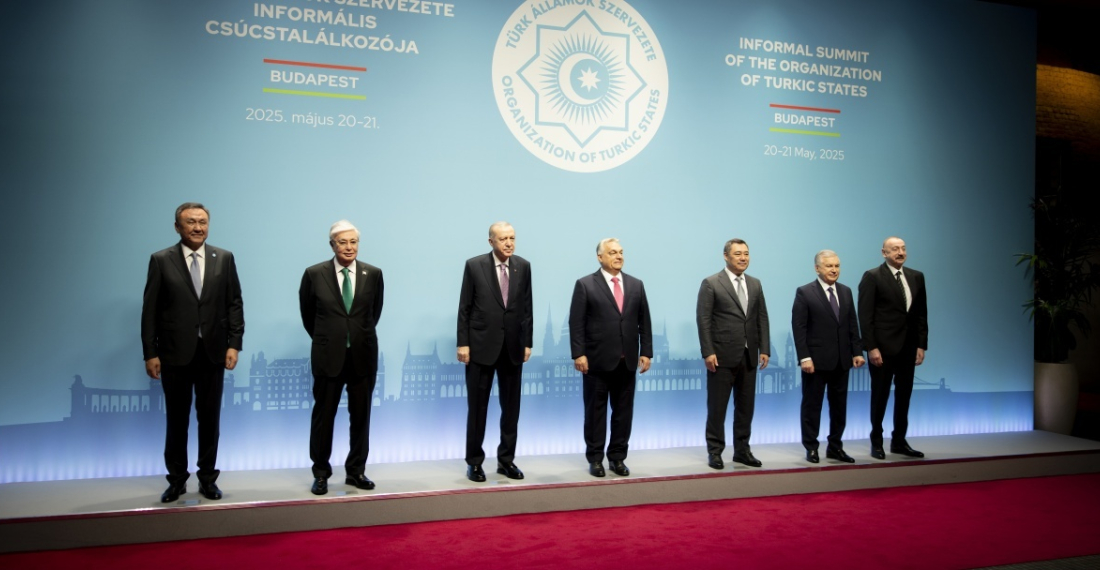
The Informal Summit of the Organization of Turkic States (OTS), held on May 20-21, 2025, in Budapest, Hungary, marked a significant milestone in the organisation’s growing geopolitical influence. Hosted by Hungarian Prime Minister Viktor Orbán, the summit brought together leaders from Azerbaijan, Kazakhstan, Kyrgyzstan, Türkiye, and Uzbekistan, alongside observer states Hungary, Turkmenistan, and the Turkish Republic of Northern Cyprus. This gathering, the first OTS summit hosted by an observer state, underscored Hungary’s role as a bridge between the Turkic world and Europe, reflecting the theme “Meeting Point of East and West.”
The summit culminated in the adoption of the Budapest Declaration, a strategic roadmap that reaffirmed the OTS’s commitment to unity, cooperation, and addressing global challenges. This event highlighted the organisation’s evolution into a formidable geopolitical player, particularly for Central Asian states and Azerbaijan, as they navigate complex regional dynamics to safeguard their independence and counter threats to their security.
The OTS, established in 2009 through the Nakhchivan Agreement, has transformed from a modest cooperation council into a robust intergovernmental body uniting Turkic-speaking nations. Initially founded by Azerbaijan, Kazakhstan, Kyrgyzstan, and Türkiye, with Uzbekistan joining as a full member in 2019, the organisation now represents a population of over 170 million and a combined GDP of approximately $2 trillion. Its institutional framework, including the Council of Heads of State, Council of Foreign Ministers, and specialised bodies like the Turkic Academy and TURKSOY, facilitates cooperation across political, economic, cultural, and security domains. The OTS’s strategic vision, outlined in the “Turkic World Vision 2040,” emphasises mutual trust, political solidarity, and economic integration, positioning the organisation as a counterweight to external pressures faced by its members.
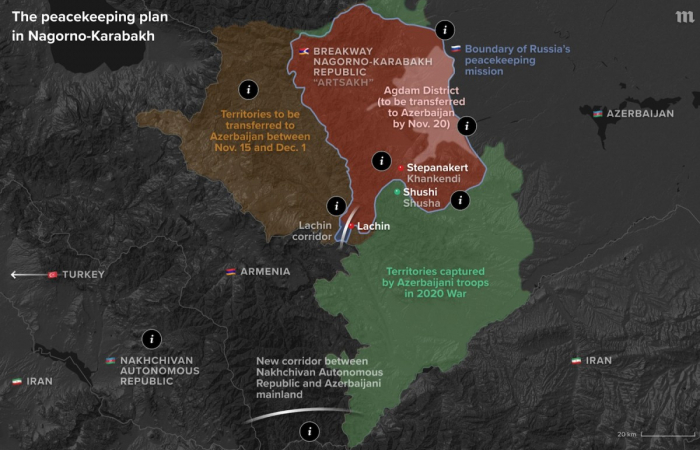
Azerbaijan, a founding member, exemplifies the OTS’s role in safeguarding independence. President Ilham Aliyev has repeatedly emphasised the Turkic world as Azerbaijan’s “family,” reflecting a strategic pivot toward Turkic unity as a cornerstone of its foreign policy. This approach gained prominence after Azerbaijan’s victory in the 2020 Second Karabakh War, which restored its territorial integrity and showcased the diplomatic and moral support of OTS members. The organisation’s unequivocal backing contrasted with the selective approaches of some Western institutions, reinforcing Azerbaijan’s trust in the OTS as a reliable platform. The 2021 Shusha Declaration, signed with Türkiye, elevated their bilateral ties to a formal alliance, with provisions for joint defence and security measures. This partnership, described as “one nation, two states,” serves as the backbone of the OTS and offers a roadmap for other member states to follow.
The OTS’s focus on security cooperation is a critical mechanism for countering threats to its members’ independence. The Budapest Declaration highlighted a joint commitment to combat terrorism, organised crime, and cyber threats, with specific praise for Türkiye’s stabilising efforts in Syria. Recent summits have prioritised defence collaboration, with Azerbaijan proposing military-industrial partnerships and joint exercises. These initiatives address shared challenges like extremism and drug trafficking, which are particularly pressing in Central Asia due to its proximity to Afghanistan. The OTS’s Civil Protection Mechanism and coordinated defence strategies enhance the resilience of member states, allowing them to collectively address external pressures without aligning with any single global power bloc.
Economic integration is another pillar through which the OTS strengthens its members’ independence. The Trans-Caspian Corridor, or Middle Corridor, linking Central Asia to Europe via Azerbaijan and Türkiye, is the artery of cooperation amongst the member states. The OTS members, as key stakeholders in this corridor, benefit from enhanced trade and investment opportunities. The OTS states consistently work on new instruments in order to optimise this transportation linkage. For instance, the Simplified Customs Corridor Agreement, signed at the 2022 Samarkand Summit, entered into force on 29 November 2024. The Agreement introduced an electronic system designed to enable the Customs Authorities of both Parties to exchange information in advance about goods being traded between them.
The member states have reached an agreement also on the adoption of the UN TIR (Transports Internationaux Routiers) Convention through the eTIR system, which updates international customs processes and enables secure data sharing among participating countries. In 2022, Azerbaijan and Uzbekistan became the first two nations to successfully carry out a transport operation using the eTIR system. The adoption of the eTIR system by the two countries has reduced transportation costs and improved logistics efficiency. Uzbekistan’s trade with OTS members has nearly tripled since 2017, reaching $10 billion, reflecting the organisation’s economic impact. The agreement on the Turkic Investment Fund, the first mutual financial institution among Turkic State, came into force in 2024, and further supports economic cooperation, fostering self-reliance and reducing dependence on external financial systems. The Fund, with a total authorised capital of US $600 million, is designed to promote entrepreneurship, growth, job creation, research and innovation through supporting small and medium-sized businesses (SMEs).
Cultural and linguistic unity also plays a crucial role in the OTS’s strategy to protect member states’ sovereignty. The adoption of a common 34-letter Turkic alphabet in 2024, transitioning from Cyrillic to Latin scripts, fosters linguistic unity and counters historical Soviet influences. Cultural initiatives, such as TURKSOY’s promotion of Turkic arts and the Turkic Academy’s research into shared heritage, strengthen collective identity, which in turn bolsters political solidarity. For Azerbaijan and Central Asian states, this cultural cohesion provides a soft power tool to assert their distinct identities on the global stage, countering external cultural and political pressures.
The OTS is keen to become a prominent actor at the global level with a notable international presence. Its observer status at the Economic Cooperation Organization and applications for similar roles at the United Nations and the Organisation of Islamic Cooperation signal its ambition to amplify the Turkic world’s voice globally. The Budapest office strengthens ties with European institutions, with Hungary serving as a gateway to the EU and OSCE. These connections provide diplomatic leverage, enabling OTS members to navigate global rivalries while maintaining strategic autonomy. The organisation’s unified support for members’ international candidacies – such as Uzbekistan’s bid for the UN Security Council (2035–2036) and Azerbaijan’s for the UNESCO World Heritage Committee (2025–2029) – further enhances their global influence.
For Azerbaijan and Central Asian states, the OTS is more than a regional alliance; it is a strategic shield against external threats and a platform for asserting independence. By fostering political solidarity, economic integration, and cultural unity, the organization offers an opportunity to its members to navigate a multipolar world without aligning with any single power bloc. This is of critical importance against the backdrop of ongoing geopolitical shifts that have heightened the need for regional unity.
The OTS provides a culturally and historically aligned framework for these states to reduce dependence on surrounding powers. As the OTS continues to expand its institutional capacity and international presence, its role as a counterbalance to geopolitical pressures will only grow, solidifying the Turkic world’s place in the emerging global order. Thus, the Organization of Turkic States is poised to become an important player in shaping the future of Eurasia and beyond, bolstering the sovereignty and independence of its member states.