Theme

Conflict and Peace

Stories related to violent conflicts, diplomatic tensions, and conflict prevention, mediation and resolution.

Editor's choice
Opinion
Opinion: The US strikes Venezuela, Consequences for Ukraine and Europe

Opinion: The US strikes Venezuela, Consequences for Ukraine and Europe

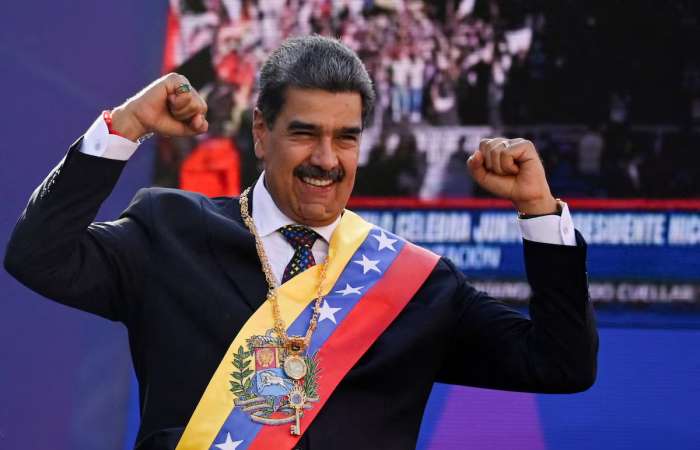
This is a Flash Analysis published on 3 January 2026 by the European Policy Centre in Brussels. Chris Kremidas-Courtney is a Senior Visiting Fellow at the European Policy Centre. As 2026 barely takes its first breath, we are already drifting back into an age where great powers manage their own neighbourhoods and look away from everyone else’s. It’s a world order that prizes control over legitimacy and stability over justice until neither one survives. The most immediate consequence of the US strike on Venezuela may be felt not in Latin America, but first in Ukraine. As foreshadowed in the Trump administration’s National Security Strategy, Washington is intent on rooting its power firmly in the Western Hemisphere while potentially leaving Russia and China greater freedom of action in their ‘backyards’. Seen through this lens, the strike on Venezuela looks more like part of a broader reversion to regional spheres of influence. The emerging message is that the United States will enforce primacy close to home but its willingness to underwrite security beyond its hemisphere is increasingly transactional and politically fragile. This is a 21st century version of the 1823 Monroe Doctrine, in which US hemispheric dominance was paired with strategic disengagement from Europe’s wars. It is also the world Putin has long argued for. It is hard to see an upside for Europe, but there may be one small silver lining. Prior to the strike, Caracas had been demonstrating how a sanctioned regime could survive and adapt by embedding itself into alternative economic and financial networks backed by China, Russia and Iran. That resilience was undermining the credibility of sanctions as a systemic tool, on which the EU relies far more heavily than the United States. By decapitating the Maduro regime, Washington has reasserted that sanctions are not an end state, but a step on an escalation ladder that can still culminate in the use of force. Yet this restoration of the credibility of sanctions comes at a great cost. It risks signalling to other revisionist or embattled regimes that force is the ultimate arbiter. All eyes are now on Moscow, since, as former US National Security Council official Fiona Hill testified in 2019, Russia had informally offered to end its support for Venezuela in exchange for US acquiescence on Ukraine.  Meanwhile, online advocates in China are calling on their regime to emulate the US and take similar steps against Taiwan. Worse still, Venezuela is now politically hollowed out. Any opposition figure who emerges now could be instantly labelled a US proxy. It is not yet clear what the thinking is in Washington about the day after, but the precedents of Iraq and Afghanistan are not encouraging. Once again, Washington has demonstrated its ability to act decisively – but also reminded us of its lack of staying power. For Ukraine, that distinction may prove fatal unless Europe can step up and support Kyiv more decisively in 2026.

Filter archive

Publication date
Editor's choice
Opinion
Abu Dhabi: What Next for Armenia and Azerbaijan?

Abu Dhabi: What Next for Armenia and Azerbaijan?

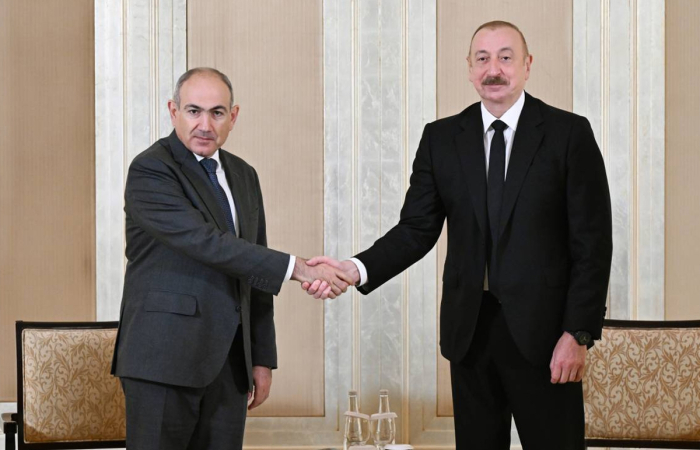
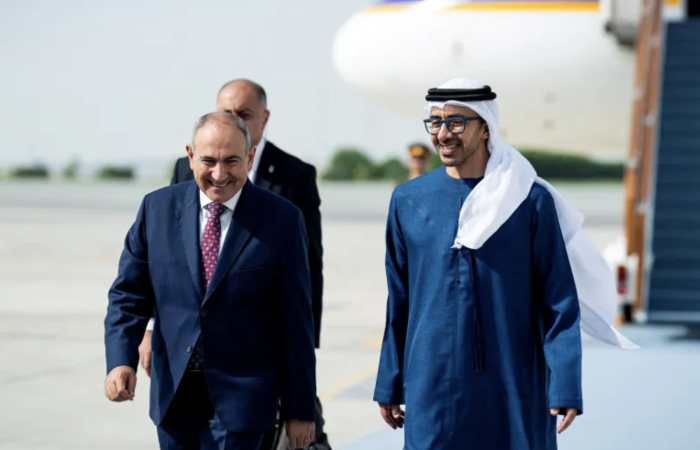
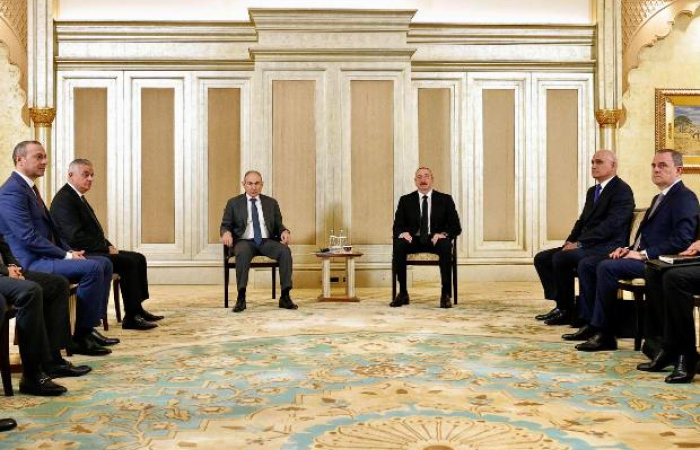
Depending on whom you ask, last week’s meeting between Armenian Prime Minister Nikol Pashinyan and Azerbaijani President Ilham Aliyev in Abu Dhabi was either a historic development or simply another routine step in the still-fragile peace process. In an interview with Slovak media prior to the talks last week, Azerbaijani presidential advisor Hikmet Hajiyev even claimed the conflict between the sides is now over. Both sides believed that they were now the closest to formalising a peace treaty than at any time before.
Editor's choice
Monday Commentary
Monday Commentary: The War in Ukraine is Europe’s War

Monday Commentary: The War in Ukraine is Europe’s War

The war in Ukraine, following Russia’s unprovoked invasion in February 2022, has now raged on for three and a half years. Thousands of Ukrainians, military and civilian, have died, and millions of Ukrainians have been displaced. Vladimir Putin brought this calamity on the Ukrainian people, and on his nation too, for political capriciousness and naked ambition. Leaders of European countries understood the seriousness and significance of the moment, not only those near Russia, such as Poland, the Baltic States, Finland and Sweden, but in wider Europe too, including Germany, France, the UK, the Netherlands and beyond. Yet whilst the leaders rose to the occasion, the European public has remained largely indifferent. The majority of Europeans have so far acquiesced to the decision of their leaders to pour billions of euros into the Ukrainian war effort, but the conflict remains distant, and most Europeans carry on with their lives as usual. Putin is perceived more as an oddity than a threat. There is a great risk in this. The European Union High Representative for Foreign and Security Policy, and former Estonian politician, Kaja Kallas, is quoted as saying “Ukraine fights today so that we may not have to fight tomorrow. Their fight is our fight.” True! But that is not the full story.
Editor's choice
News
Abu Dhabi peace talks come with small breakthroughs for Armenia and Azerbaijan

Abu Dhabi peace talks come with small breakthroughs for Armenia and Azerbaijan

On Thursday (10 July), Armenian Prime Minister Nikol Pashinyan and Azerbaijani President Ilham Aliyev met in the UAE to advance their peace negotiations, following the March agreement on a draft treaty intended to end decades of conflict. The talks, which covered border delimitation and confidence-building measures, were described by both sides as constructive. However, no final timeline for signing the full agreement was announced.
Editor's choice
News
Leaders of Armenia and Azerbaijan meet in Abu Dhabi to finalise peace agreement

Leaders of Armenia and Azerbaijan meet in Abu Dhabi to finalise peace agreement

Armenian Prime Minister Nikol Pashinyan and Azerbaijani President Ilham Aliyev are meeting on Thursday 10 July in Abu Dhabi, United Arab Emirates, to discuss the next steps in finalising the peace agreement, their offices have confirmed to international news agencies. This is the first formal bilateral meeting between the leaders of Armenia and Azerbaijan since they agreed on the draft text of the peace agreement, following nearly four decades of conflict. The results of this meeting will shape the future of the South Caucasus and how the two countries can live peacefully next to each other after decades of conflict.