Stepanakert welcomes Armenian and Azerbaijani leaders Vienna summit; says the meeting was important "for maintaining peace and stability".

The authorities of the self-declared Nagorno-Karabakh Republic have welcomed the meeting held in Vienna on Tuesday between the Presidents of Armenia and Azerbaijan. A statement by the entity's Ministry of Foreign Affairs stated:

"The resumption of high-level meetings between the presidents of Armenia and Azerbaijan after a long break is important from the perspective of the intensification of the peaceful settlement process of the conflict between Azerbaijan and Karabakh and maintaining peace and stability in the region.

"We believe that the meeting proves that there is no alternative to the peaceful settlement and serves to ensure its irreversibility.

"At the same time, we consider it necessary to note that real progress in the settlement process could only be reached by taking into consideration the existing realities and with the restoration of full-format negotiations with direct and immediate participation of the Nagorno-Karabakh Republic in all its stages,"

In the meantime international reaction to the meeting remained positive. A spokesperson for Catherine Ashton, the EU High Representative for Foreign and Security Policy said in a statement,

"The High Representative welcomes the meeting between President of the Republic of Armenia Serzh Sargsyan and President of the Republic of Azerbaijan Ilham Aliev held in Vienna on 19 November and commends the OSCE Minsk Group Co-Chairs and their efforts in facilitating the resumption of top level meetings.

The Presidents' agreement to advance negotiations and meet again in the months ahead is encouraging. The European Union is ready to engage in renewed efforts towards political settlement of the Nagorno-Karabakh conflict and to further contribute to peace-building efforts, in support of and in full complementarity with the OSCE Minsk Group."


Source: commonspace.eu

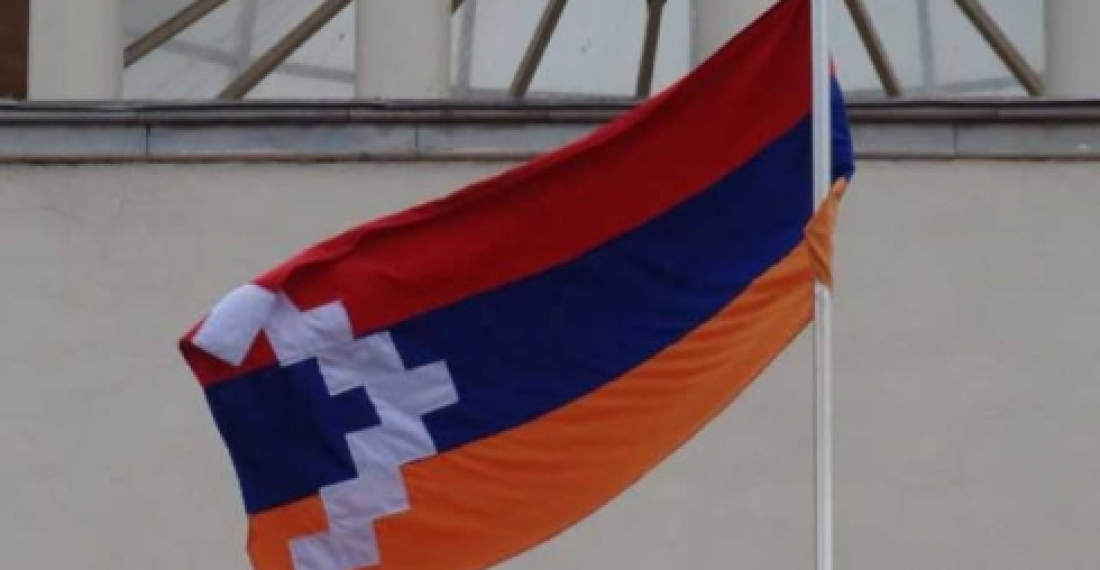
Image: The flag of the self-declared Nagorno-Karabakh Republic
Related articles

Editor's choice
News
Landmines present to the European Union both a contradiction and a dilemma

Landmines present to the European Union both a contradiction and a dilemma

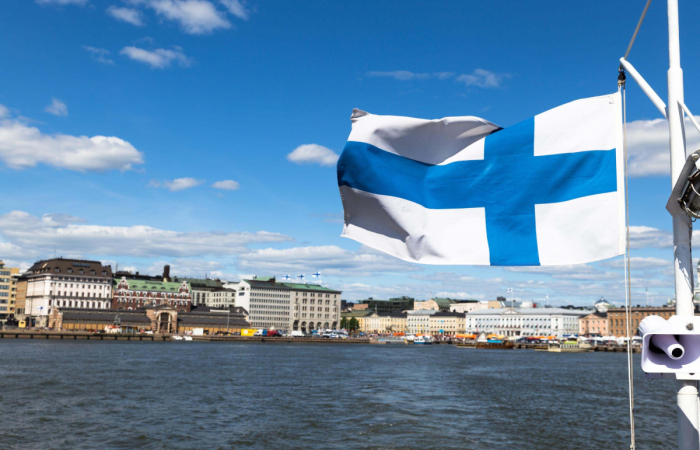
Finland’s decision to buy one million landmines creates a serious contradiction in the policy of the European Union, and is symbolic of a bigger dilemma facing European countries as they get used to the need to acquire “hard” power to face an increasing threat from Russia. Finland is seeking to acquire one million anti-personnel mines at a cost of 100 million euros. Finland, together with Poland, Latvia, Lithuania and Estonia last year abandoned the Ottawa agreement, the international framework that bans the use of anti-personnel mines, which the EU had been instrumental in establishing and supporting. All five countries cite the threat from Moscow as the reason. Colonel Riku Mikkonen of the Army Command told Finland’s national news agency STT that officials are now gathering information from suppliers regarding the deal, the AFP news agency reports. Helsinki would like domestic manufacturers to supply the mines, with contracts signed by the end of 2027 and production up and running by 2028. “It would be useful in many ways if Finnish companies produced the anti-personnel mines in Finland,” Mikkonen said. About half a dozen Finnish firms qualify, he told STT. “However, at this stage, buying the mines from abroad is not totally ruled out,” he added. LANDMINES PROVIDE THE EU WITH BOTH A CONTRADICTION, AND A DILEMMA Eliminating landmine contamination worldwide is one of the EU’s main soft power postures, and it basks in its record as the biggest funder of anti-landmine action in the world. But the fact that 5 of its 27 member states  have now left the Ottawa Treaty dents the EU moral high ground. It is a contradiction that is too big and important to be ignored. It also presents the European Union with a deeper dilemma. The threat from Russia is changing what the EU has stood for decades, namely a force for good able to mobilise its considerable soft power for the greater good of humanity. How the Union will implement this change will define its future. In the meantime landmines have not become any less lethal, benign, or unimportant. They remain in many parts of the world a major threat to life, an impediment to prosperity, and a potential trigger to further conflict. The 22 EU members states that still adhere to the Ottawa treaty must regroup, and be more assertive in their quest against anti-personnel land mines. All the reasons why they supported the Ottawa treaty in the first place still exist. The message must be clear: NO TO LANDMINES!
Editor's choice
News
Pashinyan says that he wants peace treaty with Azerbaijan by 2031

Pashinyan says that he wants peace treaty with Azerbaijan by 2031

Armenia should sign and ratify a peace treaty with Azerbaijan before 2031, Armenian Prime Minister Nikol Pashinyan said. He described the objective as the top priority for his administration. Earlier, the Armenian prime minister also spoke about a possible land-swap with Azerbaijan Armenia and Azerbaijan should agree to establish a clear, conventional border without enclaves or exclaves, Prime Minister Nikol Pashinyan said. Armenia controls three Azeri enclaves inside its borders while Baku controls one Armenian enclave – those could be subject to a land swap, Pashinyan announced.

Popular

Editor's choice
Interview
Thursday Interview: Murad Muradov

Thursday Interview: Murad Muradov

Today, commonspace.eu starts a new regular weekly series. THURSDAY INTERVIEW, conducted by Lauri Nikulainen, will host  persons who are thinkers, opinion shapers, and implementors in their countries and spheres. We start the series with an interview with Murad Muradov, a leading person in Azerbaijan's think tank community. He is also the first co-chair of the Action Committee for a new Armenian-Azerbaijani Dialogue. Last September he made history by being the first Azerbaijani civil society activist to visit Armenia after the 44 day war, and the start of the peace process. Speaking about this visit Murad Muradov said: "My experience was largely positive. My negative expectations luckily didn’t play out. The discussions were respectful, the panel format bringing together experts from Armenia, Azerbaijan, and Turkey was particularly valuable during the NATO Rose-Roth Seminar in Yerevan, and media coverage, while varied in tone, remained largely constructive. Some media outlets though attempted to represent me as more of a government mouthpiece than an independent expert, which was totally misleading.  Overall, I see these initiatives as important steps in rebuilding trust and normalising professional engagement. The fact that soon a larger Azerbaijani civil society visits to Armenia followed, reinforces the sense that this process is moving in the right direction." (click the image to read the interview in full)