

Monday Commentary: July Ankara summit will define NATO for the next decade

This Monday Commentary was prepared by Dr Dennis Sammut, Director of LINKS Europe, and Managing Editor of commonspace.eu

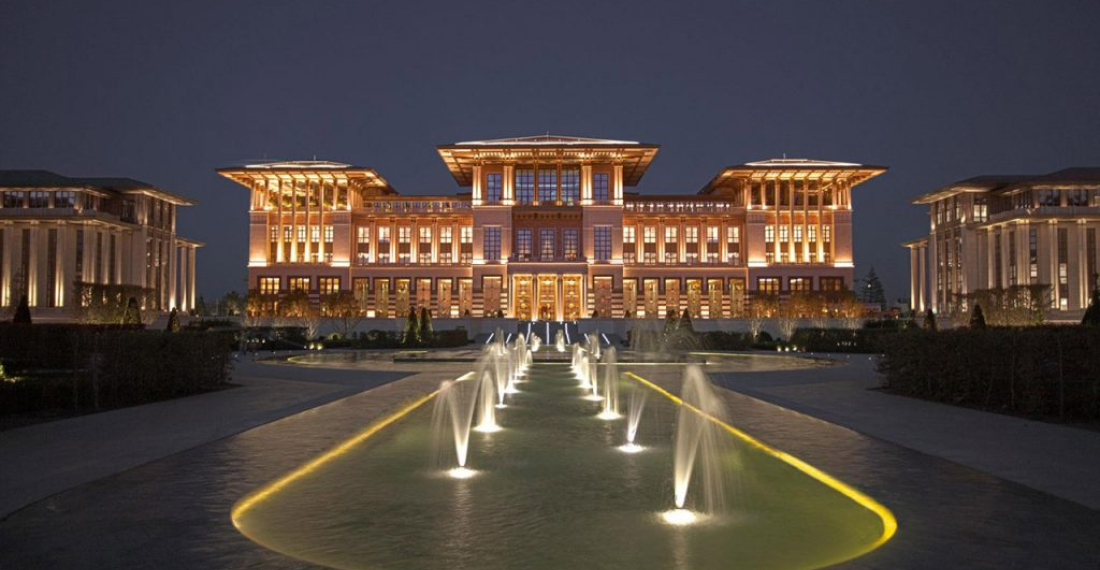
The 2026 Summit of the presidents and prime ministers of NATO countries is scheduled to take place at the presidential complex in Ankara on 7 and 8 July.

The decision to hold the summit in Turkiye was taken at the last NATO summit in The Hague in 2025. At the time, people assumed that although having the summit in Turkiye is symbolic, and will help consolidate the membership of that country in NATO, the Ankara summit would simply be a glorified photo-opportunity.

It is clear now that things will work out differently. The Ankara summit will define NATO for the next decade, and preparations are on the way, seriously and in earnest.

Two reasons are contributing to this: the first is the acute situation in the international system, caused by the ongoing conflict in Ukraine, the US-Israeli war on Iran, and the crisis it has created in the Gulf, and Donald Trump’s disregard, even disdain, for the US traditional allies in Europe, and even for NATO itself. The second reason why the Ankara summit has become so important is that the Turks, as hosts, are determined to use the event to push some key issues that NATO has been avoiding for some time, including how the alliance engages with its southern neighbourhood.

Turmoil in the international system has raised questions of how the NATO alliance can look in the future.

Ukraine, whilst not a NATO member yet, has been unjustly and brutally attacked by Russia in 2022. NATO members rallied round in support, and short of deploying troops to the conflict, have done everything possible to support Ukraine. This is increasingly a European effort. Under Donald Trump, American support has become lukewarm. The leadership of NATO has had to manage this anomaly, and it has been an uncomfortable process, which will play out in the Ankara summit too.

The US-Israel attack on Iran on 28 February and the subsequent conflict in the Middle East have had a profound impact on the region. The disruption of movement through the Straits of Hormuz has already impacted the world economy negatively, and things are likely to get worse before they get better. On the security side, the impact of the conflict on Gulf security, on European and global security is yet to be fully defined, but one can already see that it is huge. The US NATO allies refused to be dragged into a conflict on which they were not consulted,  and which they do not see as being theirs. This has resulted in very public criticism of NATO and NATO countries by Donald Trump and the Trump administration. NATO and its members will not have the luxury of maintaining this aloofness once the dust of the present conflict subsides, and the business of constructing a new Middle East Security order starts.

Finally, the European members of NATO (and Canada) are still reeling from Trump’s statements and actions on Greenland, part of the Kingdom of Denmark. In 2025, European allies of the US were ready to be patient and generous with Trump and his antics. In 2026, they no longer. Europe has finally woken up from its slumber. As Mathijas Matthijs and Nathalie Tocci put it, in their recent articles on Foreign Affairs, a leading US foreign policy journal, entitled “How Europe found its nerve”:

“Trump may have done what decades of European speeches, white papers, and declarations could not. By pushing too hard, he has made the costs of dependence visible. By embracing Europe’s far right, he has made it easier for democrats to draw a line. By treating allies as vassals and clients, he has reminded Europeans that alliances are healthy only when they rest on equality and mutual respect.”

This will have a lot of impact on NATO’s future, and it will colour thinking at the Ankara summit.

As hosts of the Ankara summit, the Turks embraced these three challenges. As Ilker Sezer puts it in Turkiye Today,

“For all of its complex balancing acts, NATO remains on of the most critical pillars of Turkiye’s own national security, whether you like it or not”

Speaking a few days ago in an interview on Al Jazeera, Turkish Foreign Minister Hakan Fidan said that NATO’s biggest achievement since its creation was not its power of deterrence, but rather the fact that it had stopped different European countries from fighting with each other, and instead cooperated together for mutual defence. Given European history up to WWII, it is difficult to disagree with him.

As Levant Kemal also argues on Turkiye Today,

“As the global landscape shifts, this summit offers Ankara a significant opportunity to act as a visionary host in shaping NATO’s future trajectory”


source: This Monday Commentary was prepared by Dr Dennis Sammut, Director of LINKS Europe, and Managing Editor of commonspace.eu.

photo:  Presidential Complex, Ankara.
Related articles

Editor's choice
News
European Commission Disburses €1.24 Billion to Boost Ukraine’s Defence Industry

European Commission Disburses €1.24 Billion to Boost Ukraine’s Defence Industry

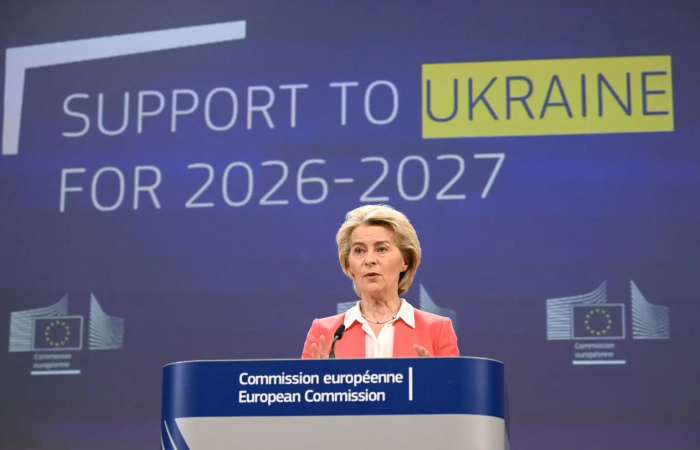
The European Commission disbursed €1.24 billion to Ukraine on Wednesday (October 7) under the defence component of the €90 billion Ukraine Support Loan, earmarked for drones, drone interceptors, ammunition, and missiles produced by Ukrainian entities. European Commission President Ursula von der Leyen said the payment would strengthen Ukraine’s defence industry and its ability to protect people and infrastructure. She described Russia’s ongoing attacks as a deliberate strategy intended to make daily life increasingly difficult for Ukrainians. The Ukraine Support Loan provides an indicative €60 billion for defence and €30 billion for budgetary assistance during 2026–2027. The European Commission plans to disburse €28.3 billion for Ukraine’s defence industrial capacity in 2026, with further payments under the defence component expected in the coming weeks. Funding decisions are based on Ukraine’s evolving requirements and remain subject to agreed conditions and monitoring. According to Ukrainian Prime Minister Serhiy Koretskyi, the latest payment brings Ukraine’s defence financing received through the programme to nearly €13 billion. He said the government would continue working with European partners to ensure the remaining planned funding is delivered on schedule and in full For the remainder of 2026, €32.5 billion in EU financial support remains available to Ukraine. This includes €28.1 billion under the Ukraine Support Loan – €15.4 billion for defence industrial capacity and €12.7 billion in budget support. A further €4.4 billion remains available through the Ukraine Facility, bringing the total budget support available for 2026 to more than €17 billion, subject to Ukraine meeting the relevant conditions. Since 2022, the EU and its member states have provided €228.7 billion in overall support to Ukraine, including €3.8 billion generated from immobilised Russian assets.
Editor's choice
News
In Ethiopia, government forces take rebel capital

In Ethiopia, government forces take rebel capital

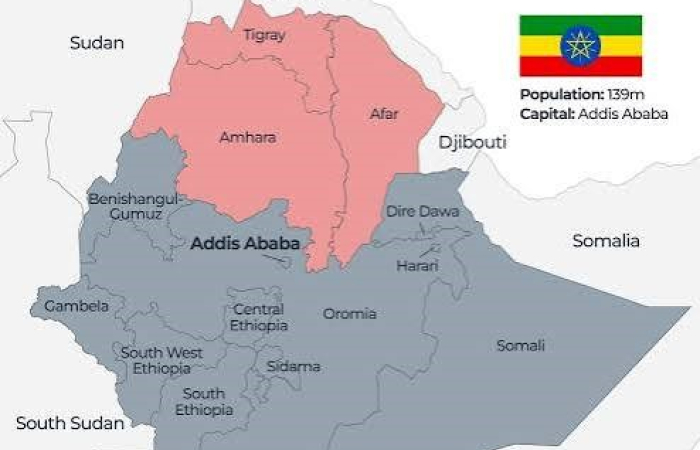
Government forces in Ethiopia, have taken control of the town of Mekelle, capital of the Tigray region. Earlier, Ethiopia's federal military said it had recaptured the main airport in the capital of the northern Tigray region, dealing a major setback to an ​opposition alliance in its stronghold. Clashes pitting a rebel alliance led by Tigray's ruling party ‌against the government and its allied forces broke out in northern Ethiopia last week, in the most serious escalation of violence since a 2020-2022 civil war. The fighting has stoked fears that it could escalate into a wider regional conflict, potentially drawing in neighbouring ​countries in the Horn of Africa and the Gulf. In recent days Ethiopia and Eritrea broke off diplomatic relations amid mutual accusations. In Washington, State Department spokesman Tommy Pigott ​said the United States strongly urged Ethiopia and Eritrea to "exercise maximum restraint and return ⁠to dialogue and cooperation as agreed in their 2018 peace framework." "The Horn of Africa cannot sustain another ​military conflict and humanitarian crisis," Pigott said. "A conflict jeopardizes ongoing U.S. collaboration on shared interests with both countries." The ​federal government in Addis Ababa accused Eritrea of supporting the rebel alliance alongside Sudan and Egypt. The three countries deny this. Troops from the Ethiopian National Defence Forces had regained control of Alula Aba ​Nega Airport in Tigray's capital Mekelle,   A Mekelle resident who asked not to be named for security reasons, confirmed the ‌taking of ⁠the airport by government forces and added they could hear gunfire outside the city centre. This source said they had seen some Tigrayan Defence Force fighters abandoning their posts and heading home, and that there was looting of government facilities taking place in the city. Mekelle's airport, which ​is around 10 km (6 miles) from the centre of the city, was ​one of three ⁠airports in the region that were seized by the opposition forces at the start of the fighting on September 23. The taking of Mekelle by government forces would be a major setback for the opposition alliance, although analysts say ⁠it ​would be unlikely to end the conflict. In 2020, federal forces captured ​Mekelle within the first month of the two year war before the TPLF reclaimed it seven months later.

Popular

Editor's choice
Interview
Thursday Interview: Murad Muradov

Thursday Interview: Murad Muradov

Today, commonspace.eu starts a new regular weekly series. THURSDAY INTERVIEW, conducted by Lauri Nikulainen, will host  persons who are thinkers, opinion shapers, and implementors in their countries and spheres. We start the series with an interview with Murad Muradov, a leading person in Azerbaijan's think tank community. He is also the first co-chair of the Action Committee for a new Armenian-Azerbaijani Dialogue. Last September he made history by being the first Azerbaijani civil society activist to visit Armenia after the 44 day war, and the start of the peace process. Speaking about this visit Murad Muradov said: "My experience was largely positive. My negative expectations luckily didn’t play out. The discussions were respectful, the panel format bringing together experts from Armenia, Azerbaijan, and Turkey was particularly valuable during the NATO Rose-Roth Seminar in Yerevan, and media coverage, while varied in tone, remained largely constructive. Some media outlets though attempted to represent me as more of a government mouthpiece than an independent expert, which was totally misleading.  Overall, I see these initiatives as important steps in rebuilding trust and normalising professional engagement. The fact that soon a larger Azerbaijani civil society visits to Armenia followed, reinforces the sense that this process is moving in the right direction." (click the image to read the interview in full)