


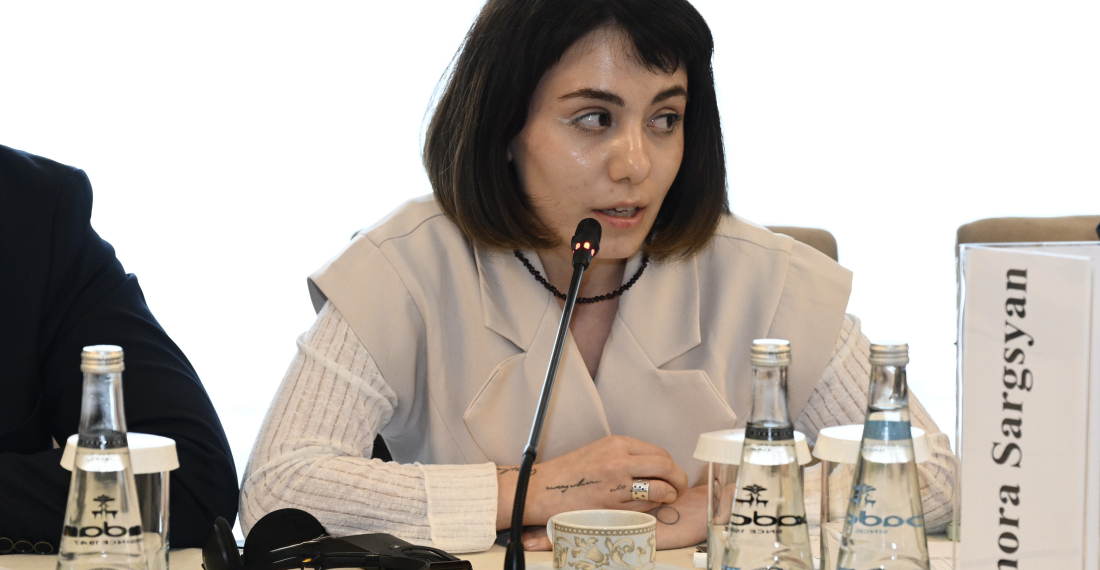
This commentary was prepared by Ms Eleonora Sargsyan for this issue of the Armenia Election Monitor 2026 newsletter. The full issue can be accessed here.
On 7 June 2026, Armenians will go to the polls in parliamentary elections that are formally domestic, but politically much larger than that. Nineteen political forces – seventeen parties and two alliances – are competing in the race. Yet the real contest is not only between parties. The 2026 elections are not only a domestic contest over power, but a referendum-like moment on Armenia’s geopolitical orientation, peace agenda, and democratic resilience.
At the heart of this election are three larger questions: whether a post-war society can resist the political instrumentalization of fear; whether a small state can reclaim agency after years of strategic dependence; and whether, after repeated rupture and loss, Armenia can still define its future beyond trauma. In this sense, the election is not only about who governs Armenia next. It is about the political direction through which Armenia will try to govern itself after war, displacement, and the collapse of old security assumptions.
These are Armenia’s third parliamentary elections since the 2018 Velvet Revolution, following the early elections of 2018 and 2021. That matters. For the first time in years, Armenia is not going to elections only because of the immediate crisis – revolution in 2018, post-war political breakdown in 2021 – but in a moment when the country is trying to define a new strategic direction. The vote is therefore less about routine government change and more about whether Armenia’s post-2018 democratic project can survive the pressures placed on it: defeat, displacement, polarization, foreign interference, and the daily political temptation to turn fear into votes.
The central divide in this election is not left versus right. Nor is it simply traditional “government versus opposition.” It is between those who see Armenia’s future through the lens of sovereignty, diversification, and difficult peace, and those who continue to speak from within the political vocabulary of dependency, grievance, and managed insecurity.
For decades, Armenia’s security and regional posture were built around Russia. But after the 2020 Nagorno-Karabakh war, which resulted in a devastating Armenian defeat, and especially after Azerbaijan’s 2023 military takeover of Nagorno-Karabakh and the involuntary displacement of its Armenian population, that architecture no longer carries the same political meaning. For many Armenians, dependence on Moscow is no longer seen as security, but as vulnerability. The question is therefore not simply whether Armenia should be “pro-Russian” or “pro-European.” The deeper question is whether Armenia can build a more sovereign foreign policy after years of strategic dependence.
This is why foreign policy has become central to the electoral discourse. The ruling Civil Contract party has positioned itself around European integration, diversification of partnerships, and normalization with neighbors. Armenia’s hosting of the European Political Community summit and the first EU-Armenia summit in Yerevan in May 2026 were not merely diplomatic ceremonies. They were symbols of a state attempting to move closer to Europe and away from an exclusively Russia-centered orbit.
The reaction from Moscow has been telling. Russia has accused Armenia of being drawn into the EU’s “anti-Russian orbit,” a formulation that reveals how Armenia’s attempt at diversification is interpreted by its former security patron: not as sovereign choice, but as disloyalty. This is precisely why the election matters beyond Armenia. A small state trying to reduce dependency is rarely allowed to do so quietly.
The election is also taking place under the shadow of hybrid threats and foreign interference. The EU has moved to support Armenia, in response to the Armenian government’s request, in countering hybrid threats and foreign information manipulation ahead of the elections, including through a rapid-response expert team. But foreign interference does not work in a vacuum. It feeds on domestic mistrust, polarization, and unresolved trauma. Armenia’s democratic vulnerability is therefore not only external. It is also internal: a political environment in which fear, grief, and insecurity can easily be instrumentalized.
The second major axis of the election is Armenia’s peace agenda.
At first glance, this part of the election may appear to present voters with a stark choice between peace and war: between the government’s normalization agenda with Azerbaijan, on the one hand, and a more nationalist, security-first politics on the other. This framing is politically powerful because it speaks directly to the trauma of recent years. These elections are being held after two devastating military defeats and the involuntary displacement of more than 100,000 Armenians from Nagorno-Karabakh. In such a context, one might have expected revanchist politics to dominate. Several opposition actors appeared to assume exactly that: that anger over defeat, dissatisfaction with the government, and anxiety about concessions could be converted into support for a harder nationalist line against Armenia-Azerbaijan normalization.
But the campaign has revealed a more complicated reality.
Some of the most prominent critics of the government’s peace agenda have softened their language. Samvel Karapetyan – the biggest opposition power – whose political project has been highly critical of the current peace process and has often appealed to a more security-first and nationalist reading of Armenia’s post-war situation, has more recently stated that he is not against peace, but supports a different kind of peace - a “strong” peace, not a “weak” one. A similar recalibration can also be observed in the rhetoric of Robert Kocharyan and other opposition actors, who criticize the government’s approach to negotiations but increasingly avoid presenting themselves as openly anti-peace.
This rhetorical adjustment should not be dismissed as a technical campaign maneuver. It reveals something politically important: even those who built much of their appeal by attacking the peace process appear to recognize that Armenian society is not simply asking for revenge, isolation, or permanent mobilization.
This may be one of the most underread dynamics of the 2026 elections. Public demand for peace exists, but it is not a naive demand. Armenian society is not asking for peace as a slogan, nor for normalization at any cost. Many citizens remain deeply distrustful of Azerbaijan’s intentions. Many are uncomfortable with concessions. Many feel that the government’s communication on Nagorno-Karabakh, loss, and normalization has often been abrupt, technocratic, or emotionally insufficient. But this does not mean that the electorate is ready to embrace a politics of permanent confrontation.
The opposition’s partial rhetorical softening suggests that explicitly anti-peace or revanchist messaging has limited appeal beyond its core base. Recent voter behavior in the Armenian Election Study, published by EVN Report, points to a fragmented opposition field and an improved position for the incumbent party, while also showing that voters remain focused on security, the economy, and the country’s overall direction. In other words, the public mood is not reducible to either enthusiasm for the government or rejection of peace. It is more pragmatic, more cautious, and perhaps more mature than many political actors assumed.
This is where the government’s peace agenda is both strong and vulnerable. It is strong because the alternative offered by much of the opposition remains vague. “Strong peace” sounds compelling, but it often avoids the harder questions: strong through which alliances, which security guarantees, which regional strategy, which economic model, and with what relationship to Russia after the failure of Russia-centered security?
But the government is vulnerable because peace cannot be sustained through geopolitical logic alone. For peace to become politically durable, it must be translated into public confidence: protection of border communities, meaningful security guarantees, economic opportunity, justice-sensitive language around displacement, and a political narrative that does not make people feel that their grief is being rushed or dismissed. Peace cannot be only a state strategy. It must become socially legible.
This election is therefore not a simple choice between peace and war. It is a struggle over the meaning of peace itself. Is peace merely the absence of war? Is it regional connectivity and open borders? Is it a security arrangement? Is it reconciliation? Or is it a fragile political process vulnerable to sabotage, maximalist demands, and external manipulation? The party that defines peace most convincingly may define Armenia’s politics well beyond election day.
A gender lens exposes a democratic deficit in this election. None of the 19 political forces has a woman as its lead candidate. Not one. In a country with gender quotas and a visible generation of women leaders in civil society, media, and public life, this absence is striking.
It also shows the limits of formal inclusion. Armenia’s quota system has helped increase women’s numerical representation, but parties still rarely place women at the center of political authority. Women are included because the law requires inclusion; they are not yet trusted, in sufficient numbers, with the symbolic and strategic leadership of political forces. The result is a familiar pattern: women are present enough to satisfy the rules, but absent where power is most visibly concentrated.
This matters especially in an election shaped by peace, displacement, security, and sovereignty. These are deeply gendered issues. Women are among the displaced, the caregivers, the border community residents, the civil society leaders, the local peacebuilders, the voters, and the targets of political harassment. Yet they are largely absent as the principal narrators of the country’s future. The continued online and offline harassment of women politicians is not simply a women’s rights issue; it is a democratic resilience issue.
For international observers, Armenia’s 2026 elections should therefore be read on several levels at once. At the institutional level, they are a test of the country’s post-2018 democratic trajectory. At the geopolitical level, they are a contest over sovereignty and orientation. At the regional level, they will shape the future of Armenia-Azerbaijan normalization and South Caucasus connectivity. At the societal level, they will show whether fear, trauma, and insecurity can be transformed into a mandate for peace rather than a return to siege thinking.
The most important question is not only who wins. It is what kind of politics becomes legitimate through the vote.
If Armenian voters reward forces that keep the country on a democratic, sovereign, and peace-oriented path, even with criticism, caution, and demands for greater security, this will signal something important. It will show that after war, displacement, and strategic disappointment, Armenian society is not choosing denial or revenge as its political horizon. It is choosing difficult pragmatism.
That choice should not be romanticized. Armenia’s peace agenda is fragile. Its European path is contested. Its democracy remains vulnerable to polarization, foreign interference, and public distrust. But the fact that peace remains politically viable after everything Armenian society has endured is itself significant.
Armenia’s 2026 elections are therefore about more than power. They are about whether a post-war society can resist the politics of fear; whether a small state can reclaim agency after dependency; and whether, after a history of rupture, Armenia can still choose a future larger than its trauma.
Source: Ms Eleonora Sargsyan is an Armenian peacebuilding practitioner and development professional with experience in women, peace, and security, youth engagement, and Armenia-Azerbaijan dialogue initiatives. Her work focuses on gender-responsive peacebuilding, democratic resilience, and inclusive approaches to regional normalization in the South Caucasus. For more information, we invite you to check her LinkedIn.



