


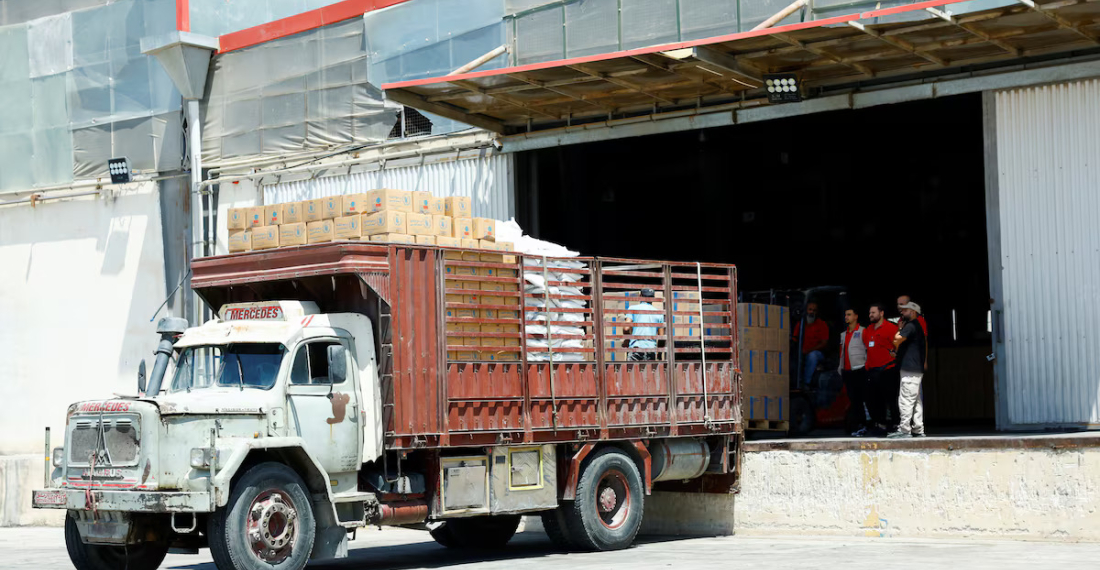
The World Food Programme announced Wednesday (13 May) that funding shortages have forced it to cut emergency food assistance to Syria by half, and warned that millions remain food insecure despite indications of stabilistion in parts of the country.
The United States, the UN’s largest donor, has drastically cut foreign aid spending under President Donald Trump, while other countries have committed to similar cuts in development and humanitarian aid.
The WFP said in a statement that the amount of people receiving emergency food assistance in Syria from 1.3 million to just 650,000 in May, and cutting governorates running operations from 14 to 7.
Currently 7.2 million people in Syria remain acutely food insecure, and 1.6 million experience extreme hunger. Even before cuts to aid, households already reduced meal portions, ate less nutritious food, or skipped meals.
“The reduction in WFP’s assistance is driven solely by funding constraints, not by a decrease in needs,” Marianne Ward, the WFP’s country director in Syria, said in the statement.
The WFP additionally paused the bread subsidy programme that supplied bakeries across the country with fortified wheat flour, providing consistent bread to vulnerable populations.
A decade of conflict has injured livelihoods across Syria, with effects that have decimated infrastructure, displaced millions, and generated severe economic consequences. Although fighting has calmed since the ousting of the former President Bashar al-Assad in 2024, need for humanitarian aid continues.
Syrian refugees in neighbouring countries are also affected by humanitarian halts. In Jordan, cash-based assistance for 135,000 refugees were cut, while support remained for refugees in camps at a reduced rate for 85,000. In Egypt, support for 20,000 Syrians has been reduced, and families in Lebanon remain dependent on aid.
WFP says it needs $189 million between June and November to resume critical aid operations in Syria.
Source: commonspace.eu with Reuters



