Luhansk the first Ukrainian region fully occupied by Russia

A Russia-appointed official in Ukraine’s occupied Luhansk region was quoted by AP on Monday saying that Moscow’s forces have overrun all of it, one of four regions Russia annexed from Ukraine in September 2022. If confirmed, it would make Luhansk the first Ukrainian region fully occupied by Russia after more than three years of war with international peace efforts led by the US failing to make progress on halting the fighting. Russian President Vladimir Putin has effectively rejected a ceasefire and hasn’t budged from his demands, which include Moscow’s control over the four illegally annexed regions. 

AP reports that there was no immediate comment from Kyiv on the claim made by the Moscow-appointed leader of the occupied region, Leonid Pasechnik. In remarks to Russia’s state TV Channel One that aired Monday evening, Pasechnik said he received a report “literally two days ago” saying that “100%” of the region was now under the control of Russian forces. 

The development came just hours after the top German diplomat said that Germany aims to help Ukraine manufacture more weapons more quickly as Kyiv looks to strengthen its negotiating position in peace talks with Russia, according to AP.

“We see our task as helping Ukraine so that it can negotiate more strongly,” Foreign Minister Johann Wadephul said during a visit to the Ukrainian capital, Kyiv, accompanied by German defense industry representatives. “When Putin speaks of peace today, it is pure mockery,” Wadephul told a news conference with Ukrainian Foreign Minister Andrii Sybiha. “His apparent readiness to negotiate is only a facade so far.”

Russia’s invasion shows no sign of letting up. Its grinding war of attrition along the roughly 1,000-kilometer front line and long-range strikes on civilian areas of Ukraine have killed thousands of troops.

Ukraine is outgunned and shorthanded on the front line and international aid has been vital for Ukraine’s resistance against its neighbor’s bigger army and economy. Germany has been Ukraine’s second-largest military backer after the United States, whose continuing support is in doubt. 

“We want to build new joint ventures so that Ukraine itself can produce faster and more for its own defense, because your needs are enormous,” Wadephul said while standing next to Sybiha. “Our arms cooperation is a real trump card — it is a logical continuation of our delivery of material,” Wadephul said. “And we can even benefit mutually from it — with your wealth of ideas and your experience, we will become better.” Wadephul was also due to meet with Ukraine President Volodymyr Zelenskyy.

The top German diplomat’s trip to Kyiv came less than 48 hours after Russia launched its biggest combined aerial attack against Ukraine over the weekend, Ukrainian officials said, in an escalating bombing campaign that has further dashed hopes for a breakthrough in peace efforts.

According to AP, Ukraine’s air force said on Monday it detected 107 Russian Shahed and decoy drones in the country’s air space overnight. 

Strikes in Ukraine’s northeastern Kharkiv region left two civilians dead and eight injured, including a 6-year-old child, regional Gov. Oleh Syniehubov said Monday. The aerial onslaughts are calculated by Russia to squeeze Ukraine into submission, according to the Institute for the Study of War.

“Russia is continuing to use increasingly large numbers of drones in its overnight strike packages in order to overwhelm Ukrainian air defenses and enable subsequent cruise and ballistic missile strikes,” the Washington-based think tank said late Sunday. 

Berlin has balked at granting Zelenskyy’s request to provide Ukraine with powerful German- and Swedish-made Taurus long-range missiles, which could potentially hit targets inside Russia. That is due to fears such a move could enrage the Kremlin and draw NATO into Europe’s biggest conflict since World War II.

German Chancellor Friedrich Merz pledged in May to help Ukraine developits own long-range missile systems that would be free of any Western-imposed limitations on their use and targets.
Source: commonspace.eu with agencies. Photo: Russia President Vladimir Putin - AFP

Related articles

Editor's choice
News
UAE says it will withdraw from Yemen, but division emerges in Yemeni presidential council

UAE says it will withdraw from Yemen, but division emerges in Yemeni presidential council

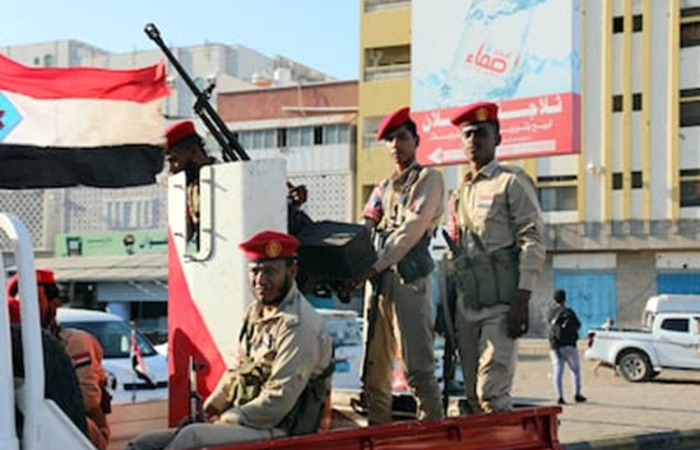
In a move seen as an attempt to de-escalate a crises with Saudi Arabia, the United Arab Emirates, on Tuesday (30th December) announced that it was heeding a call to withdraw its troops from Southern Yemen. UAE says that its presence included counter-terrorism teams that were crucial in fighting against Islamist groups. UAE sources said that parts of Yemen not controlled by the Houthis have had Al Qaeda in the Arab Peninsula (AQAP) operatives using the territory to launch attacks on Europe, the US and Middle East. UAE teams have co-ordinated with American and British special forces and intelligence. The sources added that Emirati forces and their Yemeni allies also helped reverse Houthi gains in the south. including the liberation of Aden port. The small UAE contingent has remained in place since the UAE withdrew most of its military personnel in 2019. The leading English-language newspaper in Abu Dhabi, The National, said that the main UAE force was based at Riyan Mukalla International Airport, with access to fixed-wing aircraft and helicopters, but also operated smaller contingents in the port town Balhaf and Shabwa. "It is understood it also flew a number of drones from the airbase that were able to track terrorist movements, pass information back to its allies and assisted special forces' missions." Meanwhile a division has emerged in Yemen's presidential council after four members denounced what they called the 'unilateral decisions' by the chairman. Four of Yemen’s eight Presidential Leadership Council members on Tuesday denounced an announcement by the council’s chairman accusing him of breaching the governing agreement. Tension between Yemeni leaders has been rising for weeks, underscoring the fragility of the country's already fractured political landscape and further complicating efforts to confront the Iran-backed Houthi rebels. The latest rift took an unprecedented turn on Tuesday morning, marked by a Saudi-led coalition “limited operation” striking combat vehicles Riyadh linked to the Southern Transitional Council, which has three members in the PLC. The PLC Chairman, Rashad al Alimi, on Tuesday said that he was seeking to cancel the joint defence agreement with the UAE. “What has been issued … constitutes a clear violation of the Declaration of the Transfer of Power [agreement], which explicitly stipulates that the Presidential Leadership Council is a collective body whose decisions are taken by consensus, or by majority when consensus is not possible,” the statement by the four members said. “It does not, under any circumstances, allow for unilateral decision-making on sovereign, military, or major political matters." The statement was signed by STC chief Aidarous Al Zubaidi, Faraj Al Bahsani, Tariq Saleh and Abu Zaraa al Muharrami. (click the picture to read the full article).

Popular

Editor's choice
News
UAE says it will withdraw from Yemen, but division emerges in Yemeni presidential council

UAE says it will withdraw from Yemen, but division emerges in Yemeni presidential council

In a move seen as an attempt to de-escalate a crises with Saudi Arabia, the United Arab Emirates, on Tuesday (30th December) announced that it was heeding a call to withdraw its troops from Southern Yemen. UAE says that its presence included counter-terrorism teams that were crucial in fighting against Islamist groups. UAE sources said that parts of Yemen not controlled by the Houthis have had Al Qaeda in the Arab Peninsula (AQAP) operatives using the territory to launch attacks on Europe, the US and Middle East. UAE teams have co-ordinated with American and British special forces and intelligence. The sources added that Emirati forces and their Yemeni allies also helped reverse Houthi gains in the south. including the liberation of Aden port. The small UAE contingent has remained in place since the UAE withdrew most of its military personnel in 2019. The leading English-language newspaper in Abu Dhabi, The National, said that the main UAE force was based at Riyan Mukalla International Airport, with access to fixed-wing aircraft and helicopters, but also operated smaller contingents in the port town Balhaf and Shabwa. "It is understood it also flew a number of drones from the airbase that were able to track terrorist movements, pass information back to its allies and assisted special forces' missions." Meanwhile a division has emerged in Yemen's presidential council after four members denounced what they called the 'unilateral decisions' by the chairman. Four of Yemen’s eight Presidential Leadership Council members on Tuesday denounced an announcement by the council’s chairman accusing him of breaching the governing agreement. Tension between Yemeni leaders has been rising for weeks, underscoring the fragility of the country's already fractured political landscape and further complicating efforts to confront the Iran-backed Houthi rebels. The latest rift took an unprecedented turn on Tuesday morning, marked by a Saudi-led coalition “limited operation” striking combat vehicles Riyadh linked to the Southern Transitional Council, which has three members in the PLC. The PLC Chairman, Rashad al Alimi, on Tuesday said that he was seeking to cancel the joint defence agreement with the UAE. “What has been issued … constitutes a clear violation of the Declaration of the Transfer of Power [agreement], which explicitly stipulates that the Presidential Leadership Council is a collective body whose decisions are taken by consensus, or by majority when consensus is not possible,” the statement by the four members said. “It does not, under any circumstances, allow for unilateral decision-making on sovereign, military, or major political matters." The statement was signed by STC chief Aidarous Al Zubaidi, Faraj Al Bahsani, Tariq Saleh and Abu Zaraa al Muharrami. (click the picture to read the full article).