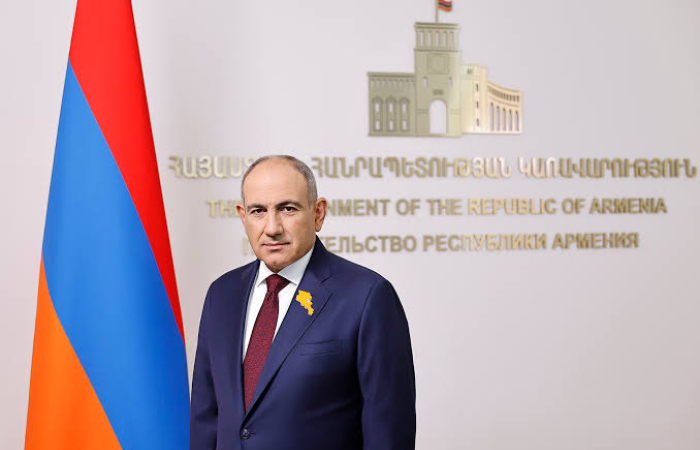
ArmInfo interviewed Andrey Areshev, research fellow at the Black Sea-Caspian Region Institute for Political and Social Studies
Let’s talk of the latest impulses or lack of impulses in the Karabakh peace process…
The Nagorno-Karabakh peace process seems to have entered some phase of turbulence. After the failed meeting in Kazan, there is little hope for progress. The parties are obviously unwilling to revise their positions. Otherwise, they would have announced a new meeting. They didn't, but this is not Russia's fault. This is the very nature of this conflict. The Kazan meeting was followed by certain diplomatic maneuvers, where Russia had quite a big role. I mean the visits of the Armenian and Azeri FMs to Moscow, the visit of their Russian counterpart to Yerevan and Baku as well as the meeting of the Russian and Azeri presidents in Sochi. That meeting and Aliyev's decision not to attend the CIS Summit in Dushanbe are links of the same chain: Aliyev expects the OSCE MG to show more respect for his official stance. As for the position of the co-chairs, it is well balanced and therefore annoying for the Azeri authorities as it gives them little chance to try to resolve the conflict by means of force. Both Russia and the United States are worried about the possibility of a new war, which is proved by the recent statement by the Russian Ambassador to Armenia, who said that Moscow is ready to meet its commitments to Yerevan in the framework of the Collective Security Treaty. The efforts to keep up the military balance in the Nagorno-Karabakh conflict zone are a very important part of the peace process.
Would you speak of those steps in more details?
Of course, we can only guess what exactly is being done. We better wait for the military parade to be held in Yerevan on Armenia's Independence Day. It is already known that Armenia has BM-30 Smerch multiple rocket launchers and has reportedly obtained S-400 anti-aircraft weapon systems. In this context, quite interesting is the recent statement by Ali Gasanov, Head of the Social-Political Department of the Azeri President's Administration, who offered Armenia and Nagorno-Karabakh cheap oil and gas in exchange for accepting the territorial integrity of Azerbaijan. Azerbaijan is obviously shifting accents again as it sees that it will hardly be able to resolve the conflict by means of war. I doubt that Nagorno-Karabakh may respond to this unrealistic offer. It is obvious that even if Armenia and Nagorno-Karabakh happen to accept Azerbaijan's territorial integrity, they will hardly get cheap oil and gas. (To remind, while speaking in Batumi Aug 28 Gasanov said that Armenia may receive oil and gas upon any terms if it acknowledges Azerbaijan's territorial integrity). Gasanov's offer is hardly realistic considering Armenia's refusal to exchange Nagorno-Karabakh's independence for Azeri fuel in the dark and cold 1990s.
In other words, the aforementioned factors show stagnation of the process, don’t they?
The Nagorno-Karabakh conflict may serve as a good regional level model for those developing the European collective security system. The latest impulses in the Nagorno-Karabakh peace process have signaled that it is stagnating in the face of growing pre-electoral activity in Armenia, Azerbaijan and the co- chair states. The mediators will hardly succeed in finalizing the process now. For attaining any final agreement they should solve a number of problems, the ongoing military rhetoric and arms race being one of them. If the co-chairs really want the conflict to be resolved, they should appear with new effective solutions.
Does it mean that there is no alternative to the status quo or will you make any other forecast?
Today there is no alternative to the present status quo. If based on efficient monitoring mechanisms, it will allow reducing casualties on the contact line and preventing relevant propaganda campaigns. And this will be a big step towards the final settlement.
Do you agree with the opinion that they in Baku have already put up with the de-facto independent NKR and pin hopes just with return of certain territories of the security zone?
I think the role of the liberated territories in security of Nagorny Karabakh within the borders of 1991 is very big. These issues cannot be considered separately. Both Yerevan and Baku are well aware that after getting these territories as a certain compromise based on the Madrid Principles, for instance, Azerbaijan will not withstand the temptation of getting also Nagorny Karabakh. It will mean the loss of Nagorny Karabakh for Armenians. I think that it is one of the key, delicate reasons that impede success in the negotiations. Therefore, Armenia and Karabakh need very solid guarantees before yielding any territory. However, I do not think that it is possible to give such guarantees to Armenia. This is what stalemates the negotiations against the background of Azerbaijan's growing demands.
What is Iran’s role in all this?
Iran's role in resolution of the Karabakh conflict is significant enough. At least, the OSCE MG, Yerevan, Baku and Stepanakert always reckon with Tehran's stance on the conflict, which is rather a serious factor. Iran's stance is rather stable and has not been changed over the past years. Iran is not interested in resumption of military actions in the conflict zone since it will make internationalization of the conflict inevitable. This, in its turn, will lead to deployment of peacemaking forces of NATO or USA close to the northern borders of Iran. The expert believes that deployment of any foreign militaries even in the territories of the security zone around NKR will damage Iran's interests. In addition, Iran has rather serious domestic political problems. Therefore, Tehran will do its best to preserve the status quo in the Karabakh conflict.
Ex-president of Armenia Robert Kocharyan has recently come out for NKR to be directly involved in the negotiations. Is it possible? What will it give to the Armenian party considering that it was at Kocharyan’s suggestion that Karabakh stopped being a party to the negotiations?
De facto Nagorno-Karabakh is involved in the peace talks and is aware of their details. The co-chairs regularly visit Nagorno-Karabakh despite its removal from the peace process in the 1990s. Nagorno- Karabakh President Bako Sahakyan will hardly be involved in the meetings of his Armenian and Azeri counterparts in the near future but it would be strange if the fate of the people living Nagorno-Karabakh is determined in their absence. I have recently visited Nagorno-Karabakh and saw that it is actively developing. The world community must admit this fact. For some unknown reasons they have recognized South Sudan, a country that may soon get bogged down in an inter-tribal bloody war but refuse to recognize Nagorno-Karabakh, a people that has certainly deserved the right to be independent in the past 20 years.
I am sure that the next presidential election in Nagorno- Karabakh will be one more step towards its legitimization. The more steps Nagorno-Karabakh takes in its development, the fewer reasons the world community has for ignoring it.
Interview by David Stepanyan; Source: ARMINFO
OPINION: Andrei Areshev "The Karabakh peace process seems to have entered some period of turbulance"
OPINION: Andrei Areshev "The Karabakh peace process seems to have entered some period of turbulance"