Dennis Sammut is the Director of LINKS Europe Foundation, and Managing Editor of commonspace.eu. He writes Monday Commentary every week for commonspace.eu
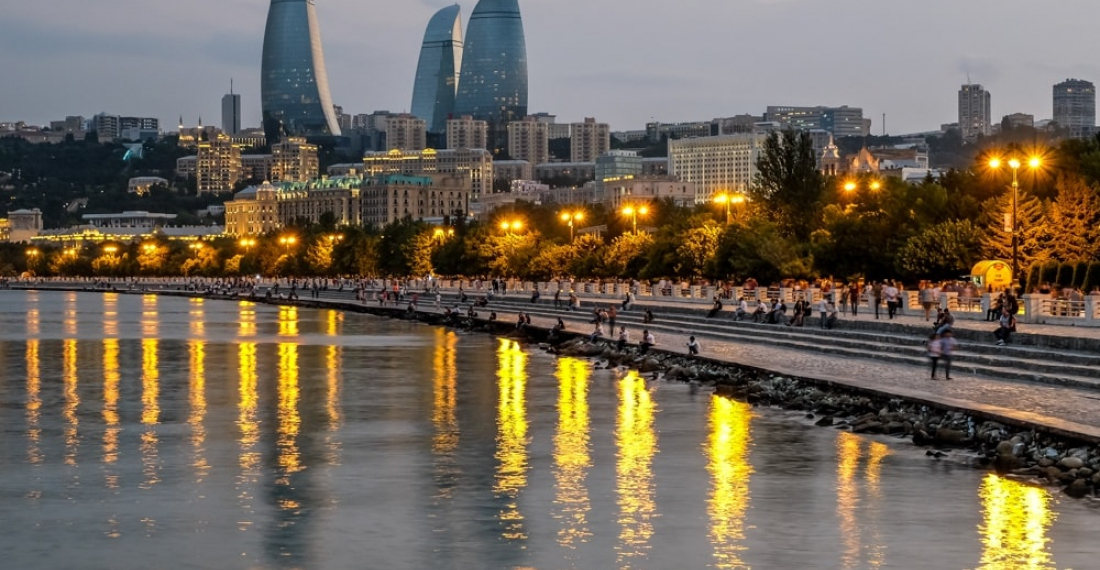
Last week I visited Baku, Azerbaijan. My first visit there was in 1996, and I have been visiting regularly since. My visit was relatively short, but very intensive, and I had many meetings with stakeholders and colleagues.
I participated in the 4th International Mine Action Conference, organized by ANAMA and the United Nations; I met the Azerbaijani delegation that will visit Armenia later this year to participate in the 3rd South Caucasus Dialogue Forum that LINKS Europe will co-organize in the Armenia Capital; I met the Azerbaijani members of the Strategic Expert Platform and the Action Committee for a new Armenia-Azerbaijani Dialogue; and had many bilateral meetings. But the highlight of my visit was the Round Table Meeting “Europe-Azerbaijan Relations: Learning from the past; building for the future” that LINKS Europe co-hosted on Friday (4 September), together with Azerbaijan’s AIR CENTER. The event marked the start of a new, more strategic and more focused relationship between Air Centre and LINKS Europe. A distinguished audience, including officials, MPs, Ambassadors, diplomats and think-tank leaders, attended the event and keynote remarks were made by Ambassador Marijana Kujundzic, Head of the European Union Delegation to Azerbaijan and Ambassador Elshad Iskanderov, Ambassador-at-large, Ministry of Foreign Affairs of Azerbaijan. The audience had many questions for the two Ambassadors, as well as the Director of the AIR Center, Ambassador Farid Shafiyev and myself.
When I arrived in Baku for the first time in 1996, Azerbaijan was a different country: weak, poor, and shaken by defeat in war.
For thirty years, the Karabakh issue dominated the agenda: the political agenda, but also the popular mindset.
Now, thirty years later, Azerbaijan has returned to Karabakh, and peace with Armenia is on the horizon. It is a new era for Armenia-Azerbaijan relations, for the South Caucasus, but also for Europe.
But we cannot be complacent: the Peace agreement has been initialled but not signed; borders remain closed; TRIPP is ambitious but remains an idea; and there are spoilers who want to turn the clock back. We must not allow them, and in this, Europe and Azerbaijan must work together.
Europe’s vanguard organisation is the European Union – it is a free union of 27 member states; it is a strong global economic force, and increasingly a diplomatic and military force too. But it remains “work in progress” and can often appear dysfunctional. It often lacks collective and institutional memory.
In its dealings with Azerbaijan, the EU has made many mistakes – not least opening the delegation here late – in 2008. It sometimes appears condescending. Some utterances from the European Parliament and from some quarters in some member states are not understandable even for me. They irritate the Azerbaijanis, but serve no other purpose
But Azerbaijan has also not handled relations with the EU well. It has failed to respond when the hand of friendship reached out; and it confused irritating actions, sometimes by well-meaning people; sometimes by outright spoilers, with strategic action.
In short, EU-Azerbaijan relations have suffered from a lack of proper dialogue. This dialogue must be frank, honest and multi-faceted, involving different segments of society on both sides.
Is Azerbaijan Europe?
When Azerbaijan applied to join the Council of Europe in the 1990s, there were some who opposed, saying this was not Europe. I was one of the people who argued that Armenia and Azerbaijan may be on the periphery of the continent geographically, but were European in essence. Certainly their elites. During the discussion on 4 September in Baku, my friend Farhad Mammedov mentioned that Azerbaijan is not interested in joining the EU, and was now close to the Central Asian countries in the 5 plus 1 format. Neither things mean that Azerbaijan is not Europe. There are several European countries that are not in the EU, and do not want to be, for example, Norway and Switzerland. Iceland has recently voted to stay out of the EU. The UK was a member and left. Europe is bigger than the EU, and the holding of the European Political Community summit in Baku in 2027 proves that. Despite all the rhetoric, I have never heard the president of Azerbaijan say that Azerbaijan is not Europe, nor have I heard any European president say it either. Not wanting to join the EU and forging close relations with neighbouring regions does not make Azerbaijan any less European. It is only logical that when Europeans talk to Azerbaijan they talk like family. The conversation is often frank. It must also be honest, and Europeans need always to remember this too.
A frank, honest and multi-faceted dialogue
A frank, honest and multifaceted dialogue will contribute to relations between Azerbaijan and the rest of Europe: it will avoid misperception, which unfortunately is very common on both sides; it will provide a forum where problems can be discussed and resolved, and it will increase mutual trust, so that together common problems can be addressed.
Source: Dennis Sammut is the Director of LINKS Europe Foundation, and Managing Editor of commonspace.eu. He writes Monday Commentary every week for commonspace.eu