Editor's choice
This is a members’ functionality. Please
Sign upNews
Trending
The European Parliament approved the temporary elimination of customs duties on goods exported from Armenia to the EU in a plenary session.
15 September 2026
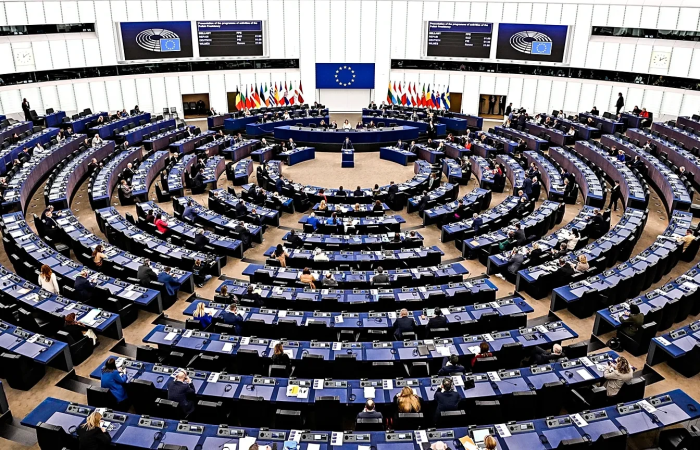
The European Parliament, during its plenary session in Strasbourg, approved the European Commission's proposal to apply a system of trade measures for "Made in Armenia" products, which means there will be a temporary elimination of customs duties on a wide range of products imported from Armenia to the European Union.
The proposal presented by the European Commission was adopted at the plenary session of the Council of Europe with 583 votes in favor, 49 against and 39 abstentions.
According to the proposal, the European Union plans to eliminate customs duties on a number of Armenian goods for a period of two years.
At the same time, it is planned to establish duty-free import quotas for eight types of Armenian agricultural products. These include grapes, apricots, cherries, peaches, and cucumbers.
The draft also provides for safeguard mechanisms that will allow the European Union to intervene, if necessary, if increased imports from Armenia have a negative impact on European producers.
This step is due to the restrictions imposed by Russia on a number of important Armenian export products since May 2026. They relate, in particular, to alcoholic beverages, mineral waters, fruits and vegetables, as well as their transit through Russian territory.
According to the European Commission, these restrictions have disrupted Armenia's traditional supply chains and significantly limited the country's access to traditional export markets. The situation has had a particularly severe impact on small and medium-sized enterprises, as well as agricultural producers, while creating challenges for Armenia's economic resilience.
The EU sees the initiative as a temporary measure to support the Armenian economy and create additional opportunities for exporters to access the EU market.
The next step for the proposal is formal approval by the EU Council. The regulation will enter into force the day after its publication in the Official Journal of the European Union.
Let us recall that on September 2, the Council of the European Union approved the proposal to establish temporary trade liberalization measures for Armenian products and sent the draft to the European Parliament for approval.