This analysis was prepared for commonspace.eu by Anna Szedlacsek, Deputy Editor and Junior Research Assistant at LINKS Europe.
Russia’s influence across the post-Soviet space has come under increasing pressure since the full-scale invasion of Ukraine in 2022. Two countries illustrate the changing relationship particularly clearly: Armenia, once one of Moscow’s closest military partners in the South Caucasus, and Kazakhstan, Russia’s largest and most strategically important partner in Central Asia.
Armenia and Kazakhstan both reached their strategic turning points between 2020 and 2022, driven by security failures, Russia's invasion of Ukraine, and severe economic vulnerabilities.
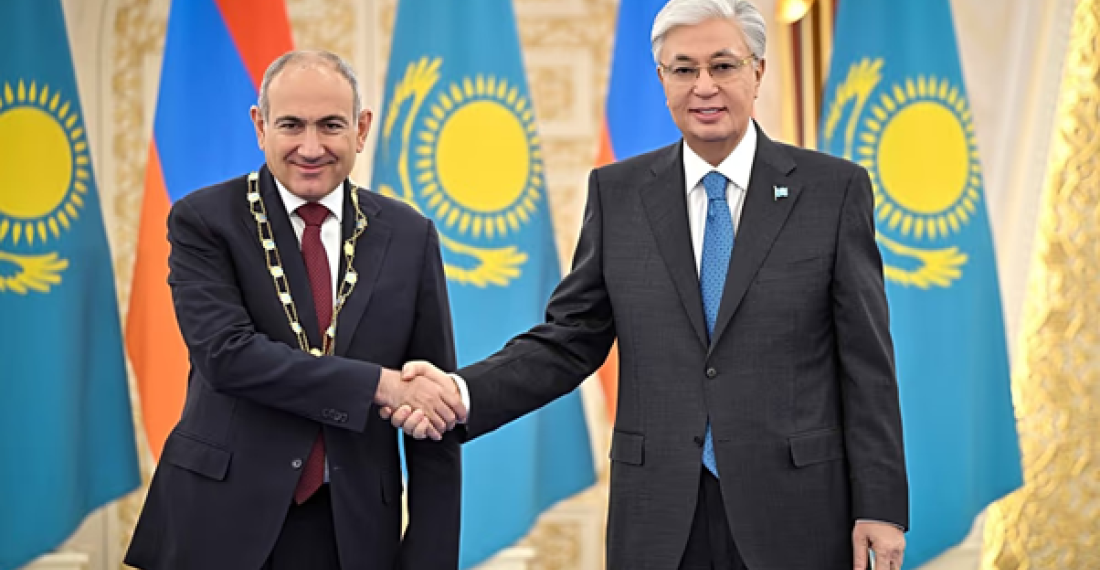
Among these reasons, the war in Ukraine sheds a particularly long shadow. In Kazakhstan, Russia’s “special military operation” substantially damaged Moscow's image among ordinary Kazakh citizens and reignited anxieties about revanchist Russian rhetoric regarding northern Kazakhstan. Public discontent has flared during Russian state visits and against Russian state projects like Rosatom’s nuclear power plant bid. Similarly, Kazakh President Kassym-Jomart Tokayev, in 2022, in a bold statement at the 25th St. Petersburg International Economic Forum – sitting directly adjacent to Russian President Vladimir Putin – made it clear that Kazakhstan does not recognize Russia’s annexation of Ukrainian territories or the "quasi-states" in Donetsk and Luhansk. More recently, in July 2026, he also publicly called on Putin to reconsider his war policy, suggesting it was time to "freeze this conflict" and return to negotiations.
However, beyond the scope of diplomatic relations, Almaty is heavily challenged by having to navigate its deep economic and transit interdependence with Russia. Kazakhstan shares a 7,500 km land border with Russia and remains bound by shared membership in the Eurasian Economic Union (EAEU) and the Collective Security Treaty Organization (CSTO). Crucially, over 80% of Kazakh crude oil exports cross Russian territory via the Caspian Pipeline Consortium (CPC) to Novorossiysk, giving Russia massive structural leverage.
To mitigate this reliance, Kazakhstan is aggressively developing alternative transport links, such as the Trans-Caspian International Transport Route (Middle Corridor) through Baku, Azerbaijan, to reach European and global markets without crossing Russian territory. This also reflects a move away from Russia as its main trading partner – this position has been earned by China, or, if considered as a bloc, the European Union (EU).
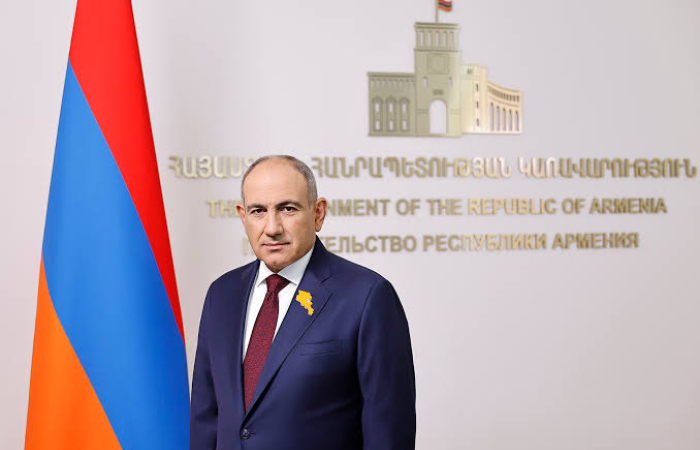
Armenia, on the other hand, began its pivot away from Moscow’s orbit after the 2020 Second Nagorno-Karabakh War and reached a point of no return following Azerbaijan's final capture of Nagorno-Karabakh in September 2023. This is due to the fact that despite hosting a Russian military base and belonging to the CSTO, Armenia received no military intervention from Russia during either of these conflicts. Moscow remained neutral – and thus turned untrustworthy in the eyes of Armenians – because it wished to safeguard its expanding economic, energy, and transit partnerships with Azerbaijan and Turkey. Concluding that Russia was no longer a reliable security guarantor and had its resources consumed by the war in Ukraine, Prime Minister Nikol Pashinyan suspended Armenia's participation in the CSTO in 2024 and began replacing Russian arms imports – which previously supplied over 90% of its arms – with defense systems from India and France. Furthermore, in March 2025, the Armenian parliament passed a law to initiate the EU accession process, while ministries are recruiting Western-educated professionals to restructure the civil service away from the Kremlin. Armenia has also concluded an energy cooperation agreement with Iran and is trying to strengthen its ties with China and India.
Ultimately, despite these developments, it would be premature to conclude the end of Moscow’s control over these countries, as both Armenia and Kazakhstan face severe structural constraints that strictly limit how far or how fast they can move away from Russia. Russia remains Armenia's primary trading partner, accounting for roughly 35% of its total foreign trade, and supplies 82% of the country’s natural gas at preferential prices via Gazprom, which owns Armenia's internal gas distribution network. Meanwhile, Almaty will certainly not dare risk a Russian halt along the CPC corridor as such a move would be detrimental to its state revenues and economy. It also continues to supply fuel to Russia during its refinery shortages and has just recently evaluated proposals to process Russian crude at Kazakh refineries.
The question, therefore, is not simply whether Russia is losing its allies. It is whether Russia is losing its ability to make those allies dependent on it.
As of September 2026, the evidence does not point to a definitive answer. Russia has not been pushed out of either country – but both Kazakhstan and Armenia appear increasingly eager to ensure that Moscow is no longer their only option.
This analysis was prepared for commonspace.eu by Anna Szedlacsek, Deputy Editor and Junior Research Assistant at LINKS Europe.