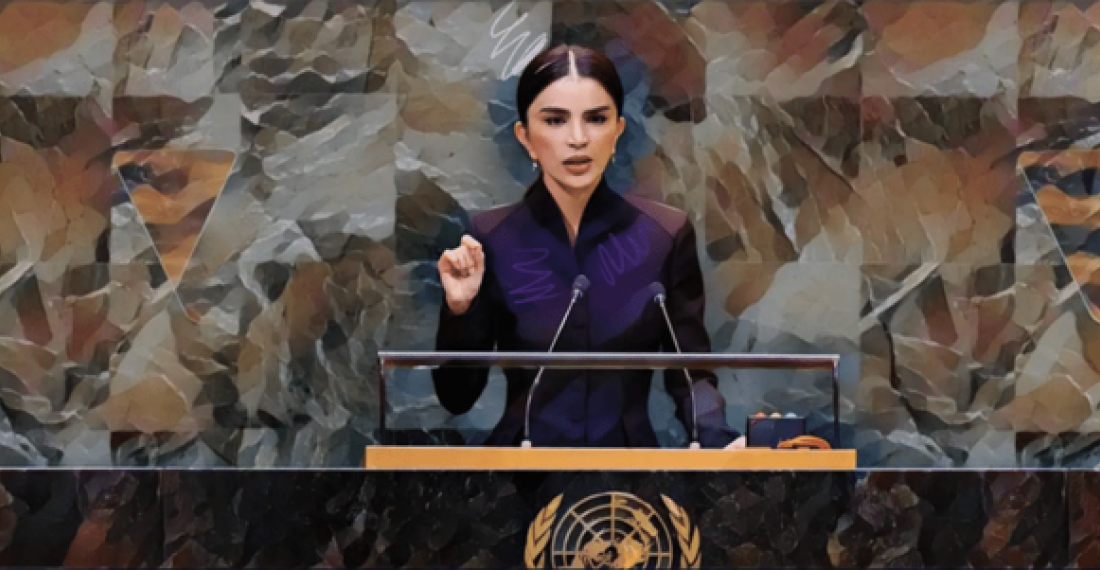
Uzbekistan called for a more effective United Nations and sought support for its Security Council candidacy during the General Assembly’s September 23 debate. Delivering the national address, presidential administration chief Saida Mirzayova urged countries to work together despite deepening international divisions.
“Our choice is human dignity” said Mirziyoyeva. “Openness does not mean weakness.”
Speaking in Uzbek at the Assembly’s 81st session in New York, she argued that a country’s strength should be judged by its ability to protect people’s rights and interests. The message offered a basis for cooperation beyond competing geopolitical camps, with particular emphasis on young people’s opportunities to study and shape their futures.
Mirziyoyeva sought support for Uzbekistan’s candidacy for a nonpermanent Security Council seat in 2035–2036. She also highlighted the country’s forthcoming chairmanship of the Non-Aligned Movement in 2027, presenting it as an opportunity to widen dialogue during a period of international tension.
She backed the secretary-general’s UN80 reform initiative and an expanded Security Council, arguing that the organization needed greater capacity to prevent conflict and implement its decisions. Her appeal was for international rules that apply consistently, rather than changing with the interests of powerful states.
Mirziyoyeva pointed to improving relations among neighboring Central Asian states as evidence that political will can help resolve longstanding disputes. She said disagreements over borders and water had increasingly given way to cooperation, with countries coming to see one another as partners
Mirziyoyeva linked her foreign policy message to Uzbekistan’s domestic reforms, citing economic growth and wider access to education. She said the economy had expanded from $50 billion to $147 billion over a decade and that poverty had fallen to 4%, presenting the figures as evidence of improvements in living standards.
“The true value of reforms is reflected in people’s lives. Especially in children’s lives".
She outlined forthcoming discussions with the UN Population Fund on demographic stability and human capital, and an international gathering in Samarkand in October focused on children’s well-being. She also cited stronger penalties for domestic violence and support for women’s entrepreneurship as elements of the government’s reform program.
Her account of technological change followed the same theme. She called for artificial intelligence to be developed with safeguards for human rights and accountability, placing improvements to people’s lives at the center of its use.
Water, Climate and Access to Markets
The Aral Sea provided the speech’s clearest warning about the consequences of policy failure. Mirziyoyeva described its destruction as the result of decades of damaging decisions. Water diplomacy remains a wider regional priority.
Mirziyoyeva’s appeal reflected a concern shared across Central Asia: countries exposed to conflicts beyond their borders want a greater say in how those conflicts are addressed. Winning a Security Council seat would give Tashkent a direct role in those decisions.
source: commonspace.eu with The Times of Central Asia (Tashkent) and agencies