Filter archive

Publication date
Editor's choice
Opinion
Opinion: The future of the China-US-Russia triangle after Pelosi's visit to Taiwan

Opinion: The future of the China-US-Russia triangle after Pelosi's visit to Taiwan

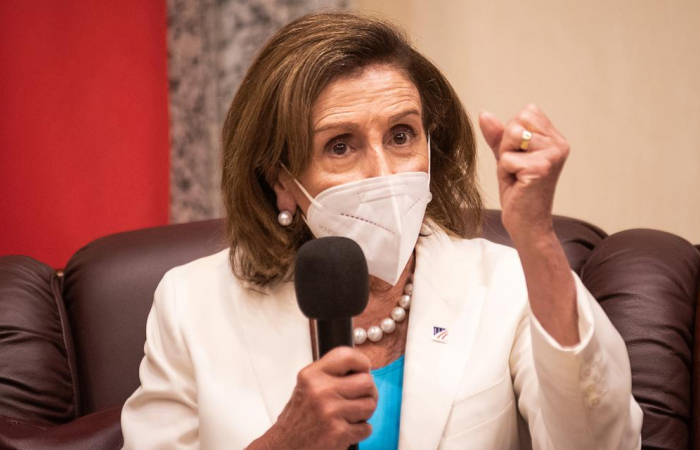
Since February 24, 2022, the international community's focus was concentrated entirely on the war in Ukraine and the growing Russia – West confrontation. It seemed that nothing could change the situation until the end of hostilities in Ukraine. However, on August 2 and 3, almost everyone’s attention shifted from Ukraine to Taiwan. As the Speaker of the US House of Representatives, Nancy Pelosi, stated her intention to visit Taiwan, up to half a million people were watching the trajectory of her plane on air flight tracking sites. The negative reaction of China, including the warning of President Xi during his conversation with President Biden that those who played with fire would be perished by it, created hype around this visit. Many were discussing the possibility of Chinese military jets closing the airspace over Taiwan and preventing Pelosi’s plane from landing in Taiwan, while some enthusiasts were even contemplating the possibility of a US-China direct military clash. As Pelosi landed in Taiwan and met with the Taiwanese President, the global social media was full of amateur assessments about the strategic victory of the US and the confirmation of the US global hegemony. However, as the dust settles down, and information noise and manipulation eventually decreases, a more serious assessment is needed to understand the real consequences of this visit.
Editor's choice
News
UAE says it will withdraw from Yemen, but division emerges in Yemeni presidential council

UAE says it will withdraw from Yemen, but division emerges in Yemeni presidential council

In a move seen as an attempt to de-escalate a crises with Saudi Arabia, the United Arab Emirates, on Tuesday (30th December) announced that it was heeding a call to withdraw its troops from Southern Yemen. UAE says that its presence included counter-terrorism teams that were crucial in fighting against Islamist groups. UAE sources said that parts of Yemen not controlled by the Houthis have had Al Qaeda in the Arab Peninsula (AQAP) operatives using the territory to launch attacks on Europe, the US and Middle East. UAE teams have co-ordinated with American and British special forces and intelligence. The sources added that Emirati forces and their Yemeni allies also helped reverse Houthi gains in the south. including the liberation of Aden port. The small UAE contingent has remained in place since the UAE withdrew most of its military personnel in 2019. The leading English-language newspaper in Abu Dhabi, The National, said that the main UAE force was based at Riyan Mukalla International Airport, with access to fixed-wing aircraft and helicopters, but also operated smaller contingents in the port town Balhaf and Shabwa. "It is understood it also flew a number of drones from the airbase that were able to track terrorist movements, pass information back to its allies and assisted special forces' missions." Meanwhile a division has emerged in Yemen's presidential council after four members denounced what they called the 'unilateral decisions' by the chairman. Four of Yemen’s eight Presidential Leadership Council members on Tuesday denounced an announcement by the council’s chairman accusing him of breaching the governing agreement. Tension between Yemeni leaders has been rising for weeks, underscoring the fragility of the country's already fractured political landscape and further complicating efforts to confront the Iran-backed Houthi rebels. The latest rift took an unprecedented turn on Tuesday morning, marked by a Saudi-led coalition “limited operation” striking combat vehicles Riyadh linked to the Southern Transitional Council, which has three members in the PLC. The PLC Chairman, Rashad al Alimi, on Tuesday said that he was seeking to cancel the joint defence agreement with the UAE. “What has been issued … constitutes a clear violation of the Declaration of the Transfer of Power [agreement], which explicitly stipulates that the Presidential Leadership Council is a collective body whose decisions are taken by consensus, or by majority when consensus is not possible,” the statement by the four members said. “It does not, under any circumstances, allow for unilateral decision-making on sovereign, military, or major political matters." The statement was signed by STC chief Aidarous Al Zubaidi, Faraj Al Bahsani, Tariq Saleh and Abu Zaraa al Muharrami. (click the picture to read the full article).
Editor's choice
News
Situation in South Yemen strains relations between Saudi Arabia and UAE

Situation in South Yemen strains relations between Saudi Arabia and UAE

The relations between Saudi Arabia and the United Arab Emirates (UAE) are increasingly strained as a result of the different approach of the two countries towards Yemen. Whilst both countries were initially together in resisting the Houthi take over in Yemen, the UAE subsequently focused on the South of the country, backing the Southern Movement (STC), which seeks to restore the independence of South Yemen. South Yemen became an independent country in 1967, at the end of British rule, and only unified with the north in 1990. The Saudi-led “Coalition to Support Legitimacy in Yemen” on Tuesday, 30 December, said it conducted a “limited” airstrike targeting two ships “that smuggled weapons and other military hardware into Mukalla in southern Yemen”. The ships originated in the UAE port of Furjeirah. In a statement carried by the Saudi Press Agency (SPA), the Coalition Forces spokesman, Major General Turki Al-Maliki, said that two ships coming from the port of Fujairah in the United Arab Emirates entered the Port of Mukalla in Hadramaut without obtaining official permits from the Joint Forces Command of the Coalition. He stressed the Coalition's "continued commitment to de-escalation and enforcing calm in the governorates of Hadramawt and Al-Mahra, and to prevent any military support from any country to any Yemeni faction without coordination with the legitimate Yemeni government and the Coalition. The Southern Transitional Council (STC), launched a sweeping military campaign early in December, seizing the governorates of Hadramaut along the Saudi border and the eastern governorate of Al-Mahra in Yemen’s border with Oman. The UAE-backed STC forces captured the city of Seiyun, including its international airport and the presidential palace. They also took control of the strategic PetroMasila oilfields, which account for a massive portion of Yemen’s remaining oil wealth. (click the image to read the article in full).
Editor's choice
Opinion
John Simpson: "I've reported on 40 wars but I've never seen a year like 2025"

John Simpson: "I've reported on 40 wars but I've never seen a year like 2025"

John Simpson is the BBC's World Affairs editor, and one of its most experienced journalists. In this sombre and candid article for BBC InDepth Simpson says "I've reported on 40 wars but I've never seen a year like 2025". commonspace.eu is republishing the article in full because of its importance:
Editor's choice
News
Not quite there yet!

Not quite there yet!

The presidents of Ukraine and the United States were both upbeat after their talks on Sunday (28 December), but clearly there is yet no agreement on how to end the war in Ukraine. Donald Trump and Volodymyr Zelensky said progress had been made during Florida talks but the US president admitted the problem of territory remained "unresolved". While both the US and Ukrainian presidents described the talks as "great", Trump said "one or two very thorny issues" remained outstanding - most notably on the issue of land. Addressing reporters at Mar-a-Lago, Zelensky said they had come to an agreement on "90%" of the 20-point peace plan, while Trump said a security guarantee for Ukraine was "close to 95%" done. Zelensky later said US and Ukrainian teams would meet next week for further talks on issues aimed at ending Russia's nearly four-year war in Ukraine. "We had a substantive conversation on all issues and highly value the progress that the Ukrainian and American teams have made over the past weeks," Zelensky said in a statement on the Telegram messaging app. Russia launched a full-scale invasion of Ukraine in February 2022, and Moscow currently controls about 20% of Ukrainian territory. A proposal to turn the Donbas region in eastern Ukraine, which Russia largely controls, into a demilitarised zone remains "unresolved", Trump said. "Some of that land has been taken," he told reporters after the meeting. "Some of that land is maybe up for grabs, but it may be taken over the next period of a number of months." Moscow currently controls about 75% of the Donetsk region, and some 99% of the neighbouring Luhansk. The regions are collectively known as Donbas. Russia wants Ukraine to pull back from the small part of the territory it still controls in Donbas, while Kyiv has insisted the area could become a free economic zone policed by Ukrainian forces. The US president has repeatedly changed his own position on Ukraine's lost territories, and in September stunned observers by suggesting that Ukraine might be able to take it back. He later reversed course. "[That] is a very tough issue," he said. "One that will get resolved." Security guarantees for Ukraine are "95% done", Trump said, without formally committing to logistical support or troop deployment to help protect Ukraine from future attacks. Trump floated the possibility of trilateral talks between the US, Russia, and Ukraine, saying it could happen "at the right time". Immediately after their bilateral talks, Trump and Zelensky held a one hour meeting with European leaders. European Commission president, Ursula von der Leyen, wrote on X "We had a good hour-long conversation with President Trump and Zelensky. Several European leaders were present and discussed future peace talks. Good progress has been made. Europe stands ready to work with its partners to consolidate this."